Indigenous

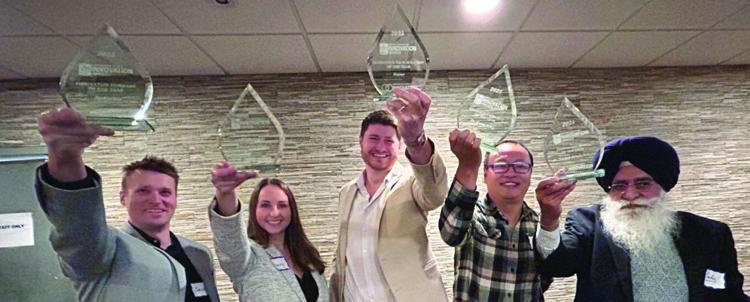
Mohit Dudeja Receives Teaching Innovation Award

Mohit Dudeja, PhD student and Contract Lecturer (Thunder Bay campus), has been honoured with a Teaching Innovation Award for the 2024-2025 academic year. The Senate Teaching and Learning Committee recognized Mohit’s creative development and delivery of the graduate-level Activism in Education course, which blended theory with immersive, hands-on learning.

The course stood out for its dynamic mix of arts-based activities, outdoor experiential learning, multimedia, and imaginative exercises designed to create transformative learning experiences. A highlight noted by the committee was Mohit’s theatrical approach—most notably an in-class play on activism—which allowed the Master of Education students, many of whom are international students, to actively explore pressing issues in the Canadian context including gender equality, racism, and discrimination.

The award speaks to both the impact of the course and Mohit’s dedication to innovative, student-centered teaching.

Congratulations, Mohit!


Dr. Rob Stewart Spearheads Efforts to Protect Lake Superior

OVERVIEW:

  • Dr. Rob Stewart leads the Freshwater Coastal Management Research Group and coordinates Remedial Action Plans (RAPs) along the Canadian north shore of Lake Superior
  • Harbours along Lake Superior were heavily polluted as a result of mining and forestry operations and industrial development
  • The work of RAPs, combined with government regulation, has made Lake Superior harbours safe for swimming and a source of drinking water
  • Dr. Stewart, in collaboration with RAPs, is investigating emerging global threats to the health of Lake Superior
  • Lakehead researchers are also working with Indigenous communities with the goal of restoring Lake Nipigon's ecosystem

"The best way to experience the magnificence of Lake Superior is to paddle to the last chain of islands before you hit open water," says Dr. Rob Stewart.

Dr. Rob Stewart on a lakeshore wearing outdoor gear and a winter toque

He's an associate professor of geography & the environment who feels most at home on the lake.

"It's amazing to be 10 km offshore in a kayak and have an otter pop up and hiss at you."

His career has been devoted to working with local communities to protect the watersheds and coastal environments of the Lake Superior Basin.

"Lake Superior is the headwater of all the Great Lakes, and its health determines the future of all the Great Lakes," he explains.

Dr. Stewart leads Lakehead's Freshwater Coastal Management Research Group and coordinates Remedial Action Plans (RAPs) along the Canadian north shore of Lake Superior.

"We identify environmental problems, monitor them, and then work on lake restoration," he says.

Through the determination of communities and researchers, there's been great success in removing pollutants from Lake Superior.

"When I was growing up, places like Thunder Bay, Nipigon, and Red Rock had working harbours.

There was foam, oil, and tree bark floating on the water because industries like pulp mills and mines would discharge effluents directly into the lake.

Today, you can swim in these harbours and use them for drinking water because of intense government regulation and the clean-up efforts of RAP groups."

Community members, and a videographer, stand in a circle on a Jackfish Bay beach

Community members belonging to the Jackfish Bay Area of Concern RAP discuss next steps to deal with legacy contaminants discharged into Lake Superior by the Terrace Bay Pulp and Paper Mill. "Remedial Action Plan groups try to reduce conflict between communities and governments over problems that can't be immediately resolved," Dr. Stewart says.

Now, Lake Superior RAPs are equally concerned with emerging threats to the lake that don't have simple solutions and that require cooperation between countries.

"We're investigating how to deal with invasive species, airborne mercury travelling from China and India, and climate change—Lake Superior is the fastest warming Great Lake."

Uncovering the Story of Lake Nipigon

Dr. Stewart's research extends beyond Lake Superior.

He's excited to be working with Indigenous communities in the Lake Nipigon area to trace the history of this freshwater lake and how it's changed over the past 200 years.

"Lake Nipigon was intensely developed in the 1940s. Large forestry and mining operations were set up near the lake's shoreline.

The provincial government also built a hydroelectric dam that diverted massive amounts of water from the Arctic watershed into Lake Nipigon. This changed the lake's ecosystem dramatically."

Members of the Nipigon Guardians Team aboard the Velma Linda boat

Above, the Nipigon Guardians Team (researchers from Lakehead, York University, and Biinjitiwaabik Zaaging Anishinaabek First Nation) collect sediment core samples. "We want to empower Indigenous communities with data to verify what they've been saying all along about the negative effects of hydro dams on Lake Nipigon."

The high levels of silt and nutrients in the Arctic Watershed were too much for a freshwater body like Lake Nipigon to absorb.

"The silt covered up fish spawning grounds, and the overabundance of nutrients created toxic algae blooms. The dam also caused erosion and raised the level of the lake, which released more sediment and nutrients."

Until recently, Indigenous people were forced to stand by and see their lake degraded because they had no say over how it was developed.

"Now, First Nations want the full story of the lake's changes backed up with scientific data," Dr. Stewart says. "Our 'Lake Nipigon Cumulative Impacts Partnership' will help provide this information."

A back view of Dr. Rob Stewart wearing an orange safety jacket, jeans, and rubber boots stands in an excavated area of land near the north shore of Lake Superior

Dr. Stewart's Freshwater Coastal Management Research Group has built landscape features to filter stormwater before it reaches Lake Superior. They've also restored riverbanks and coastal habitats for fish and wildlife. For instance, constructing a new channel for fish to swim through (see above).

His research team is doing this by tracking the movement of fish in the lake and by taking sediment samples from the lake floor.

"We'll analyze the sediment to determine the nutrients, plants, aquatic life, and toxins present in Lake Nipigon at different time periods."

After all the evidence is gathered, communities will pinpoint areas of Lake Nipigon where the environment has been adversely affected by development and by pollution, such as arsenic contamination from mills. Then, they'll advocate to have them restored.

"They want to build healthy communities with clean water and land for their youth," Dr. Stewart says.

Save Our Remarkable Lakes

A profile view of Dr. Rob Stewart outside with a cliff in the background

Current projects being led by North Shore of Lake Superior RAPs include shoreline naturalization and monitoring beaches closed because of high E.coli levels. "We also watch for new technology that may help with future lake restoration efforts," Dr. Stewart says.

He encourages local citizens to get involved in sustaining our region's waterways by joining an environmental community group or by becoming a member of one of the north shore's Remedial Action Plan groups.

"The number-one thing, though, is to connect with our lakes in your own way. Go for a canoe ride with a friend, take your kids fishing, or walk along one of the beaches."

Dr. Stewart's Lake Nipigon Cumulative Impacts Partnership research is funded by an NSERC Alliance Grant, the Indigenous Guardians Network, the First Nations Environmental Contaminants Program (Health Canada), and by Biinjitiwaabik Zaaging Anishinaabek. He has received funding for his Lake Superior research initiatives from the Great Lakes Freshwater Ecosystem Initiative, which is part of the Government of Canada's Freshwater Action Plan.

Indigenous Waterviews - An Anthology of Story, Song and Protocol for Water Ethics

The Office of Indigenous Initiatives is inviting you to a unique opportunity for connection and learning on December 5th 2:00pm to 4:30pm to celebrate the book launch of Indigenous Waterviews, an anthology centred around Indigenous Water Environments. This important work explores the profound relationship Indigenous peoples and communities have with water. Associate Professor Dr.

Winter Market

WINTER MARKET

Join us for a cozy and vibrant Winter Market, proudly hosted by the Lakehead University Indigenous Students' Association!
Come explore unique crafts, handmade goods, and seasonal treasures in the Agora on November 27th and 28th, 2024, from 10 AM to 4 PM each day.

Everyone is welcome—come support local vendors, enjoy the festive atmosphere, and find the perfect winter gifts!

Winter Market

WINTER MARKET

Join us for a cozy and vibrant Winter Market, proudly hosted by the Lakehead University Indigenous Students' Association!
Come explore unique crafts, handmade goods, and seasonal treasures in the Agora on November 27th and 28th, 2024, from 10 AM to 4 PM each day.

Student Spotlight: The Sky’s the Limit for Engineer Sana Sharif

A Natural Problem Solver

"I've always wanted to quench my thirst for learning," says Sana Sharif, a third-year electrical and computer engineering PhD student based in Barrie.

"From childhood, I was always keen to see how things are built. I would reverse-engineer my toys!"

Last spring, she received a Lakehead Luminary Award from Lakehead's Student Success Centre, celebrating her many contributions on and off campus.

Journeying from Pakistan to Lakehead

Sana Sharif sits in a chair in front of a large window

Sana's PhD supervisor is Dr. Waleed Ejaz. She's also worked with researchers in Canada, the United States, Malaysia, and Pakistan. "When we collaborate, it opens up so many more avenues." One of the recent research papers she co-authored looks at how equipping unmanned aerial vehicles with digital twin technology has the potential to better respond to natural disasters.

Sana earned her undergraduate and master's degrees in computer engineering in her native country, Pakistan, then emigrated to Canada in 2014.

After starting her family and becoming a Canadian citizen, she decided to return to school in 2021 for her Master of Electrical and Computer Engineering degree. She chose Lakehead because of its small class sizes and accessible professors, she says.

"I can find my professor without a crowd of other students, and I can discuss my research goals and how the work is going."

Cutting-Edge Wireless Technology Research

Today, those research goals include being at the forefront of 6G wireless technology.

The first few generations of data transmission via cell phone and text message were slower, but the next generation provides high-speed internet and supports mobile with better voice quality and faster connections.

"Under 6G, it's not only words," Sana says. "It's about image transmission and video transmission. It's also about transmitting bulk data in milliseconds."

Sana Sharif accepts a $200 cheque from 2025 IEEE CSYPC officials for winning third place

Sana's research is attracting attention. She won third place in the 2025 Canada Students and Young Professionals Congress hosted by the Institute of Electrical and Electronics Engineers (IEEE).  

Sana is focused on optimizing resources for semantic communication—a wireless communication system that transmits meaningful data rather than raw data.

"For example, if a building was on fire, instead of sending an image of the building, semantic communication sends only the meaning: The building is on fire," Sana explains. "This reduces both transmission costs and storage costs."

Projected to be available in the next five years, 6G data transmission may be a thousand times faster than what we have right now with 5G. It has fascinating implications in a wide range of areas in machine-to-machine communication—from self-driving cars to networked factories to robotic surgery.

One of Sana's recent research papers looked at the potential use of 6G in "smart traffic systems" that make roads safer and reduce traffic congestion. "Such a system would turn all the traffic lights on an emergency vehicle's route green so that it could reach its destination quickly."

She believes that harnessing the potential of 6G wireless networks will create a more interconnected and intelligent world.

Mentoring and Inclusion for the Win

Sharing her skills and experiences is an essential part of Sana's success. For several years, she's been part of mentoring programs with Mitacs, a leading Canadian innovation organization that connects businesses and researchers.

Through the global research intern program, Sana guides visiting researchers during their time in Canada. She also mentors female researchers in a women-in-STEM accelerator project, offering advice and insights from her own experience.

She says she values the perspectives from her mentees, and that her efforts are also a way of echoing the mentoring her own professors provided.

Dr. Waled Ejaz, Dr. Andrew Dean, Sana Sharif holding her award certificate, and Dr. Gillian Siddall stand beside each other

Sana (third from left) received a 2024 Graduate Studies Research Excellence Award from Lakehead. She also received a 2025 Lakehead Leader Luminary Award. "It was a moment of gratitude for me."

A spirit of inclusion and embracing the value of different points of view also informs Sana's work. In 2024, the Digital Research Alliance of Canada (DRAC) recognized her through their Equity, Diversity, Inclusion and Accessibility Champions program.

They provided $35,000 in funding for her series of workshops on enhancing AI knowledge among women, racialized groups, and first-generation students. "There are so many opportunities in AI," she points out. "The future is becoming more and more digital, so we need hands-on experience in those skills."

6G data transmission has fascinating implications in a wide range of areas in machine-to-machine communication—from self-driving cars to networked factories to robotic surgery.

Although she's won many graduate student awards and scholarships, one of the most meaningful honours is her Lakehead Luminary Award. "I'm really happy and thankful to all the people who nominated me."

The Lakehead community is equally thankful to Sana.

One of her nominators described her as "a rising star who has made significant contributions to Lakehead University and the broader community through her leadership, academic achievements, and commitment to diversity, inclusion, and sustainability."

As Lakehead University prepares to open its new Barrie STEM Hub in fall 2026, Sana's story offers a glimpse of what future engineering and computer science students will experience there. Located in the heart of Barrie's waterfront district, the STEM Hub will provide the kind of hands-on research, small-class mentorship, and high-tech learning environment that has helped Sana thrive. Her work shows the possibilities that await the next generation of students who choose to study close to home while staying connected to opportunity.

Beaded Poinsettia Earring Workshop

✨ Beaded Poinsettia Earring Workshop ✨

Thursday, November 27, 2026 | 12:00 PM
Gakina Nindinawemaaganag – UC1007

Join our Métis liaisons, Brooke and Darla, for a festive and creative hands-on workshop! ?
Come learn how to bead beautiful poinsettia-inspired earrings—perfect for the holiday season or as a meaningful handmade gift.

Groundbreaking Lakehead Study Sheds Light on Workplace Mental Health in Real Time

By: EMILY DONTSOS

A first-of-its-kind study at Lakehead University is shedding light on mental-health challenges in the workplace—in real time. 

Through the Northwestern Ontario Workplace and Worker Health Study (NOWWHS), researchers are surveying thousands of workers across the region at workinghealth.ca. 

Every time a survey is completed, the data is automatically added to the study’s live dashboards—creating unprecedented public access to workplace mental health insights.       

Filling a critical gap in research about mental health and the workplace, NOWWHS seeks to identify exactly how workplace factors impact workers’ well-being—sector by sector—to influence meaningful change. 

“We’re seeing rising rates of mental-health challenges in northwestern Ontario workplaces. People are struggling at work, and we want to find a way to stop that,” says Dr. Vicki Kristman. She is the study’s lead and the director of Lakehead’s EPID@Work (Enhancing the Prevention of Injury and Disability at Work) Research Institute. 

Photo of EPID@Work Team

Workers in Northwestern Ontario Face Unique Risk Factors 

“The nature of work here is different from southern Ontario,” says Dr. Kristman. “We have more people working in mining and forestry, for example, which can be isolating fields. And health-care workers—who represent half of our workforce—often struggle with significant understaffing and limited resources.”

Recognizing mental health as a growing challenge in northwestern Ontario workplaces, Dr. Kristman and her team launched NOWWHS in 2023 with funding from the Ministry of Labour, Immigration, Training, and Skills Development. The study directly aligns with two United Nations Sustainable Development Goals (SDGs)—SDG 3: Good Health and Well-being and SDG 8: Decent Work and Economic Growth. 

Over the next five to ten years, the researchers aim to recruit 6,000 participants across all sectors in the region—from mining to forestry, health care, education, and beyond. 

With funding from the Canadian Institutes of Health Research (CIHR), the team is also working in close collaboration with the Nokiiwin Tribal Council to recruit at least 500 Indigenous workers to gain insights into their unique experiences and risk factors. 

Dr. Kristman says students and post-doctoral fellows have played a vital role in supporting participant recruitment efforts, data analysis, and offshoot studies exploring specific sectors and professions. 

“We have many students working as research assistants and helping with data collection. They’re also using the data we’re collecting within their dissertations,” she says. 

“I also have four PhD students on the team right now, including one who is looking into the specific issue of burnout among nurses, one who is looking at the mental-health impacts of working from home, and one interested in immigrant mental health. It’s a great opportunity to help the next generation build research skills while surfacing critical insights.” 

Findings Reveal Major Mental Health Challenges  

With 2,000 surveys completed so far, the results are already painting a powerful picture of workplace mental health in the region. 

“Almost 40% of respondents say they have been diagnosed with or received treatment for anxiety, and almost 35% for depression,” Dr. Kristman says. 

When it comes to burnout, over half of workers say they are experiencing high levels of burnout—and almost 20% say their burnout levels are extremely high. 

“One really interesting data point we’re seeing is that just 21% of workers say they feel safe sharing their thoughts and ideas about how to improve well-being in the workplace,” Dr. Kristman says. “This suggests workers may be worried about losing their jobs if they speak up, which is concerning.”  

Anyone can view the study’s real-time dashboards for mental health and workplace factors, and learn more about who is participating. 

Building a More Caring and Compassionate World 

Although the researchers are still actively recruiting participants, the real-time data emerging from NOWWHS means they’ve already started sharing insights and recommendations with employers and policymakers. 

Dr. Kristman says that based on the information emerging from the study so far, she believes many of the issues workers are facing could be improved through one simple act. 

“I think a lot of the challenges we’re seeing would resolve themselves if people just started caring more about each other,” she reflects. 

“Like so many problems in our world today, we would all be better off if we treated each other with greater care and compassion. That’s one of the central messages I hope to share through this study.” 

Are you a worker or employer in northwestern Ontario? Visit workinghealth.ca to participate in the Northwestern Ontario Workplace and Worker Health Study. Your personal information and responses will be kept confidential. 

Research in Action highlights the work of Lakehead University in various fields of research.

Giving Tuesday 2025

Mark your calendars for Tuesday, December 2nd as Lakehead University celebrates the ninth annual Giving Tuesday-a global movement of generosity and giving back.

Giving Tuesday directly supports our students through scholarships, bursaries, and awards. Over the years, your contributions have helped create new student awards, and dozens more continue to be supported annually, making higher education accessible for those who need it most.

Pages

Subscribe to Indigenous