


Groundbreaking Lakehead Study Sheds Light on Workplace Mental Health in Real Time
By: EMILY DONTSOS
A first-of-its-kind study at Lakehead University is shedding light on mental-health challenges in the workplace—in real time.
Through the Northwestern Ontario Workplace and Worker Health Study (NOWWHS), researchers are surveying thousands of workers across the region at workinghealth.ca.
Every time a survey is completed, the data is automatically added to the study’s live dashboards—creating unprecedented public access to workplace mental health insights.
Filling a critical gap in research about mental health and the workplace, NOWWHS seeks to identify exactly how workplace factors impact workers’ well-being—sector by sector—to influence meaningful change.
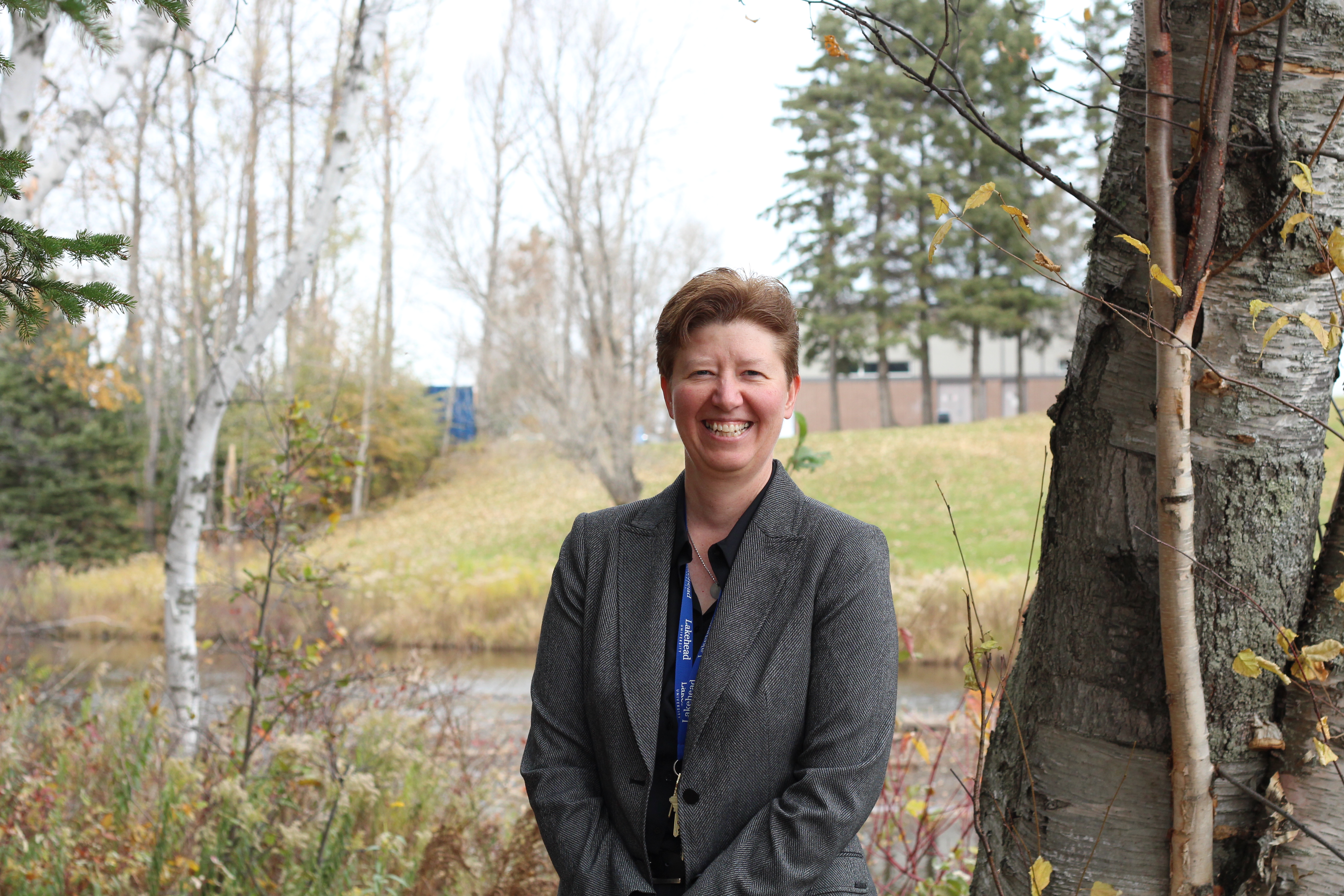
“We’re seeing rising rates of mental-health challenges in northwestern Ontario workplaces. People are struggling at work, and we want to find a way to stop that,” says Dr. Vicki Kristman. She is the study’s lead and the director of Lakehead’s EPID@Work (Enhancing the Prevention of Injury and Disability at Work) Research Institute.

Workers in Northwestern Ontario Face Unique Risk Factors
“The nature of work here is different from southern Ontario,” says Dr. Kristman. “We have more people working in mining and forestry, for example, which can be isolating fields. And health-care workers—who represent half of our workforce—often struggle with significant understaffing and limited resources.”
Recognizing mental health as a growing challenge in northwestern Ontario workplaces, Dr. Kristman and her team launched NOWWHS in 2023 with funding from the Ministry of Labour, Immigration, Training, and Skills Development. The study directly aligns with two United Nations Sustainable Development Goals (SDGs)—SDG 3: Good Health and Well-being and SDG 8: Decent Work and Economic Growth.
Over the next five to ten years, the researchers aim to recruit 6,000 participants across all sectors in the region—from mining to forestry, health care, education, and beyond.
With funding from the Canadian Institutes of Health Research (CIHR), the team is also working in close collaboration with the Nokiiwin Tribal Council to recruit at least 500 Indigenous workers to gain insights into their unique experiences and risk factors.
Dr. Kristman says students and post-doctoral fellows have played a vital role in supporting participant recruitment efforts, data analysis, and offshoot studies exploring specific sectors and professions.
“We have many students working as research assistants and helping with data collection. They’re also using the data we’re collecting within their dissertations,” she says.
“I also have four PhD students on the team right now, including one who is looking into the specific issue of burnout among nurses, one who is looking at the mental-health impacts of working from home, and one interested in immigrant mental health. It’s a great opportunity to help the next generation build research skills while surfacing critical insights.”
Findings Reveal Major Mental Health Challenges
With 2,000 surveys completed so far, the results are already painting a powerful picture of workplace mental health in the region.
“Almost 40% of respondents say they have been diagnosed with or received treatment for anxiety, and almost 35% for depression,” Dr. Kristman says.
When it comes to burnout, over half of workers say they are experiencing high levels of burnout—and almost 20% say their burnout levels are extremely high.
“One really interesting data point we’re seeing is that just 21% of workers say they feel safe sharing their thoughts and ideas about how to improve well-being in the workplace,” Dr. Kristman says. “This suggests workers may be worried about losing their jobs if they speak up, which is concerning.”
Anyone can view the study’s real-time dashboards for mental health and workplace factors, and learn more about who is participating.
Building a More Caring and Compassionate World
Although the researchers are still actively recruiting participants, the real-time data emerging from NOWWHS means they’ve already started sharing insights and recommendations with employers and policymakers.
Dr. Kristman says that based on the information emerging from the study so far, she believes many of the issues workers are facing could be improved through one simple act.
“I think a lot of the challenges we’re seeing would resolve themselves if people just started caring more about each other,” she reflects.
“Like so many problems in our world today, we would all be better off if we treated each other with greater care and compassion. That’s one of the central messages I hope to share through this study.”
Are you a worker or employer in northwestern Ontario? Visit workinghealth.ca to participate in the Northwestern Ontario Workplace and Worker Health Study. Your personal information and responses will be kept confidential.
Research in Action highlights the work of Lakehead University in various fields of research.