



Powley Day
Powley Day will be in person in the Agora and live-streamed
To register to attend via Zoom:
https://lakeheadu.zoom.us/webinar/register/WN_Bo8leK5WS4WDny3gzF77og
A confirmation email will be sent once you register
Welcome Back Open House
Wednesday, September 3, 2025
11:00 am to 1:00 pm
Gakina Nindinawemaaganag - UC1007
Stop by for a delicious Walking Taco. Learn about Indigenous student services
All students, staff & faculty are welcome!
Mini Workshop - How to Navigate D2L and Mylnfo
Presented by Lakehead's Academic Support Zone
September 3rd, 2025 - 12 - 1 p.m.
Gakina Nindinawemaaganag UC1007
Are you worried about how to use D2L? Are you wondering what Mylnfo is?
Overview:
A drone buzzes over a wheatfield on a sunny summer day in northwestern Ontario. It's not on military manoeuvres or taking part in a recreational flying competition.
It's gathering information so that farmers can better tend their crops.

The drone is piloted by geo-spatial scientist Dr. Muditha Heenkenda. Once a week she sends the drone on flyover missions over an experimental plot on the Lakehead University Agricultural Research Station (LUARS).
This region's short growing season and cold temperatures, combined with unpredictable weather caused by climate change, means that good crop management is imperative.
Dr. Muditha Heenkenda is a LUARS researcher and Lakehead Geography & the Environment associate professor in the Faculty of Science and Environmental Studies.
"I'm capturing video footage to see how many plants emerge after a frost and to track their growth," Dr. Heenkenda says. The goal is to boost northwestern Ontario's food production.
The technology Dr. Heenkenda is deploying reflects the growing sophistication of precision agriculture.
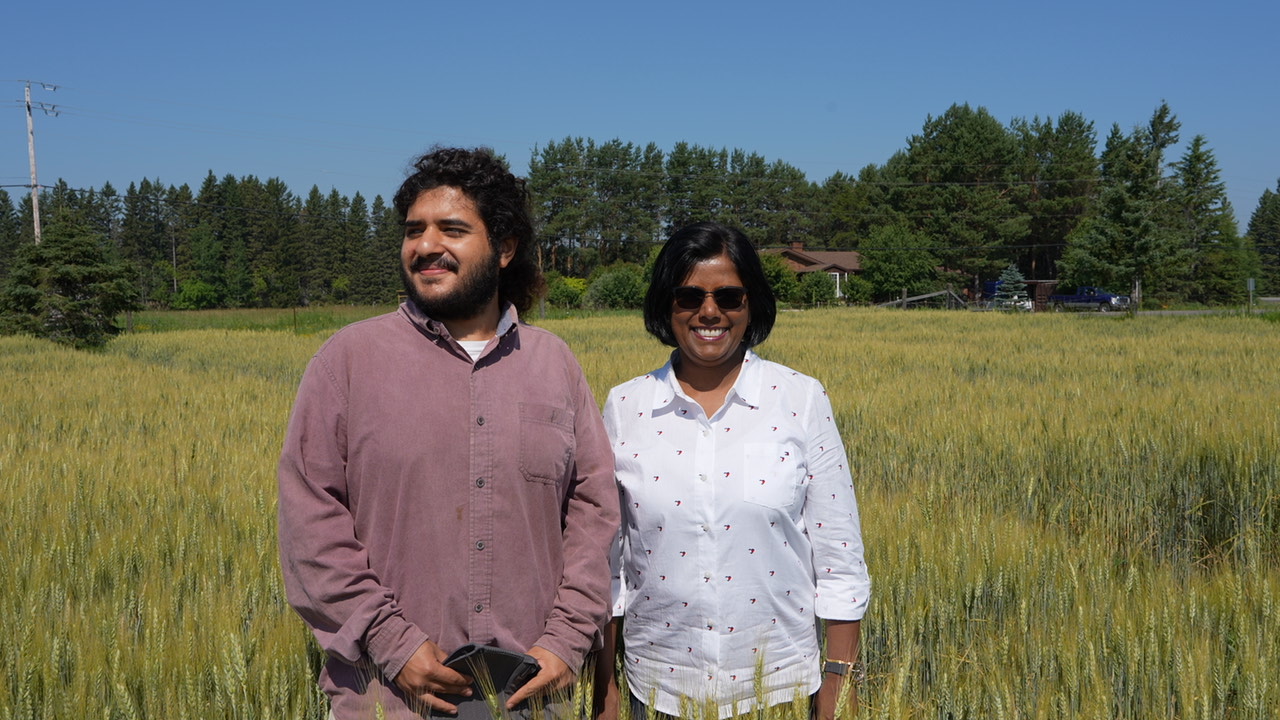
Advances in remote sensing and artificial intelligence are rapidly improving precision agriculture," says Dr. Heenkenda, pictured here with research student Alexander Betancourt.
Besides monitoring crops, drones carry out tasks like the targeted sprayings of pesticides and fertilizers, which saves farmers money.
Reducing the amount of fertilizers and pesticides has the additional benefit of protecting the environment from the negative effects of excessive amounts of these chemicals.
Fertilizers, for instance, bring a risk of acidifying soils and causing algae blooms.
On the ground, LUARS researchers are developing a robotic-camera system to continuously photograph crop plots. This system will create 3D models of plant structures and analyze chlorophyll levels, allowing the early detection of nutritional deficiencies and diseases.
"Precision agriculture enables farmers to make more accurate decisions about all aspects of farming, which is essential as climate change pressures grow," Dr. Heenkenda says.

In 2023, Dr. Heenkenda was part of the LUARS team that constructed a solar-powered camera system to monitor the amount of chlorophyll—a crucial plant nutrient—in an experimental soybean crop. Precision agriculture—also known as site-specific crop management—is revolutionizing farming with robotic cameras, smart sensors, and drone technology.
The Lakehead University Agricultural Research Station is on the outskirts of Thunder Bay, Ontario. It's a university research centre that introduces new crop varieties and sustainable agricultural practices to the local farming community.
The LUARS advisory board is made up of members of the local farming community like Fritz Jaspers, who runs a dairy farm and manages approximately 1,000 acres of crops.
"Farmers get advice from LUARS Director Dr. Tarlok Singh Sahota about the best crops to plant, when to plant seeds, and the quality and quantity of fertilizers to apply," Dr. Heenkenda says.
Some of the new crops that farmers have been able to successfully grow because of LUARS research initiatives include perennial rye, winter canola, frosty berseem, and chicory.
"I'm part of a current LUARS research project that's monitoring several varieties of winter wheat, a plant that does well in this region," Dr. Heenkenda says.
"We're looking at the density of seeds planted and the amount of nitrogen used. As a result, we'll be able to understand how these factors affect the height of plants and the health of winter wheat varieties—including when plants flower and develop pods."
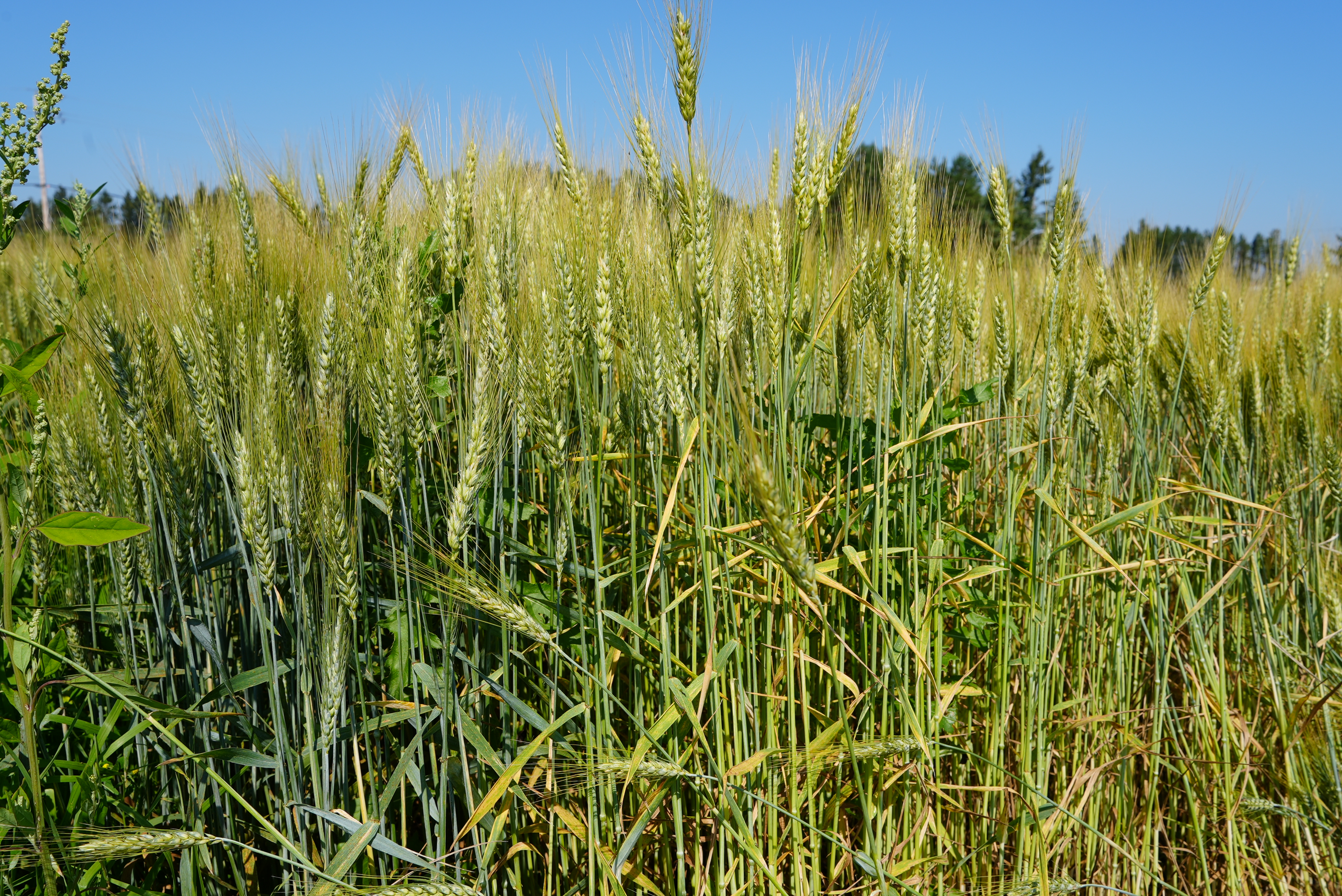
The information they collect will be used to predict crop yield and draft site-specific fertilization plans for farmers in the area.
LUARS will also share their high-resolution 3D-camera system with them. "Most farmers still go into their fields and gather plant information manually, which is time consuming and expensive," Dr. Heenkenda explains.
LUARS is helping farmers modernize and expand their operations and start small-scale commercial activities, leading to more prosperity for rural farm communities.
"The exciting news is that farmers will be able to remotely analyze any of their crops, not just winter wheat, and then take actions when and where necessary to ensure that they thrive."
This project is funded in part by the governments of Canada and Ontario under the Sustainable Canadian Agricultural Partnership, a federal-provincial-territorial initiative. The winter wheat project is also funded by the Lakehead University Agricultural Research Station: Agricultural Research Capacity Development Program. By fostering food security and promoting sustainable agriculture, this research project is supporting United Nations Sustainable Development Goal 2—ending hunger around the world by 2030.
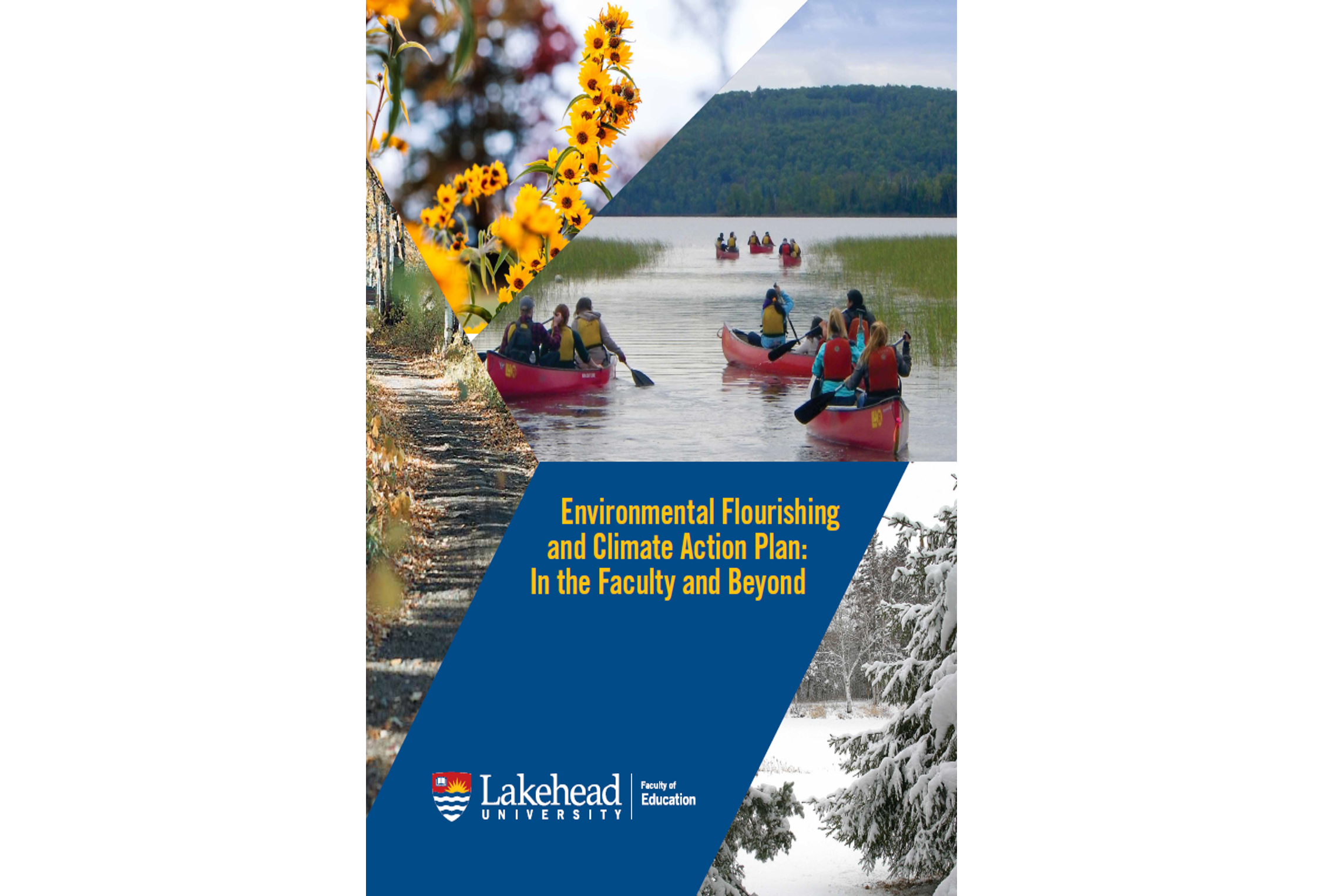
The Faculty of Education is proud to announce the publication of its Environmental Flourishing and Climate Action Plan: In the Faculty and Beyond. This Plan is a direct response to the growing call for action in the face of climate change and other global crises and represents a significant step in embedding environmental responsibility into every facet of the Faculty’s academic and community work.
This Plan builds upon Flourishing as a Faculty, a foundational vision document that articulates the Faculty of Education’s core values, recognizing our responsibility in a world increasingly shaped by environmental, social, and economic challenges. Together, these documents affirm our commitment to fostering environmental flourishing through teaching, research, policy, and community engagement.
The Environmental Flourishing and Climate Action Plan is closely aligned with Lakehead University’s broader Sustainability Plan and reflects a deep commitment to cultivating inclusive, just, and sustainable communities. It was developed through a collaborative effort by the following faculty, staff, and students (listed in alphabetical order): Paul Berger, Joan Chambers, George Drazenovich, Ellen Field, Jillian Fraser, Allison Gardiner, Ann Kajender, Ledah McKellar, Jacob Kearey-Moreland, Jason Kennedy, Maria Lalla, Devon Lee, Claire Morris, Teresa Ruberto, and Christina Summers, with input from the wider Faculty of Education community.
The Faculty is proud to take this meaningful step toward a flourishing future—for our students, our communities, and the planet.
Join us on September 5, 2025 while we raise the Survivors' Flag to honour residential school Survivors and all the lives and communities impacted by the residential school system in Canada.
Join the Lakehead University Elders to learn cultural teaching and sample traditional foods.
Stop by the Indigenous Student Services Centre for a delicious walking taco, learn about Indigenous student services, and join in on a D2L mini workshop (12pm) to learn how to navigate the D2L learning platform and myInfo.
The Indigenous Student Services Centre is honoured to welcome Elder Beatrice Twance-Hynes, who is available to meet with students, staff, and faculty for individual or small group teachings.
Elder Beatrice is a member of Biigtigong Nishnaabeg First Nation. A traditional women’s dancer who crafts her own regalia, she also carries the grandmother pipe and serves as a sacred circle facilitator, songwriter, singer, and drummer. She generously shares teachings on Hand Drumming, the Medicine Wheel, Sacred Medicines, and the Seven Grandfather Teachings.
