



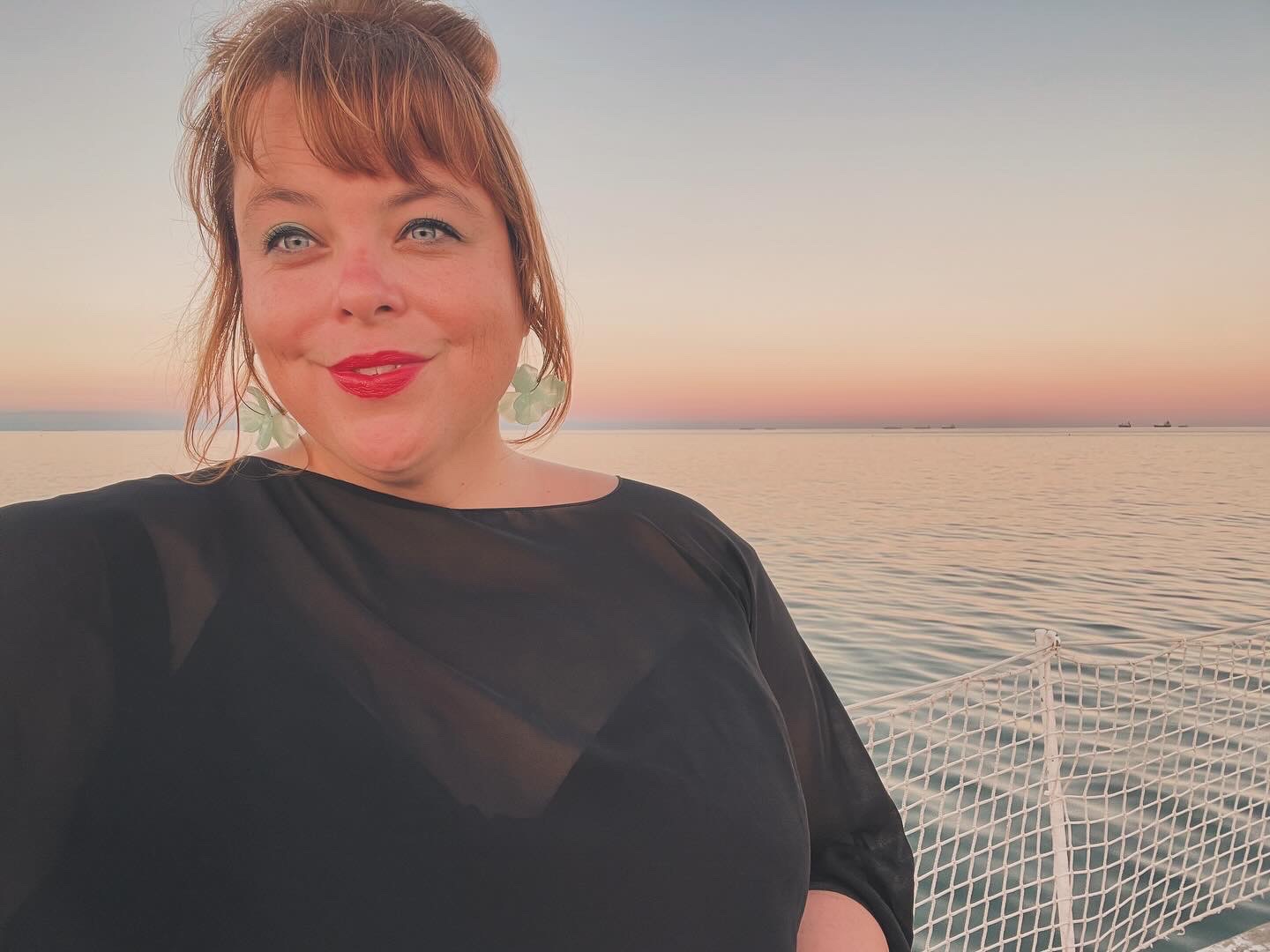
Shannon Webb-Campbell
Ph.D. Creative Writing, Department of English, University of New Brunswick 2024
As an academic and professional writer, Dr. Shannon Webb-Campbell’s primary areas of
teaching include Indigenous Literatures, Indigenous Storytelling and Creative Writing (poetry,
creative non-fiction and fiction). On top teaching introductory courses in English Literature at
the University of New Brunswick, Trent University Durham, Memorial University of
Newfoundland and Labrador, she has developed and hosted creative writing workshops at the
secondary and post-secondary level.
With a background in literary and arts criticism, she is the Associate Editor of Muskrat
Magazine, and former Editor of Visual Arts News Magazine, Indigenous Guest Editor for the
National Magazine Awards Foundation, and Advisory Editor at The Fiddlehead. She was a
Curator with DIALOG+ Acre Architects and Brackish Design Studio for the Art Gallery of Nova
Scotia International Design Competition, a Guest Curator at Campbell River Art Gallery and The
Rooms Art Gallery, as well as the Curatorial Assistant at Eastern Edge Gallery. She was the
Project Manager, Curator and Co-facilitator of Atwater Reads the Final Report of the Truth and
Reconciliation Commission of Canada at the Atwater Library in Montreal, Quebec. She was also
the Assistant Editor at Atlantic Books Today, Poetry Editor at Plentitude Magazine, and former
critic-in-residence for CWILA (Canadian Women in Literary Arts) in 2014. She has also written
for trade publications such as Geist Magazine, The Globe and Mail, Quill and Quire, Canadian
Art, Montreal Review of Books and more.
Dr. Shannon Webb-Campbell’s research interests span Indigenous Literatures, art, photography,
feminism, poetry, wild swimming and slow living. Her current research concerns Indigenous
Storytelling, visual art and literature. She is a collaborator on SSHRC-NCTR grant “We’re Still
Here’: Amplifying Urban Indigenous Stories in Saskatoon, Prince Albert and St. John’s through
Indigenous-led Partnerships” with project manager Dr. Kristina Bidwell at University of
Saskatchewan. She is working on an Urban Indigenous Storytelling research project as part of a
joint initiative with the National Centre for Truth and Reconciliation and the Social Sciences and
Humanities Research Council. As a researcher she is interested in Mi’kmaq Visual Artists and
Writers from Newfoundland and Labrador Speaking Back Against 1949’s Confederation Terms
of Union.
At the time of Confederation in 1949, the provincial and federal governments made no
provisions for the new province's Indigenous groups. The Terms of Union, which determined
how Newfoundland and Labrador would operate as a province, did not mention Indigenous
people. As a result, Innu, Inuit, and Mi'kmaq people living in Newfoundland and Labrador were
unable to access the same rights, programs, services, and funding the federal Indian Act made
available to other Indigenous groups in Canada.
The exclusion of Indigenous people in Confederation was not just a political oversight, but part
of a much broader and longer narrative about the depletion and absence of Indigenous people in
Newfoundland and Labrador (Bidwell). In the face of this narrative, Mi’kmaq writers and artists
have insisted on Mi’kmaq histories and futures. However, at the same time, many Mi’kmaq
artists and writers have been denied recognition as Indigenous people or have lost their status.
Due to colonial forces and the disenfranchisement of the Indian Act, Mi’kmaq art and
storytelling continues to be threatened. In the face of this ongoing threat, storytelling through
visual culture and literature is essential to the survival of the Mi’kmaq peoples, offering ways of
understanding and living Mi’kmaq identity that is not dependent on a colonial ‘politics of
recognition’ (Coulthard).
Dr. Webb-Campbell is a member of Flat Bay First Nation (No’kmaq Village), a non-profit
village council dedicated to the progressive development of the 99% Mi’kmaq community of
Ewipek/ Flat Bay, Flat Bay East, Flat Bay West, and St Theresa in western Newfoundland. Flat
Bay First Nation upholds self-governance and preserves cultural authenticity.
As a Mi’kmaw-settler poet, she has published four books: Re: Wild Her (Book*hug 2025), Lunar
Tides (Book*hug 2022), I Am a Body of Land, edited and introduced by Lee Maracle (Book*hug
2018) and Still No Word (Breakwater Books 2015), which was the inaugural recipient of the
Egale Canada Human Rights Trust Out in Print Award. Her poetry has appeared on public
transit, sidewalk signs, inspired cocktails, classical music suites, short films, literary journals,
hip-hop tracks, postcards, walking trails, illuminated signs, anthologies, theatre, a saltbox house,
on the front page of the national newspaper, choral arrangements, art exhibitions and projected
on a castle in the South of France.
She is currently working on her first novel.
She is the author of the forthcoming poetry collection Feral Mermaids (Book*hug 2027), Re: Wild Her (2025), Lunar Tides (2022), I Am a Body of Land, edited and introduced by Lee Maracle (2018) and Still No Word (Breakwater Books 2015), which was the inaugural recipient of the Egale Canada Human Rights Trust Out in Print Award.
Selected Publications:
“Radical Kinship: Nelson White’s Wutanminu – Our Community,” Nelson White: Mimajimk |
Living (Grenfell Art Gallery Memorial University of Newfoundland Fall 2025)
“Failure Gifts,” Failure: American Review of Books, edited by Thom Vernon (University of
Nebraska 2025)
“Tangled Down with the Mermaids Up in Renews,” Fishing Stories edited by Gillian Wigmore
(Invisible Publishing Spring 2027)
"Feral Mermaids" (Book*hug April 2027)