



Revolutionizing Real-Time Allergy Monitoring
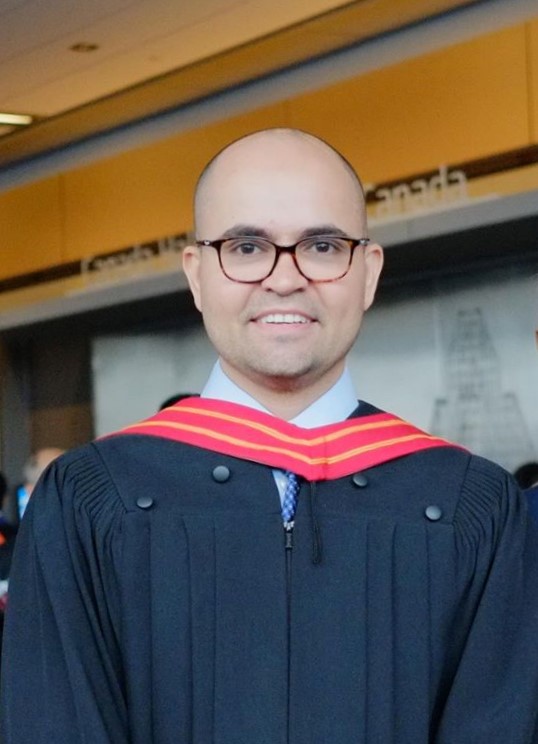 A Lakehead Barrie STEM Hub researcher, in partnership with the Royal Victoria Regional Health Centre (RVH), is transforming how Simcoe County detects and responds to environmental health threats, starting with airborne allergens.
Dr. Thiago E. Alves de Oliveira, associate professor of computer science and assistant dean of the Faculty of Science and Environmental Studies, has been awarded $248,750 from the New Frontiers in Research Fund’s (NFRF) Exploration stream to create a real-time, autonomous allergen-detection system using machine learning.
A High-Tech Approach to Tracking Airborne Allergens
Dr. de Oliveira— along with Geography and Environmental Sustainability Professor Dr. Florin Pendea and Psychology Professor Dr. Sila Demir— will work closely with Barrie’s RVH to develop an AI-driven sensing network that can instantly and precisely detect, count, and classify pollen particles and determine their allergenic potential.
“Our network has the capacity to enhance quality of life, support public health responses, and strengthen community resilience against environmental and biological risks,” says Dr. de Oliveira.
Collection tapes will capture airborne pollen particles, often invisible to regular microscopes, which will be automatically analyzed by ‘super-resolution’ robotic microscopes.
The platform will also track environmental data including air pressure, temperature, humidity, and particulate matter.
“This will provide a complete, real-time picture of what types of pollen are in the air we breathe,” explains Dr. de Oliveira.
Putting Real-Time Data into Allergy Sufferers’ Hands
Getting information to people will be the most important part.
The interdisciplinary research team will develop an AI-driven app to take the “raw data” and translate it into clear, actionable messages for users.
Users can log their allergy symptoms and will receive personalized health alerts when allergen exposure is high.
This will help them make informed decisions about their health and stop an allergy attack before it happens.
As a partner on the project, RVH is eager to see this next-gen health innovation deliver tangible benefits for the region.
“Environmental conditions can have a real impact on health, particularly for people living with allergies, asthma, respiratory disease, or other chronic conditions,” says Dr. Jesse McLean, RVH director, research and innovation and grant co-applicant.
“This exciting project will help us explore how real-time data can support better day-to-day decisions for individuals, while helping healthcare providers in our region anticipate and respond to emerging community health needs.”
While the project’s initial focus is on allergy management, the network will provide a foundation to monitor a wide range of environmental health risks, including airborne pathogens and harmful pollutants.
“By combining computer science, environmental science, healthcare, and psychology in ways that have not been tried before, this cross-disciplinary project will help individuals better manage their health through technology,” says Dr. Langis Roy, Lakehead vice-president, research and innovation.
“This is exactly the ‘out of the box’ thinking the NFRF program is designed for and that will help Lakehead develop game-changing solutions for health and well-being across the regions we serve.”
