
Indigenous

Ontario Working for Workers by Investing Over $5 Million in Health and Safety Research at Lakehead
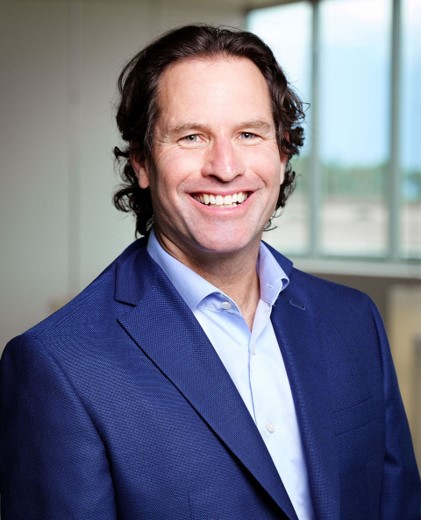
Photo of Dr. Vicki Kristman

Dr. Vicki Kristman

April 14, 2022 

THUNDER BAY — The Ontario government is working for workers by investing $5.5 million in ground-breaking workplace health and safety research led by the Enhancing Prevention of Injury and Disability @ Work (EPID@Work) Research Institute at Lakehead University. The funding will contribute to the Institute’s leading research in several key areas including, reducing mental health stigma in the workplace and designing injury prevention programs for vulnerable workers in Northwestern Ontario.

“Every worker in Northern Ontario should feel safe and supported on the job, and they deserve to come home safe to their loved ones after a hard day’s work,” said Monte McNaughton, Minister of Labour, Training and Skills Development. “Our government is working for workers by proudly investing in the EPID@Work Research Institute at Lakehead University so they can deliver solutions that will create lasting improvements to worker safety.”

Research shows vulnerable workers are often at increased risk of workplace injury as they face challenges accessing conventional workplace health and safety resources and training. EPID@Work’s research will aim to identify and address these barriers.

As part of this five-year project, the EPID@Work Research Institute will help employers in Northern Ontario reduce mental health stigma in their workplaces, improve support for workers, and ensure managers have the tools for the early identification of mental health symptoms. The funding will also contribute to ongoing research to understand Indigenous workers’ experiences in Northern Ontario workplaces to provide them with better mental health support and prevent injuries on the job.

“Lakehead University is excited for the significant, long-term investment by the Ministry of Labour, Training and Skills Development in Dr. Kristman’s research and the EPID@Work Research Centre,” said Dr. Moira McPherson, President and Vice-Chancellor of Lakehead University. “Focussing on Northern Ontario’s workforce, with emphasis on Indigenous communities and equity seeking groups, the Center will conduct high-quality, community-based, transdisciplinary research in the areas of work-related injury, both physical and mental, and disability prevention.”

This investment is part of the government’s plan to build a future where Ontario is the best place to live, work and raise a family. This includes recently passing new legislation that provides historic new protections for workers, as well as releasing the province’s five-year health and safety strategy, Prevention Works.

Quick Facts

  • Based out of Lakehead University, the EPID@Work Research Institute was established in 2018 and conducts community-based research in the areas of work injury and disability prevention.
  • According to the Association of Worker’s Compensation Boards of Canada, Ontario’s occupational health and safety record is among the best in Canada, with the province achieving the lowest rate of work time lost to injury among any province or territory since 2009.
  • Ontario is working with the Workplace Safety and Insurance Board to review the province’s occupational illness system to drive improvements in how workplace illness and disease are prevented, identified and addressed, and ensure that worker and employer needs are supported. 

 Additional Resources

-30-


MEDIA CONTACTS                                                                    Harry Godfrey
Minister's Office
harry.godfrey@ontario.ca

ontario.ca/labour-news
Disponible en français

Ciara Nardelli
Communications Branch
MLTSDmedialine@ontario.ca
416-326-7405


BEd Student Kari Clark Named Best Presenter on Sustainable Growth Panel

As part of an undergraduate conference during this year’s Research and Innovation (R&I) week, Bachelor of Education student Kari Clark (Orillia campus) was selected by her peers as best panelist on a nine-student panel that focused on sustainability and growth.

Her presentation, which she adapted from a Social Studies assignment, responded to the question: “How does the town of Collingwood’s potential water shortage affect the school system, infrastructure development, and growth and sustainability of the community as a whole?”

Kari notes that participating in the panel was an excellent opportunity to advocate for teachers using outdoor spaces to teach the Social Studies curriculum, as a means of promoting sustainability. This connected to the theme of this year’s R&I week: “Planetary Sustainability.”

As a reward for being selected as best panelist, Kari was asked to represent the Faculty of Education at a lunch with the University President and winners from other University faculties.

She explains that participating on the panel was “an amazing opportunity, especially from an educational perspective. Lakehead students have a wealth of knowledge, and to be able to witness this learning and growth in relation to planetary sustainability was nothing short of incredible!”

Connecting Indigenous Cultural Practices and Lynx Coding: Dr. Ruth Beatty and Colleagues Receive Grant

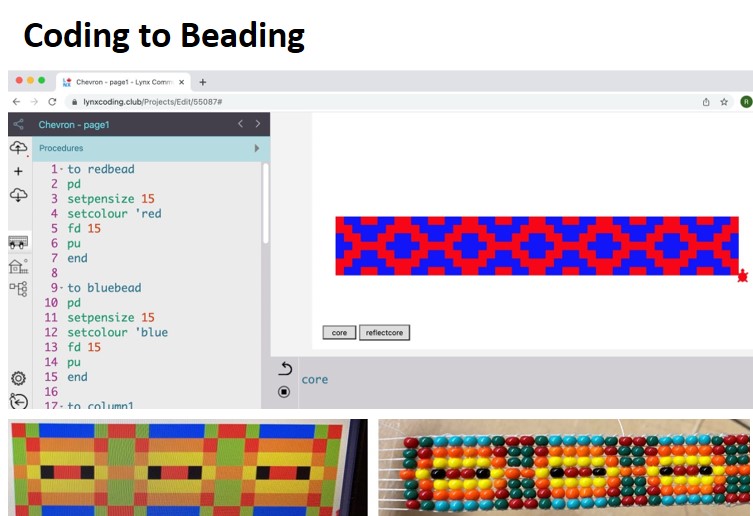
As part of a $3,000,000 CanCode grant awarded to TakingITGlobal, Dr. Ruth Beatty (Associate Professor, Orillia campus) and her Indigenous Knowledges and Mathematics research colleagues will receive $75,000 over the next 2.5 years to continue to explore connections among Indigenous cultural practices, mathematics, and Lynx coding.

Lynx is a text-based coding program available in many languages including Anishinaabe, Mi’kmaw, Kanien’kéha, and Oji-Cree. For this project, the research team will collaborate with community partners to continue to explore how incorporating coding can help us to further understand Anishinaabe and Métis ways of knowing mathematics that both align with, and are different from, a Western European conception of mathematics.

To date, they have used Lynx as a way to investigate the structure of loom beading, circular medallions, and Métis finger weaving. The dynamic nature of the software affords students an opportunity to explore different mathematical concepts inherent in beadwork or weaving such as computational thinking, patterning and algebraic reasoning, proportional reasoning, and geometric transformations. The current project will extend these previous explorations, and also include other technologies such as birchbark basket making.

Seven Faculty Instructors Nominated for Contribution to Teaching Awards

The Faculty of Education is fortunate to have many exemplary instructors whose work has been recognized in a number of different ways over the past years. In an impressive demonstration of the depth of teaching in the Faculty of Education, seven instructors have been nominated by their students for Contribution to Teaching Awards. Unfortunately, some of these outstanding educators are not eligible for the award, as one of the conditions for receiving the award is to have taught at Lakehead for four semesters. This does not detract, however, from the very real achievement of being nominated.

On behalf of the Faculty of Education, congratulations to the seven nominees!

  • Melanie Biesenthal - Curriculum & Instruction in Mathematics (Primary-Junior). Melanie recognizes that this nomination is the result of being part of a collaboration with Dr. Alex Lawson and the Primary/Junior Math Team with whom she learns and works so closely.
  • Tom Boland - Planning, Evaluation, and Classroom Management; Faculty Advisor
  • Jen Farrell-Cordon - Curriculum & Instruction in Social Studies (Primary-Junior)
  • Sarah Gibbon - Curriculum & Instruction in Language Arts (Primary-Junior)
  • Sherri Lankinen - Planning, Evaluation, and Classroom Management; Curriculum & Instruction in Language Arts (Primary-Junior); The Practice of Inclusive Education (Primary-Junior); Faculty Advisor
  • Steven Secord - Critical Digital Literacy; Online Teaching; Planning, Evaluation, and Classroom Management; Curriculum and Instruction in Science and Technology (Primary/Junior); Faculty Advisor
  • Brian Weishar - Planning, Evaluation, and Classroom Management; Literacy and Learning in the Intermediate-Senior Curriculum; Faculty Advisor

Dr. Gary Pluim’s Research Featured in OrilliaMatters News

Dr. Gary Pluim (Assistant Professor, Orillia campus) is leading a study that follows the transfer of curriculum between Commonwealth countries in the Caribbean, South Pacific, Eurasia, and sub-Saharan Africa.

His research was recently featured in OrilliaMatters News, as part of their “Research in Action” series.

As Gary notes in the write-up, “The research looks at the extent to which educational programming can be packaged and exported to different countries, the assumptions we make about the nature of knowledge, and the implications of sharing curriculum around the world. We draw on decolonial scholarship to critique a widespread perception that curriculum and knowledge are universal. In this vein we ask, ‘to what extent does place, culture, and nationality matter in education?’”

To read the story about Gary’s research, click here.

Dr. Sonia Mastrangelo’s Research Featured in OrilliaMatters News

Dr. Sonia Mastrangelo (Associate Professor, Orillia campus) is conducting a qualitative study to explore the lived experiences of adults with developmental disabilities living in the care farm setting of Camphill Communities of Ontario.

Her research was recently featured in OrilliaMatters News, as part of their “Research in Action” series.

As Sonia explains in the article, the goal of the research project is to build “knowledge and understanding about the well-being of adults with developmental disabilities, and figuring out what they need. We’re going to explore their lived experiences at Camphill and what that looks like.”

To read the story about Sonia’s research, click here.

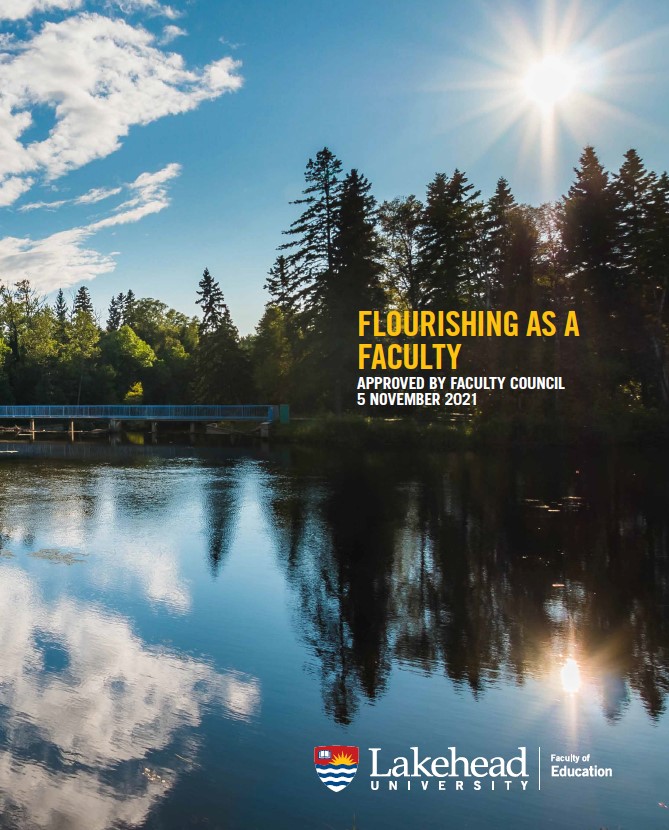
Faculty of Education Publishes Flourishing as a Faculty

Flourishing as a Faculty encapsulates the values of the Faculty of Education and will guide the Faculty’s program reviews and the next iteration of the Faculty Strategic Plan (2023-2028).

Developed collaboratively over 14 months of conversations, the Faculty of Education has identified and come to understand the values that will promote sustainability and human dignity such as equity, diversity, inclusion, reconciliation, and empowerment, both within the Faculty and in its relationships with the wider world. A diversity of issues and challenges, both tangible and intangible, are discussed in the document, alongside pathways for change at both the individual and Faculty level.

Developing an understanding of the values that the Faculty aspires to, and the work that will be required to realize those values, commits the Faculty of Education “to helping create the conditions by which all humans, all life, and the land can flourish. We strive to work and act in accordance with these values for the benefit of all.”

The document can be viewed here.

Flourishing as a Faculty document

Research In Action: Developing resiliency against cyber-attacks

By: Kari Klassen

Amir AmeliAmir Ameli, Assistant Professor in the Electrical Engineering department, is an early career researcher at Lakehead University, and is already demonstrating a building capacity in his field that will apply to our local economy, society and beyond.

With the ever-expanding need for more energy to run the systems of our world, cybersecurity becomes an increasingly important concern.

“Cyber-attacks against power systems are growing in their number and complexity,” Ameli said. “Given that power grids are among the most critical infrastructure that societies highly depend on, many attackers have focused their attention on these grids. Targeting power systems can result in severe consequences, such as instability of the grid, or a blackout.”

High-profile cyber-attacks, such as the 2015 BlackEnergy trojan that left about half the homes in Ukraine’s Ivano-Frankivsk region (a population of 1.4 million) without power, show an urgent need for greater vigilance and protection.

“What (the cyber-attackers) do is slowly propagate into the system and gain information about at what point and at what direction they could create the maximum damage,” Ameli said. “It’s the stealthy nature of the cyber-attacks that is the most important challenge, since it makes it difficult for us, as power engineers, to detect cyber-attacks.”

While there are several layers involved in protecting power systems against cyber-attacks, Ameli’s area of research focuses on securing the cyber layer using the physical attributes of the system.

“My research builds the last line of defense to protect the system against those cyber-attacks that have already entered the system from the cyber layer, and tries to detect and mitigate them in the physical layer,” he explained. “What we do is different, but in line with what network security experts do to make power systems resilient to cyber-attacks.”

Ameli was awarded a National Sciences and Engineering Research Council (NSERC) Discovery Grant valued at $152,500 for his research project and he’s hopeful that several other grant proposals to different funding agencies will award him similar success.

“Immediately after I was hired, I started writing my NSERC DG proposal, which was my first funding proposal ever,” Ameli said.  “Luckily it was accepted with very positive peer-review comments.”

Ameli’s research has also received attention locally. Lakehead and the City of Orillia have solidified a partnership that will see Ameli lead a team to determine the feasibility of Orillia becoming a cybersecurity industry hub. The City of Orillia has earmarked $25,000 toward the project, and a $25,000 NSERC Alliance Grant has also been secured.

“To use my expertise in a way that will benefit the economic development of our community is very satisfying,” he said.

Currently in the process of hiring students to assist him on his projects, Ameli has hired two master’s and one PhD student, and is planning on hiring several more master’s and PhD students.

“There are always open positions in my group for motivated and qualified students who have a background in power system cyber-security and protection. Such students are always welcome to contact me.”

Close up businessman hand typing or working on laptop for programming about cyber security

Research in Action : Across the Bay – Working to address climate change

By: Kari Klassen

Dr. Chris Murray, Associate Professor in the Department of Physics at Lakehead University, is in his third year of the Beausoleil First Nation wind and water monitoring project. The main focus of the project is to help the Beausoleil community address climate change and the lack of information around changing weather.

“As an island community they’re isolated,” Murray said, “and they’re very susceptible to changes. The Office of Indigenous Initiatives reached out to me and what had initially interested me was an ice road that was no longer used.”

Residents of the island had previously been able to go back and forth to the mainland from Cedar Point over the ice road, but due to weather changes, they haven’t been able to use it for about a decade. “It’s a function of the unpredictable ice. It might be 20 feet thick on one side of the island, because the wind has piled it up, or it might not be there at all on the other side of the island. It’s just the way things are changing and becoming more erratic.”

Ice used to be measured by drilling a hole into it, putting a stick down and then measuring the depth on the stick, but that can only be done on the shore. It wouldn’t tell anyone how deep the ice is enroute or at the other end. “That was what intrigued me, so I helped develop an ice thickness monitor that is still a prototype, but we haven’t gotten it to a user-friendly version yet,” he said “That’s why I got involved.”

Somewhat unexpectedly, Murray ended up spending much more time on setting up weather stations. “It was a learning experience, for sure, as I am not a field scientist.”

The stations provide information to the community, in real time, about the weather in and around the island. They measure wind speed, wind direction, rainfall, air temperature, humidity, as well as the water level. The information supports the community directly with accurate weather information, but also allows them to track trends, combined in a digital file with their traditional ecological information, which is essentially oral history.

Information from the weather projects is also woven into the education of K-12 students on the island. “I take the research that we’ve been doing for two years and make that into a science outreach project. We’ve been to the elementary school, through Zoom, something like 50 times this semester. Every class has had at least seven visits from me or my students.” Not every class focuses on the weather stations, but many do.

“The teachers are amazing. Everything we’ve asked them to do is enthusiastically embraced. Hopefully this will keep going, year after year, and we’ll eventually get to a point where the community is much more aware of what we’re doing because their kids are coming home and talking about it.”

During Lakehead University’s Research and Innovation Week in 2021, Murray and Nancy Assance, Department of Education at Beausoleil First Nation, were the recipients of the Indigenous Partnership Research Award.

Man wearing blue plaid jacket works from his home garage lab

Pages

Subscribe to Indigenous