Indigenous

Alumnus Chris Dube Wins “Natural Curiosity Edward Burtynsky Award” for Environmental Education Teaching

Chris Dube (BEd, 2005; MEd 2009; Thunder Bay campus), and High School Science/Outdoor Environmental Education Teacher at Lake Superior High School in Terrace Bay, Ontario, has been named Grand Prize winner of the 2022 Natural Curiosity Edward Burtynsky Award for Teaching Excellence in Environmental Education. This annual, national award honours three outstanding educators across Canada for their exemplary practices in environmental inquiry.  

Chris explains that his philosophy of experiential, environmental education is that “students and the school should be an integral part of the community. I believe that local activism, and authentic project-based learning activities, allow students to develop their critical thinking and global citizenry.”

Chris demonstrates this passion through various hands-on projects he coordinates with students, such as the sustainable trail development of the Casque Isles Hiking Trail. Together, Chris and his students developed a plan to create 11 permanent camp sites along a 53-kilometre trail on the North Shore of Lake Superior. Students received a Trillium grant to fund the purchase of bear boxes, fire rings, signage, and material to build thunder boxes. They also researched sensitive environmental features of the trail, such as the Arctic Alpine Disjunct plants, to determine appropriate locations for camp sites.

Chris has also developed a locally-focused, yet globally relevant multi-credit Outdoor Environmental Science program, based on Ontario curriculum documents. The program consists entirely of hands-on, project-based learning activities, employing authentic and alternative assessment methods and Indigenous ways of teaching and learning. He notes that the program naturally incorporates four areas of priority: Indigenous Education, Community Development, Mental Health and Well-being, and Experiential Learning.

“The majority of the course is spent on the land with First Nations members, local community members, peers, and local business and community organizations to learn beyond the walls of the school,” he explains. This enables students to understand their role and responsibilities in the community, identify goals for self-development and growth, and actualize projects that have a real impact in their community.

Chris wrote an MEd thesis focused on assessment and evaluation of two secondary school outdoor, experiential environmental programs, under the supervision of Dr. Connie Russell.  

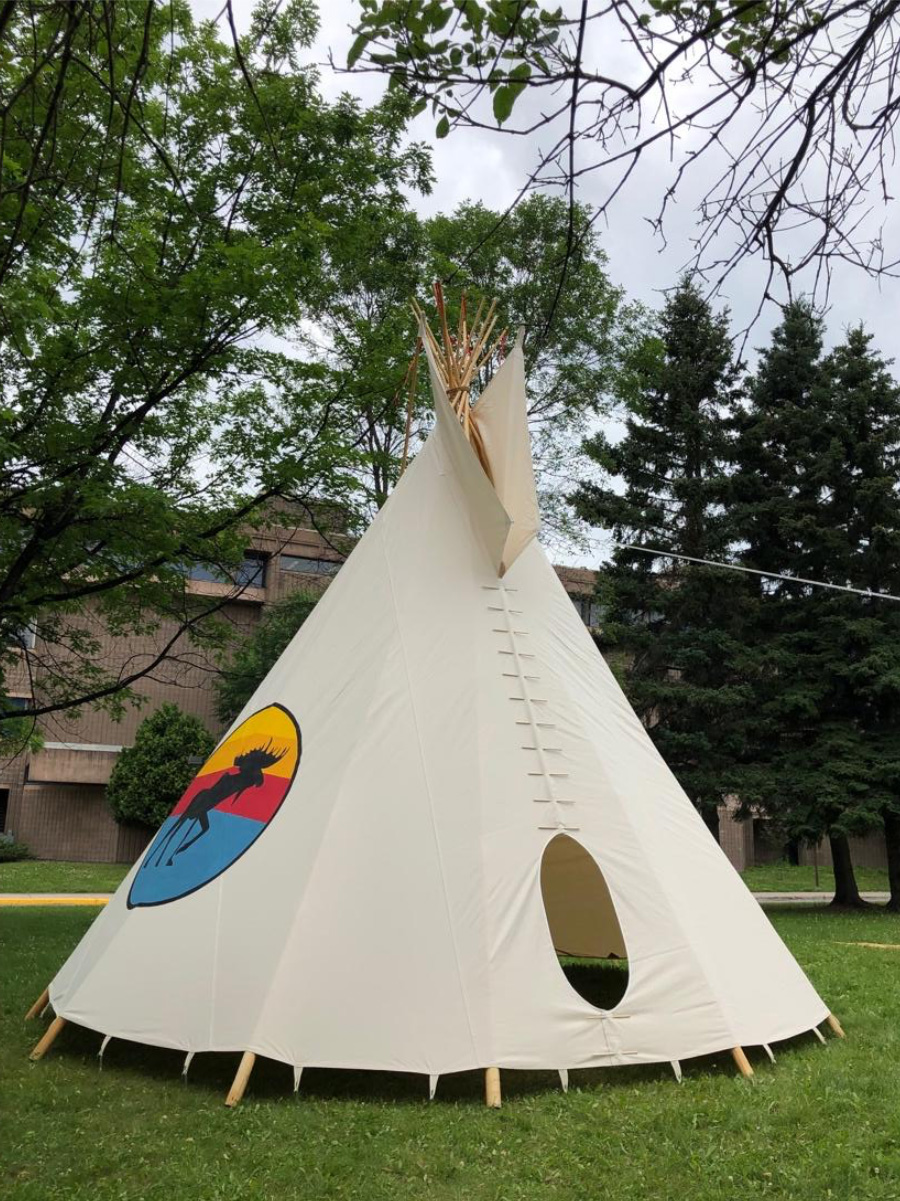
Tipi at Agora Circle

Tipi stands outside the Agora Circle

The 18-foot tipi at the Agora Circle was purchased from Assiniboine Tipis in Lundar, Manitoba. Tipis originated on the plains but today they have become a universal symbol for Indigenous peoples across Canada. They were once covered with bark or animal skins but now, many are made of canvas. The painting depicted on the tipi, called People of the Forest, acknowledges the Ojibwe peoples of this area. The door of the tipi faces east; away from the prevailing winds. The tipi’s conical shape is held up by 12 spruce poles measuring 23 feet. The smoke flaps at the top of the tipi are used to control smoke and air quality when a fire is made inside. They can also be closed when it’s raining.

The Indigenous Student Services Centre (ISSC) has erected the tipi at the Agora Circle for everyone’s enjoyment but remember to use it respectfully. As a safety precaution, individuals are not permitted to untie the ropes, remove pegs, or climb the tipi poles or ropes. Please be extremely cautious in crossing the Agora Circle drive, as it often has significant traffic and due to the Circle’s curves and trees, moving vehicles may not be easily visible.

Anyone wishing to use the tipi can contact the ISSC at adm.issc@lakeheadu.ca , call 807-343-8010 ext. 8085, or stop by UC 1007 to make a booking. If you have questions about the tipi, we’re happy to answer them!

Aki Kikinomakaywin Program Offers Hands-on STEAM Learning Opportunities for Indigenous Youth in Northern Ontario

June 17, 2022

NORDIK Institute is launching its new Aki Kikinomakaywin (Learning on the land) program, which offers hands-on, Indigenous science, technology, engineering, arts, and math (STEAM) training for Indigenous youth.

The program will run for one week in July at Lakehead University and Confederation College in Thunder Bay.

Aki Kikinomakaywin is a women- and Indigenous-led program that teaches Indigenous youth from Northern Ontario First Nation communities Indigenous ways of knowing and being through learning on the land through the use of western science techniques.

Aki Kikinomakaywin will be running a week-long camp in Thunder Bay at Lakehead University and Confederation College this summer 2022. The program is free to youth ages 12-14 and covers all costs for accommodation, transportation, and food. In future years, programs will be run in both Thunder Bay and Sault Ste Marie, Ontario.

Youth participating in the program will learn from local Elders, Water Walkers, and Knowledge Holders about Indigenous water laws and governance, as well as how to complete an Indigenous Impact Assessment using Indigenous ways of knowing and being.

Youth will learn how to code sensors to collect environmental data and learn how western science techniques can be used to support Indigenous science, while also becoming more confident in university and college settings.

“The Elders have said that we need to teach our young on the land. Mother Earth is our education system, she is our pharmacy, our kitchen, our everything. By learning on the land, our young will come to understand she is our everything” said Dr. Susan Bell-Chiblow, Assistant Professor at the University of Guelph, NORDIK Research Associate and, and Anishinaabekwe from Garden River First Nation, who is a Co-Lead to the program.

“The youth will learn that we all come from water and need to protect the waters. They will gain the understanding that water is life, is alive with spirit, and is medicine. They will understand that as Anishinaabek, we always did science. This will provide confidence in who they are and potentially assist them in career decisions,” Dr. Chiblow said.

Aki Kikinomakaywin is led by an Advisory Group that is comprised of Indigenous women who are all leaders in the education field and their communities.

This Advisory Group is led by Marnie Yourchuk the Education Program Manager at Mamaweswen, The North Shore Tribal Council; Erin Desjardins is a Stewardship Intern at Matawa and Four Rivers, as well as an M.Sc. candidate at Lakehead University; Lisa Harris is the Coordinator of the Niijii Indigenous Mentorship program at Lakehead University; Mary Wabano-McKay is the Vice President of Nyaagaaniid, Anishinabe Initiatives, Equity and Student Success at Algoma University; Nicole Nicolas-Bayer is the Director of Mukwa Waakaa’igan at Algoma University; Carolyn Hepburn is the Dean of Indigenous Studies and Academic Upgrading at Sault College, and lastly Jasmine Baxter is an Environmental Technician with Matawa and Four Rivers who is also completing her Honours B.Sc. in Environmental Science at Lakehead University.

Dr. Gayle Broad, Professor Emerita at Algoma University and Research Associate at NORDIK Institute, has also played an integral role in developing the program.

Aki Kikinomakaywin is also fortunate to be partnering with Water First and Let’s Talk Science to provide engaging water-focused and coding hands-on western science activities.

“Aki Kikinomakaywin is an important program aiming to support Ontario’s northern First Nation youth in learning about careers in STEAM,” said Haley MacLeod, a Ph.D. Candidate at Lakehead University and a Co-Lead on the program.

“Allowing youth to learn from local Elders and Knowledge Holders will provide a unique opportunity to get youth excited about their own knowledge systems and future career opportunities. I am excited to help get youth on to the land and in the lab and to provide more education opportunities in the North,” MacLeod said.

Applications and additional information are available on the program’s website at akikikinomakaywin.com.

NORDIK Institute is excited to aid in this program. This program will benefit Indigenous youth in Northern Ontario through providing them with unique learning opportunities and provide a model for future land-based learning opportunities in the region.


-30-


Media Contact:


Dr. Susan Chiblow

Aki Kikinomakaywin Co-Lead

Assistant Professor, University of Guelph

Email: schiblow@uoguelph.ca

Phone: 705-975-1604


Algoma University

Megan Parlowe

Communications Officer

Desk: 705.949.2301, Ext. 4121

Cell: 705.971.2227

Email: megan.parlowe@algomau.ca


About NORDIK Institute: NORDIK Institute is an innovative community development and community-based research hub affiliated with Algoma University, dedicated to building healthy, resilient communities. Its goal is to build Northern Ontario’s capacity to conduct research that contributes to social, economic and environmental justice in rural, Indigenous, and northern communities and provides evidence for informed policy and decision making.


About Algoma University: Algoma University, established in Sault Ste. Marie in 1965, offers a wide range of degrees and certificates spanning the liberal arts, sciences, and professional disciplines. The University also offers programming at growing campus locations in Brampton and Timmins. Algoma University has a Special Mission to cultivate cross-cultural learning between Indigenous populations and other communities.  For more information, please visit www.algomau.ca.


About Confederation College: Confederation College has been serving the citizens of northwestern Ontario since 1967 meeting the educational needs of students in a catchment area of some 550,000 square kilometres. Along with its main campus in Thunder Bay, Confederation College has seven regional sites located in Dryden, Fort Frances, Greenstone, Kenora, Marathon, Sioux Lookout and Red Lake, as well as a growing Distance Education division. Confederation College delivers exceptional education and training to an average of 7,000 combined full- and part-time students per year and currently has a total of 600 full- and part-time employees. Confederation’s regional economic impact and contribution is valued at $707.3 million annually.


About Lakehead University: Lakehead University is a fully comprehensive university with approximately 9,700 full-time equivalent students and over 2,000 faculty and staff at two campuses in Orillia and Thunder Bay, Ontario. Lakehead has nine faculties, including Business Administration, Education, Engineering, Graduate Studies, Health & Behavioural Sciences, Law, Natural Resources Management, Science & Environmental Studies, and Social Sciences & Humanities. Lakehead University’s achievements have been recognized nationally and internationally, including being ranked, once again, among Canada’s Top 10 primarily undergraduate universities in Maclean’s 2021 University Rankings; as well as included in the top half of Times Higher Education's 2022 World Universities Rankings for the third consecutive year, and the number one university in the world with fewer than 10,000 students in THE's 2022 Impact Rankings (which assesses institutions against the United Nations’ 17 Sustainable Development Goals). Visit www.lakeheadu.ca.


About Niijii: Lakehead University's Niijii Indigenous Mentorship Program delivers educational programming and a hands-on experience to thousands of Indigenous youth throughout Northwestern Ontario. The program frequently visits regional school classrooms to conduct a multitude of activities, experiments, and motivational challenges. Niijii matches experienced university students (at the undergrad, graduate and post-graduate levels) with Indigenous high school students from all across the region to create a positive connection that both inspires and assists the high school student in thinking about post-secondary through learning about science and cultural based activities.


About Let’s Talk Science: Let’s Talk Science – a leading partner in Canadian education – is a national charitable organization committed to inspiring and empowering children and youth of all ages in Canada to develop the skills they need to participate and thrive in an ever-changing world. To accomplish this, Let’s Talk Science offers a comprehensive suite of science, technology, engineering and math (STEM) based programs to support youth, educators, and volunteers across Canada. For more information about Let's Talk Science, visit letstalkscience.ca.


About Water First Education & Training Inc. (Water First): Water First is a registered Canadian charity that works in partnership with Indigenous communities to address water challenges through education, training and meaningful collaboration. Since 2009, Water First has collaborated with 60 Indigenous communities located in the lands now known as Canada while supporting Indigenous youth and young adults to pursue careers in water science. To learn more about Water First, visit www.waterfirst.ngo.

Dress for Success chair to speak at Lakehead convocation

Originally published in The Barrie Today

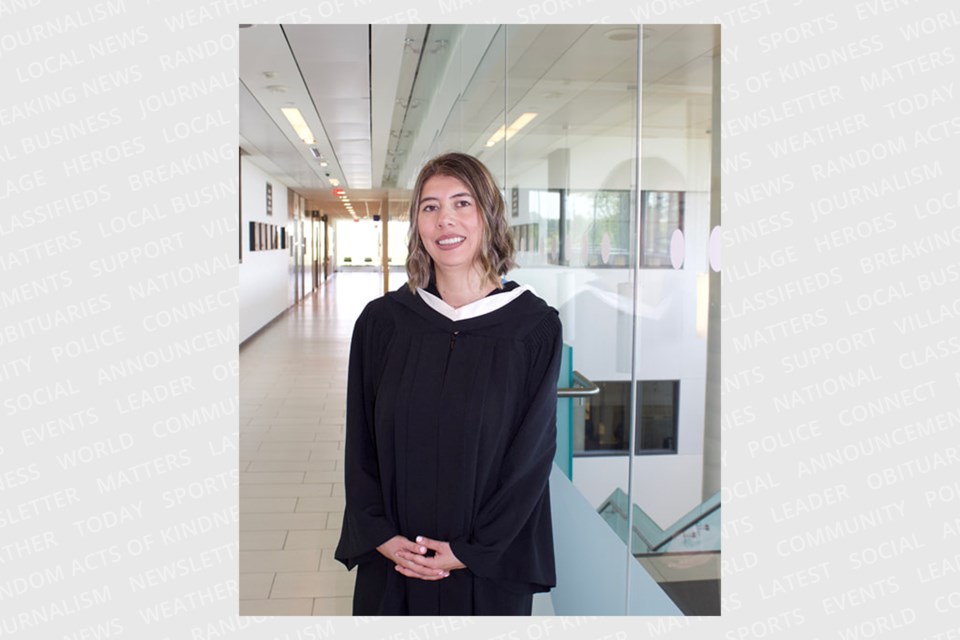
Sandy Falcon, board chair of Dress for Success Orillia and Barrie, will speak at Lakehead University’s faculty convocation ceremonies in June.Photo submitted by Dress for Success Orillia and Barrie

Sandy Falcon, board chair of Dress for Success Orillia and Barrie, will speak at Lakehead University’s faculty convocation ceremonies in June. Photo submitted by Dress for Success Orillia and Barrie


Dress for Success Orillia and Barrie board chair Sandy Falcon will speak at Lakehead University's faculty convocation ceremonies in June as one of the Voices of the Class student speakers. The student speakers will share their Lakehead experiences and words of advice with their classmates.

Falcon is graduating with a Master of Arts in Social Justice Studies.

"My goal has always been to inspire and support my children, but also my community," she said.

In addition to being a mother of four, pursuing a master's degree, and volunteering as Dress for Success Orillia and Barrie's board chair, Falcon runs a non-profit called Unknown Neighbours, which strives to connect temporary foreign workers with their communities.

"Sandy is a dedicated and energetic board chair for Dress for Success Orillia and Barrie," said Carolyn Gibson, outreach coordinator at Dress for Success Orillia and Barrie community. "We are lucky to have her on our team and we are thrilled that her hard work at Lakehead has paid off. Congratulations, Sandy!"

"I've gotta say, I've come a long way. I went back to school at the age of 35 after having four children. I decided I wanted to learn as much as I could so I could prove to myself that age was just a number, and it was never too late to go back to school," said Falcon about her impending graduation and Voices from the Class achievement.

"I was introduced to Dress for Success through school at both Georgian and Lakehead and it was amazing that I was able to volunteer and eventually become a board member. Dress for Success has been with me the last year of my BA and the entirety of my master's degree. I am so grateful to be here. I am an immigrant, a mature student, a mom, a wife, a woman and I am so proud of what I have been able to achieve," Falcon added.

Visit this website to see other exceptional students who make up the Voices from the Class:

To find more information about Unknown Neighbours, click here.

Follow Dress for Success Orillia and Barrie on Facebook, Instagram, Twitter and LinkedIn, plus join their newsletter by visiting Dress for Success Orillia and Barrie (scroll to the bottom).  


Sandy Falcon graduated from Lakehead University in May of 2022 with a Master of Arts in Social Justice Studies.

Faculty of Education May 2022 Newsletter Published

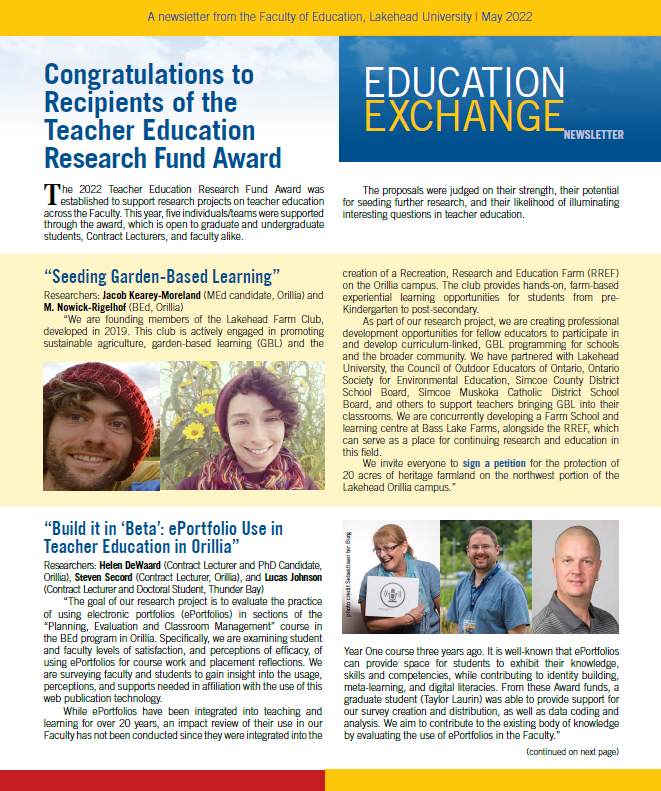
The Faculty of Education's May 2022 Education Exchange newsletter is now published.

This issue features an article on the Recipients of the Teacher Education Research Fund Award, introduction to new staff in the Faculty, faculty news and profiles, and more.

To access the Education Exchange newsletter, click here.

MEd Alumna Melissa Chumakov Wins Award for Thesis on Women in Mathematics Education

Melissa Chumakov, a recent graduate of the Master of Education program (Orillia campus, 2021) and current Secondary Business teacher, has received a Canadian Association for Teacher Education (CATE) Recognition Award for her thesis, Women In Mathematics Education: Pathways to Participation.

Melissa’s thesis focuses on improving women’s participation in mathematics education at the post-secondary level. As noted on the CATE Awards website, her work “highlights women’s experiences through storytelling, as a way of understanding how the complexities of gender identity influence the ways in which women orient themselves in various domains of academia.” 

Using narrative inquiry, her thesis brings together critical feminist theory, psychoanalytical perspectives, and social constructivist theory to share five women’s “personal pathways—including experiences, thoughts, and stories—to becoming a woman mathematics educator at the post-secondary level. The research questions guiding this inquiry are: Why do women decide to teach mathematics education at the post-secondary level? What are the experiences of women mathematics educators who had “overcome barriers”? What are the critical moments along their pathway to participation?”

Melissa recently presented her work via a poster presentation at the Canadian Society for the Study of Education conference, as part of a panel featuring CATE Award winners’ research.

Lakehead University in top 100 of Times Higher Education Impact Rankings for third consecutive year

May 19, 2022 – Thunder Bay and Orillia, Ont.

For the third year in a row, Lakehead University was included in the top 100 of the Times Higher Education Impact Rankings. Lakehead is the highest ranked university in the world with under 10,000 students.

The Impact Rankings measure the societal impact of universities by evaluating an institutions’ success in delivering the United Nations’ Sustainable Development Goals. In 2022, Lakehead has been ranked as one of the top universities in the world contributing to poverty reduction, elimination of hunger, reduced inequalities, good health and wellbeing, and to peace, justice and strong institutions.

Lakehead is ranked 64th out of 1,406 universities from around the world, based on its performance in meeting the United Nations’ 17 Sustainable Development Goals (SDGs).

Dr. Moira McPherson, Lakehead’s President and Vice-Chancellor, said she was ecstatic with Lakehead ‘s recognition this year.

“Over the last three years, we have strengthened our commitment to social justice and to Indigenous, social and environmental sustainability. This ranking is so very exciting and reflects Lakehead’s role in fostering a greater understanding of local and global societal issues and inspiring positive change.

“It reflects the world-class research being led by Lakehead faculty, staff, and students to address some of the world’s greatest societal challenges,” she added.

Lakehead is the only primarily undergraduate university in Canada that participated in the 2022 Impact Rankings and one of only 16 Canadian universities to be included in the top 100.

Lakehead is ranked in all 17 SDGs, which demonstrates the University’s commitments to be a leader in sustainability and to embed and embrace sustainability throughout the university community.

Ranking ahead of several top comprehensive and research-intensive Canadian universities, Lakehead scored highly across many SDGs, including ninth globally in SDG 1: No Poverty, which measures institutions on their respective efforts to help reduce poverty, including research, stewardship, outreach, and teaching. This represents Lakehead’s role as one of the largest employers, post-secondary institutions and economic hubs in Northwestern Ontario and Simcoe County, and the direct impact the University has on economic and social resiliency in the regions it serves.

This ranking also reflects the many initiatives Lakehead offers to support students who face barriers to accessing university education, including financial barriers, as well as the innovative research being done by faculty related to poverty in rural and remote communities in Northwestern Ontario.

Lakehead ranked 13th globally in SDG 15: Life on Land, which explores a university’s research on life on land and education on and support for land ecosystems.

Lakehead ranked 24th globally in SDG 14: Life Below Water, examining a university’s research on life below water and their education on and support for aquatic ecosystems.

In addition, Lakehead scored in the top 100 universities globally in SDG 2: Zero Hunger (ranked 29th), SDG 3: Good Health and Well-Being (ranked 95th), SDG 6: Clean Water and Sanitation (ranked 71st), SDG 7: Affordable and Clean Energy (ranked 88th), SDG 10: Reduced Inequalities (ranked 76th), and SDG 13: Climate Action (ranked 94th).

For the third year in a row, Lakehead has also been ranked as one of the top universities in the world contributing to poverty reduction, elimination of hunger, reduced inequalities, good health and wellbeing, and to peace, justice and strong institutions.

Dr. David Barnett, Lakehead’s Provost and Vice-President (Academic), said this year’s ranking is an exceptional achievement that should make students, faculty, staff and alumni feel proud.

“More and more people outside of the communities we serve are learning that Lakehead is a world-class university thanks to rankings such as this one,” Dr. Barnett said.

“This latest international acknowledgement celebrates our work to tackle global challenges that impact our future and how we remain committed to advancing the United Nations Sustainable Development Goals,” he added. “Specifically, Lakehead University is recognized for our development of creative solutions to issues such as sustainability, social justice, and Indigenous education.”

The Times Higher Education Impact Rankings measure the impact universities make to the world in the areas of poverty, inequality, climate change, environmental degradation, peace and justice.

Visit Lakehead University's Times Higher Education profile at timeshighereducation.com/world-university-rankings/lakehead-university.

– 30 –


Media: For more information or interviews, please contact Brandon Walker, Media, Communications and Marketing Associate, at 807-343-8010 ext. 8372 or mediarelations@lakeheadu.ca.

Lakehead University is a fully comprehensive university with approximately 9,700 full-time equivalent students and over 2,000 faculty and staff at two campuses in Orillia and Thunder Bay, Ontario. Lakehead has nine faculties, including Business Administration, Education, Engineering, Graduate Studies, Health & Behavioural Sciences, Law, Natural Resources Management, Science & Environmental Studies, and Social Sciences & Humanities. Lakehead University’s achievements have been recognized nationally and internationally, including being ranked, once again, among Canada’s Top 10 primarily undergraduate universities in Maclean’s 2021 University Rankings; as well as included in the top half of Times Higher Education's 2022 World Universities Rankings for the third consecutive year, and the number one university in the world with fewer than 10,000 students in THE’s 2022 Impact Rankings (which assesses institutions against the United Nations’ 17 Sustainable Development Goals). Visit www.lakeheadu.ca.

Lucas Johnson Receives Grant for Research Project on Educational Technology Decision-Making Influences

Lucas Johnson (Educational Technologies Facilitator, Contract Lecturer, and PhD student) has been awarded an AMTEC Trust research grant for his graduate research, titled “Educational Technology Implementation Influences in Ontario K-12 Schools.”

His research examines the decision-making processes and factors related to the selection and implementation of education technology in schools.

“It is important to critically examine the factors influencing decision-making, especially in a time when publicly-funded spending on educational technologies continues to increase and technology permeates our lives,” he explains.

He plans to collect data via by surveying boards of education and conducting interviews to garner a larger picture of the scope of the factors influencing technology acquisition and allocation.

With over 20 years’ experience in the educational technologies sector himself, Lucas is well-positioned to undertake this study.

The annual AMTEC Trust award is a $3000.00 research grant awarded to a graduate student whose research is focused on educational technology. Lucas will present his research at the Canadian Network for Innovation in Education conference next year.

BEd Student Samantha Clay Wins Panel Award for Storybook about “The Sustainable Squirrel”

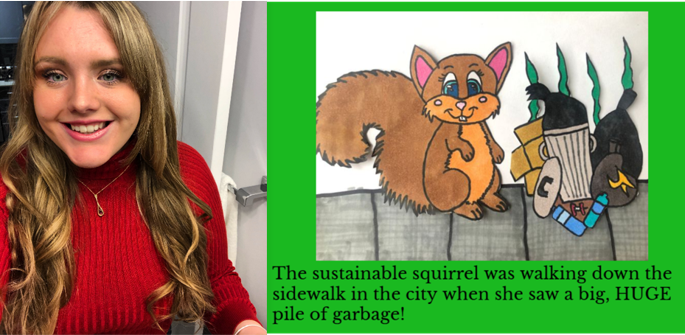
As part of the undergraduate conference during this year’s Research and Innovation (R&I) week, Bachelor of Education student Samantha Clay (Orillia campus) won a “Special Category” award for participating on panel and sharing the storybook she created and illustrated, titled The Sustainable Squirrel.

Samantha explains that the storybook introduces young readers to the Sustainable Squirrel character, who provides lessons in sustainability to Fashionable Frog, New Toy Turtle, Art Ant, and Water Bottle Walrus.

“The storybook focuses on the idea of commercial over-consumption. The Sustainable Squirrel promotes the concepts of reducing, reusing, and recycling. I envisioned the story as one that could be shared with parents/guardians. Students could come up with their own characters with alliterative names, then follow the repetitive template of the book to identify more sustainable solutions to throwing an item away,” she says.

Samantha was selected by her instructor, Elizabeth Thomas (Curriculum & Instruction in Social Studies - Primary/Junior) to participate on a nine-student panel that focused on sustainability and growth. She adds that it was an honour to be selected and to be able to combine her interests in this project.

“I’ve always had a passion for the outdoors and the environment, and the ability to apply my artistic side to this project made it especially exciting.”

Ontario Helping Students in Simcoe County Graduate with Job-ready Skills

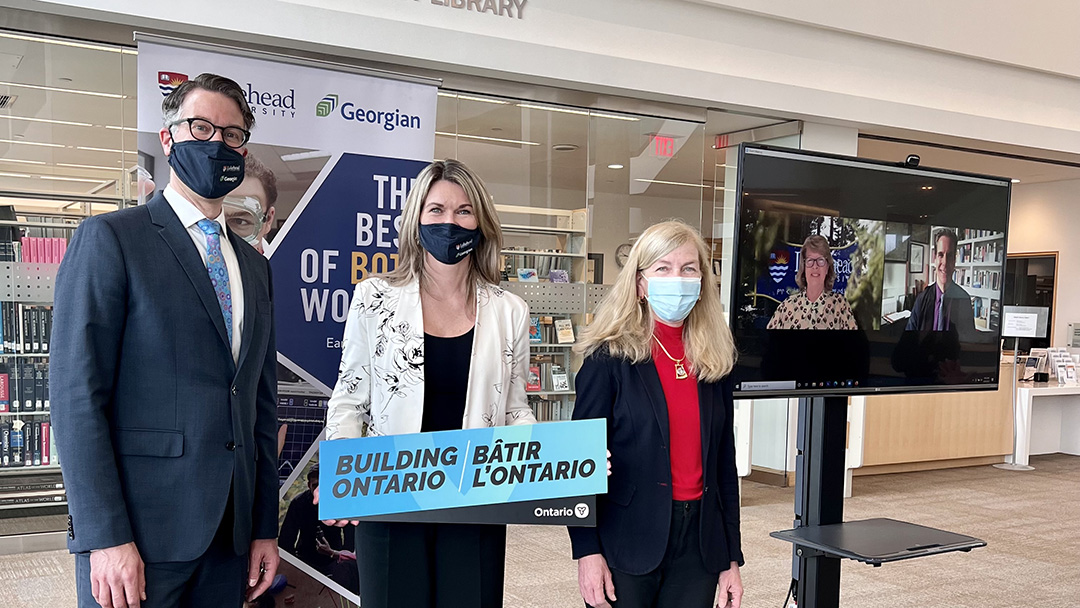
ORILLIA — The Ontario government is providing $2.56 million to support the continuing Lakehead University-Georgian College partnership in Simcoe County. The partnership provides more postsecondary options in the region, including increased access to degree-level education, helping students gain the knowledge and hands-on training they need to get good jobs. Details were announced today by Jill Dunlop, Minister of Colleges and Universities at Lakehead University’s Orillia campus.

“Collaborations like Lakehead-Georgian provide students with local opportunities to build the knowledge and skills they need to find meaningful jobs,” said Minister Dunlop. “Investing in innovative learning opportunities for students is part of the government’s plan to build a skilled workforce that supports economic growth in the province.”

Nearly 3,000 postsecondary students currently benefit from this program, where students can earn both a university degree and a college diploma in four years. Programming is focused on meeting the changing needs of the local economy to prepare graduates with a mix of degree-level education and technical skills.

“Since 2017, Lakehead University and Georgian College’s formal partnership has provided students from Simcoe County and beyond with the opportunity to graduate from STEM fields of study with the best degree-diploma learning experiences available,” said Dr. Moira McPherson, President and Vice-Chancellor, Lakehead University. “Thanks to today’s Ministry of Colleges and Universities’ announced investment, this unique joint-offering from our institutions will be able to continue — improving access to degree-level postsecondary programming that nurtures tomorrow’s job-ready workforce — for years to come.”

“Georgian and Lakehead share many values – including student access to quality education,” said Dr. MaryLynn West-Moynes, President and CEO, Georgian College. “As the two recognized postsecondary institutions serving Central Ontario, we chose to partner to improve postsecondary attainment rates, which remain below the provincial average. We’re grateful for this important funding, which will provide enhanced experiential learning opportunities to benefit our students and further support regional economic growth and development.”

The partnership between Lakehead University and Georgian College increases access to degree level education in Simcoe County, helps support collaboration and research between the two institutions and promotes economic development in the region.

QUICK FACTS

  • Both Lakehead University and Georgian College will each receive $1.28 million in funding to support the partnership in 2022-23.
  • The Lakehead-Georgian partnership in Simcoe County was formalized in 2017.
  • Students study at campuses in both Barrie and Orillia.
  • Four programs are currently offered through Lakehead-Georgian:
    • Bachelor of Engineering (Electrical) with Electrical Engineering Technology advanced diploma;
    • Honours Bachelor of Arts and Science (Environmental Sustainability) Specialization in Ecosystem Management degree with Environmental Technician diploma;
    • Honours Bachelor of Science in Applied Life Sciences degree with Biotechnology – Health diploma; and
    • Honours Bachelor of Science in Computer Science degree with Computer Programming diploma.

ADDITIONAL RESOURCES

Mike Den Haan, Jill Dunlop and Angela Lockridge stand in the Orsi Family Learning Commons

Pages

Subscribe to Indigenous