Indigenous

Magical, Mystical Mushrooms - An OMNP Workshop with Bob Bowles

Mushrooms come in different sizes, shapes and colours, and they can appear overnight, covering lawns, meadows, woods, and wetlands.  Mushrooms grow on both living and dead matter, and they often form mutually beneficial relationships with other living flora.  Some are edible and others are not - learning the differences between the two is important!

Lakehead Researcher Has the Dirt on Soil and Sustainability

Originally published in The Chronicle Journal on August 28, 2025

By EMILY DONTSOS

Dr. Amanda Diochon is digging into the relationship between soils and sustainability — and her findings hold the potential to change the way we manage forests and agriculture for a healthier future. 

An associate professor in Lakehead University’s Department of Geology, coordinator of the Water Resource Science program, and assistant dean of the Faculty of Science and Environmental Studies, Dr. Diochon says soil science is critical in a changing climate. 

“Soils are the largest reservoir of organic carbon, and they emit ten times the amount of carbon dioxide that humans do,” she says. “So knowing how they respond to changes in the climate and understanding how to better manage them is important not just in Canada, but globally.”  

With a focus on the carbon cycle, or how carbon moves between the Earth, living things, and the atmosphere, Dr. Diochon’s research examines changes to soil’s ability to store carbon and how agricultural and forest-management practices influence sustainability. 

Her work is directly aligned with a number of United Nations Sustainable Development Goals (SDGs), including #13: Climate Action, #15: Life on Land, and #12: Responsible Consumption and Production.  

From Forest Fires to Agriculture 

In 2022, Dr. Diochon received a five-year grant from the Natural Sciences and Engineering Research Council of Canada (NSERC) to explore how events like forest fires impact the role of soil in the carbon cycle. 

“When a forest burns, the ash that’s produced makes the soil less acidic — but that change can affect how carbon is stabilized in the soil,” Dr. Diochon says. “At the same time, less acidic soils can be better for regrowth because many of the nutrients plants require to grow are more available at a near-neutral pH and the ash is also supplying nutrients.” 

Faced with these dual impacts, Dr. Diochon wanted to know whether changes to soil’s acidity because of ash persist over time — information that could help ensure forest-management practices are designed to both protect soil’s ability to store carbon and support vegetation regrowth as forest fires become more frequent. 

This work also has implications for food security — an issue of growing concern to Canadians as climate change and geopolitical tensions affect the supply of produce from other countries. 

“Reducing the acidity of soil is a good thing for crop growth, but it may not be as good for carbon storage in acidic soils, where carbon is retained through interactions with iron and aluminum — two ions that become less available as pH increases,” says Dr. Diochon. “So we’re also considering how agricultural practices can be designed to support carbon storage while strengthening food production.”

Dr. Diochon says this work taps into Indigenous worldviews that emphasize a cycle of reciprocity. 

“This includes returning organic inputs like manure to the soil instead of just taking from the soil all the time, which significantly reduces the ability of soil to store carbon,” she says.

Dr. Amanda Diochon conducting soil sampling at a site in Nova Scotia with researchers from the Canadian Forest Service. From the left, Kate Van Rooyen (Technician, CFS Atlantic, Fredericton), Dr Charlotte Norris (Research Scientist, CFS, Pacific Forestry Centre, Victoria), and Dr Erika Young (Research Scientist, CFS, Atlantic Forestry Centre, Corner Brook).

Analyzing Soils from Coast to Coast 

In addition to her own projects, Dr. Diochon is participating in a first-of-its-kind study, funded by NSERC, to analyze soils from every type of forest in every part of Canada. 

Led by Dr. Sylvie Quideau, a professor of soil biogeochemistry at the University of Alberta, the study aims to understand how carbon is stored in different forest environments. 

Over the coming year, scientists from Vancouver Island to the Maritimes will collect soil samples from the country’s diverse forest regions — the first time such an effort has been undertaken. 

“Our goal is to learn about how soils react in a changing environment and how they’re impacted by different forest-management systems,” says Dr. Diochon, who will be collecting samples from the northwestern Ontario region. 

Students will be engaged in every aspect of the project, including fieldwork, and postdoctoral fellows from across the country will conduct in-depth analysis once all samples have been collected. 

Amanda Diochon works on soil sampling at a site in Nova Scotia

“Our hope is to recommend forest-management practices rooted in evidence and focused on the vital role of forest soils in the fight against climate change.” 

Raising Awareness of the Vital Importance of Soils

Beyond her research, Dr. Diochon actively contributes to soil education nationally.

As a member of the Canadian Society of Soil Scientists, she has been heavily involved in raising awareness about how soils can maintain a healthy ecosystem, particularly in a changing climate.  

“People think soils are just dirt, but they’re so much more than that,” she says. “I want to encourage students to really appreciate and embrace how important they are to our daily lives.”

Research in Action highlights the work of Lakehead University in various fields of research.


Northern Roots, Veterinary Futures: OVC Welcomes First Northern Cohort

CDVMP
This September, the Ontario Veterinary College (OVC) at the University of Guelph will welcome its inaugural Northern Cohort—20 students from Northern Ontario embarking on their journey to become veterinarians through the Collaborative Doctor of Veterinary Medicine Program (CDVMP), a groundbreaking partnership between the University of Guelph and Lakehead University.

This cohort is a milestone in a province-wide initiative to address the veterinary care shortage in Northern Ontario. Access to veterinary services for companion animals, farm animals, and in rural, remote and Indigenous communities is driving a growing animal health and welfare crisis across Northern Ontario.

Over the next four years, the northern students will train at OVC with the goal of returning to their home communities to deliver essential, accessible and culturally responsive veterinary care. The CDVMP is supported by $14.7 million in funding from the Government of Ontario earmarked for new infrastructure on each campus to support the delivery of the collaborative program.

“These students bring deep ties to Northern Ontario, a passion for service, and a commitment to improving animal health and welfare,” says Dr. Jeff Wichtel, dean of the Ontario Veterinary College. “We’re proud to support their journey and to be part of a long-term solution that strengthens veterinary capacity across the province.”

The CDVMP combines OVC’s internationally recognized veterinary education with Lakehead University’s 60-year history of strengthening and supporting northern, rural, remote and Indigenous communities. Together, the institutions are breaking down barriers to education and building a talent pool of skilled professionals ready to serve the North.

"I am proud to see the first cohort of the Collaborative Doctor of Veterinary Medicine program begin their studies at the Ontario Veterinary College," says Trevor Jones, Minister of Agriculture, Food and Agribusiness.

"By supporting the new construction and expansion of the College’s capacity, our government is helping more students from Northern Ontario get the training and education they need to launch rewarding careers in veterinary medicine, safeguarding animal health across the province and strengthening our economy." 

Nolan Quinn, Minister of Colleges, Universities, Research Excellence and Security, adds that veterinarians in Ontario’s North play a vital role in keeping pets, businesses and livestock healthy.

“Our government is proud to welcome the first cohort of students in the Collaborative Doctor of Veterinary Medicine Program, which will equip students with the skills and training they need to deliver excellent animal care in Northern Ontario for decades to come."

Students will engage in experiential learning, collaborate with local veterinarians and complete specialized coursework tailored to northern practice. Graduates will earn a Doctor of Veterinary Medicine (DVM) degree from the University of Guelph.

While Lakehead University builds new infrastructure to support the program, the first two cohorts (2025 and 2026) will complete all four years at the Guelph campus. Beginning in 2027, it is expected that students will begin their studies at Lakehead’s Thunder Bay campus and complete the program at OVC.

“Watching the inaugural Northern Cohort begin their veterinary studies at OVC this fall is a remarkable milestone,” said Dr. Gillian Balfour, Provost and Vice-President, Academic at Lakehead University. 

“Lakehead is proud and optimistic as we celebrate the start of a new school year— one that promises real, positive change for people and animals across northern Ontario. We look forward to welcoming future cohorts to our new facilities in Thunder Bay.”

The journey begins Sept. 2 with OVC’s Orientation Week, culminating in the Professional Welcome Ceremony on Sept. 7, where each student will receive a blue lab coat and stethoscope marking the start of their DVM training.


Meet a few of the Northern Cohort students

Shanelle BerthierShanelle Berthier (Timmins) Shanelle studied at the University of Prince Edward Island and worked with the Atlantic Veterinary College Teaching Hospital and on a dairy farm. “I’ve seen the impacts of limited access to veterinary services firsthand,” she says. “I want to bring my knowledge back to the North to enhance animal welfare and provide emergency services.”


Paris FuzyParis Fuzy (Corbeil) Paris grew up around horses and farm animals and discovered her passion for rural mixed practice while studying Animal Biology at U of G’s Ontario Agricultural College. “I’m excited to serve both large and small animals in the Nipissing District, where I grew up,” she says.


Julia HeyderJulia Heyder (Thunder Bay) A proud U of G graduate, Julia has years of experience in wildlife rehabilitation and a deep love for shelter medicine. “I want to provide accessible and affordable veterinary services to rural communities in Northwestern Ontario,” she says. “I also hope to help address the stray animal population in underserved areas and contribute meaningfully to solving the veterinary care crisis in the North.”


Aiden LehtoAiden Lehto (Thunder Bay) Aiden is deeply rooted in his community and grew up enjoying the outdoors, hockey, and football. “I’m honoured to be part of the Northern Cohort at OVC,” he says. “I’m excited to meet my classmates and continue my journey toward serving my community as a veterinarian.” His dream is to return to Thunder Bay and open his own clinic.


Emily Van RasselEmily Van Rassel (Sudbury) Emily is a passionate advocate for northern students and the LGBTQ+ community. She values the northern landscape and close-knit communities and aims to amplify underrepresented voices in veterinary medicine while building strong relationships with clients and animals in her home region.


Building capacity for the North

The Northern Cohort is a cornerstone of the Collaborative Doctor of Veterinary Medicine Program, designed to recruit and train students from Northern Ontario who are committed to returning home to practise after graduating.

“These students are the future of veterinary care in the North,” said Dr. Joanne Hewson, associate dean, students and academic at OVC. “Their stories reflect the resilience, compassion, and leadership that will shape the profession for years to come.”

For more information about the CDVMP and the Northern Cohort, visit https://www.uoguelph.ca/dvm-expansion/  

Construction begins on Lakehead’s new veterinary education building

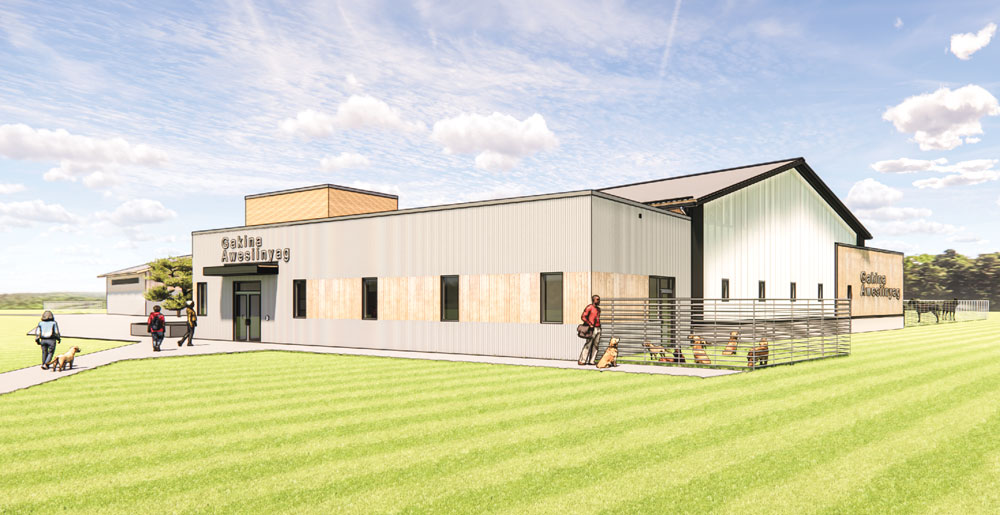
Artist rendering of Gakina Awesiinyag | Photo credit: mcCallumSather 2025

Artist rendering of Gakina Awesiinyag | Photo credit: mcCallumSather 2025

Construction is set to begin on Lakehead University’s new animal education facility to support the Collaborative Doctor of Veterinary Medicine Program, delivered in partnership with the University of Guelph, to help address northern Ontario’s critical veterinarian shortage.

A $12.6-million contract has been awarded to Tom Jones Corporation to build the facility, named Gakina Awesiinyag, meaning “All Animals (Place For)” in Anishinaabemowin.

An Indigenous-led ground blessing ceremony was held on Lakehead’s campus in June 2025, in part to celebrate the visionary philanthropists and funders helping bring this project to life. Construction will begin the week of August 25, 2025, with completion expected in summer 2026.

“Bringing the Collaborative Doctor of Veterinary Medicine Program to life has taken years of planning and the dedication of many people,” said Dr. Gillian Balfour, Provost and Vice-President, Academic at Lakehead University. “Breaking ground is an incredible milestone, and I expect construction to spark excitement across our campus community as students, faculty, staff, and friends see evidence of Lakehead evolving in new and exciting ways.”

Gakina Awesiinyag will provide modern learning space for students and safe housing for both large and small animals, along with storage for feed, bedding, and supplies. Designed by mcCallumSather, the facility will feature advanced mechanical systems that prioritize animal comfort, sustainability, and operational efficiency.

"The launch of construction on this new facility marks a significant step forward for the Collaborative Doctor of Veterinary Medicine Program,” said Trevor Jones, Minister of Agriculture, Food and Agribusiness. "Our government’s investment of $14.78-million provides support to build education facilities at Lakehead University and the University of Guelph to help more students from Northern Ontario launch rewarding careers in veterinary medicine, safeguarding animal health across the province and strengthening food security." 

The next phase of the project includes renovating Lakehead’s ATAC and CASES buildings to support clinical training, student life, and anatomy/pathobiology studies. The competitive RFP process for this work is still underway.

The Collaborative Doctor of Veterinary Medicine Program was created to address the shortage of veterinarians in northern Ontario, including rural, remote, and Indigenous communities. This shortage affects both pet owners’ access to care and the region’s growing agri-food sector. To support the program, the Government of Ontario is investing up to $14.78 million, including $4.5-million toward Lakehead’s capital build requirements.

“The agricultural industry is expanding in Northern Ontario, and having well-trained veterinarians is key to sustaining that growth,” said George Pirie, Minister of Northern Economic Development and Growth. “This new program will address the needs of the region with a made-in-the-North solution and help further secure our growing northern economy.”

The program’s first Northern Cohort students will begin their studies at the University of Guelph’s Ontario Veterinary College this September. Beginning in 2027, once Lakehead’s facilities are complete, students will start their studies at Lakehead before completing the program at Guelph. Students will gain hands-on experience with veterinarians in the north and receive training tailored to rural and remote practice.

"The Collaborative Doctor of Veterinary Medicine Program will ensure Northern Ontario has the highly qualified veterinarians to keep our pets and livestock healthy,” said Nolan Quinn, Minister of Colleges, Universities, Research Excellence and Security. “Our government is proud to support this innovative partnership between Lakehead University and University of Guelph and celebrates the monumental groundbreaking of Lakehead’s new world-class animal education facility where future students will gain the skills they need to support northern businesses, farms and families for generations to come.”

 
Keywords: 

Open 3v3 Basketball Tournament

Join us on Sunday, September 14th for our 3v3 Basketball Tournament hosted by Lakehead Basketball & Campus Recreation! Through this exciting style of basketball, this orientation tournament is designed to allow students to get active, and grow friendships! 

Date, Time & Location: This tournament will be held on Sunday, September 14th between 1-5pm! Players are asked to check in at the Wolf Den gym at 12:45pm in order for games to begin at 1pm! 


3v3 Tournament Structure: 

Open 6v6 Beach Volleyball Card Tournament

Join us on Sunday, September 7th for our Beach Volleyball Card Tournament hosted by Lakehead Women’s Volleyball & Campus Recreation! Through the use of card tournament style of play, this orientation tournament is designed to allow students to get active, and make new friends! 

Date, Time & Location: This tournament will be held on Sunday, September 7th between 1-5pm! Players are asked to check in at the LU Beach Volleyball courts at 12:45pm in order for games to begin at 1pm! 


Bee Curious! - A Workshop Buzzing About Honeybees

Bee Workshop Poster

Join the Office of Community Engagement & Lifelong Learning and Tylor Stocks of Stocks Apiaries to explore the buzz about honeybees!  You will explore a colony: workers, queen(s), drones, and their unique contributions. See a working colony take care of their queen, brood, and resources.

Truth and Reconciliation in an Era of Distraction - We are in a time of global shifts, fake news, media overload, and growing incivility; does Truth and Reconciliation still have meaning? with Dr. Cynthia Wesley-Esquimaux

Join us for a virtual talk with Dr. Cynthia Wesley-Esquimaux on September 24, 2025.

Register at the following link:

https://lakeheadu.zoom.us/meeting/register/MzCMC73_QeGmrDBNq8OsnQ

A confirmation email will be sent after you register.

About the Speaker

DIY Welcome Kit

DIY Welcome Kits (while supplies last)

Starting Tuesday, September 2, 2025

ALL WEEK

Gakina Nindinawemaaganag - UC1007


Indigenous students can stop by anytime during the first week of classes to grab a DIY Welcome Kit while supplies last. 

Start your year off with a treat that's sure to brighten your day!

Pages

Subscribe to Indigenous