Indigenous

Therapy Dogs in SAS (TB)

Come visit a furry friend for some much needed relaxation in the SAS Multi Use Access Lounge. Every Thursday from 2 to 3 p.m. in the tunnels, SC 0004. All are welcome!

Image Description: A brown dog in the Student Accessibility Services Access Lounge looking at the camera. Academic Support icon in the top right corner. 

Sacred Fire & Pipe Ceremony

Sacred Fire & Pipe Ceremony

Friday, September 26, 2025

12:00 pm start

Lakehead University Sweat Lodge Site

(Rain location Gakina Nindinawemaaganag - UC1007)

All  students are invited to attend a pipe ceremony and teachings. Elder Gene Nowegejick a from Kiashke Zaaging Anishinaabek will conduct a pipe ceremony and share his knowledge.

Light refreshments will be available.

Student Spotlight: Meet Inspiring Animal Lover and Lakehead Student Zee Riley

Animals have been a constant in the life of Lakehead student Zhawanoogbiik (Zee) Riley. She's grown up surrounded by ducks, turkeys, chickens, dogs, and cats. More recently, horses and a cockatiel have joined her menagerie.

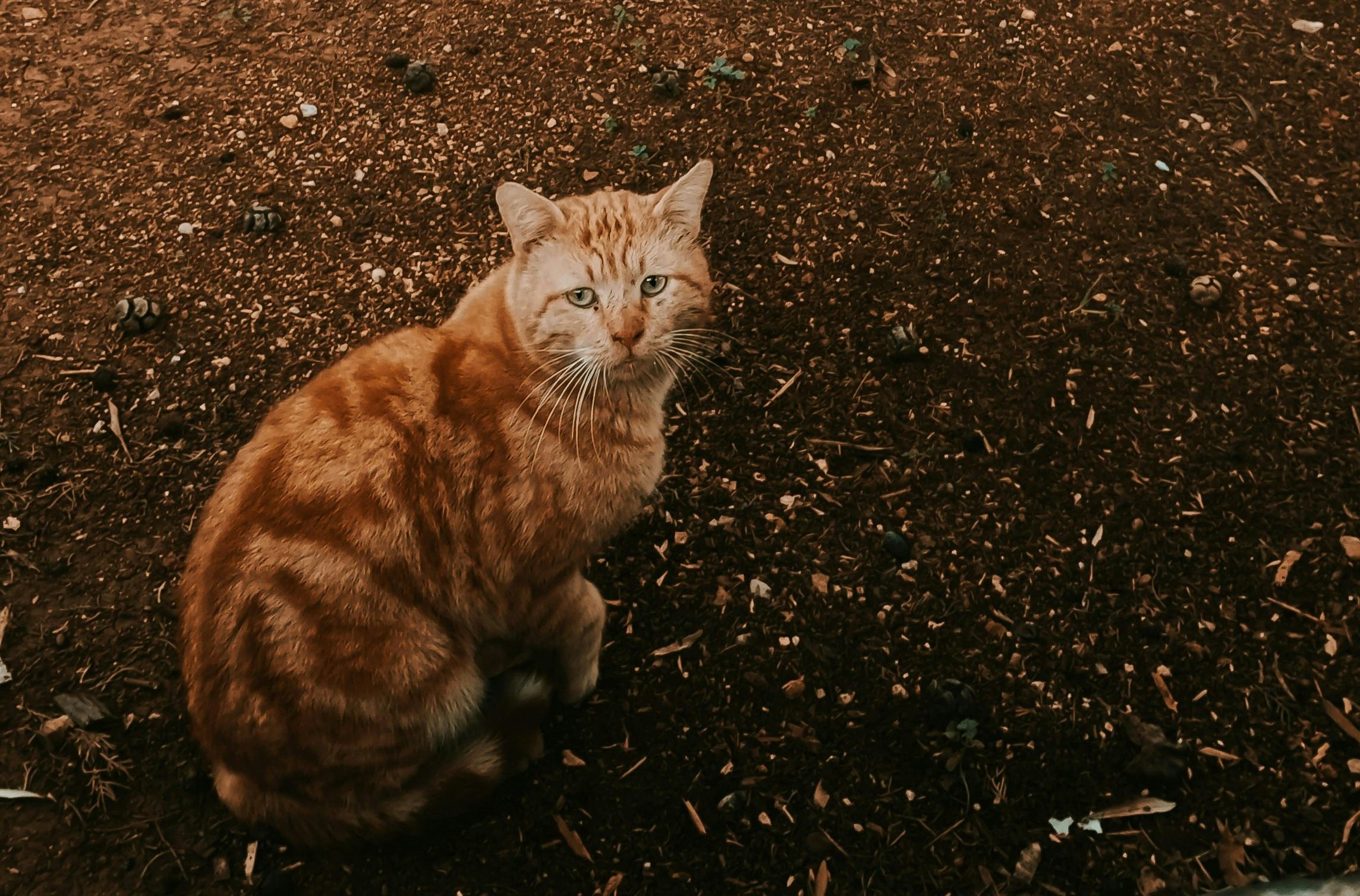
An orange tabby cat sitting on the ground

Photo Credit: Leylâ/Pexels

"My grandmother taught me how to rear domestic and wild animals by hand," Zee says. "I raised two geese in my bedroom until they were four months old. I had to clean my room four times a day until they were diaper trained."

Her rapport with animals made becoming a veterinarian a childhood dream.

"It's what I've wanted to do since I was six years old," she says.

Zee recently completed Lakehead's eight-month Indigenous STEM Access Program (ISTEM). The program offers preparatory courses and support to Indigenous students who want to apply to Lakehead degree programs in the sciences and engineering fields.

"ISTEM has been amazing," Zee says. "It gave me a university experience while teaching me time management and research skills. It also introduced me to different university services and helped me form a supportive community before starting my Honours Bachelor of Science this September."

Spirit Woman of the South

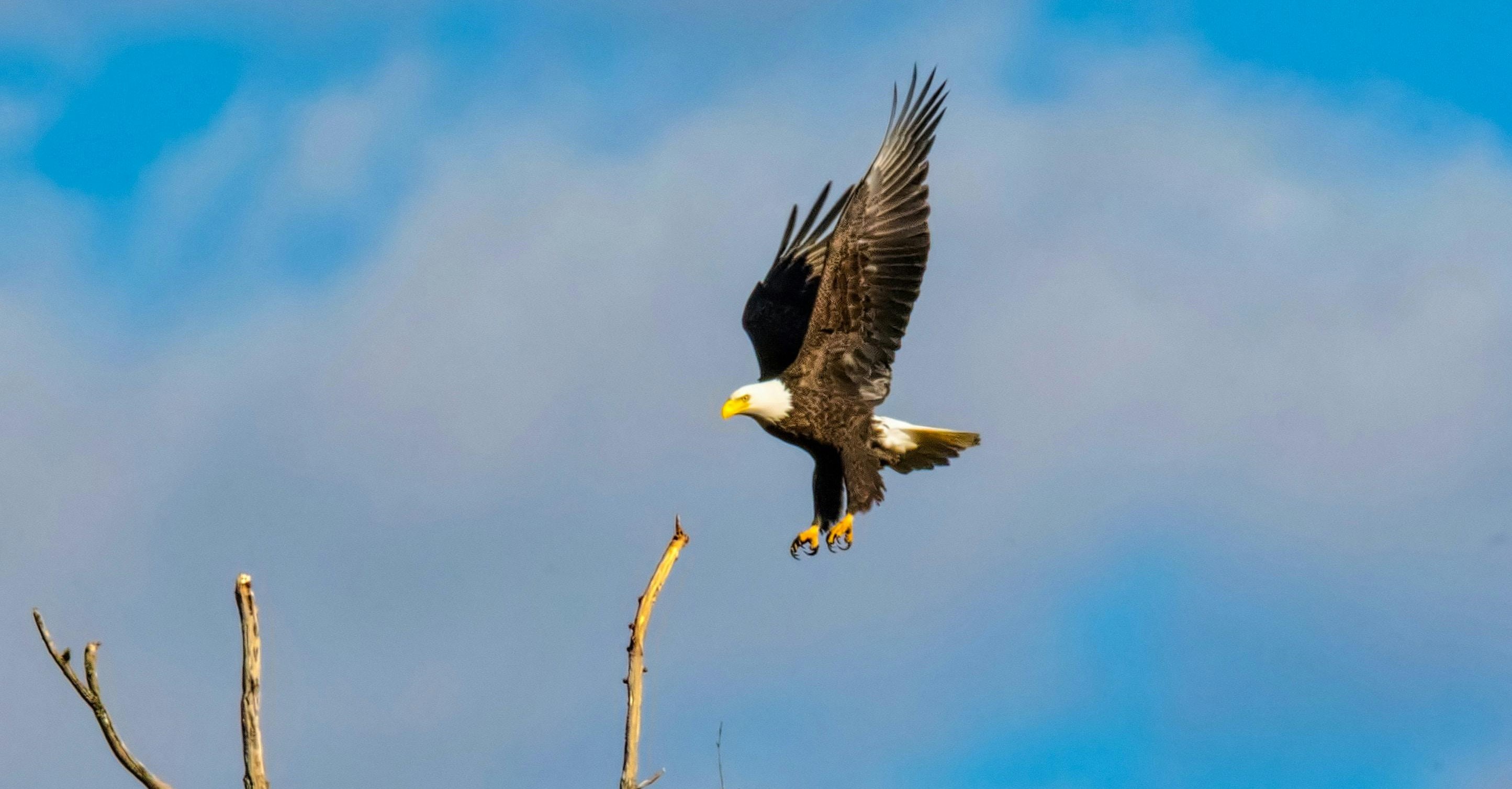
A bald eagle flight gets ready to land on the top of a dead tree

When it comes to her favourite animals, Zee says that she "gravitates to eagles, because it's my clan. I know where their nests are, and I can identify different eagles. I'm also very drawn to horses because of the bond and understanding I have with them." Photo Credit: David Dibert/Pexels

When she's not at Lakehead, Zee is at her family home, Riley Ranch on Three Fires, in southwestern Ontario. Zee's community is an integral part of her identity, always introducing herself in her language as: Zhawanoogbiik indizhinikaaz. Miigizi indoodem. Deshkan Ziibing indonjibaa. Anishinaabekwe indaaw.

This translates to: My name is Spirit Woman of the South. I am from Eagle Clan. I come from Antler River/Chippewa Thames First Nation. I am an Anishinaabe woman.

Riley Ranch is also the place where Zee runs a thriving business. "Last year, we began providing equine-assisted therapy to help young people aged 15-30 who are struggling with PTSD, intergenerational trauma, autism, ADHD, and depression," Zee says.

"Horses have an innate understanding of humans and our body language. They know if you are happy, anxious, sad, or mad. Our clients are coming from tough spots in their lives and aren't able to trust people, but they can trust horses."

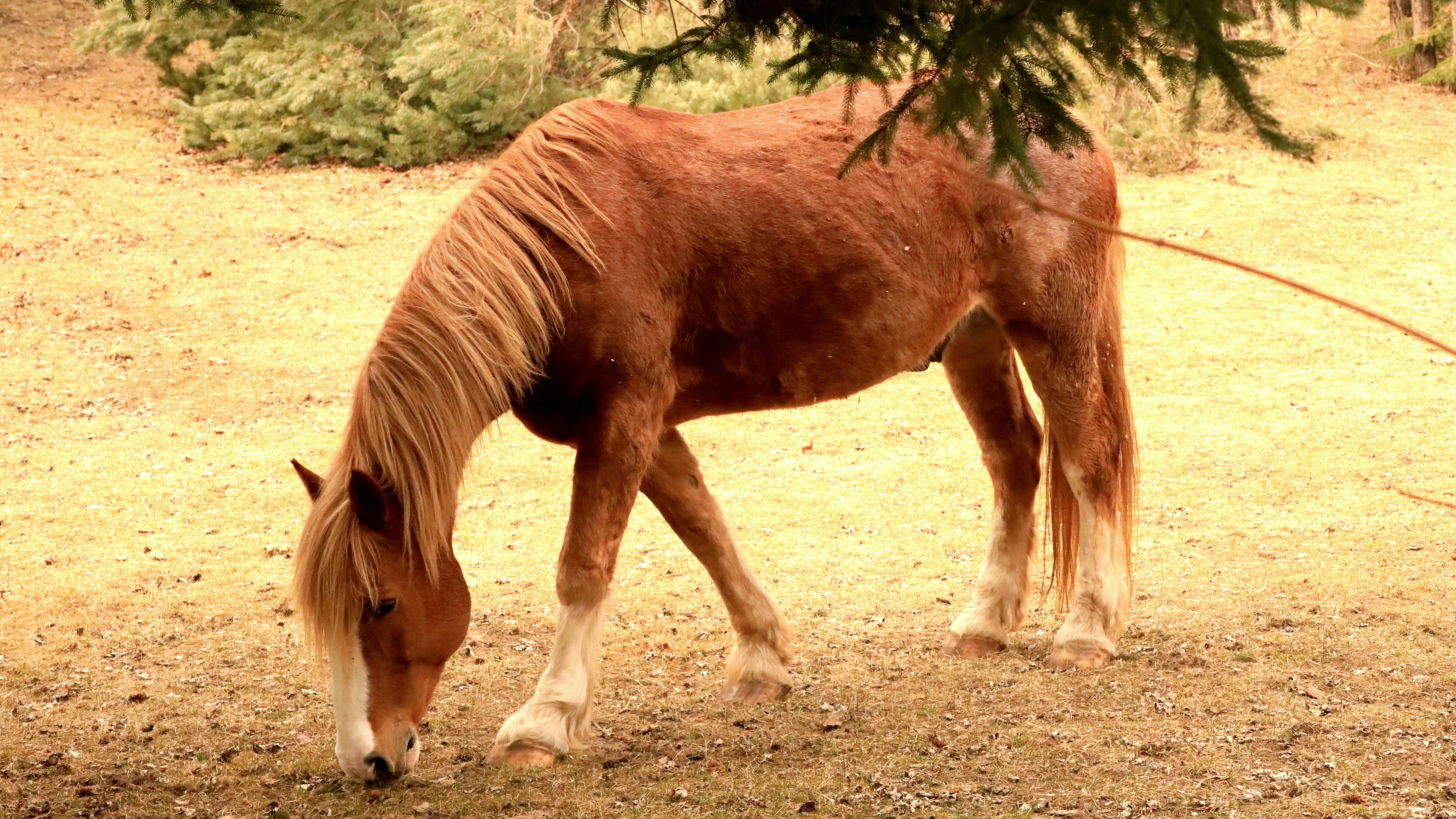
A reddish-brown horse with white markings grazes near trees

Zee has a miniature horse, a quarter horse, and a Haflinger horse. As part of her equine-assisted therapy, each client is paired with a horse. "They become a team that learns to navigate obstacles together," Zee says. "Caring for an animal and developing a relationship based on mutual respect is a big part of healing." Photo Credit: Richard Burlton/richardworks/Unsplash

Standing Up for Animals

In addition to her therapy work, Zee is a passionate animal-welfare advocate. During the pandemic in 2020, while in high school, she established a no-cost animal food bank at the Riley Ranch on Three Fires.

These services became necessary after COVID-19 caused economic hardships and health orders made it necessary to impose restrictions on who could enter the Chippewa of the Thames First Nation, making it difficult for some community members to access veterinary care. "Some people were forced to choose between feeding their families and feeding their animals," Zee says. "Packs of wild dogs on the reserve began to get aggressive because they were starving."

A reddish-coloured dog with sad eyes

In 2022, Zee entered the Pow Wow Pitch entrepreneurship competition to raise awareness and money for her animal food bank. "I don't care what someone's financial situation is," Zee says. "If they need help for their animals, they'll get help." Photo Credit: RK Jajoria/Pexels

"We operate like a Tim Horton's drive-thru where people can pick up food for dogs and cats, but also hamsters, ferrets, and kangaroos," Zee continues.

"We even found food for a camel." Along with distributing food, Zee gives out free crates, leashes, and other pet supplies. Her animal-welfare activities extend to arranging at-cost spays, neuters, vaccinations, and other veterinarian services through her partnership with the East Village Animal Hospital in London.

Although Zee has just started her Lakehead degree, which is focused on animal sciences, she's already proven herself to be a fierce protector of all creatures, great and small.

Lakehead University Observes National Day for Truth and Reconciliation

Lakehead University's campuses will be closed and classes will be cancelled on Tuesday, September 30, 2025, in recognition of the National Day for Truth and Reconciliation and Orange Shirt Day. This day provides an opportunity to reflect on the multi-generational impacts of Canada's Residential School system, honour the children who survived, and remember those who did not.

The 2025 National Truth and Reconciliation Flag-Raising Ceremony at Lakehead Orillia

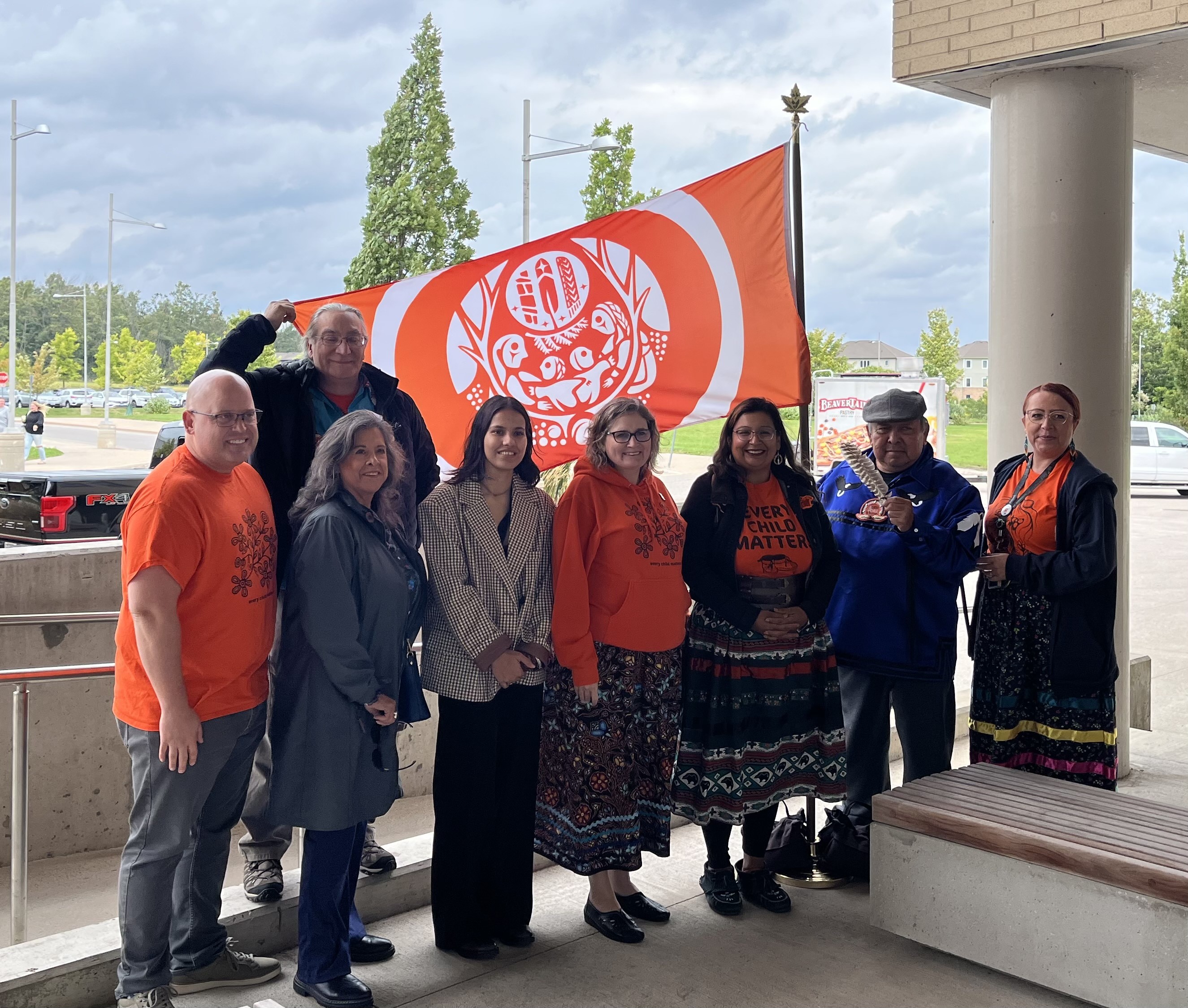
Lakehead Orillia's Survivors' Flag-raising ceremony on September 5, 2025.

A Month of Reflection and Learning

September is a month of truth-telling, reflection, and learning at Lakehead University—essential steps on the path toward meaningful action and reconciliation. Closing campuses on September 30 allows students, faculty, and staff to participate in this important day through quiet reflection or involvement in community events.

Creating Understanding and Building Bridges

Earlier this month, Survivors' Flag-raising ceremonies were held on the Thunder Bay and Orillia campuses. Indigenous community leaders, including Honorary Survivors and Elders Bob Baxter and Ernie Sandy, shared their stories and perspectives.

More events and learning opportunities continue throughout the month to support everyone's personal journey toward reconciliation. September 30 is a time not only to acknowledge the harms caused by Residential Schools but also to take action to prevent them from ever happening again and to seek justice for survivors.

Honorary Survivor Elder Bob Baxter speaks at Lakehead Thunder Bay’s Survivors’ Flag Raising Ceremony on September 5, 2025

Honorary Survivor and Elder Bob Baxter speaks at Lakehead Thunder Bay's Survivors' Flag Raising ceremony on September 5, 2025.

UNIVERSITY EVENTS:

Lakehead Orillia Events:

September 24: "Truth and Reconciliation in an Era of Distraction." Attend this virtual talk by Dr. Cynthia Wesley-Esquimaux, Lakehead's Chair on Truth and Reconciliation, from 11:30 am - 1:00 pm.

Lakehead Thunder Bay Events:

September 19: Powley Day ceremony celebrating the legacy of activist Steve Powley and the historic Métis victory at the Supreme Court of Canada in 2003. The ceremony will take place in the Agora from 1:30-2:30 pm. You can also watch the event on Zoom.

September 20: Fall Harvest at the Sweat Lodge site from 11:00 am - 2:00 pm. Join Lakehead University Elders to learn cultural teachings and sample traditional foods.

September 18, 23, and 29: Elder Beatrice Twance-Hynes is available to meet with students, staff, and faculty from 12:00 - 4:00 pm for individual or small group teachings in the Gakina Nindinawemaaganag Lounge in the Indigenous Student Services Centre (University Centre, UC1007).

September 24: "Truth and Reconciliation in an Era of Distraction." Attend this virtual talk by Dr. Cynthia Wesley-Esquimaux, Lakehead's Chair on Truth and Reconciliation, from 11:30 am - 1:00 pm.

September 29: Bead a Pin for Orange Shirt Day. All material will be provided so that participants can create Orange Shirt Day beaded pins. This event, hosted by the Indigenous Student Services Centre, runs from 11:00 am – 1:00 pm in the Agora.

COMMUNITY EVENTS:

Simcoe County Community Events:

September 22: Orange Shirt Day Flag Raising from 11:00 am - 12:00 pm at the Orillia Opera House at 20 Mississaga St W. The Orillia Native Women's Group (ONWG), Biminaawzogin Regional Aboriginal Women's Circle (BRAWC), Mamaway Wiidokdaadwin, and the City of Orillia are raising a flag in honour of those who attended Residential School. Click here to register.

September 30: Truth and Reconciliation events supported by the Barrie Native Friendship Centre, Mamaway Wiidokdaadwin, the Barrie Public Library, and the City of Barrie at Spirit Catcher (15 Lakeshore Drive, Barrie) including a Sunrise Ceremony, Sacred Fire, guest speakers, and a memorial walk.

September 30: National Day for Truth and Reconciliation 5th Annual Community Event from 5:00 - 7:00 pm. The event (hosted by the ONWG, Mamaway Wiidokdaadwin, and BRAWC) begins at the Orillia Common Roof Building at 169 Front Street South, followed by an Honour Walk to Couchiching Park, a Youth and Children Panel Presentation, and an Honour song and round dance.

September 30: National Day for Truth and Reconciliation event hosted by the Georgian Bay Native Friendship Centre at 175 Yonge Street in Midland from 10:00 am - 12:00 pm. Events include opening songs and prayers, traditional dancers, a Sacred Fire, drumming, and a barbecue.

September 30: Ceremonies and tours will be held throughout the day at the Sainte-Marie among the Hurons historic site in Midland, offering a chance to reflect, commemorate, and learn. Admission is free.

Thunder Bay Community Events:

September 29: National Day of Truth and Reconciliation Survivors' Flag Raising hosted by the City of Thunder Bay at Hillcrest Park. The ceremony begins at 6:00 pm.

September 30: Orange Shirt Day Walk & Gathering in Support of Residential School Survivors and their Families hosted by Nishnawbe Aski Nation. The event begins at 10:30 am with opening remarks at City Hall (500 Donald Street East) followed by a walk to Vickers Park.

September 30: Fort William First Nation 10th Annual Traditional Fall Gathering at Anemki Wajiw (Mount McKay Scenic Lookout) in honour of Indigenous children. Events include a Sunrise Ceremony, grand entries, youth and tiny tot dance specials, a hand drum special, and a feast.

September 30: Honouring Our Children Run at Boulevard Lake hosted by Dilico Anishinabek Family Care. Funds raised from this event will help support the Mazinaajim Children's Foundation—a non-profit organization dedicated to supporting Indigenous children and their families.

October 4: Sisters in Spirit Sunrise Ceremony is taking place at The Spirit Garden in Marina Park from 7:30 - 8:30 am. For more information, contact Karissa Michano at kmichano@nan.ca.

More Ways to Show Your Support:

Lakehead University's campuses are located on the traditional lands of Fort William First Nation and the traditional territory of the Anishnaabeg, specifically the Chippewas of Rama First Nation, a member of the Chippewa Tri-Council and Three Fires Confederacy.

If You’re Seeking Peace, Try Walking a Labyrinth

Amidst the bustle of campus life, the Wellness Path near the Faculty of Education offers a place to slow down—a quiet refuge from the stresses and demands of modern life. Open to individuals, families, and the university community, the labyrinth welcomes anyone who ventures its way.

"The labyrinth is a walking, meditative path," says Devon Lee. Its twists and turns are sometimes seen as a symbol of those we experience on our own life journeys.
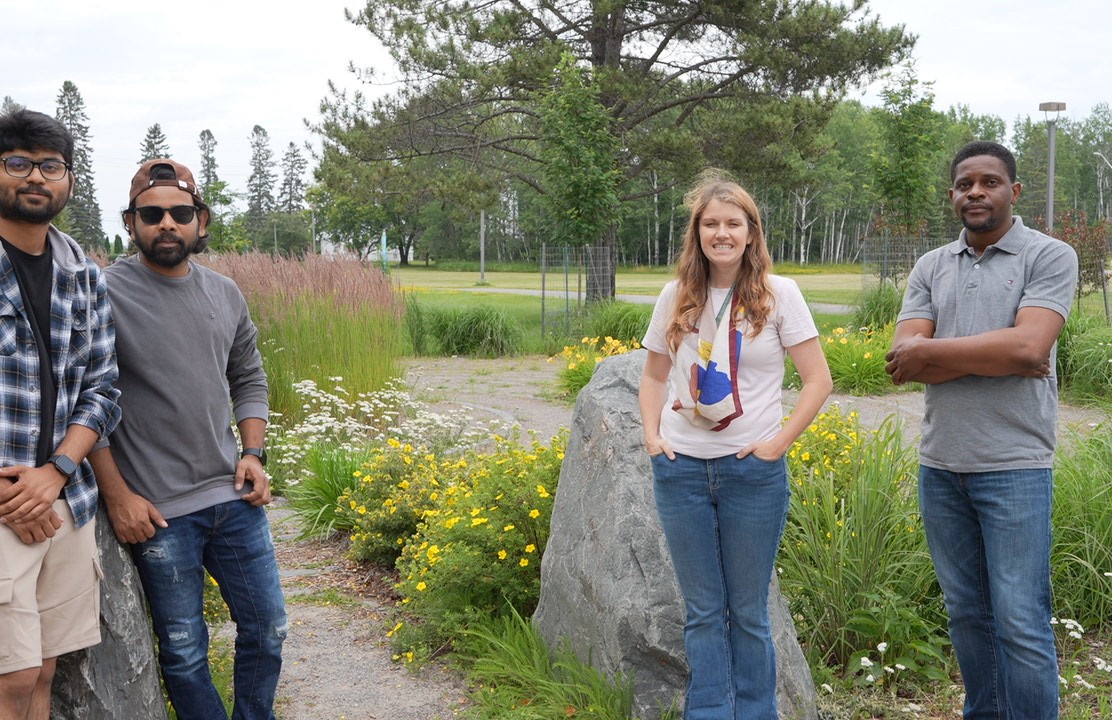
Devon Lee and Philosophy of Education students stand at the Wellness Path entrance

Devon Lee (third from left) and her Philosophy of Education students (L to R): Arafat Alamgir Shanto, Shakil Zaman, and Ayoola Jegede at the entrance of the Wellness Path. Devon's work focuses on climate education, the environment, and folk schooling (non-formal education for adults). Devon also worked on Lakehead’s Labyrinth Learning Project as a graduate assistant and as Lakehead’s sustainability coordinator. 

Lee is a Lakehead PhD student in Educational Studies and a contract lecturer who has been closely involved with the labyrinth since its inception.

"People can experience deep emotions in the labyrinth, and it can be a powerful way to deal with grief. As a teacher, I've also used it to help people get to know each other and to answer complex questions. Labyrinths can be a pilgrimage in both a secular and a religious sense," she adds.

Labyrinths Versus Mazes
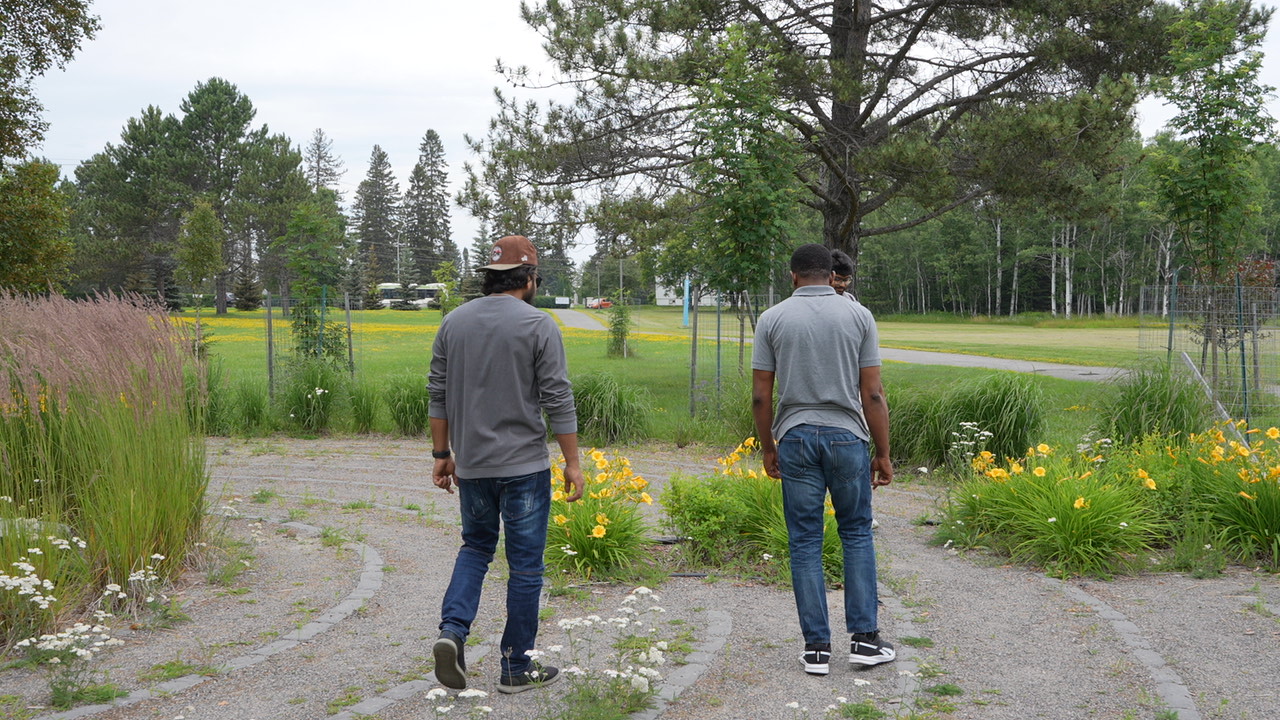
Three students walk the Wellness Path labyrinth

The Wellness Path (above) isn’t the only labyrinth on the Thunder Bay campus. There’s a second labyrinth next to the CASES building. This labyrinth has a dual purpose—to encourage contemplation and to act as a stormwater catchment area.

The words "labyrinth" and "maze" are sometimes used interchangeably, but they are different in both purpose and design.

Mazes often have multiple entrances and branching paths that lead to dead ends. They're a puzzle meant to confuse the walker. Labyrinths are a single path that takes the walker to their centre. You can never lose your way in a labyrinth.

A labyrinth is a walking meditation that encourages the walker to slow down and reflect.

"No one really knows where labyrinths originated," Lee says. "They're ancient and they're found in cultures all over the world that had little or no contact with each other."

A labyrinth etched into a rock face at least 11,000 years ago in Nevada and the French medieval labyrinth found in Chartres Cathedral are just two examples.

"Recently, labyrinths have gained traction in schools, hospitals, and churches as a wellness or mindfulness practice," Lee says. "K-12 schools are using them indoors and outdoors to help children decompress."

Welcome to the Wellness Path
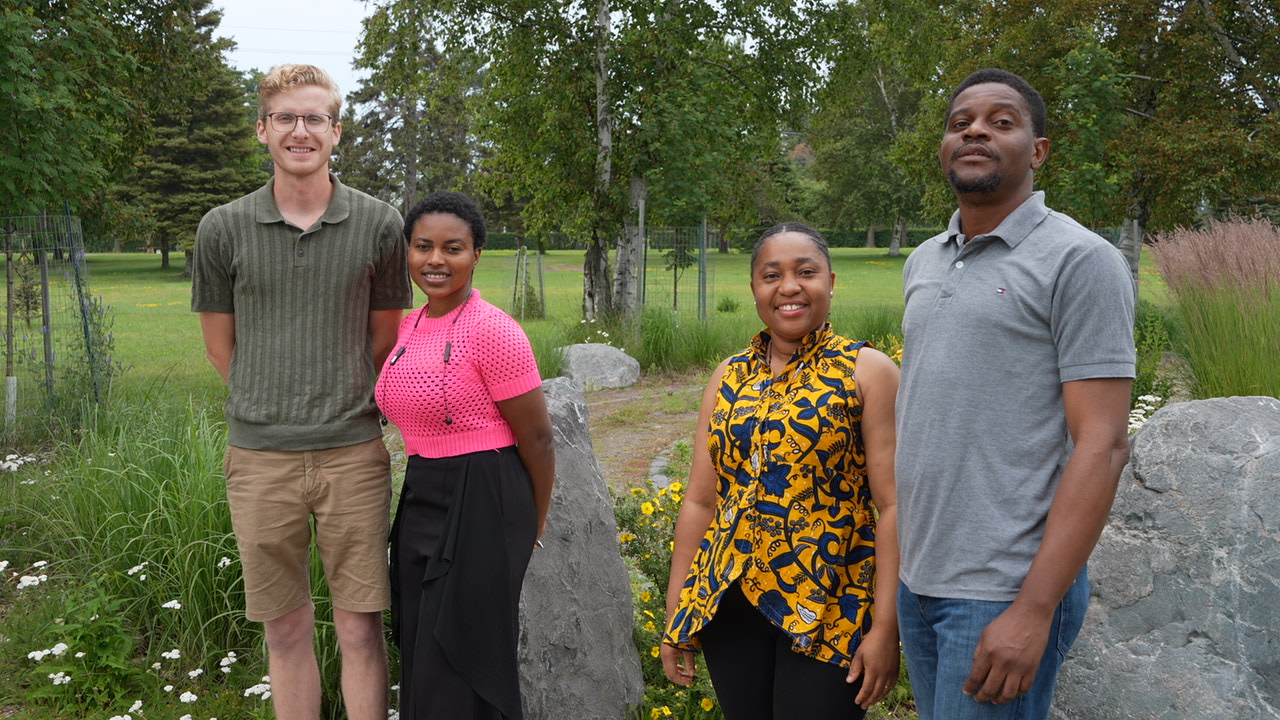
Four Lakehead Philosophy of Education students stand at the entrance of the Wellness Path labyrinth

Philosophy of Education students Nicholas McPherson, Natasha Nkrumah, and Portia Addai Adusei relax at the labyrinth after class. Besides walking labyrinths, there are also labyrinths that are painted on walls or printed on paper that allow people to trace their paths using their fingers.

Lakehead Professor Emeritus Dr. David Greenwood led the group that advocated for the construction of the Wellness Path. At the time, he was the university's Canada Research Chair in Environmental Education, within the Faculty of Education.

Dr. Greenwood worked with landscape architect Werner Schwar to design the labyrinth, which was completed in 2022.

It has 11 switchbacks and is modelled on the "Path of Peace" labyrinth form. It takes 5-20 minutes to complete, depending upon the walker's pace.

Some of the boulders in the labyrinth were quarried locally, including the two at the centre where people can sit once they've completed their journey.

Lakehead's labyrinth is also notable for fostering environmental wellness alongside human wellness.

"It's a place that was previously a monoculture of grass," Lee says. "Now, there's mountain ash, yarrow, coneflower, and other native plant species that are encouraging biodiversity."

Learning from the Labyrinth
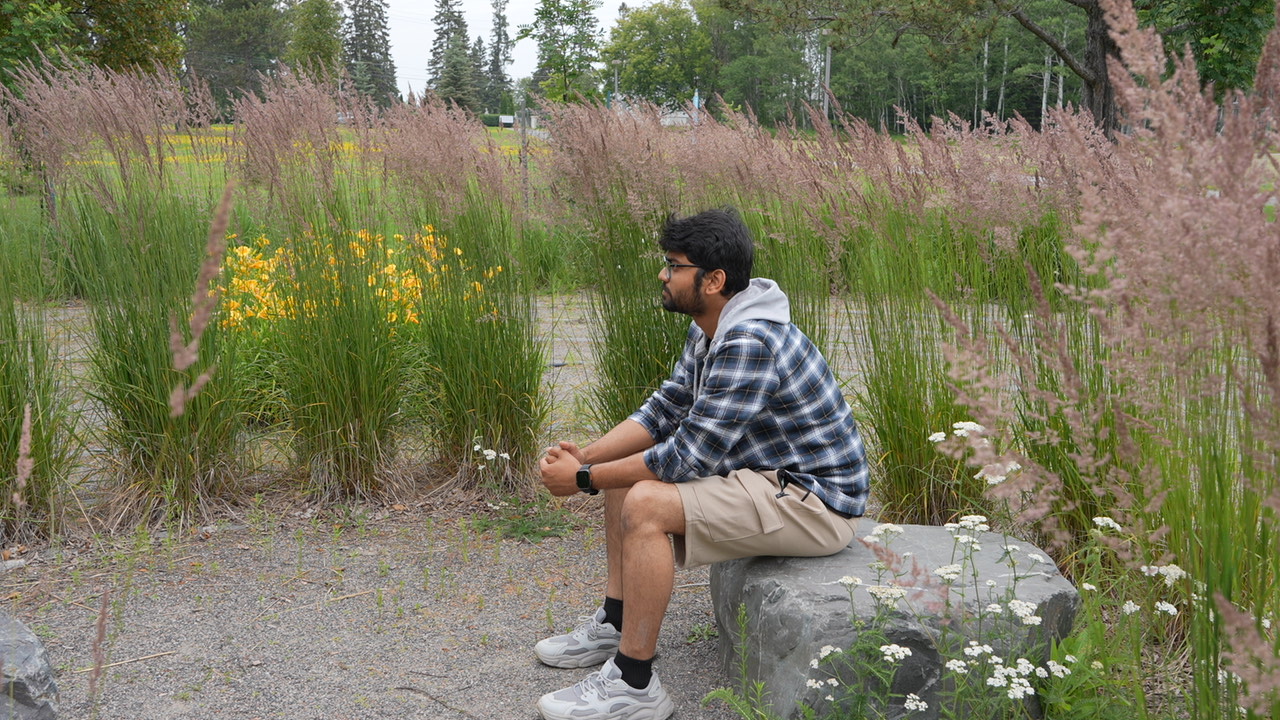
Student Arafat Alamgir Shanto sit at the centre of the Wellness Path labyrinth

 "I find that people are often a little bit reluctant to walk the labyrinth, but once they do it, they feel more comfortable and walk it again and again," Devon Lee says.

Lee uses the labyrinth as a form of holistic and embodied learning. "That means using movement, our whole body, and our senses to learn," she explains.

"My education students walk the path with a specific question in mind, which they then journal about," Lee says. "For one of my recent classes, their question was, 'How can educators promote the conditions for democracy to thrive?'

The sense of inquiry and contemplation is much greater than if they were sitting in a classroom or writing an essay on their computers."

The Wellness Path supports two United Nations Sustainable Development Goals (SDGs)—SDG 3: Good Health and Well-Being and SDG 13: Climate Action. Visit the Wellness Path beside the Faculty of Education on Oliver Road to discover the power of a labyrinth.

Ontario Master Naturalist Program - Fall 2025

The Ontario Master Naturalist Certificate Program is aimed at naturalists and those dedicated to environmental stewardship, empowering them to learn and share knowledge of the natural world and engage as stewards of their local ecosystems and resources.

True North Talks: Exploring Canadian Identity

What does it mean to be Canadian today? Join us for a thought-provoking lecture series that examines the diverse forces shaping Canada’s national identity. Together, we’ll explore the stories of immigration and multiculturalism, Canada’s role in international trade and global affairs, the importance of Indigenous perspectives and reconciliation, and the foundations of our democracy. Each of the four sessions will bring fresh insights and engaging discussion, offering participants a deeper understanding of Canada’s past, present, and future.

Lakehead’s Natural Resource Management Experts Lead $1.67M Global Effort to Help Forests Adapt to Climate Change

Forscale TeamForests around the world face unprecedented challenges from a rapidly changing climate, and a team of Lakehead University researchers is stepping up to lead solutions.

Thanks to $1.67 million in funding from the Eva Mayr-Stihl Foundation in Germany, seven professors from Lakehead University’s Faculty of Natural Resources Management will play a central role in a groundbreaking international research network dedicated to forest adaptation called FORSCALE: Scale Effects in the Forest Adaptation to Climate Change. The research will explore forest adaptation at many levels — from tree genetics and whole ecosystems to policy and land-use planning — and examine how biological, ecological, and social systems interact to shape forest health in a changing climate.

The Canadian arm of the international project is led by Dr. Brigitte Leblon, Dean of the Faculty of Natural Resources Management and principal investigator for Canada. Joining her from Lakehead are: Dr. Ashley Thomson, Dr. Brian McLaren, Dr. QingLai Dang, Dr. Michel Laforge, Dr. Seung-Il Lee, and Dr. Dzhamal Amishev. These seven experts bring deep expertise in forest ecology, remote sensing, fire management, genomics, entomology, forest operations, wildlife management, and ecophysiology. Lakehead is collaborating with leading institutions across Canada and Germany, including: Université TÉLUQ, Université du Québec en Abitibi-Témiscamingue (UQAT), Université du Québec en Outaouais (UQO), Université du Québec à Montréal (UQAM), University of British Columbia, and University of Freiburg (Germany) with project coordinator: Professor Thomas Seifert. Canadian partners include the Canadian Forest Service, the Ministère des Ressources naturelles et des Forêts du Québec, DOMTAR (Thunder Bay and Québec), and other forestry-sector organizations. The German side of the project is supported in part by the Deutsche Forschungsgemeinschaft (DFG).

Over the next six years, 41 graduate students and post-doctoral researchers in Canada, along with 20 PhD students in Germany, will be co-supervised by professors in both countries. This collaborative model offers students immersive, hands-on research opportunities that span disciplines, borders, and perspectives.

“At the heart of this project is the chance to empower the next generation of forest scientists to make a real difference,” said Dr. Brigitte Leblon. “Our students will learn and contribute on a global scale, helping to shape climate solutions grounded in both science and collaboration.”

Lakehead University’s Faculty of Natural Resources Management (NRM) is a hub for hands-on learning and applied research in the heart of the boreal forest. Faculty and students work across forestry, wildlife, and environmental management, blending field training with advanced lab and data science to solve real-world problems. Partnering with governments, industry, communities, and Indigenous partners, NRM advances sustainable forest practices, climate adaptation, fire management, genomics, biodiversity conservation, and ecosystem resilience while preparing the next generation of resource professionals and researchers to lead in a changing world.

As one of the first initiatives to examine forest adaptation through a cross-scale, international lens, FORSCALE represents more than just research; it’s a model for how science can guide resilience. For students, it’s a gateway to high-impact learning. For the planet, it’s a pathway to more adaptive, sustainable forest management.

2025 Alumni Annual General Meeting

Join us at this year’s Lakehead University Alumni Association Annual General Meeting! It’s a chance to come together as part of the Lakehead family, reflect on the highlights of the past year, and look ahead to the exciting things to come in 2025/2026.

Pages

Subscribe to Indigenous