Indigenous

(ORILLIA) Commuter House Meeting

Residence students have house meetings—why shouldn’t you? New commuter students, join us at your very own "house meeting" to get tips on winter driving, saving on gas, making friends while living off-campus, and more. Discover the ins and outs of commuting to Orillia!

Note: There's a super fun Commuter Social happening just before this. If you’re a commuter student, try to attend both events and kick off your Orientation on the right foot!

This event requires registration — don’t forget to register below!

(ORILLIA) Commuter & International Social

We warmly invite all commuter and international students to join the Commuter & International Student Social! Enjoy light refreshments and a relaxed atmosphere to connect with fellow students who share your experience, along with representatives from various campus departments.

This event will take place while Residence students are moving in, so it’s the perfect opportunity to meet new people and get oriented at your own pace.

Amani Sloley (HBMus’24) is Bringing New Life and New Audiences to Classical Music

Meet a Composer and Violist Who Is Hitting All the Right Notes

Talented violist and up-and-coming composer Amani Sloley is making the classical music scene more exciting, both nationally and in his hometown of Brampton, Ontario.

"Classical music resonates with me because it allows me to explore my emotions," says Amani, who graduated with first-class honours from Lakehead University's Honours Bachelor of Music program in 2024.

A head-and-shoulders image of Amani Sloley wearing a white shirt in a dimly lit room with display cases

As he finished high school, Amani couldn't decide whether he should study computer engineering or music at university. "It was during the pandemic, and I wanted to do something different, so I decided to move from Brampton to the opposite end of the province and study music at Lakehead University."

"If I had to start my musical studies all over again, I would choose Lakehead because it gave me such a great start in the music world," he adds.

"My first viola professor, Cathy Jillings, was very influential to my development, while my other viola professor, Patrick Horn, taught me confidence in playing and advanced my musical education. The composition teachers for my culminating projects, Dr. Sean Kim, Dr. Darlene Reid, and Dr. Aristocles Carastathis, were wonderful, too. You never forget the professors who pushed you and helped put you on your way."

Amani is currently the artist-in-residence with the Brampton Arts Organization where he is organizing a five-month concert series entitled "Fractured Flowers in Five." He also runs a grassroot collective called Composer's Canvas that he started while a Lakehead University student. Amani describes it as an artist-centered organization and concert series that supports emerging artists, with a focus on creating equitable opportunities for BIPOC and 2SLGBTQIA+ creatives with community events and programming.

A profile view of Amani Sloley playing the viola

"Thunder Bay is great at cultivating organic grassroots initiatives," Amani says. "There are more theatre and music groups in Thunder Bay than there is in Brampton, which has 800,000 people. I feel like Thunder Bay doesn't get enough recognition for its vibrant artistic culture."

Composer's Canvas and his work as a member of arts boards, including Consortium Aurora Borealis in Thunder Bay and the Canadian Viola Society, are part of his mission to make the music industry more diverse.

Amani is combining this work with his responsibilities as a violist with the Rose Orchestra in Brampton, a City of Brampton Youth Cabinet advisory member, an Arts Administration and Cultural Management student at Toronto's Humber Polytechnic, and a music instructor (he teaches both the Rose Youth Orchestra and private students).

Whatever he's focused on, Amani isn't afraid to take a risk or to follow an unconventional path—like his decision to study music at university rather than computer engineering.

"My philosophy of life is that I'd rather take a chance now than regret it later," he says.

Two young women and one young man wearing white shirts sit beside each other; they each hold a bouquet of red roses

In 2025, Amani moved back to Brampton where he is encouraging the local classical scene. "I'm part of a small trio that plays for fun and occasionally takes gigs, including at the Brampton Farmers' Market and weddings." Above, Amani and fellow trio members violinist Sadaf Sohrab and cellist Angela Lea, relax after playing at the grand opening of Brampton's City Side Cafe in October 2026.

This attitude even extends to the instrument he's chosen to play. "The viola is like the awkward cousin at the family gathering that no one knew was coming," he jokes.

"Even though it's a less well-known string instrument, I prefer it because its larger size and weight gives it a warmer, more rounded tone compared to the violin."

A Composer for the Twenty-First Century

In 2024, Amani became the youngest composer from Ontario to be accepted into the Canadian Music Centre—an organization with a mission to support, preserve, and celebrate the works of Canadian composers across the country.

"I'm still shocked I got in," he says. "Musicians usually apply at the end of their careers, but I'm glad I did it early. They're helping me develop an independent voice as a composer.

Amani Sloley holds a viola under one arm in a dimly lit room filled with people

"I believe all music is connected and that a wide palette of sounds allows you to draw inspiration from many genres, even genres beyond music," Amani says. "It doesn't matter if it's pop, rap, R & B, or indie alternative." Through Composer's Canvas, he organizes concerts and hosts an open call for emerging composers to submit their music to be performed. "I also often hire early career professional musicians for my concerts to provide them with paid gigs to help sustain their careers."

"My goal is to try something new in every single piece and to push boundaries," Amani says of compositions like Skybound and Scatterings. "Some people describe my compositions as scary and moody, but I write based on personal things I experience, so for me, it sounds like my life."

Being a composer isn't something he considered before enrolling at Lakehead University.

"I was astonished to learn that people are composing classical music today," he says. "Then, in my third year at Lakehead, Dr. Carastathis, who's an amazing composition teacher, opened my eyes to contemporary classical music and encouraged me to write my own pieces."

A Changemaker on the Rise

Amani is using his multi-faceted skills to make the contemporary classical music world more welcoming as well as more dynamic.

Amani Sloley, wearing a black shirt and black pants, holds a viola while standing outside an ornate stone cathedral at nighttime

In 2023, Amani received a $5,000 scholarship from Lakehead University's Institute of Italian Studies to spend 18 days studying at the prestigious Cremona International Music Academy in Italy—the birthplace of the legendary violinmaker, Stradivarius. Right, Amani in Cremona by the Cattedrale di Santa Maria Assunta, a cathedral famous as the tallest pre-modern brick tower in Italy.

"As someone who is a person of colour and queer, I believe it's essential to decolonize the classical music industry and foster change. That's why initiatives like Composer's Canvas and playing in accessible venues like the Brampton Farmers' Market are close to my heart.

If you look at orchestras, it's important to ask who can afford to go to concerts, who is playing onstage, who has access to musical training, and do all people feel like they belong in these spaces?"

Despite these challenges, Amani finds music a deeply rewarding field of endeavour, whether it's teaching, performing, or working in arts organizations.

"I encourage anyone who is passionate about a music career to persevere," he says. "If you do, you'll find your people and things will come together."

Click here to watch Amani, and members of a string quartet, perform a piece called Moments in Motion, which Amani composed while studying at the Cremona International Music Festival & Academy in 2024.

Check out Amani's music on his YouTube channel and keep up with his latest news on Instagram and LinkedIn.

Life-Saving Advances in Medical Imaging are Happening at Lakehead University

Dr. Mitchell Albert's Cutting-Edge Lab Gains National Attention

Dr. Mitchell Albert's scientific discoveries have been helping diagnose and treat thousands of patients suffering from lung cancer, cystic fibrosis, chronic obstructive pulmonary disease, asthma, Alzheimer's disease, traumatic brain injuries, and brain strokes.

He is a Lakehead University/Thunder Bay Regional Health Research Institute (TBRHRI) Research Chair, a Lakehead University chemistry professor, and the founder of the Hyperpolarized Noble Gas MRI Laboratory, located at the Thunder Bay Regional Health Sciences Centre, where he conducts his research.

Dr. Mitchell Albert, wearing a white lab coat, stands in front of an MRI machine"I teach the physics of MRI and medical applications at Lakehead University as well as a medical-imaging survey course," Dr. Albert says. "I give my students the skills to make public presentations and articulate their ideas well."

Currently, he is working on getting new brain-imaging techniques approved by Health Canada. Several years ago, Dr. Albert's clinical lung-imaging technique was approved by the FDA and can now be used by any hospital in the United States and China for diagnostic imaging.

In May 2026, his innovative research led to his laboratory winning a Canada Impact+ Research Training Award. These awards are a one-time federal government initiative designed to attract international and returning Canadian students and postdoctoral researchers to our country to strengthen Canada's research capacity and global competitiveness.

Training World-Class Researchers

Undergraduate, graduate, and postdoctoral students from Lakehead University—and across the globe—seek out placements in Dr. Albert's lab.

Shabaz Ali stands in front of a research poster entitled "AI-driven Treatment Decisions Platform for Breast Cancer
Shahbaz Ali from the Lahore University of Engineering and Technology in Pakistan and Oleksandr Ostapenko and Hanna Shaposhnikova from Taras Shevchenko National University in Kyiv, Ukraine, were immersed in life-saving research in Dr. Albert's state-of-the art lab in the summer of 2026. Benjamin Sunila from Thunder Bay's Superior Collegiate and Vocational Institute high school also did a summer placement that focused on designing, modelling, and manufacturing advanced detection elements for MRI imaging.

"My research group is very international," Dr. Albert says. "Students from Canada, the United States, China, the Middle East, Ukraine, Israel, the United Arab Emirates, India, Pakistan, and Iran have trained in my lab."

In the summer of 2026, three visiting research students gained invaluable research experience in Dr. Albert's lab under the supervision of Dr. Viktoriia Batarchuk and Dr. Yurii Shepelytskyi through the Mitacs Globalink Research Internship program, which provided paid work-integrated learning placements.

Pakistani university student Shahbaz Ali and Ukrainian university student Hanna Shaposhnikova developed novel artificial intelligence systems for modern healthcare with guidance from Dr. Batarchuk, who is also an adjunct professor in the Department of Chemistry at Lakehead University. Shahbaz was focused on developing an AI-driven treatment decisions platform for breast cancer, while Hanna concentrated on creating a physics-informed AI pipeline for MRI imaging.

Ukrainian university student Oleksandr Ostapenko, meanwhile, worked on developing novel nanocomposite magnetic materials and creating a novel theoretical description of dipolar spin waves in inhomogeneous materials under Dr. Shepelytskyi's supervision.

By the end of their placements, the students had gained enhanced research and academic skills that will assist them as they prepare to launch the next phases of their careers.

A Medical-Imaging Revolutionary

Dr. Albert's groundbreaking career in medical-imaging technologies began when he was still a graduate student at Stony Brook University in New York.

"When I was doing my PhD, my former physics professor, Dilip Balamore, encouraged me to investigate xenon gas, an inert noble gas that does strange things," he says.

In 1994, Dr. Albert—along with researchers at Princeton University and Stony Brook University, including Professor Balamore—co-invented hyperpolarized (HP) xenon-129 magnetic resonance imaging (MRI). This technology uses xenon gas to obtain extremely detailed imaging of the lungs compared to conventional MRIs.

This diagnostic technology showed, for the first time ever, how the lungs functioned in real time. In addition, their invention made it possible to image organs and human tissues with low water content, such as the lungs, that conventional MRIs are incapable of doing.

MRI images of healthy and diseased lungs
Dr. Albert and his research team's primary focus is the use of HP xenon-129 MRI and HP helium-3 to image the alveoli and ventilation function of human lungs. They are also developing innovative imaging technologies for brain stroke, traumatic brain injury, breast tumours, and the early detection of lung cancer and Alzheimer's disease. Above, a scan of lungs that have been imaged with Dr. Albert's HP xenon technology. Recently, Dr. Albert received $1.5 million to upgrade the Thunder Bay Regional Health Sciences Centre's research MRI system, which is also available to hospital and clinical patients.

In 1999, Dr. Albert received a Presidential Early Career Award for Scientists and Engineers (PECASE) from United States President Bill Clinton and, in 2001, he received a National Science Foundation (NSF) Career Award for his work with HP gas MRI. He went on to become an associate radiology professor at Harvard Medical School and an associate radiology professor and director of MRI research at the University of Massachusetts Medical School before coming to Lakehead University.

His technology is used in hospitals and clinics for a vast array of purposes ranging from the early detection of lung cancer to uncovering new insights into how the lungs and the brain function. His Xenon MRI is approved for clinical use in the United States and the United Kingdom and is in various stages of implementation in China and Japan.

Fourteen medical centres currently use his technology, including Duke University Medical Center in North Carolina and the Hospital for Sick Children (SickKids) in Toronto, and seven other medical centres are in the process of adding his technology to their services, including Columbia University in New York.

A profile view of a xenon polarizer machineRight, Dr. Albert's xenon polarizer at the Thunder Bay Regional Health Sciences Centre. Xenon gas that has been hyperpolarized can amplify the MRI signal by more than 100,000 times to provide highly detailed imaging. "Hyperpolarized xenon gas acts like a surrogate for oxygen," says Dr. Albert, who holds 10 patents in hyperpolarized xenon. He is an adjunct professor in physics, biotechnology, biology, and health sciences at Lakehead University, as well as a chemistry professor. "My former physics professor, Dilip Balamore, told me, 'When you put xenon in bread dough, the dough loses its structure and falls apart.' I was intrigued when I learned that even though xenon is used as an anesthetic, no one really understood how it worked."

Dr. Albert is also venturing into unexplored frontiers through a research partnership aimed at developing a multimodal imaging of the brain using MRI and Positron emission tomography (PET). This collaboration between the TBRHRI and the Radialis precision medical-imaging company is allowing him to join forces with Lakehead University Physics Professor Dr. Alla Reznik, who is Radialis's chief scientific officer and founder.

"I'm extremely lucky to have so many talented and highly qualified students in my lab to help me push my research agenda forward," Dr. Albert says.

"They help enormously with research, the preparation of laboratory materials, and the writing of research papers. I'm also very grateful to Lakehead University and the Thunder Bay Regional Health Research Institute for enabling me to carry out my research program."

Dr. Albert's lab thanks the National Sciences and Engineering Research Council of Canada (NSERC), the New Frontiers in Research Fund (NFRF), the Northern Ontario Heritage Fund Corporation (NOHFC), and MITACS for generous support of their research.

Lakehead University Students Use Crowdsourcing to Fuel Community-Engaged Research

Published in The Chronicle Journal on November 24, 2026

By EMILY DONTSOS

CIER Community Event

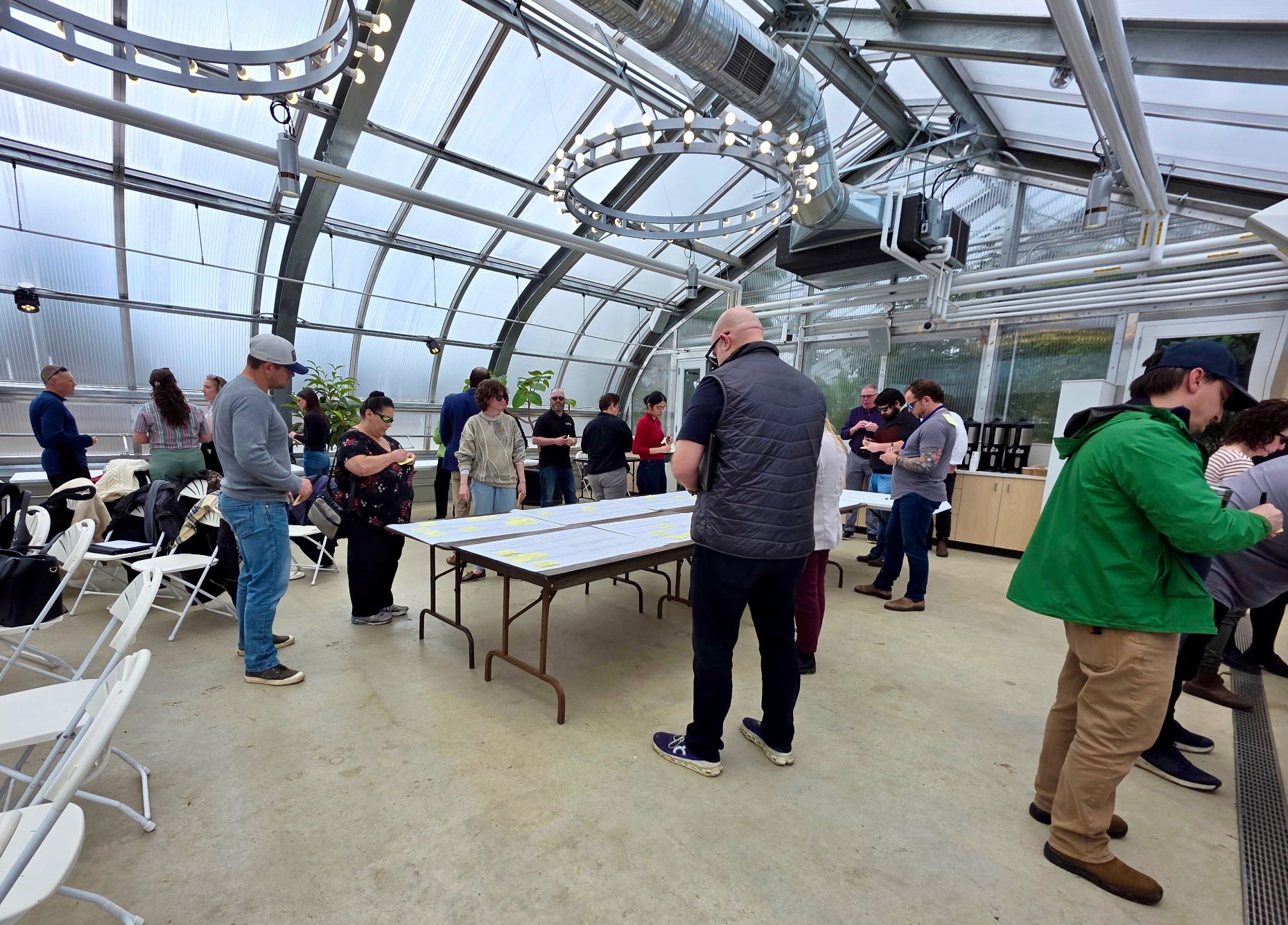
Community members pitch real-world problems for Lakehead University business students to solve at a recent event.

Can crowdsourcing research ideas lead to better outcomes for people and communities in Thunder Bay? 

That’s the question at the heart of a growing initiative led by Dr. Michael S. Dohan, director of Lakehead University’s Centre for Innovation and Entrepreneurship Research (CIER). 

Together with Karen Kerk of CityStudio Thunder Bay, an applied-learning model that connects students with real-world learning and research projects, Dr. Dohan is asking local citizens, organizations, and municipal departments to tell him about the problems they need solved—and then getting Lakehead’s business students to solve them.  

So far, their crowdsourcing efforts have generated about 50 unique research ideas, ranging from youth employment to water safety for low-income families to civic infrastructure needs and beyond.  

“In traditional research, academics look for problems to solve. But community members are living with real challenges every day, and they need someone to fix them,” Dr. Dohan says. “We realized that we need different brains, different knowledge, and different perspectives at the table to conduct research that really changes people’s lives.”  

For the past two years, Dr. Dohan and Kerk have leveraged the Lakehead Business Research Showcase—held annually during the university’s Research and Innovation Week in February—to let community members know that they want their ideas. Members of the public, City of Thunder Bay employees, and industry representatives were invited to attend and pitch their most pressing concerns.  

“The ideas we’re receiving span multiple sectors and reflect a broad range of societal challenges,” Dr. Dohan says. “Everything from anti-stigma campaigns for people who use substances encouraging them to seek help, to investigating pathways to attract venture capital business funding to the Thunder Bay region. It’s amazing.” 

Connecting Students with Real-World Research Opportunities 

Dr. Dohan and Kerk are now taking these ideas directly to Faculty of Business Administration students to engage them in applied research and real-world problem solving. 

With Kerk acting as the primary liaison between the community and Lakehead, the two are matching each idea to the right academic avenue. 

“We’ve got fourth-year undergraduates pursuing some of these ideas for their capstone projects. They’re being used as MBA course assignments, as master’s research theses, and for cross-collaborations between different faculties and departments,” Dr. Dohan says. 

“Students are fully immersed with these projects; they’re out there in the community, and they really care,” he adds. “I always tell students that we want them to do research they can talk about in their first job interviews after graduation, and that’s what this project is giving them.”

Kerk says the benefits extend beyond student research and learning. The project is also breaking down barriers between the university and the community, building a strong foundation for a thriving future of community-engaged research. 

“Through these events and the research being conducted, community members are starting to see the university as more approachable,” she says. “They’re seeing that these are real people who want to work together. The civic engagement aspect is huge, and Thunder Bay is the perfect size to make all of this happen.” 

Preparing Generations of Business Students for Success 

Dr. Dohan and Kerk may already have 50 research ideas for students to work on, but they’re not stopping there. The two plan to continue leveraging the Lakehead Business Research Showcase to crowdsource more ideas every year. 

The original project was funded through a Social Sciences and Humanities Research Council (SSHRC) Institutional Community-Engaged Research Grant (CERG), but they’re now seeking a larger and longer-term government funding commitment to expand and embed the initiative to make it a permanent feature of the CIER. 

For Dr. Dohan, it’s the realization of a long-held vision. 

“My job is to leave Lakehead better off,” he says. “A business school is where students should learn how to get stuff done in the real world and scale solutions. That’s exactly what we’re achieving with this project.”

This research project supports numerous United Nations Sustainable Development Goals, including Goal #4: Quality Education. 

Research in Action highlights the work of Lakehead University in various fields of research.

Chronicle Journal - CIER Article

Virtual BINGO: Win up to $1,250

Join the largest cohort study ever conducted in Northwestern Ontario to earn three chances at winning $250, $400, or $600 in virtual BINGO on Thursday, November 26, 2026, at 6:30pm.
 
We are currently recruiting workers from all sectors in our region to participate in the Northwestern Ontario Workplace & Worker Health Study.

Department of Veterinary Science Welcomes Inaugural Faculty Members

Important Milestone for Collaborative Doctor of Veterinary Medicine Program

Lakehead University is pleased to welcome Drs. Joshua Antunes, Hannah Godfrey, and Minh Man Pham, as part of the inaugural faculty complement of its Department of Veterinary Science. The department is currently led by Interim Chair Dr. Joe Carney, whose leadership has been instrumental in establishing the department and supporting the development of the Collaborative Doctor of Veterinary Medicine Program (CDVMP) at Lakehead.

Based at Lakehead University's Thunder Bay campus, these three faculty members will contribute to teaching and research as part of the CDVMP—a partnership between Lakehead University and the University of Guelph's Ontario Veterinary College (OVC).

The CDMVP expands access to veterinary education in Ontario by adding 20 seats annually to OVC's Doctor of Veterinary Medicine (DVM) program, with a focus on recruiting students from northern Ontario and preparing graduates to meet the veterinary needs of rural, northern, and underserved communities. These inaugural appointments mark an important step in building the academic foundation for veterinary education at Lakehead and strengthening the collaboration between the two universities.

"The CDVMP was established to address the shortage of both large animal and companion animal veterinarians in northern Ontario, and welcomed its first cohort in the fall of 2025," says Dr. Todd Randall, Dean of Science and Environmental Studies. The initial two CDVMP cohorts will complete all four years of their programs at OVC while Lakehead finishes the construction of program facilities on its Thunder Bay campus. "Lakehead University is proud to be part of this unique partnership with the University of Guelph's Ontario Veterinary College and is very excited to have the next CDVMP cohort start their journey at Lakehead in September 2027," continues Dr. Randall.

Dr. Antunes, Dr. Godfrey, and Dr. Pham bring expertise that will contribute to the delivery of comprehensive veterinary education and support the CDVMP's broader goals of strengthening veterinary services, animal health and welfare, and the sustainability of rural and northern communities. The new Lakehead faculty members will work collaboratively with OVC colleagues to become familiar with the DVM curriculum, teaching and assessment approaches, and the integration of learning experiences across the two campuses. Beyond their teaching responsibilities, they will also establish research programs at Lakehead University, advancing the university's research capacity in veterinary science and contributing to its broader research mission.

"Welcoming our first Lakehead faculty colleagues to OVC is an exciting milestone for the Collaborative DVM Program," says Dr. Brigitte A. Brisson, Assistant Dean, Academic Collaborations. "Building a veterinary program is ultimately about people, and we are thrilled to welcome these talented educators and researchers as partners in this work. Their appointments bring us one step closer to realizing our shared vision of expanding access to veterinary education and strengthening veterinary care in northern, rural, and underserved communities. As we prepare to welcome the inaugural cohort of students in Thunder Bay next fall, we look forward to sharing expertise, building lasting relationships, and creating a learning experience that reflects the strengths of both institutions."

Read on to meet the inaugural faculty members of Lakehead University's Department of Veterinary Science and learn more about their backgrounds, interests, and expertise.

Dr. Joshua Antunes, PhD
Assistant Professor in Veterinary Comparative Anatomy

Dr. Joshua Antunes stands in front of a stone and brick buildingDr. Joshua Antunes brings extensive hands-on teaching experience in human and veterinary anatomy to Lakehead University. During his MSc and PhD in the Department of Biomedical Sciences at the Ontario Veterinary College, he accumulated more than 2,500 hours of instruction in the Phase 1 DVM anatomy curriculum. "I'm passionate about making anatomy clear, clinically relevant, and memorable," says Dr. Antunes, who will be using photogrammetry to develop 3D anatomical models to extend hands-on learning beyond the lab. His doctoral research identified microRNA signatures in the blood and joint fluid of horses with joint disease in collaboration with the Schroeder Arthritis Institute, and he will continue investigating how these small molecules could enable earlier detection and new treatments, some of which may have implications for human joint disease. Most recently, he worked as a clinical research coordinator at SGS Nutrasource, supporting clinical trials in the health-product industry. "I'm honoured to be one of the inaugural faculty members of the newly minted Department of Veterinary Science," Dr. Antunes adds. "I'm looking forward to building new collaborations at Lakehead, continuing my work with colleagues at OVC, and training veterinarians who'll serve northern communities for generations to come."

Dr. Hannah Godfrey, PhD
Assistant Professor in Veterinary Physiology

A head-and-shoulders image of Dr. Hannah GodfreyDr. Godfrey is committed to creating engaging, inclusive, and student-centred learning environments that will help students connect foundational physiological principles to clinical veterinary practice. Prior to becoming a Lakehead University faculty member, she was the lead nutritional scientist and technical lead with Tom & Sawyer Fresh Pet Meals. She recently completed a PhD in Companion Animal Nutrition through OVC's Biomedical Sciences Department that examined the impacts of macronutrient compositions on energy metabolism in cats. This was followed by postdoctoral fellow training in the OVC Clinical Pet Nutrition lab where she studied cats and carbohydrates, canine obesity and behaviour, and weight loss programs in dogs. Dr. Godfrey will be continuing her research program at Lakehead University with a focus on how nutrition influences physiology, metabolism, behaviour, and overall health in companion animals, with a particular interest in the gut-brain axis and one-carbon metabolism. "While feline nutrition encompasses the majority of my research focus, I have also grasped opportunities to take a comparative animal nutrition approach, including canine, equine, and wildlife nutrition," she says. "Through my teaching and research, I'm eager to prepare the next generation of veterinarians while advancing animal health and welfare across Canada."

Dr. Minh Man Pham, DVM, DVSc
Assistant Professor in Food Animal Veterinary Practice and Herd Health

A head-and-shoulders image of Dr. Minh Man PhamDr. Pham's teaching and research interests are focused on food animal herd health management, veterinary epidemiology, and improving access to veterinary services in northern Ontario communities. Dr. Pham earned a DVM degree through an international collaborative program between Nong Lam University HCMC, Vietnam, and the University of Queensland, Australia. He subsequently earned a Doctor of Veterinary Science (DVSc) degree in Population Medicine from OVC. Following his doctorate, Dr. Pham continued in OVC's Department of Population Medicine as a postdoctoral research associate and as a sessional instructor before joining Lakehead University. Building on his experience teaching in the OVC's DVM program and his food animal-focused research he says, "I aim to provide CDVMP students with practical, evidence-based veterinary education. My teaching approach emphasizes connecting classroom knowledge with real-world clinical scenarios, fostering critical thinking and problem-solving skills, and preparing students to address the animal health and productivity challenges faced by livestock producers. I'm also looking forward to collaborating with colleagues and local livestock producers and contributing to the education of future veterinarians while supporting animal health and strengthening veterinary services in northern Ontario."

Pages

Subscribe to Indigenous