Indigenous

Introducing a Veterinary Student Eager to Make a Difference in the North

Hope Has Been Caring for Animals Since Childhood

Hope Grootenboer is one of the students who'll be helping address northern Ontario's long-term veterinarian shortage.

"I grew up in Murillo, outside of Thunder Bay, on a second-generation dairy farm started by my grandparents," Hope says.
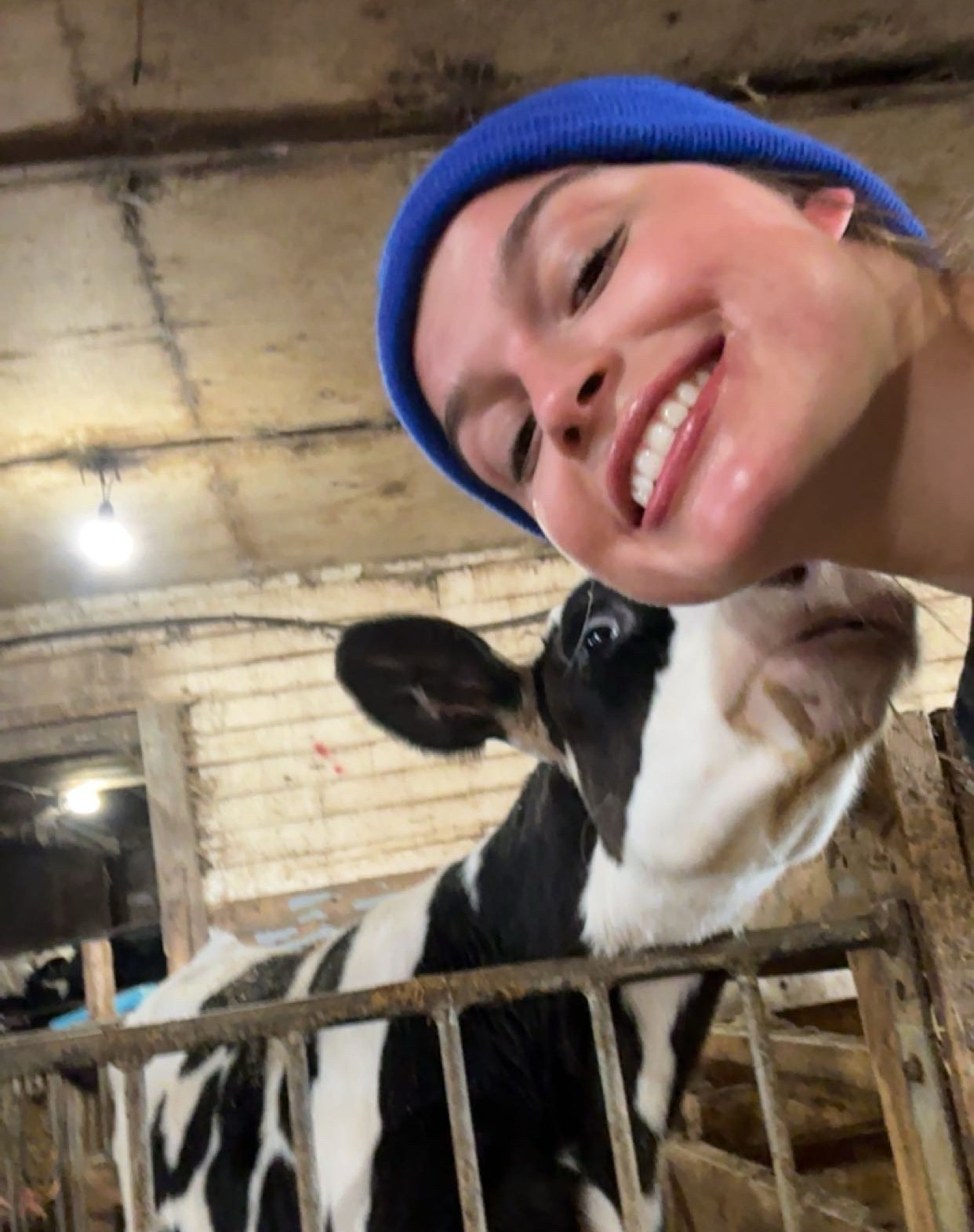
Hope Grootenboer, in a barn, leans her head towards a black-and-white calf as it lifts its head towards her neck

Hope's career ambitions were shaped by her mother as well as her father. "My mom was an emergency room nurse at the Thunder Bay Regional Health Sciences Centre, and I loved hearing about her job," Hope says. "I think that being a veterinarian is the perfect marriage of nursing and farming."

She's just begun her second year in the Collaborative Doctor of Veterinary Medicine Program (CDVMP)—an innovative partnership between Lakehead University and the University of Guelph's Ontario Veterinary College (OVC).

Every year, the CDVMP accepts up to 20 students from northern Ontario to train to become licensed veterinarians. The goal is to help alleviate the veterinary shortage in northern Ontario and ensure that more animals in rural, remote, and Indigenous communities receive proper care.

Beginning in September 2027, CDVMP students will complete the first year of their degree on Lakehead's Thunder Bay campus and their final three years at the OVC in Guelph.

A Born Veterinarian

It's not surprising that when the CDVMP was launched last year, Hope was among those chosen to be a member of its inaugural class.

She'd already accumulated an impressive amount of hands-on experience.

"As a kid, I was always in the barn with the cows or out in the fields with my dad," she recalls. "My Oma would tell people that I would know when a cow was sick before anyone else did."
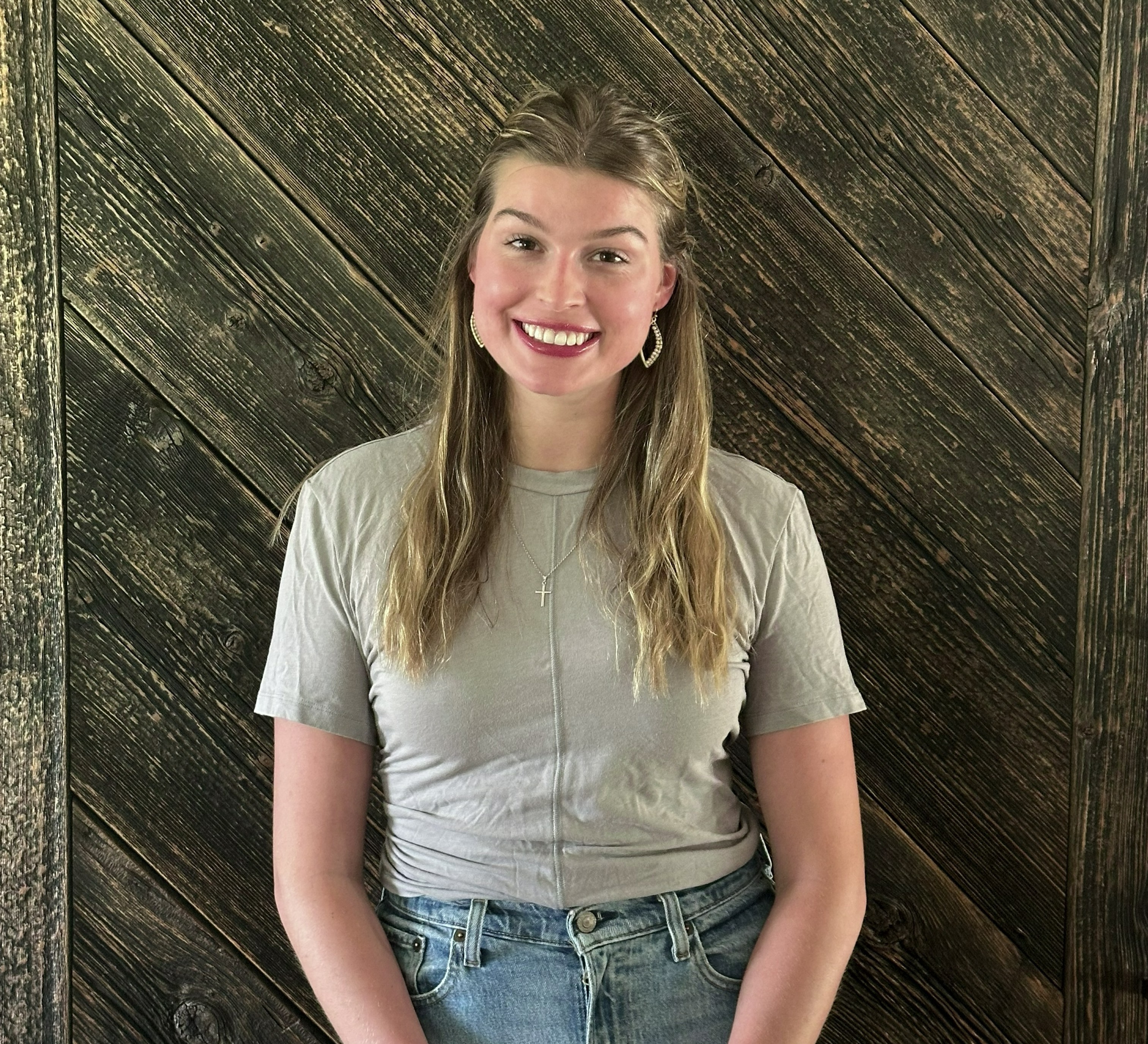
Hope Grootenboer stands in front of wooden plank wall

Hope earned an Honours Bachelor of Science in Biology in 2023 at Lakehead. “My professors were very supportive of everything I did—they remembered my name and I wasn’t just a number,” she says.

It helped that Hope has such a strong bond with these massive animals.

"I love cows! They have unique personalities, just like humans," she says. "I used to lay down in the barn by the calves whenever I was feeling overwhelmed. They helped me de-stress because they're just so happy."

By the time Hope was in grade five, she was already skilled at feeding calves, milking cows, and providing basic care. "That's when I started thinking about becoming a veterinarian," she says.

Then in 2020—while pursuing an Honours Bachelor of Science in Biology degree at Lakehead University in Thunder Bay—Hope was hired as a veterinary assistant at the Northwestern Veterinarian Hospital.

"I still work full time during the summers, and I also picked up hours during the school year when I was doing my Lakehead University degree," says Hope, who graduated in 2023.

"It's great to be able to watch surgeries and shadow both large and small-animal veterinarians. They're very excited when anyone wants to learn and they're happy to teach you."
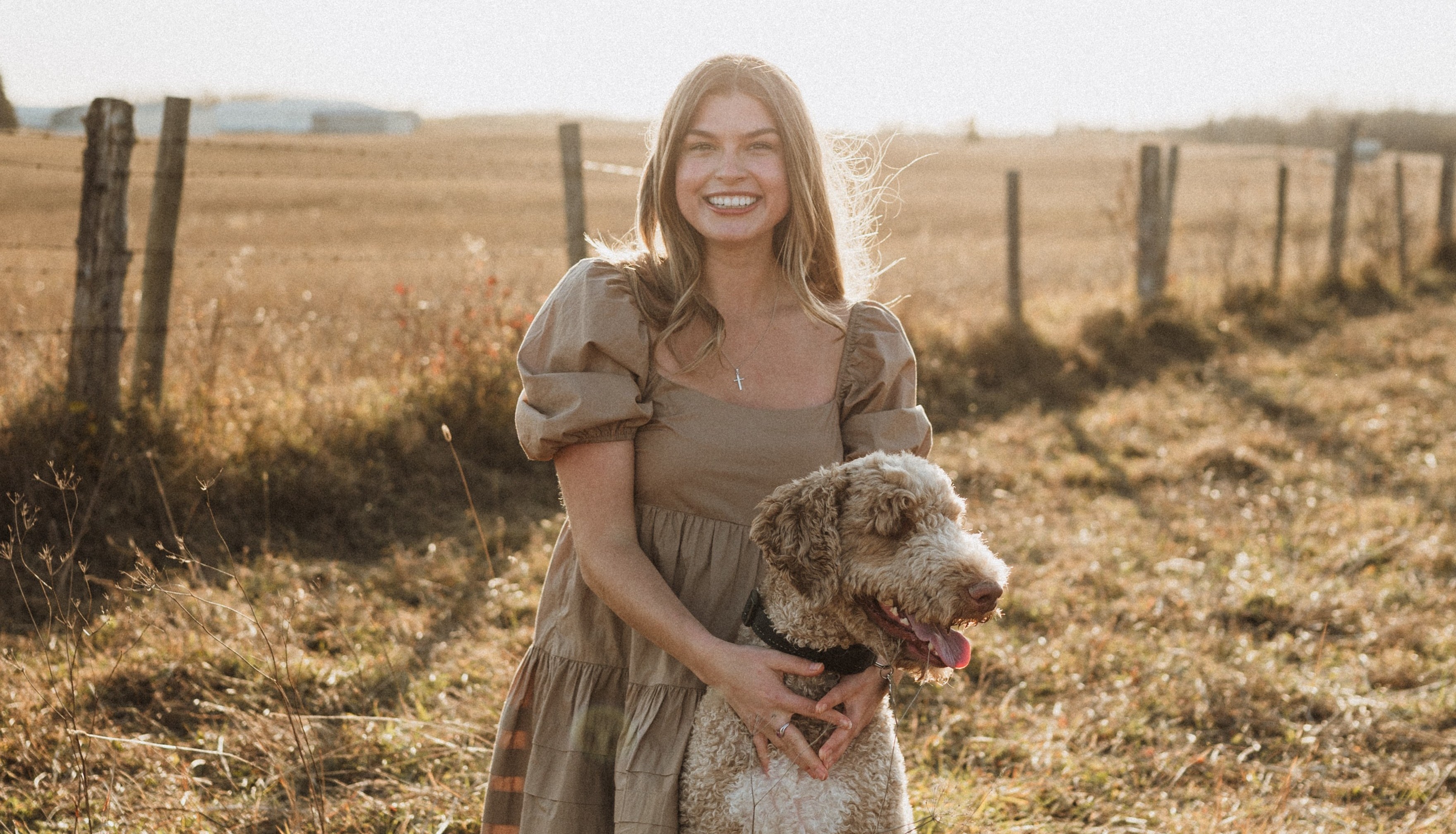
Hope Grootenboer, in a field during the autumn, puts her arms around a dog; a wire fence is behind her

Hope won a Beef Farmers of Ontario Veterinary Scholarship in 2025. "I was elated to be honoured and very surprised to win," she says. Above, Hope on her family farm with her brother's dog Elly.

Her time at Northwestern Veterinarian Hospital has opened Hope's eyes to the struggles veterinarians face due to the shortage of professionals in the north.

"They have to turn away clients because they want to provide the best care possible and there's only so many animals they can see in the day," she says.

"The situation is even worse for farmers whose horses and cattle need medical assistance. There are just two large animal veterinarians in the region—and both of them are on-call 24/7, 365 days a year."

The Busy and Rewarding Life of a CDVMP Student

As Hope embarks on her second year at the OVC campus at the University of Guelph, she's ready to tackle whatever is on the curriculum.
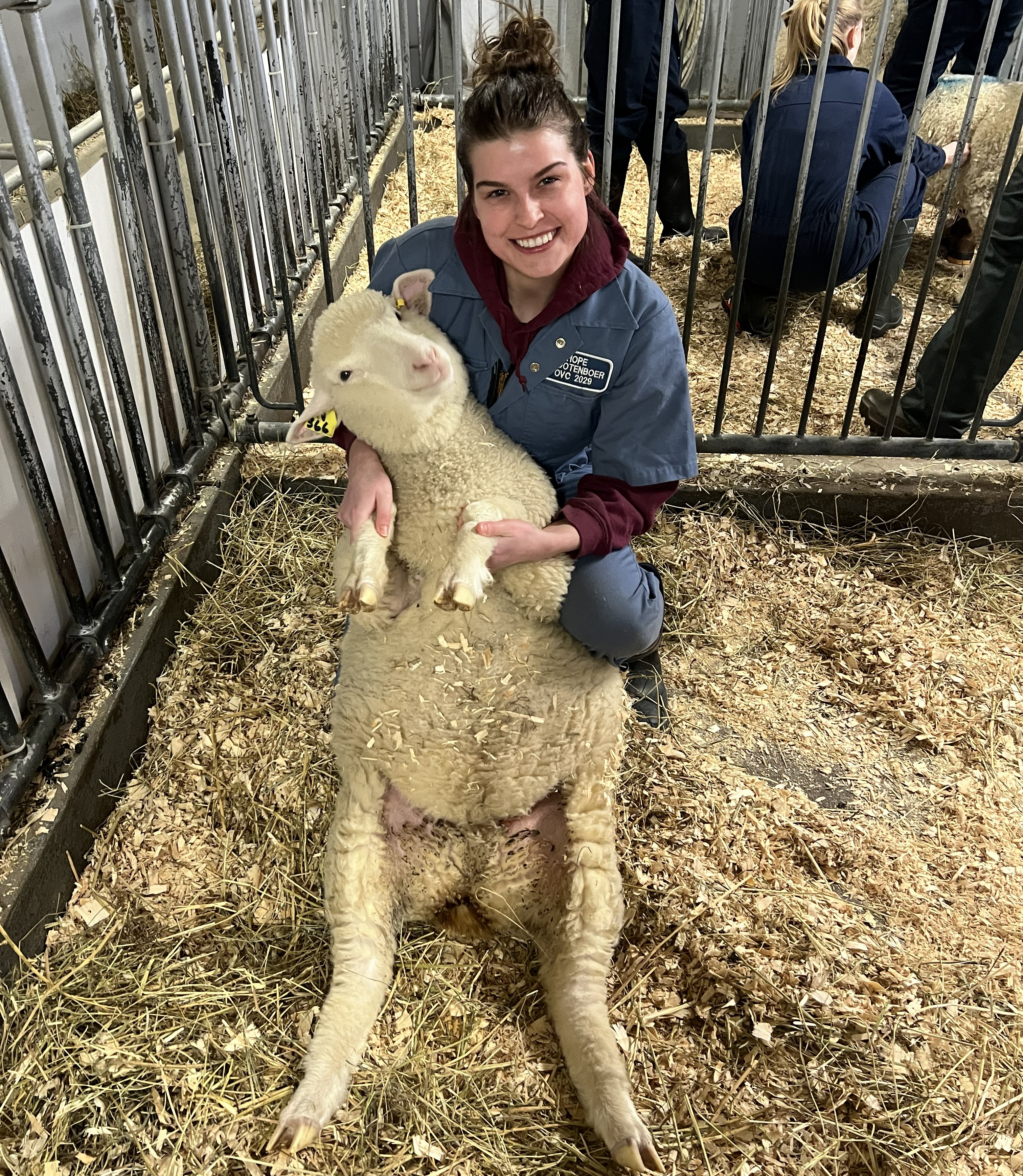
Hope Grootenboer sits on the ground in a barn pen and holds a sheep sitting on its haunches on the ground

Above, Hope, in the OVC barn, takes part in a lab teaching students how to conduct physical exams of sheep. "We practice tipping the sheep to put them in the position that is most comfortable for them," she says. Hope discovered that she'd been accepted to the CDVMP while preparing to run a half marathon in Banff. "I woke up at 5 in the morning and looked at the Ontario Veterinary College student portal and it said I was accepted, a few hours later I got an official notification by email. I popped a bottle of champagne and celebrated with my mom, two of my sisters-in-law, and my sister, who were with me in Banff. It was a great day!"

"We're learning spaying, surgical techniques like suturing, and rectal palpation exams. These exams help you understand the anatomical structure of cows and horses and determine if an animal is pregnant or sick—it's the most effective way to check the health of herds."

Hope believes that enrolling in the CDVMP is one of the smartest educational decisions she's ever made.

"I've had an amazing experience at Guelph. We're like one big happy family and the students in my lab practice group have become my closest friends."

When Hope graduates in 2029, her plan is to establish a mixed practice in Thunder Bay that treats both large and small animals.
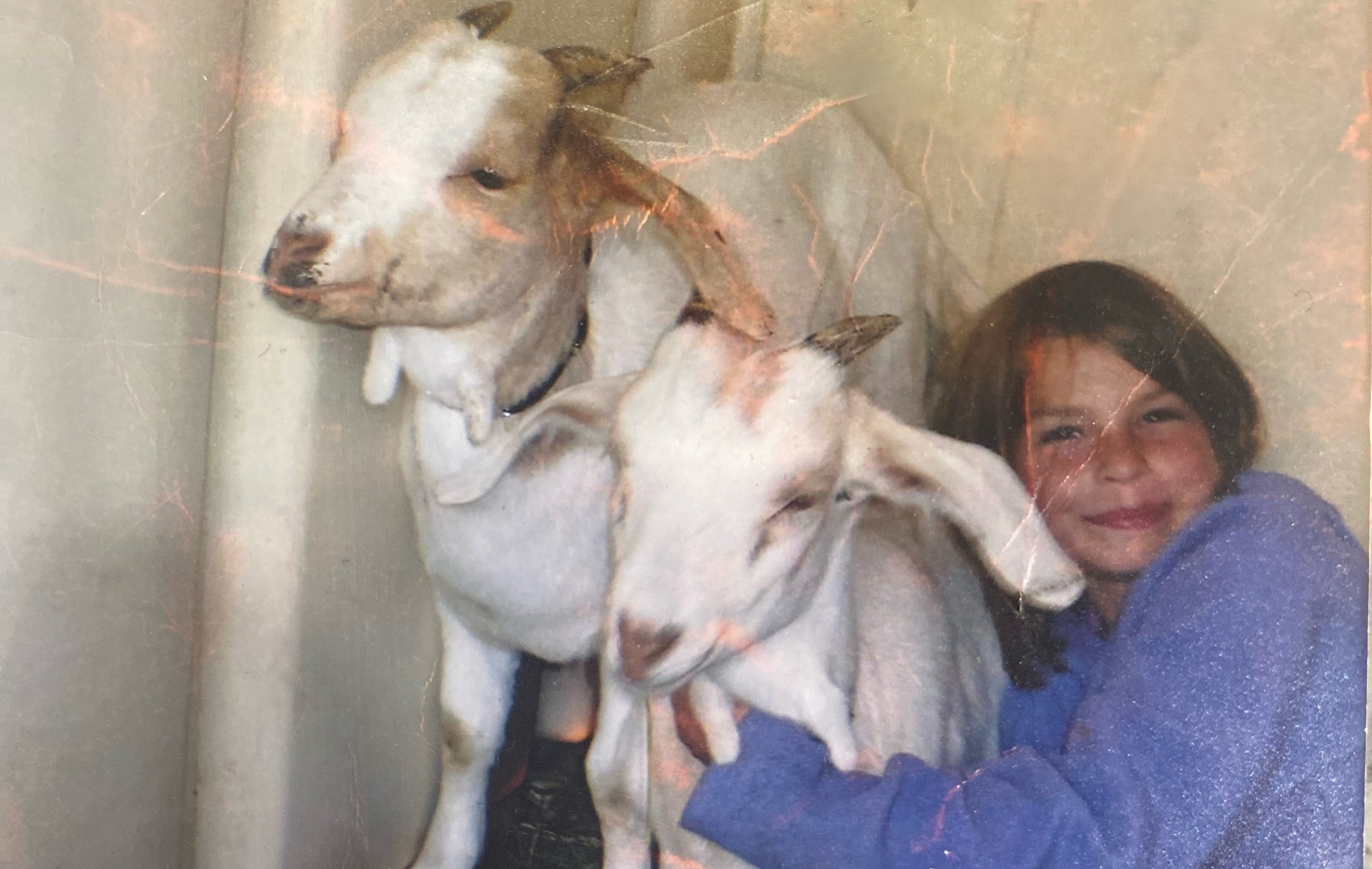
Hope Grootenboer, aged about 10, hugs a small white goat that is standing next another small white goat in a buiding

"Cows are great mothers and great protectors, and calves are super sweet," Hope says. She is also fond of goats. "When I was in grade three we got two goats, Autumn and Nutmeg (above). I was there when their mother gave birth and I helped feed them after they were born."

"I'd recommend that anyone from northern Ontario interested in a veterinary career look at the CDVMP option, talk to their local veterinarians, get some work experience, and then apply to the program," she says.

"My wish is that every student in my CDVMP cohort will see how fulfilling it is to work in the north," she adds.
Lakehead University’s Support of Anishinaabe Law Offers a Powerful Path to Truth and Reconciliation

Law Professor Larissa Speak Helps Bring Communities Together

Legal scholar Larissa Speak says she practices Anishinaabe law because it offers her healing and a respectful way to live in the world that honours the dignity of all.

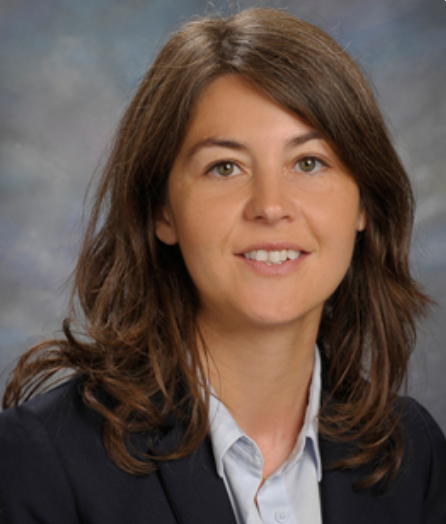
A head-and-shoulders image of Larissa Speak wearing a collared shirt and a dark blazer

Professor Speak's skills as an educator have made her law school classes extremely popular. In 2025, she won a Contribution to Teaching Award—a student-nominated award that recognizes instructors who have demonstrated high levels of teaching performance at Lakehead University.

"I'm focused on promoting resurgence at the community level, which helps Lakehead University with its commitment to Canada's Truth and Reconciliation (TRC) Calls to Action," she says.

She adds that being an assistant professor at Lakehead University's Bora Laskin Faculty of Law and a member of Fort William First Nation has helped shape her perspective on resurgence and Truth and Reconciliation.

"We need to figure out respectful relationships between Indigenous and settler communities to live well together on Anishinaabe lands," Professor Speak says.

She's helping forge these relationships as a teacher, researcher, and co-director of the law school's Mino-waabandan Inaakonigewinan Indigenous Law and Justice Institute. She collaborates closely with co-director Robin Sutherland in her work with the institute.

The institute was established in 2021 in response to the Truth and Reconciliation Commission of Canada's Call to Action #50, which called for the creation of Indigenous law institutes across the country.

"The institute works with communities to revitalize Indigenous law and to increase access to justice for Indigenous Peoples," she says.

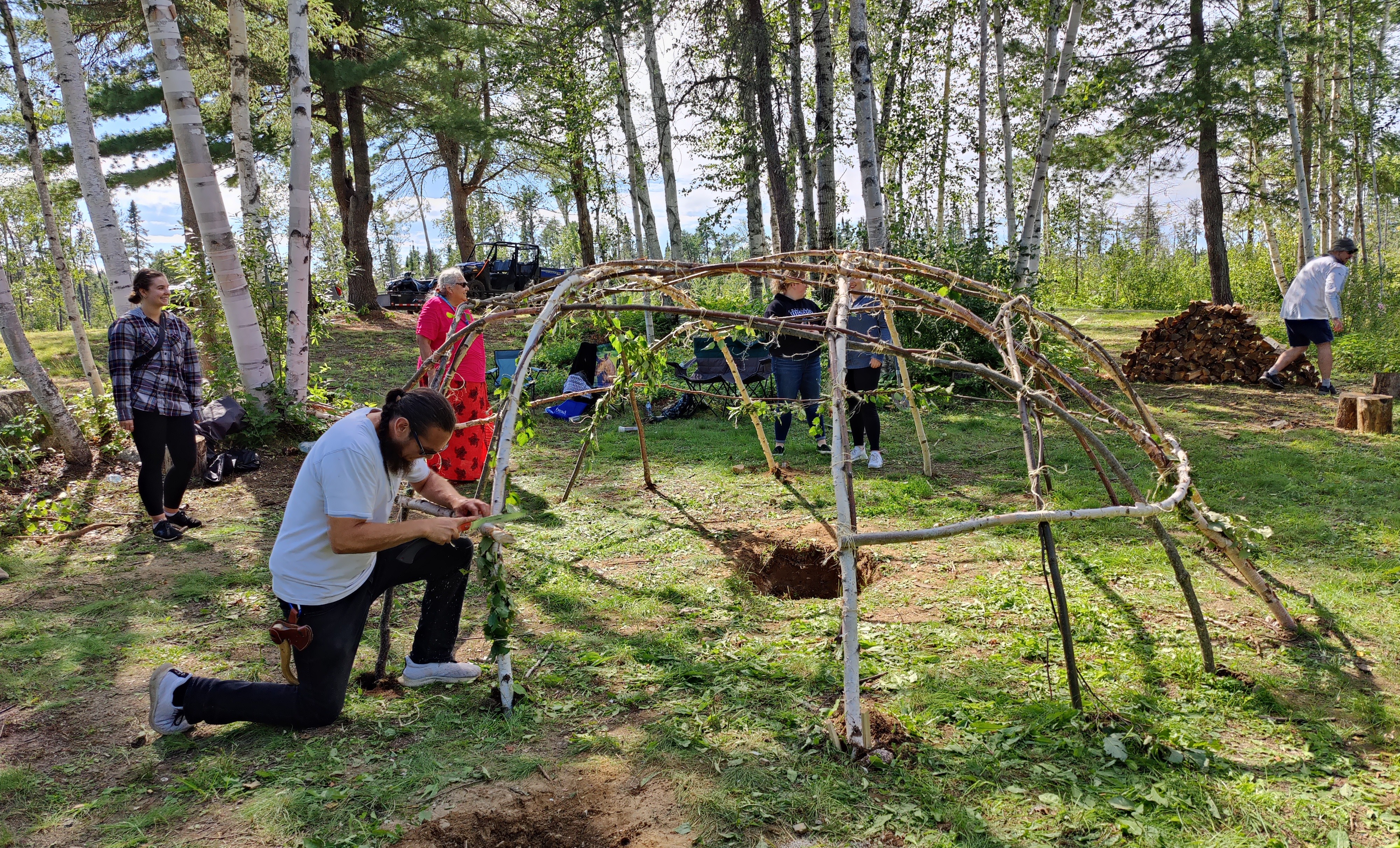
In a clearing surrounded by trees, Robin Sutherland constructs a sweat lodge out of tree saplings while several other people stand on the edge of the clearing

Professor Speak and Robin Sutherland are co-directors of the Mino-waabandan Inaakonigewinan Indigenous Law and Justice Institute, which means "seeing the law in a good way." Robin Sutherland is also the law school's Director of Indigenous Relations. Above, he helps first-year law students build a sweat lodge at the law school's first annual Law Camp.

It also offers important academic and outreach programming to law students, such as the annual Gaa-maada'ooniding Land-based Law Camp co-hosted with the School of Indigenous Learning (SOIL).

Gaa-maada'ooniding—Anishinaabe for "the place where we share together"—welcomes first-year students to the law school community and introduces them to Indigenous law through land-based practices, ceremonies, art, and sharing circles led by Indigenous knowledge holders.

A Leader in Indigenous and Aboriginal Law

Professor Speak's teaching, research, and advocacy are closely intertwined with the Bora Laskin Faculty of Law in other ways, too.

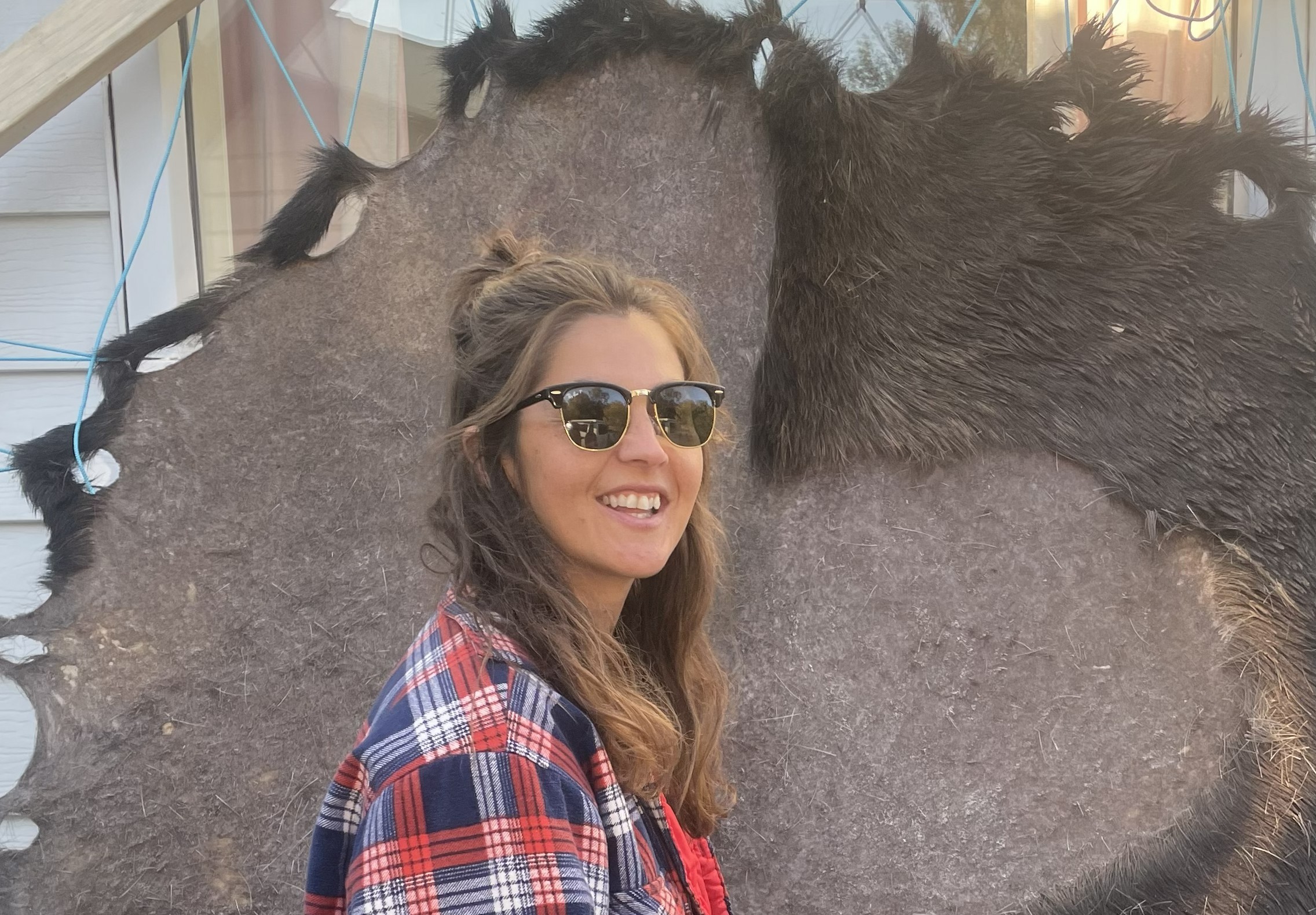
Larissa Speak, wearing a plaid jacket and sunglasses, stands in front of a moose hide that is being tanned

"We live in a very powerful place, and the Indigenous community wants to share that with people," Professor Speak says. "The sacred mountain—Anemki Wajiw—is the home of the Thunderbirds." Above, Professor Speak works on a moose hide after learning the practice from hide-tanners Jean Marshall and Shelby Gagnon.

She joined the law school as a contract lecturer in 2020, later becoming a professor, but she first stepped through its doors in 2013 as a student and a member of the law school's charter class.

"Studying at the Bora Laskin Faculty of Law helped me better understand my Anishinaabe identity and the responsibilities that it carries," Professor Speak says.

"My family had become disconnected from Fort William First Nation, but law school helped me establish relationships in my community and got me really interested in learning about Indigenous law, especially Anishinaabe law."

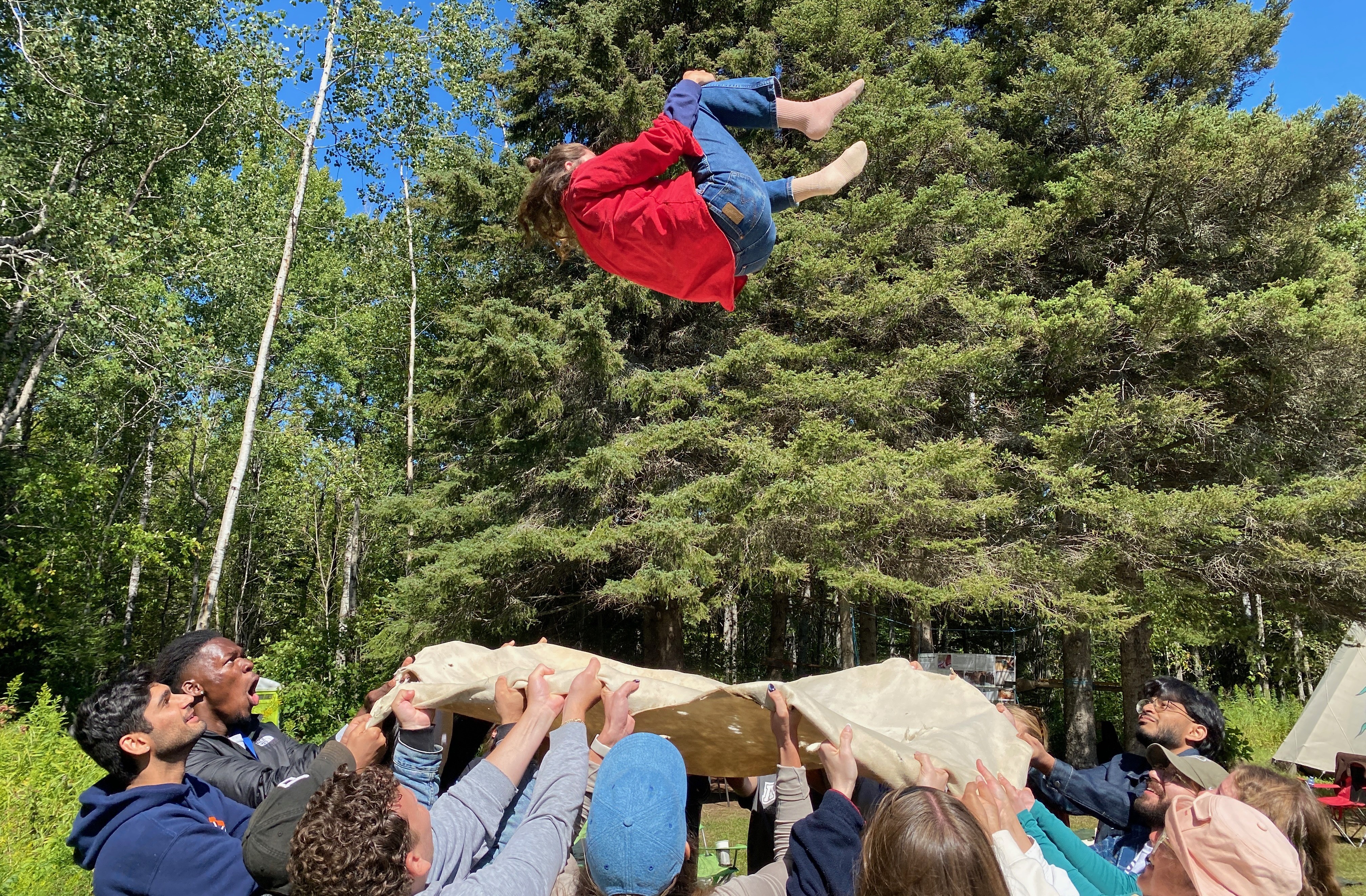
A group of people stand in a circle holding a moose hide and toss a woman from the moose hide up into the air

When students arrive at the law school's Gaa-maada'ooniding Land-based Law Camp, Professor Speak says they "set up the tents and stations, bring the Elders food, and help clean up, because if you're going to learn something, you also need to give something back." Above, students help soften a moose hide by tossing Professor Speak into the air at the Bora Laskin Faculty of Law's 2025 Law Camp.

Her exposure to these forms of laws wasn't accidental. One of the law school's three mandates is the teaching of Aboriginal and Indigenous law.

"Aboriginal law deals with how Canadian law applies to and affects Indigenous people, for example, treaty and hunting rights," Professor Speak explains. "Indigenous law refers to the law practiced by Indigenous people, which is separate and apart from Canadian law."

An Anishinaabe Worldview

Professor Speak specializes in the law practiced by Anishinaabe people and communities in northwestern Ontario. "It's an oral tradition based on protocols, relationships, and how to live and act in a good way so that you don't cause harm."

Fundamental to Anishinaabe law is a more inclusive version of personhood in which humans have no superiority over other living things—animals, plants, lakes, and trees are equal to humans and imbued with agency and spirit.

This conception of the world means that Anishinaabe law is often expressed through communal activities that happen on the land, such as respectful harvesting and hunting. For this reason, supporting Indigenous people being on the land is crucial to Professor Speak's teaching and research.

"I also try to broaden law students' understanding of what constitutes law through practices like deer and moosehide tanning," she says.

A back view of a group of people sitting and standing on rocks at the edge of a river

Last year, Professor Speak offered an upper-year elective course called "Anishinaabe Governance in Practice: Visiting and Learning at Kay-Nah-Chi-Wah-Nung." Students in Lakehead's Faculty of Law program and the Outdoor Recreation Parks and Tourism (ORPT) program went to the Manitou Mounds Historical Centre on Rainy River First Nations lands with ORPT Director Dr. Leigh Potvin. The course built on extracurricular trips to Manitou Mounds led by Robin Sutherland in previous academic years. "Robin established strong ties with Manitou Mounds and the local knowledge holders, setting us up for success. We visited a protected site with burial mounds, some of which were 8,000 years old, and the students were part of a ceremony to repatriate ancient remains," Professor Speak says. "They also learned Anishinaabe teachings about the stars and constellations." Above, as part of the course, Professor Speak and students look for "jumping name," also known as sturgeon, in the Rainy River.

In collaboration with Dr. Leigh Potvin, she has hosted two hide-tanning gatherings at Lakehead University, funded by a SSHRC SIG Community-Engaged Research Grant (CERG) and a Lakehead University Indigenous Research Capacity Development Grant. The gatherings were open to Indigenous and non-Indigenous students, and anyone from the wider community interested in participating. These kinds of gatherings strengthen Anishinaabe law and teach non-Indigenous people about the places where they live.

We All Have a Part to Play in Truth and Reconciliation

Professor Speak says that many of the TRC's calls to action remain incomplete.

"There's been backsliding and a resistance to decolonization at the institutional level. That's why I'd like to see non-Indigenous people step into leadership roles to support this work, including commemorating the National Day for Truth and Reconciliation on September 30."

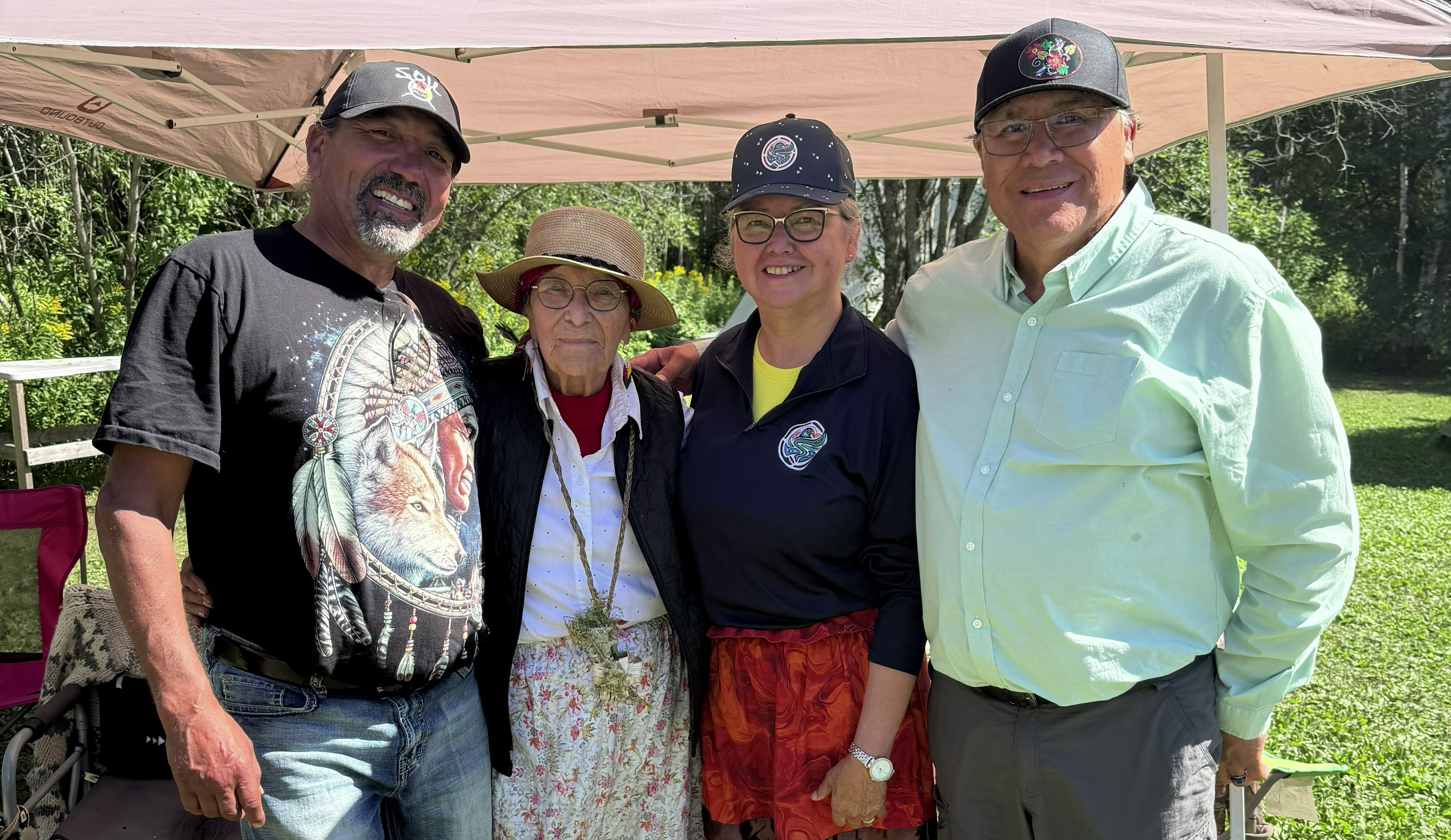
Two women and two men stand outside beneath a tent

Professor Speak says that non-Indigenous students often arrive at law camp feeling very nervous, but that they soon relax. "They eat so much food at law camp, which is how I know they're becoming comfortable," she says. "In sharing circles at the end of the three days, many students describe it as an amazing experience." Above, Knowledge Holders Jeordi Pierre, Marlene Pierre, Irene Linklater, and Ron Linklater at the Bora Laskin Faculty of Law's 2026 Law Camp.

Professor Speak believes that the best way to begin engaging in Truth and Reconciliation is by attending Indigenous community events and getting to know people—whether it's a Powwow, an art exhibition, Lakehead University's annual Fall Harvest celebration, or other campus gatherings.

"Then think about specific calls to action you want to respond to, because this work is for all of us to do," she says.

How to Show Your Support on September 30:

Researcher Céline Wick Embraces the Potential of Traditional Medicine

Meet an Emerging Leader Using Indigenous-Centred Care to Support Well-being

"The birth of my niece and nephew made me see myself as part of a long line of people," Céline Wick says.

It was a realization that led this Lakehead University PhD student and new Indigenous Learning professor on a transformative journey.

"An Elder told me that being an auntie means being a little mother," Céline says. "He also talked about our responsibilities to children as well as to our ancestors, our grannies, and our grandfathers.

That's why I'm committed to fostering healthy, bright, and loving futures for my community and my nation."

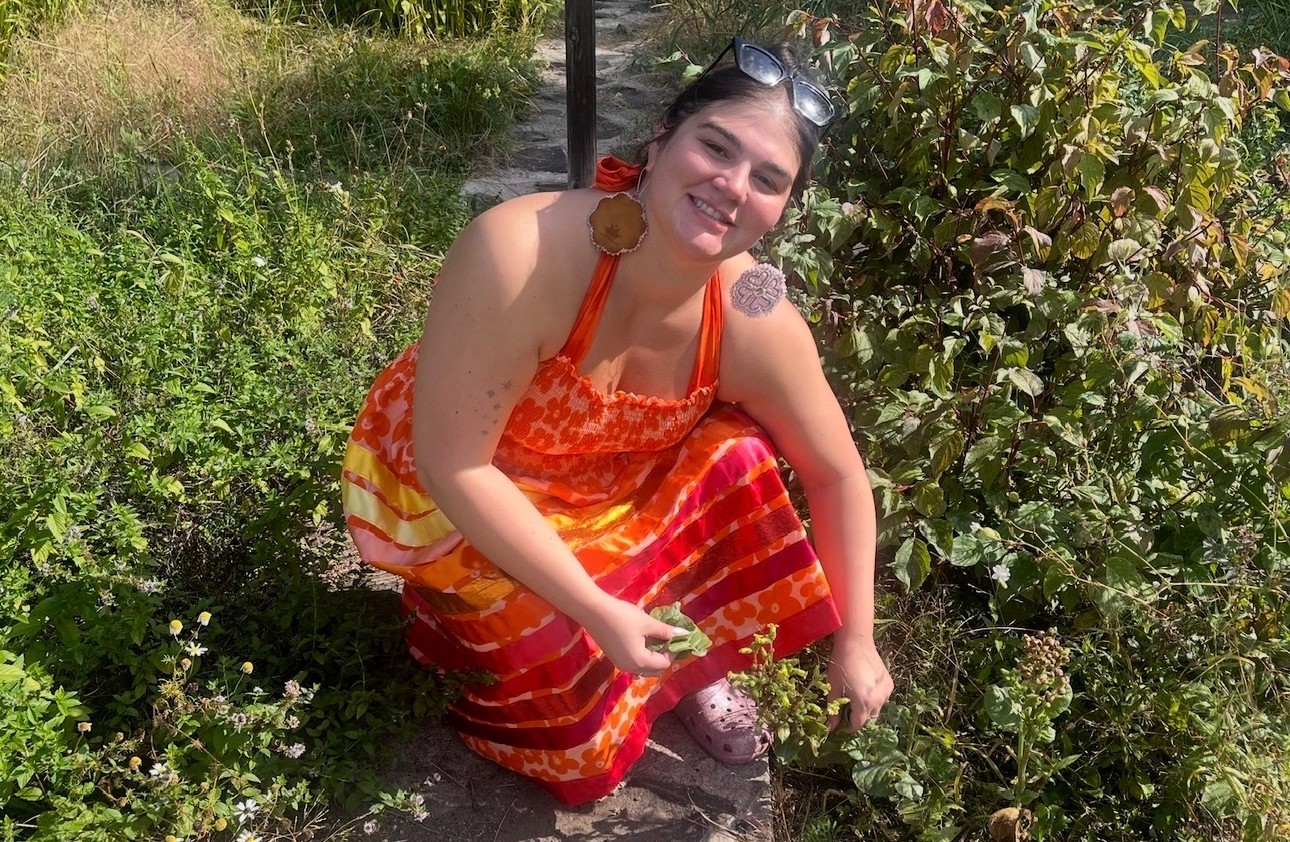
Céline Wick, wearing an orange dress and beaded earrings, picks leaves from plants in a garden on a sunny day

"I never saw myself pursuing a PhD, but having people like Lana Ray, Denise Baxter, and Kristin Burnett believe in me made me realize it was possible," Céline says. "Now I have my dream job as an Indigenous Learning professor. I love my colleagues and will keep finding ways to be useful to my people and my Nation, including through health research." Above, Céline collects plants from the Gitigaan Medicine Garden at Lakehead University's Sweat Lodge Site.

Finding Strength in Métis Culture

Céline has already earned two Lakehead degrees and is on the verge of completing her third—
a health sciences PhD focused on Indigenous well-being.

She credits her BA in Political Science and Government with introducing her to the postsecondary world and her Master of Social Justice degree with deepening her connection to her Métis heritage.

For her master's, Céline collaborated with her mother and her grandmother to document their experiences of being Métis women. Her resulting thesis provided insights into how relationships enable Métis women to sustain their cultural identity.

"It was through this degree that I began to see research as a useful way of bringing resources to my community," she says. "This, in turn, got me interested in Indigenous health."

Céline Wick's great-grandmother holds Céline, aged about 18 months, on her lap and smiles at her

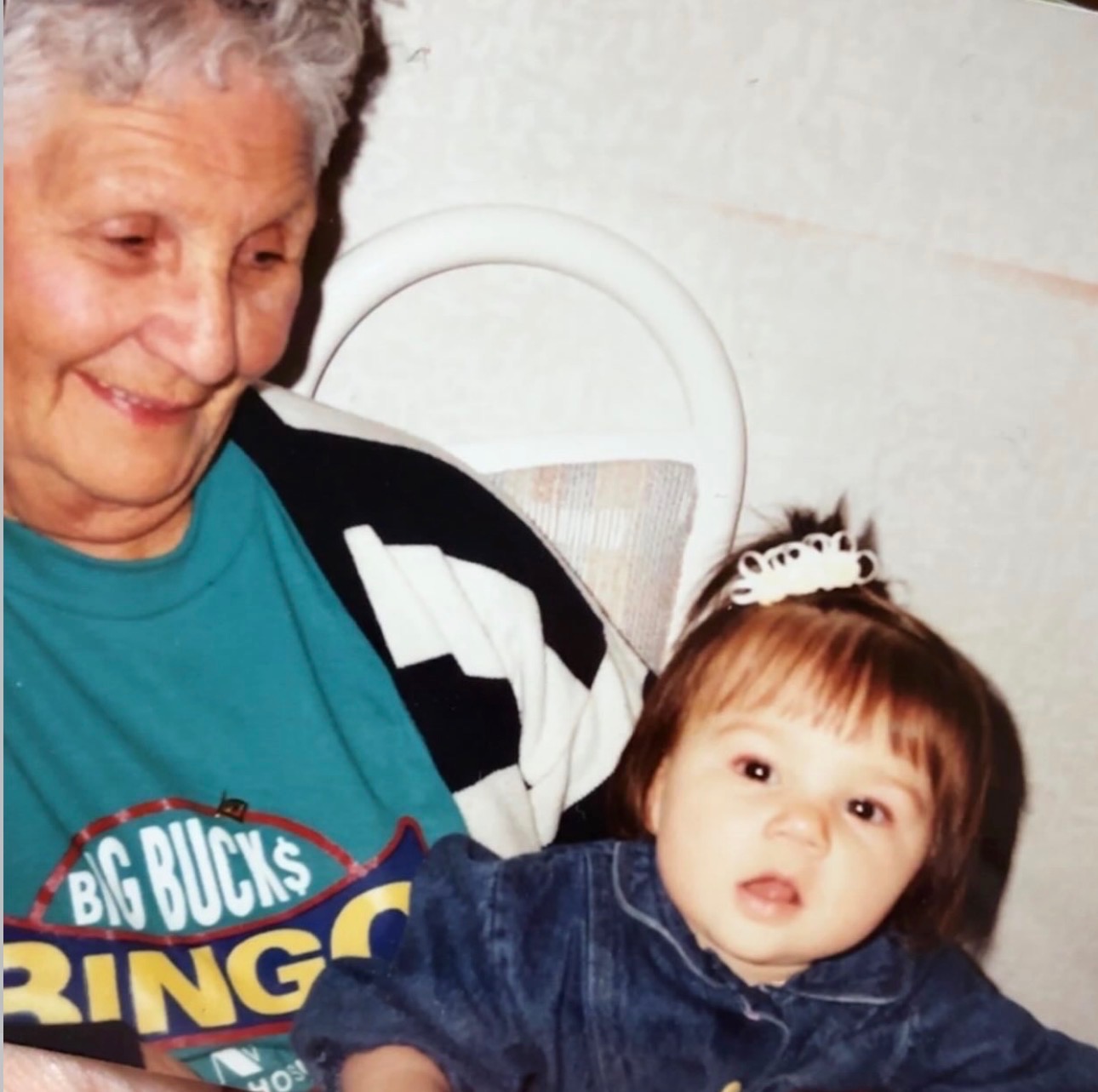
Céline's grandmother was born in a Métis road allowance community in southern Saskatchewan. These communities arose after the government displaced Métis people to make way for immigrant farmers from Europe. These settlements didn't have running water and houses were built with salvaged materials. "It was a really difficult time, but it was also a time of resource sharing and Métis values," Céline says. Left, a photo of Céline as a toddler with her great-grandmother Agnes (Bellerose) Bellamy.

Céline master's thesis supervisor Dr. Lana Ray— Lakehead's Anishinaabe Kendaasiwin Institute Director and the Canada Research Chair in Resurgent Methodologies for Indigenous Health with Athabasca University—played a pivotal role in this shift.

"I spent the year after my master's degree as a research assistant with Dr. Ray's Waasegiizhig Nanaandawe'iyewigamig Mino Bimaadiziwin (WNMB) project," Céline says.

"It explored how access to traditional medicine has the potential to support overall well-being and address high rates of cancer and other chronic diseases.

Her project helped prepare me for my PhD, and it helped prepare me as a human being."

The Power of Traditional Medicine

Céline's PhD dissertation, co-supervised by Dr. Ray and Dr. Anna Koné, is investigating how love and care can act as protective factors against the harms of settler colonialism.

"Colonization attacked our relationships to ourselves, each other, and the land, and this has been really detrimental to our health," she explains.

"My PhD is focused on how culturally responsive care can be an antidote to these harms by treating the whole of an individual's being."

Céline Wick and four other women, wearing t-shirts and Métis ribbon skirts, stand outdoors; trees and a river are visible in the background

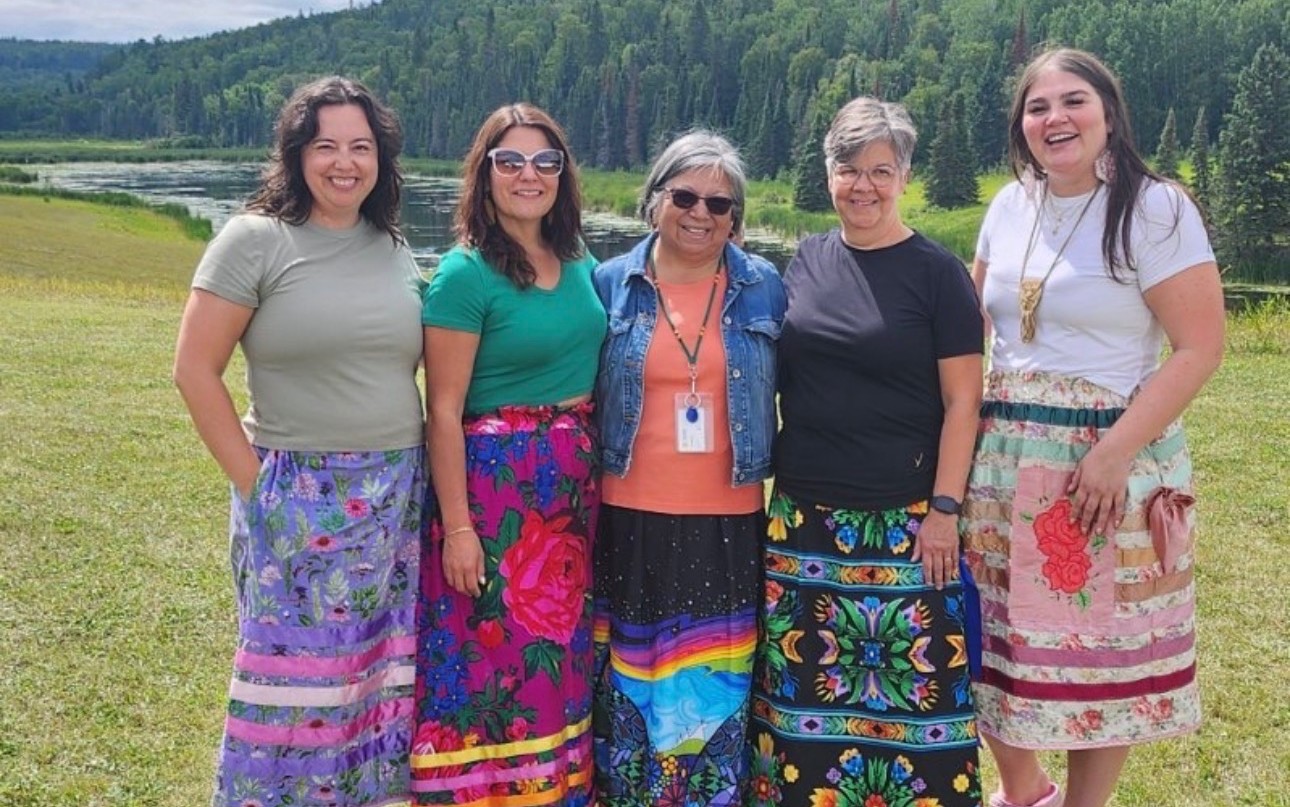
"Part of the process of my master's research was coming to understand the importance of unconditional love and how it helps you find your place," Above, Indigenous members of the WNMB research project. Left to right: Dr. Alanna Morgan (MD), Dr. Lana Ray, Ida Copenace, Dr. Cindy Peltier, and Céline Wick.

Traditional medicines and ceremony support health and good living because they are underpinned by love.

"Love is the fabric that holds everything together, and it's how my people survive impossible realities," she says.

Céline Wick holds an eagle feather while surrounded by people who are clapping

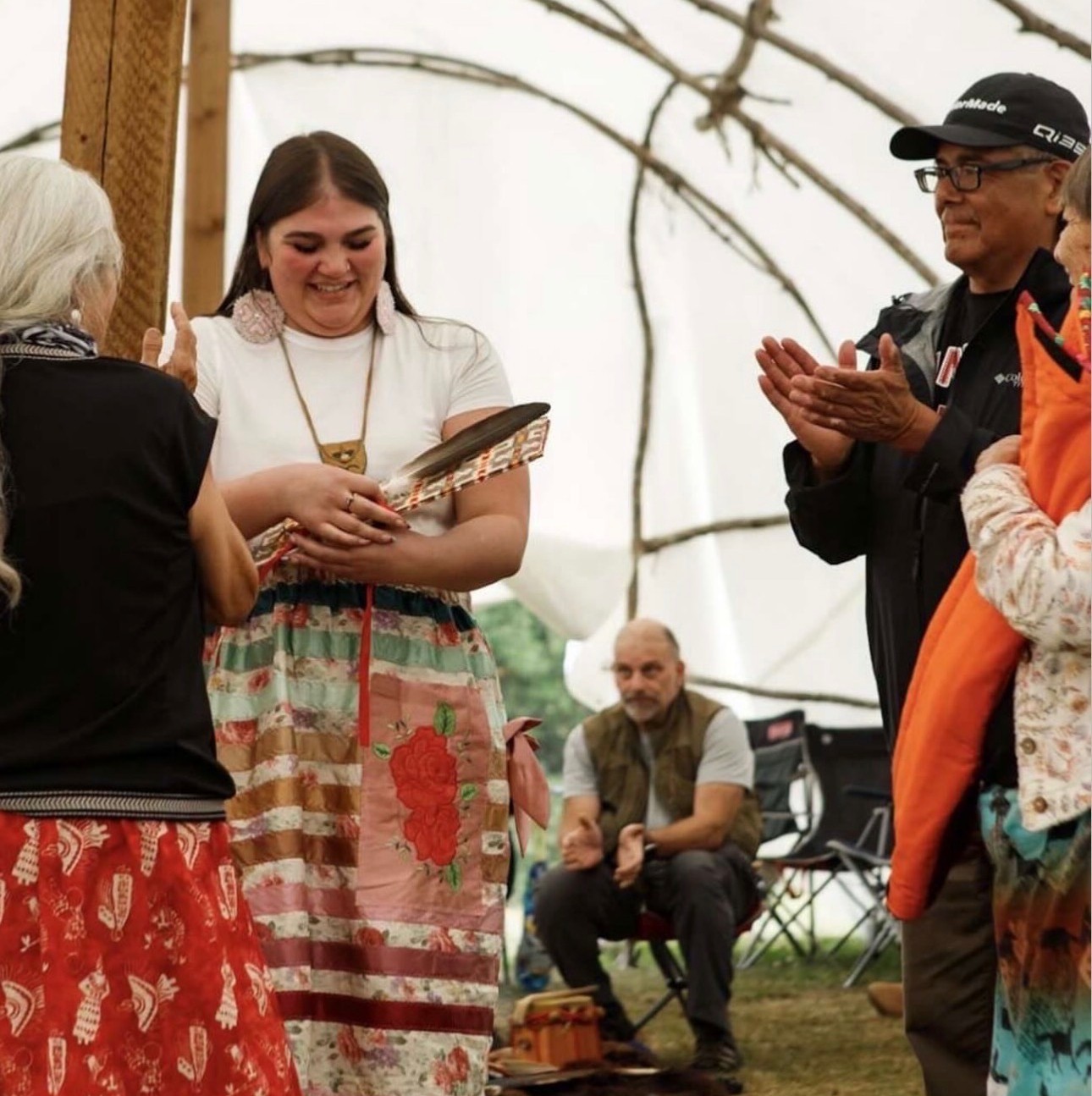
“Over the summer of 2025, after I was hired as an Indigenous Learning professor, I did a lot of reflecting on this new chapter,” Céline says. “I want my students to know that they’re brilliant and that they can do anything that's important to them.” Above, Céline is honoured with an eagle feather for her WNMB research work at a medicine camp teaching lodge.

"My goal is to tell the story of the important work being done in our communities to undo the ongoing harms of colonization. Both Indigenous and Western approaches to medicine have an important role in health and well-being, and it's important to ensure that both are respected."

Céline's work as a health research advisor with the Métis National Council reaffirmed her commitment to this area of research.

"I worked on a docu-series called "We Won't Be Ignored." We interviewed Métis people across the country about their experiences with diseases and other health issues because Métis health is very under-researched."

Mentors Inspire the Changemakers We Need

"Dr. Ray has been wonderful and much more than a master's and PhD supervisor," Céline says. "She's helped me grow into my community responsibilities and shown me what it means to be a strong Indigenous woman in an academic space."

When the position of Indigenous Learning professor opened up at Lakehead, it was Dr. Ray who encouraged Céline to apply.

Céline Wick smiles as she holds a pair of clippers in one hand and a piece of a spruce tree bough in her other hand; a pile of tree boughs sit on a table in front of her

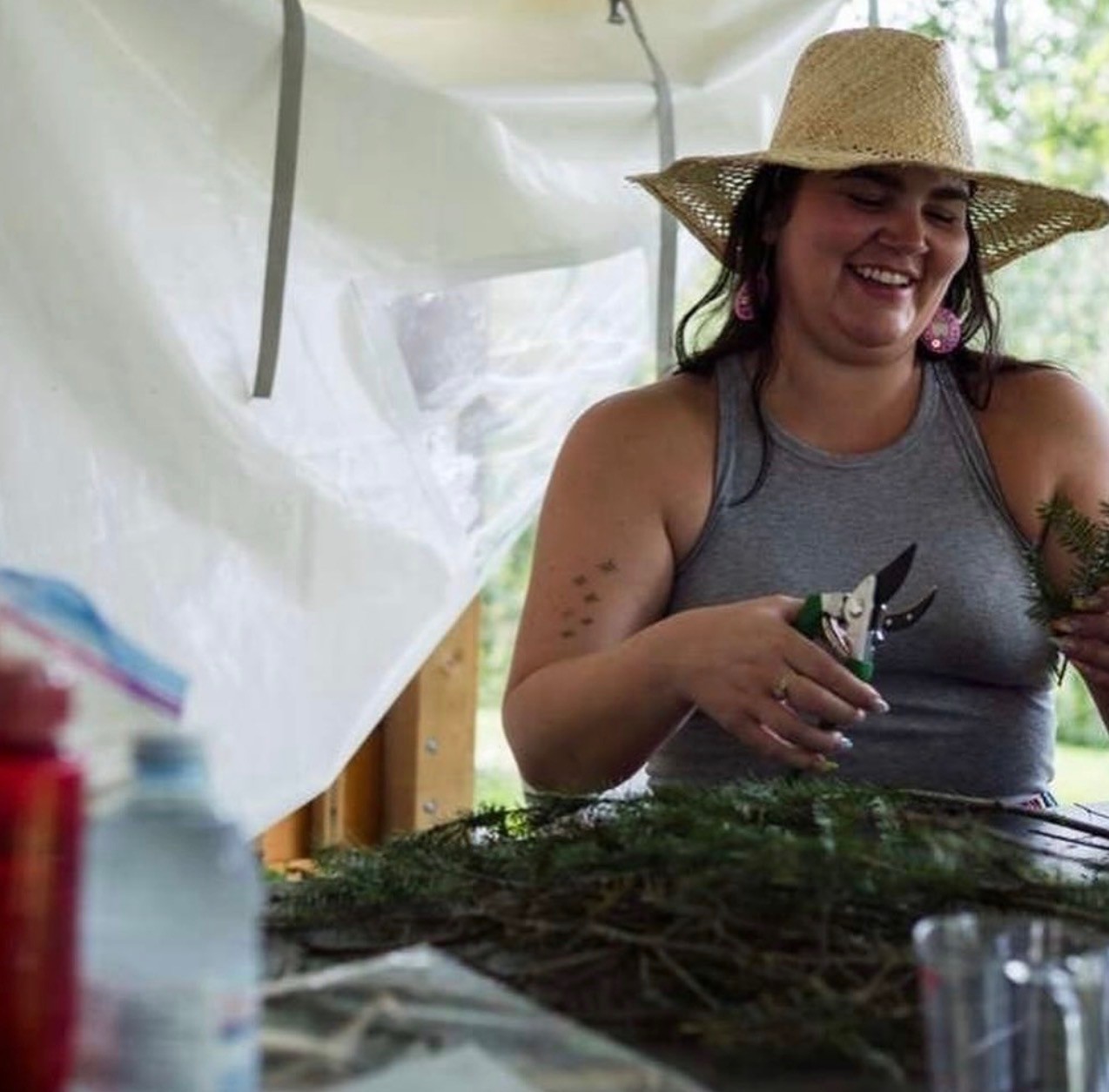
"Learning about traditional healing has been one of the most beautiful parts of being on Dr. Ray's research team," Céline says. "We worked with traditional knowledge holders and the Waasegiizhig Nanaandawe'iyewigamig Health Access Centre (WNHAC)." Above, Céline processes medicines harvested at a medicine camp near Kenora, Ontario, as part of the WNMB project.

"I was really nervous and didn't think that I'd get the position," Céline says. "Now, I'm just starting my second year of teaching. It's been amazing to see my students get excited about learning and research that can nurture their communities."

She's also grateful to Indigenous Learning professor Dr. Kristin Burnett for encouraging her to enrol in Lakehead's master's program and for the ongoing support of Indigenous Initiatives Vice-Provost Denise Baxter and the Indigenous Initiatives team.

"All the love that's been poured into me, I want to pass forward," Céline says. "I want to be the cheerleader and supporter that so many of my mentors have been to me."

Watch the "We Won't Be Ignored" video Céline helped produce about Métis people's experiences with cancer and their barriers to treatment.

Lakehead University thanks the Canadian Institutes of Health Research (CIHR) for their $1.2 million in funding in support of the Waasegiizhig Nanaandawe'iyewigamig Mino Bimaadiziwin research project led by principal investigator Dr. Lana Ray.

September 2026 Education Exchange Newsletter Published

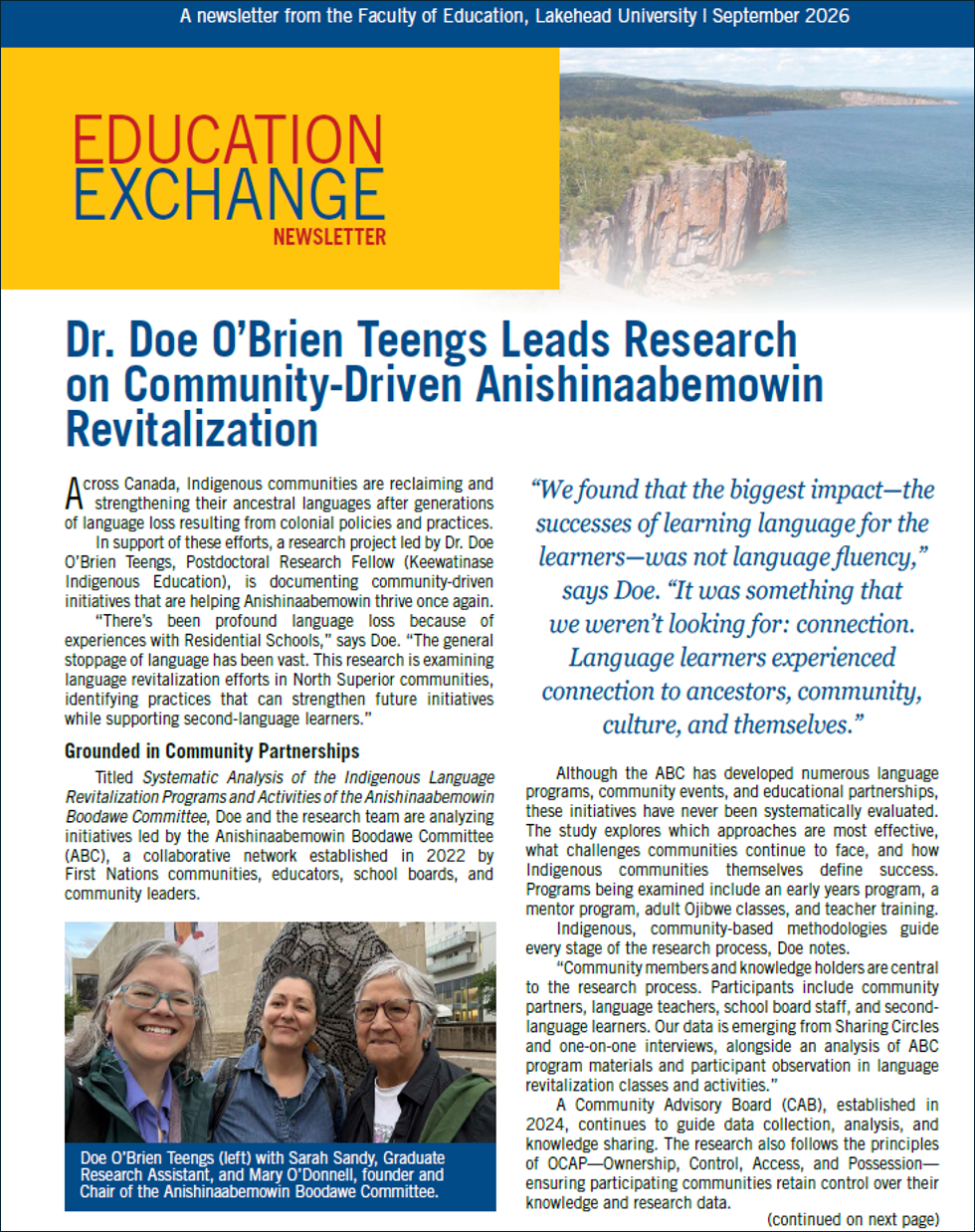
The September 2026 issue of Education Exchange, the Faculty of Education’s newsletter, is now available. This issue features Dr. Doe O'Brien Teengs's research on Anishinaabemowin revitalization, Dr. Leisa Desmoulins and Dr. Ruth Beatty's research on advancing Indigenous education in Simcoe County, faculty awards, profiles of alumni from the Technological Education program, and more.

To read this issue, click here.


Pages

Subscribe to Indigenous