



Lily’s Graduate Poster Competition Success
The Faculty of Natural Resources Management announces that Master of Science in Forestry student Lily Edmunds has won the 2026 Graduate Poster Competition*. We connected with Lily for a Q&A to explore her research and the accomplishment that earned her this distinction.
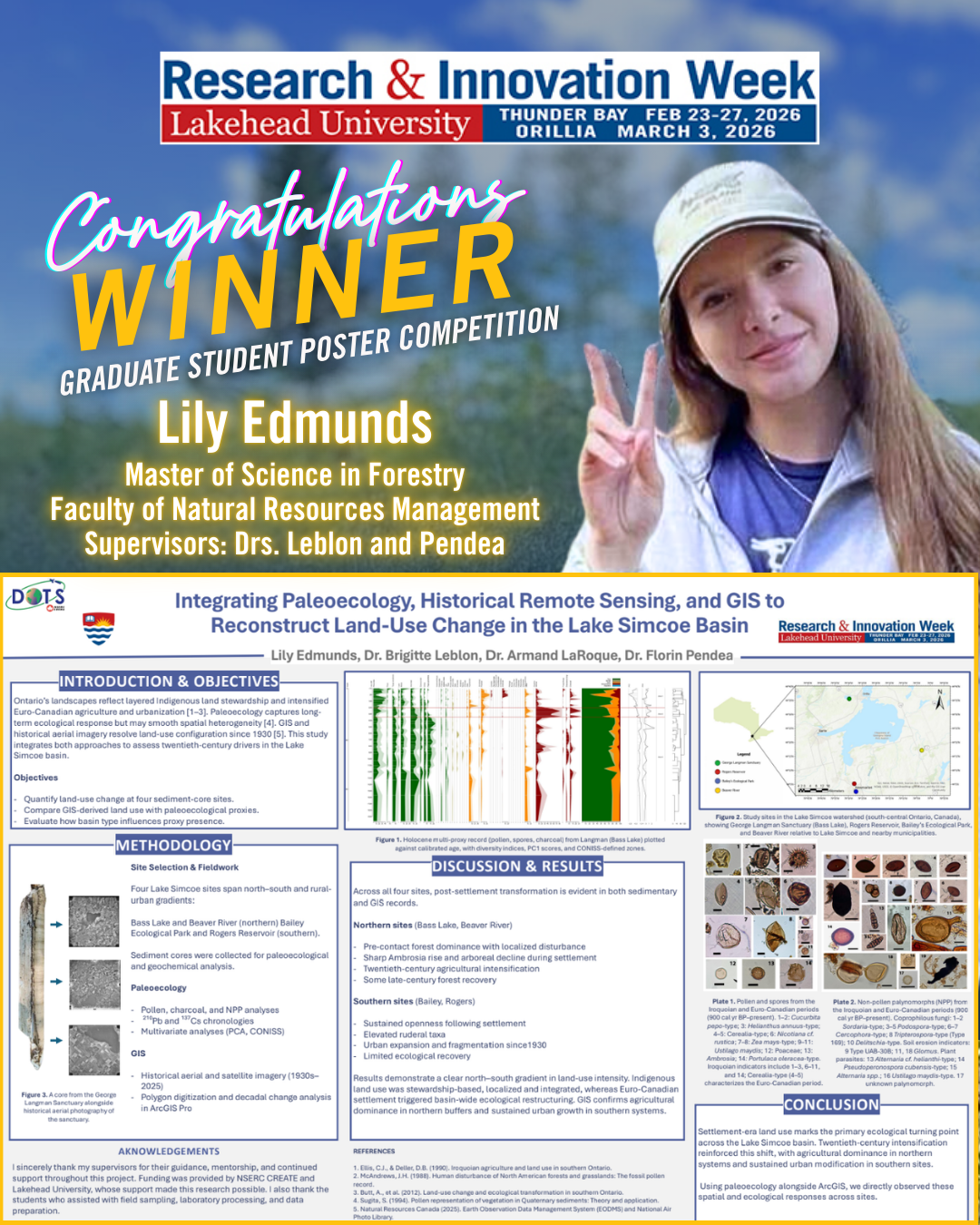
Hi Lily, congratulations on your win! To start off, can you share a little about your background?
My name is Lily Edmunds. I graduated from Lakehead University’s Orillia campus in 2024 with an Honours Bachelor of Arts and Science in Environmental Sustainability, specializing in Ecosystem Management, along with an Environmental Technician diploma offered through Georgian College. I’m currently pursuing a thesis-based Master of Science in Forestry under the co-supervision of Dr. Brigitte Leblon and Dr. Florin Pendea, where my research focuses on understanding land-use change over time in the Lake Simcoe watershed using paleoecology and remote sensing. I expect to publish my two manuscripts and graduate this summer. The thesis is funded by an NSERC-CREATE grant and an NSERC Discovery Grant awarded to Dr. Brigitte Leblon.
What inspired the research behind your winning poster, and how did the idea first develop?
As an undergraduate, I took a geomorphology class taught by one of my current supervisors, Dr. Florin Pendea. During a field trip to the George Langman Sanctuary in Orillia, our class collected a soil core as part of a small exercise. What we discovered was that the site allowed us to retrieve an unusually deep core compared to many other locations, where bedrock, disturbance, or shallow soils often limit how far back you can sample. This meant we had access to a long-term environmental record of the area.
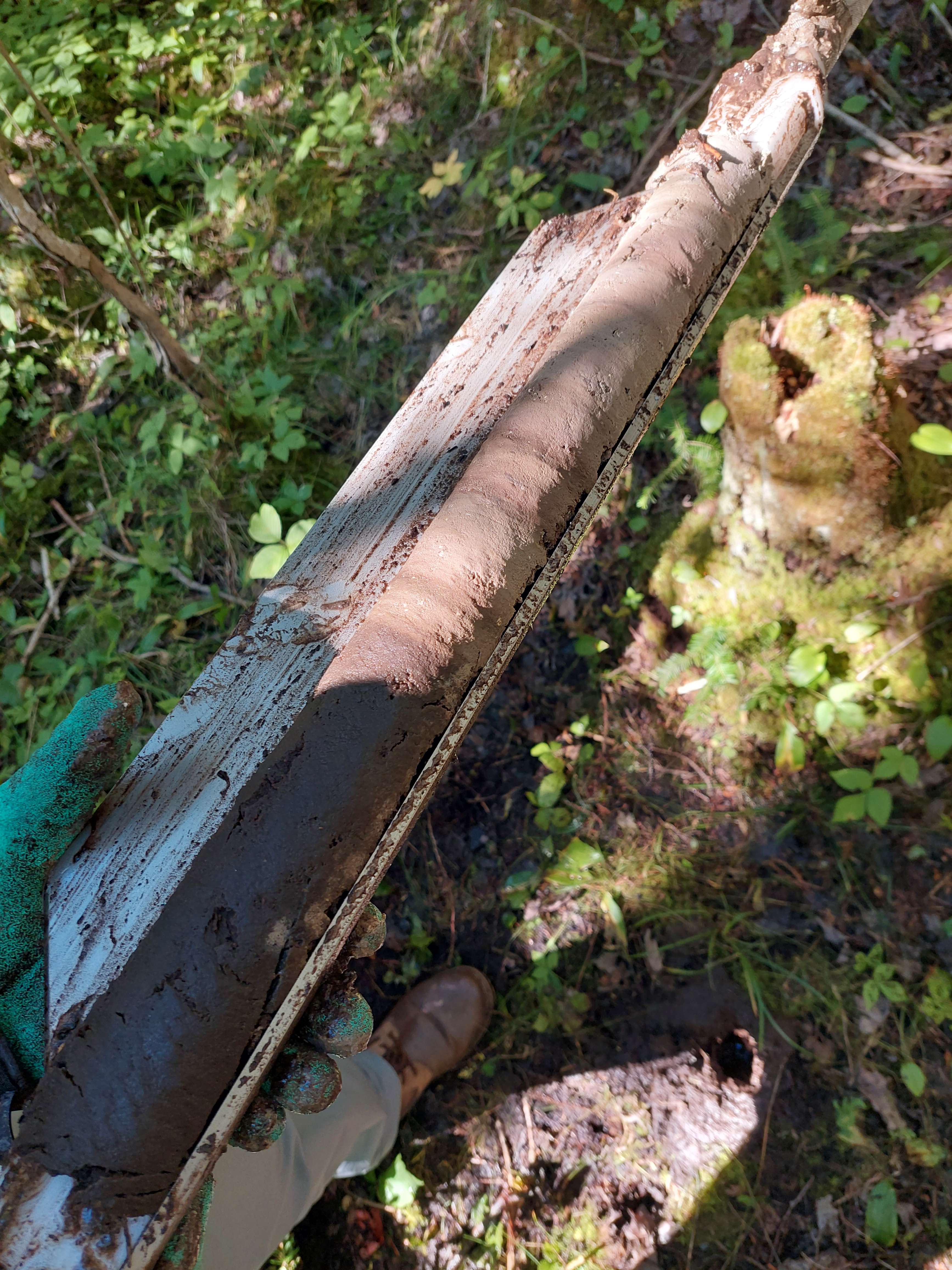
A part of a sediment core from Langman - Photo by Lily E.
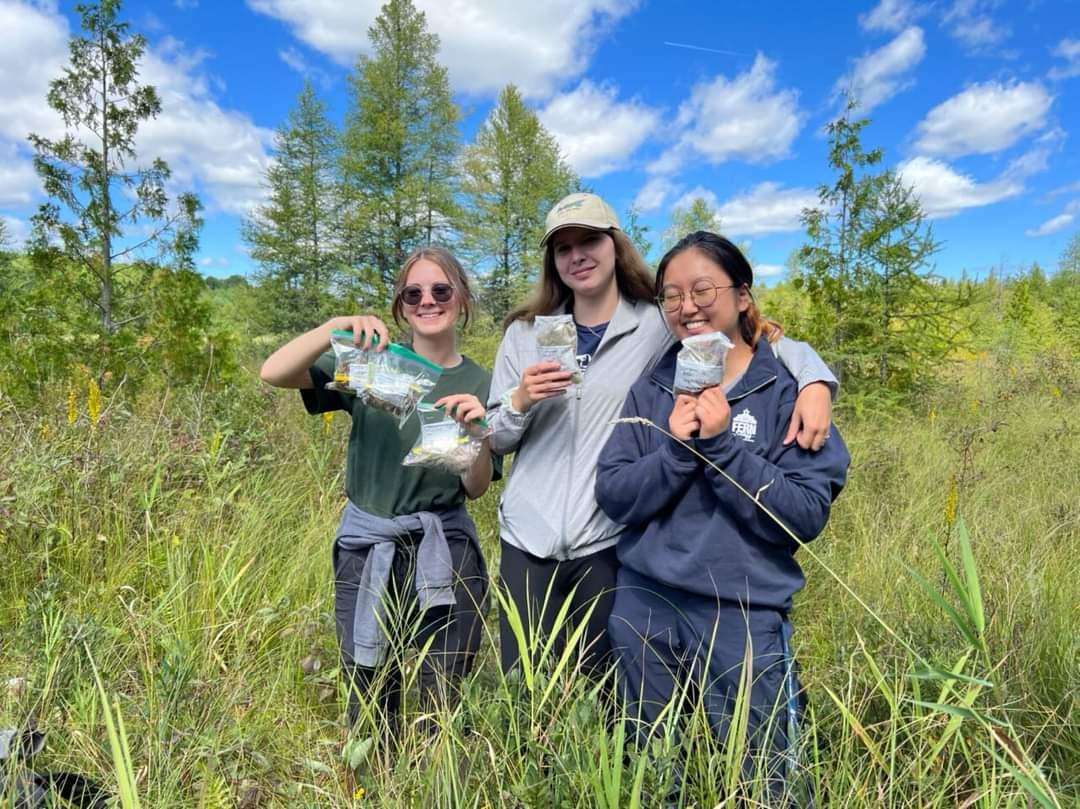
Lily in the middle, Samantha Mitchell (left - Lily's classmate in the MSc Forestry program, and Emily Hawton (right - who completed an Honours Bachelor of Arts and Science in Environmental Sustainability with a specialization in Ecosystem Management, as well as an Environmental Technician diploma) - Photo by Lily
That experience inspired me to pursue research on land-use change. I approached Dr. Pendea, who taught me how to analyze the core, and I used that work as the foundation of my undergraduate thesis, focusing on Indigenous land use and the transition through European settlement to the present day. We soon realized the project had even greater potential. When I applied for my master’s, we expanded the study to a basin-wide scale to classify land-use change across the entire Lake Simcoe watershed using a nested paleoecological approach. This included the long core from the George Langman site along with shorter cores from the Beaver River Wetland Complex, Bailey Ecopark, and Rogers Reservoir, representing a north–south gradient.
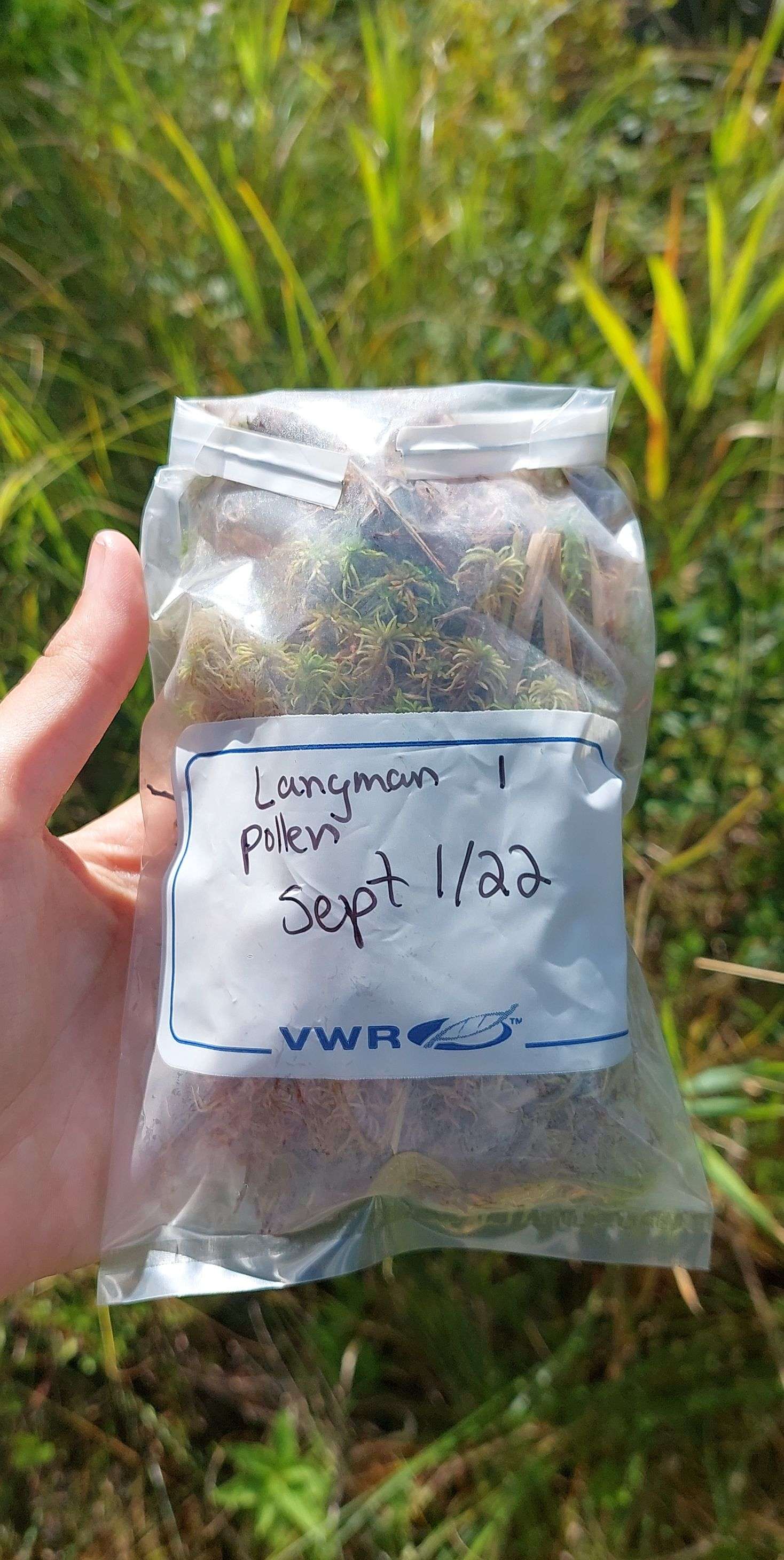
A sample bag containing sphagnum moss from Langman - Photo by Lily E.
Historical information for this region is limited, which makes it important to look at the landscape from multiple perspectives. I also brought experience in GIS and remote sensing, and with guidance from my co-supervisor, Dr. Brigitte Leblon and Dr. Armand Larocque, I used historical aerial photography and satellite imagery to manually classify land-use change. Combining those approaches with paleoecology allowed us to build a clearer and more visual understanding of how the landscape has changed over time.
Can you walk us through one key challenge you faced during your project and how you overcame it? Is there anything memorable about this?
One of the biggest challenges was connecting two very different types of data. Paleoecological records can tell us about vegetation changes going back thousands of years, but they represent a broader regional signal. Historical aerial photographs and GIS mapping, on the other hand, show very detailed land-use patterns but only for the last century. Studies that combine these approaches are still fairly limited, so there wasn’t a clear roadmap for how to link them together.
Bringing those two approaches together meant carefully thinking about scale and interpretation. I had to make sure the patterns I was seeing in the sediment record aligned with the land-use changes visible in the aerial photographs, and if they didn’t, understand why. Once that framework started to work, it was really exciting because the two datasets began to fill in gaps that would exist if each method was used on its own. Together they helped tell a clearer story about how settlement and twentieth-century agriculture reshaped the landscape around Lake Simcoe.
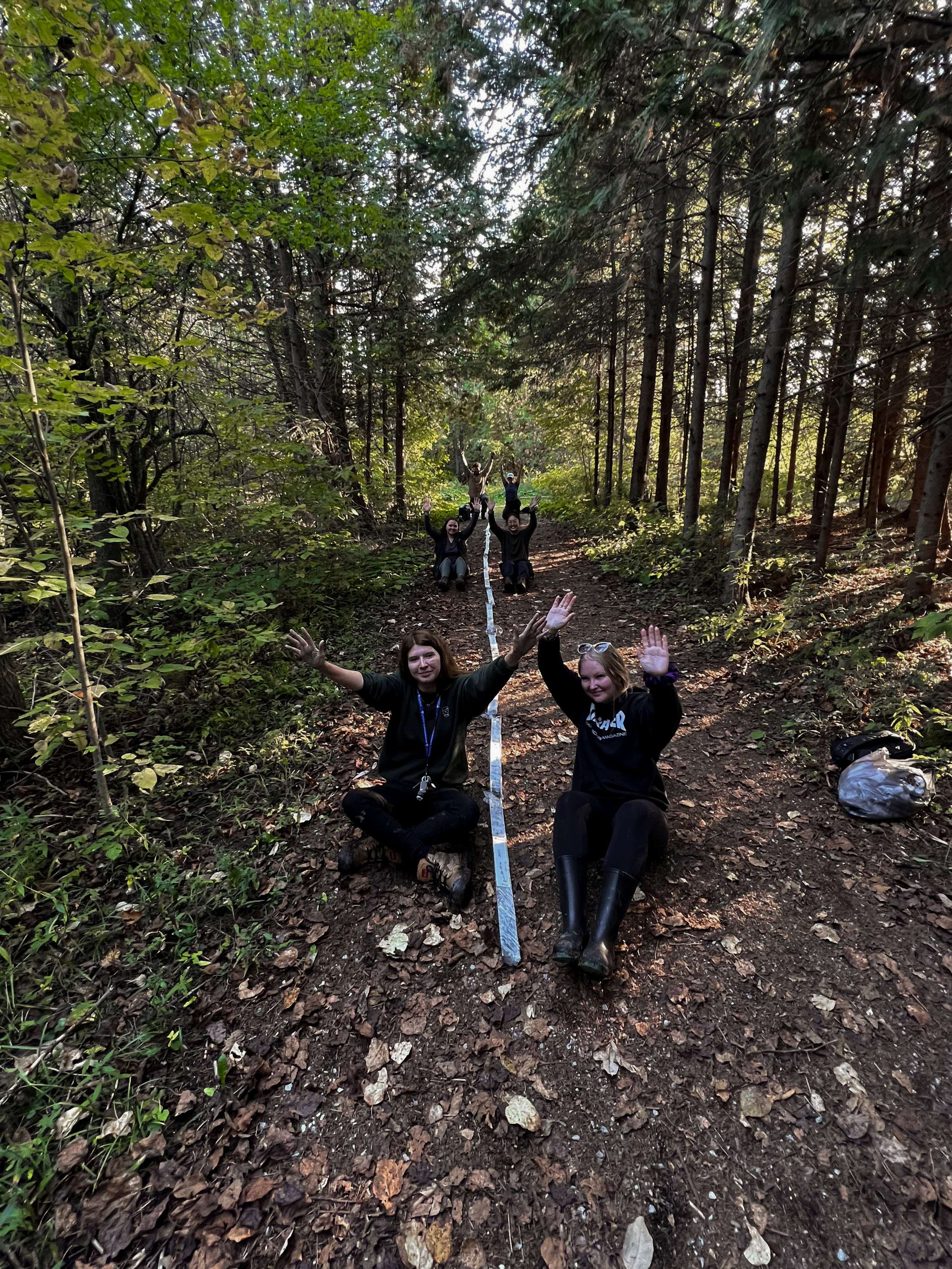
Can you see how long the Langman core is! - Photo by Lily E.
One memorable moment was seeing how the paleoecological record reflected the land-use patterns identified through remote sensing. Cultivated crop pollen is actually quite rare in sediment records, and many agricultural plants produce little pollen that preserves well. It was interesting to see that the northern sites, particularly Langman, showed clearer signals of agricultural expansion in the historical aerial photography and satellite imagery, while the southern sites reflected increasing urbanization. That contrast was also visible in the disturbance indicator species I observed under the microscope, which reflected the different types of land-use pressure across the watershed.
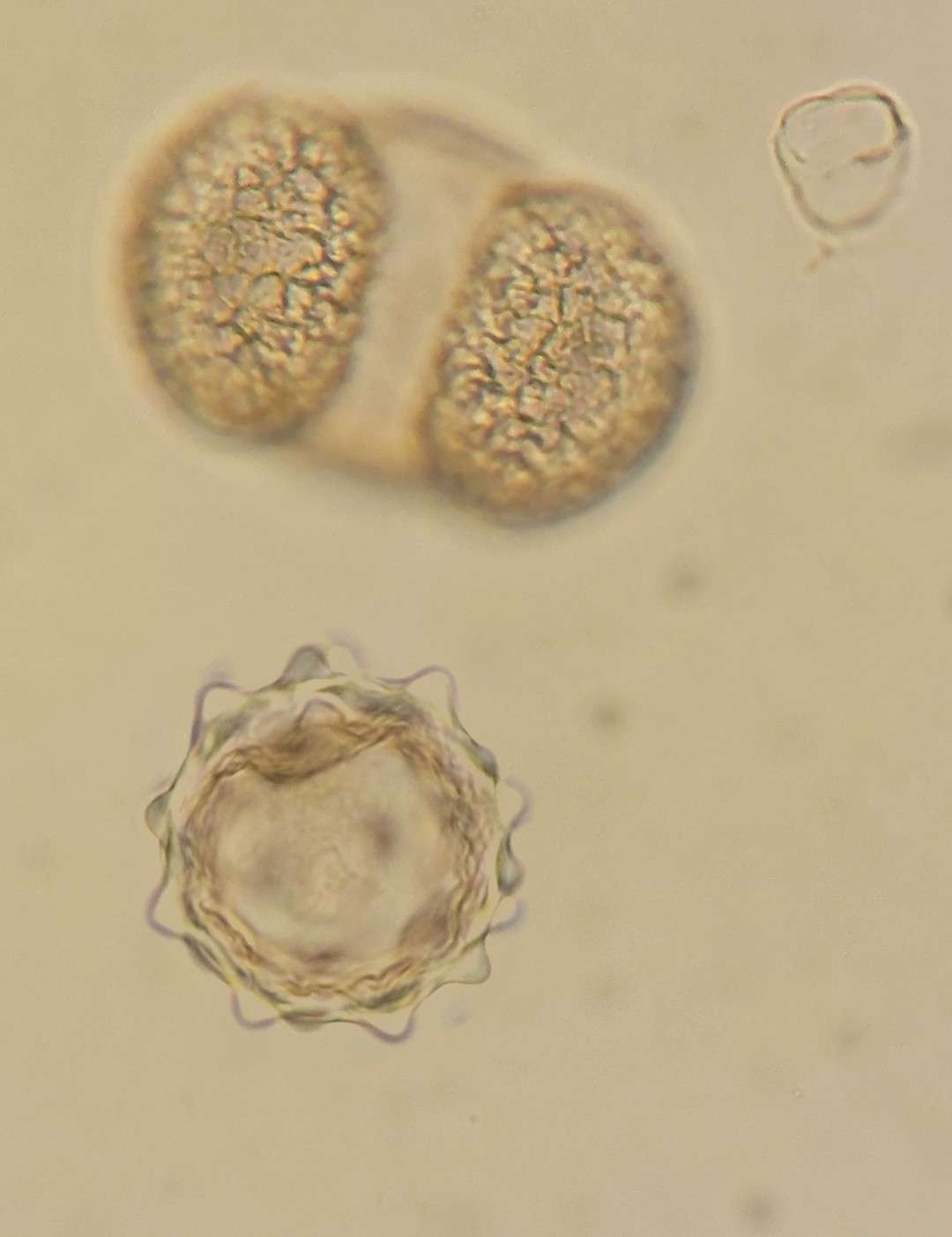
Pollen from Langman, with a pine grain at the top and an Ambrosia (ragweed) grain at the bottom - Photo by Lily E.
How has participating in this competition influenced your academic or career goals moving forward?
Competitions like this are valuable because they give graduate students the opportunity to present their research to a wide range of audiences. When I explain my research to people with different perspectives, I often receive questions and insights that make me think about my work in a new way.
It is also great practice for communicating research clearly. In both academia and especially in many careers, whether you are speaking with clients, stakeholders, other researchers, or the general public, you need to be able to explain complex ideas in a way that is accessible. Participating in competitions like this helps graduate students build that experience while also gaining confidence presenting their work.
It is also a great networking opportunity and something meaningful to include on a resume, as it shows both research experience and the ability to communicate that work effectively.
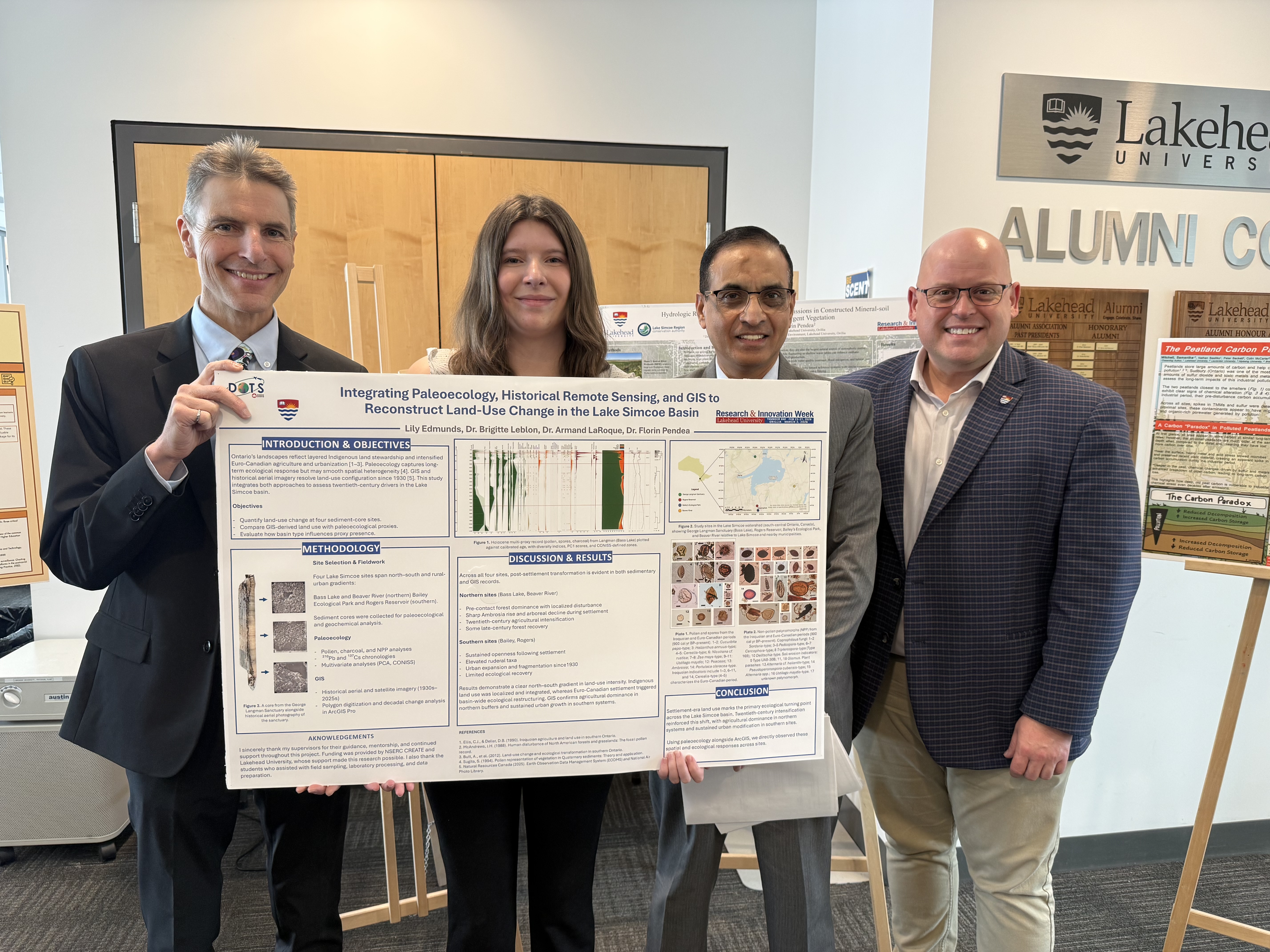
Lily E. with the with the judging panel
What advice would you offer future graduate students preparing research posters for competitions like this one?
My main advice would be to keep your poster clear and simple and avoid overcrowding it. Many of the people viewing it may not be experts in your specific field, so it is important to present your research in a way that is easy to follow and avoids too much technical language. Try to focus on the key message of your research and why it matters.
It is also helpful to think about how you will explain your work verbally. Being able to give a short, clear explanation of your research helps people engage with your poster and ask questions.
Finally, be open to questions and different perspectives. Competitions like this are a great opportunity to discuss your work with others, hear new ideas, and gain different perspectives.
Most importantly, be confident and enthusiastic when presenting your research and take pride in the work you’ve accomplished!
One of the most meaningful parts of this project for me was learning more about the long history of land stewardship in the Lake Simcoe region. Looking at ecological records that extend back hundreds to thousands of years really shows how landscapes have changed over time and how Indigenous stewardship shaped these environments long before large-scale settlement.
It reinforced for me how important it is to understand the full history of a landscape when studying environmental change. The landscape we see today did not appear overnight, it is a result of many generations of interaction between people and the land. Understanding the past helps us better understand the landscapes we live in today and reminds us that the choices we make now will shape those environments for generations to come.
*The Graduate Poster Competition was developed to showcase current graduate students’ contributions to research and scholarship at Lakehead University. It was part of the Research & Innovation Week, which provides an avenue for researchers (faculty, students and research staff) and their partners to showcase their research. This year, the theme was “Shaping the EvoLUtion” of Lakehead University.