



When Woolly Mammoths and Lions Roamed North America
Dr. Jessica Metcalfe Studies Megafauna to Understand Our Past
"North America was a dangerous place during the last ice age," says Lakehead University Associate Professor of Anthropology Dr. Jessica Metcalfe.
Until around 10,000 years ago, sabre-toothed cats, lions, and short-faced bears prowled across the continent. They hunted giant herbivores—including giant beavers, giant sloths, giant bison, mastodons, and woolly mammoths, which are the focus of Dr. Metcalfe's research.
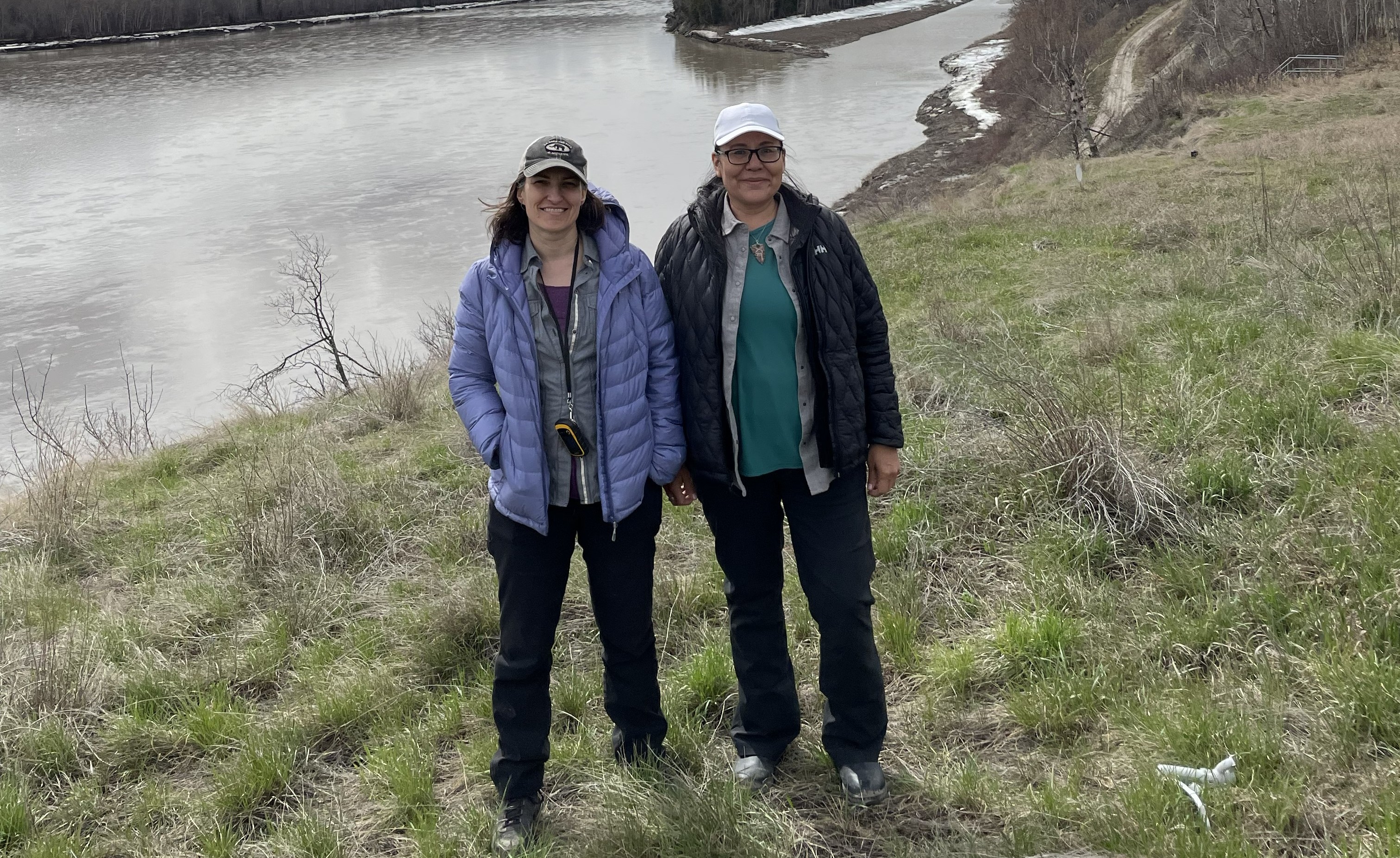
Dr. Metcalfe (left) with research partner Victoria Wanihadie (right) near Green Island along the Peace River in Alberta (Tsattine territory) in 2022 as part of her community-based research with Tsattine people. Dr. Metcalfe is one of the authors of the article Paleogenomic insight into the collapse, recovery, and management of American bison published in the August 2026 issue of the prestigious journal Science. "My bison research provides a more recent window into the human past around 10,000 years ago," she says.
Indigenous people, who have been in North America for tens of thousands of years, had to learn how to share their environment with these ancient giant mammals, which researchers call megafauna.
"I study the remains of ancient megafauna to learn more about their diets and past climate and ecological changes," Dr. Metcalfe says.
"Megafauna are fascinating and they help us understand human history. There was a great diversity of them on every continent until just after the ice age ended, when many of the largest ones went extinct. Some megafauna like bison have persisted, but they became smaller in size."
According to Dr. Metcalfe, megafauna were important to human survival. They were hunted for food, their bones were used to make houses and tools, and their fur and skin were made into clothing. They also had—and still have—spiritual importance to Indigenous Peoples.
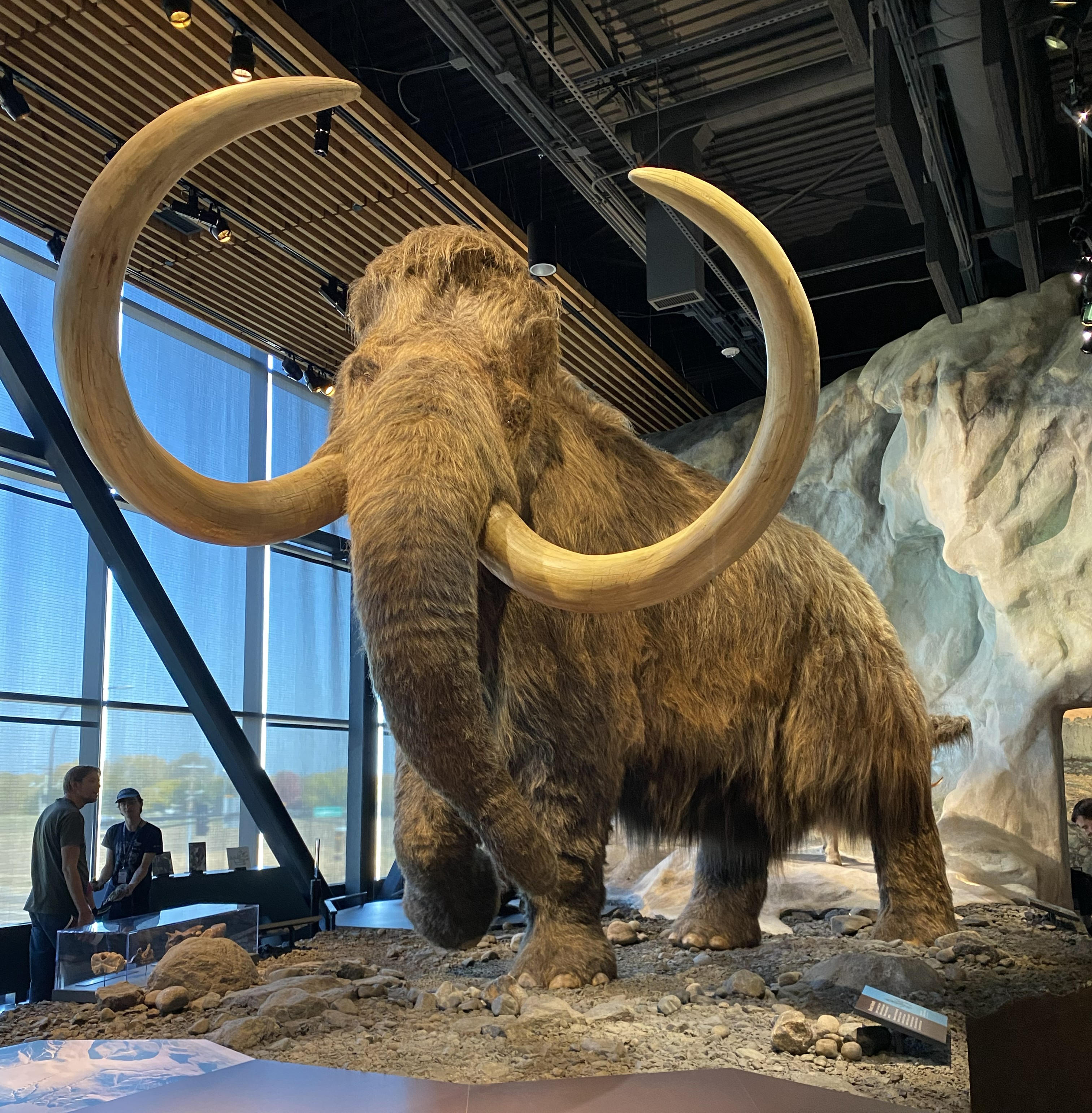
Dr. Metcalfe has found that Clovis-era woolly mammoths in Arizona that lived circa 13,050 to 12,750 years ago became extinct when monsoon rains stopped and the region became drier. Left, a reconstruction of a woolly mammoth, Mammuthus primigenius, at the Bell Museum in St. Paul, Minnesota.
The fossils of these animals are located across the traditional territories of Indigenous Peoples, and Dr. Metcalfe's research has found that anthropologists, archaeologists, and palaeontologists can learn a lot from Indigenous oral histories.
"Indigenous Peoples who co-existed with megafauna have rich stories about creatures like woolly mammoths and giant beavers the size of bears. They also talk about how perilous it was to live alongside megafauna."
Engaging in community-based anthropological research with Indigenous partners—such as the Tsattine (Beaver Dene) in Alberta—is integral to her work. "I'm trying to work toward braiding Indigenous knowledge and western knowledge through an approach known as 'two-eyed seeing.'"
This approach is becoming more common among settler scholars who are seeking to conduct ethical and responsible research and counteract harms caused by old approaches.
"There is a long history of western scientists ignoring Indigenous knowledge and removing ancient remains from their territories without permission," Dr. Metcalfe says. "The situation was worsened by anthropologists who treated Indigenous peoples as subjects to be studied, rather than as collaborators in learning."
Unlocking the Secrets of Megafauna
Dr. Metcalfe doesn't usually make her discoveries on far-flung archaeological digs. Instead, she concentrates on studying the biogeochemical compositions of previously collected materials housed in museum and university collections.
In her Metcalfe Archaeological Studies (MASS) research lab on Lakehead University's Thunder Bay campus, she reconstructs the diets and migrations of megafauna and their interactions with humans and the environment.
She uses sophisticated instruments to study the hair, bones, and teeth of megafauna fossils.
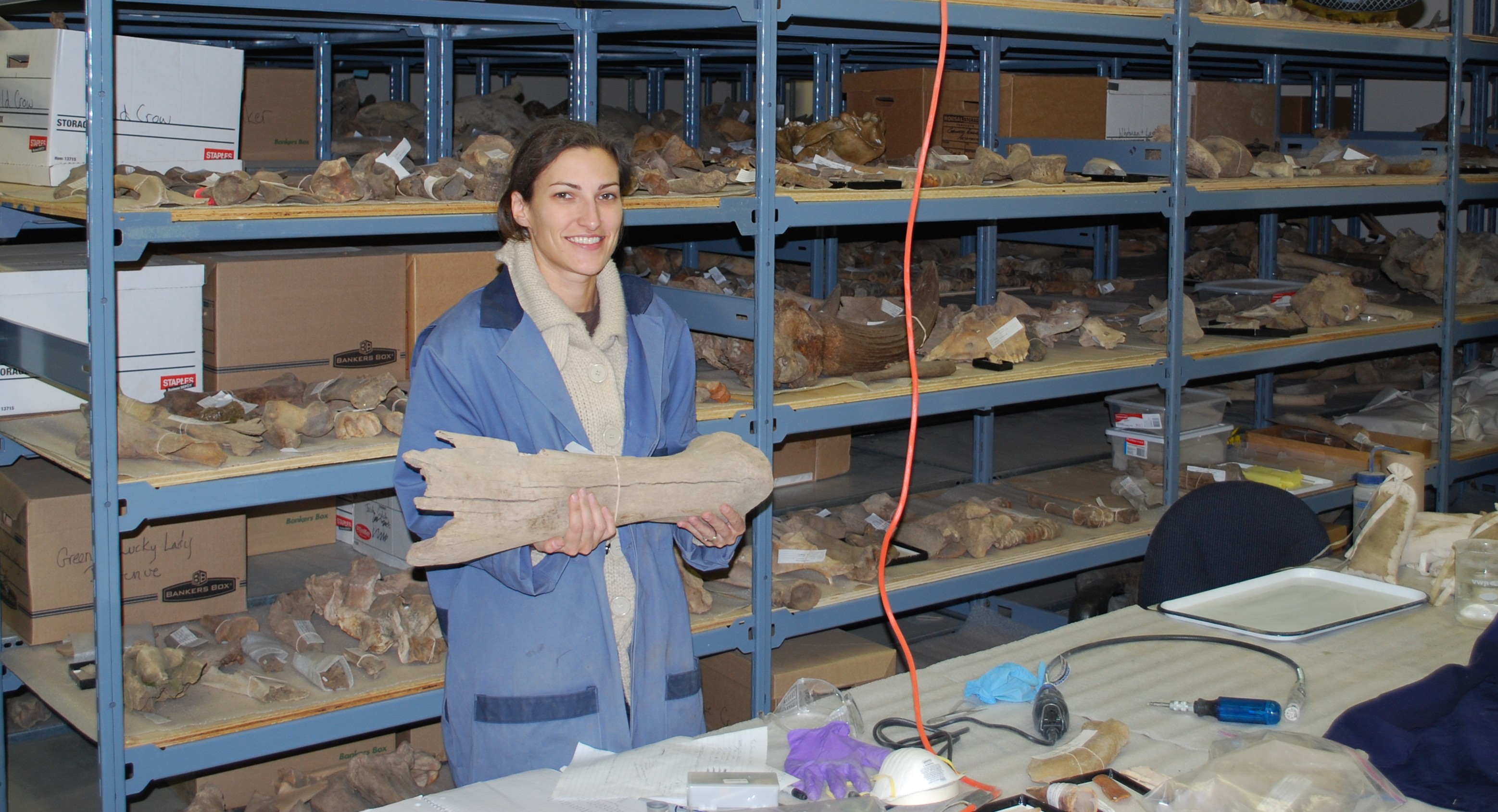
Dr. Jessica Metcalfe sampled woolly mammoth bones in Yukon as part of her PhD research. Above, Dr. Jessica Metcalfe holds a woolly mammoth bone in 2008 when she was a PhD student.
Mass spectrometers, for instance, enable her to examine tiny mass variations in carbon, nitrogen, oxygen, sulfur, and other non-radioactive chemical elements in fossils. These stable isotopes do not break down over time, so they provide a record of the environmental conditions when the animal was alive.
"Fossil bones and teeth can indicate the type of climate megafauna lived in. You can tell whether it was warm, cold, wet, or dry, and how animals responded to these climatic conditions in terms of which types of plants they ate and their mobility patterns."
A Land of Mammoths and Mastodons
Dr. Metcalfe's methods, in combination with Indigenous knowledge, have helped her uncover crucial insights into megafauna. This includes her bison research and the mammoth and mastodon research that she has recently returned to.
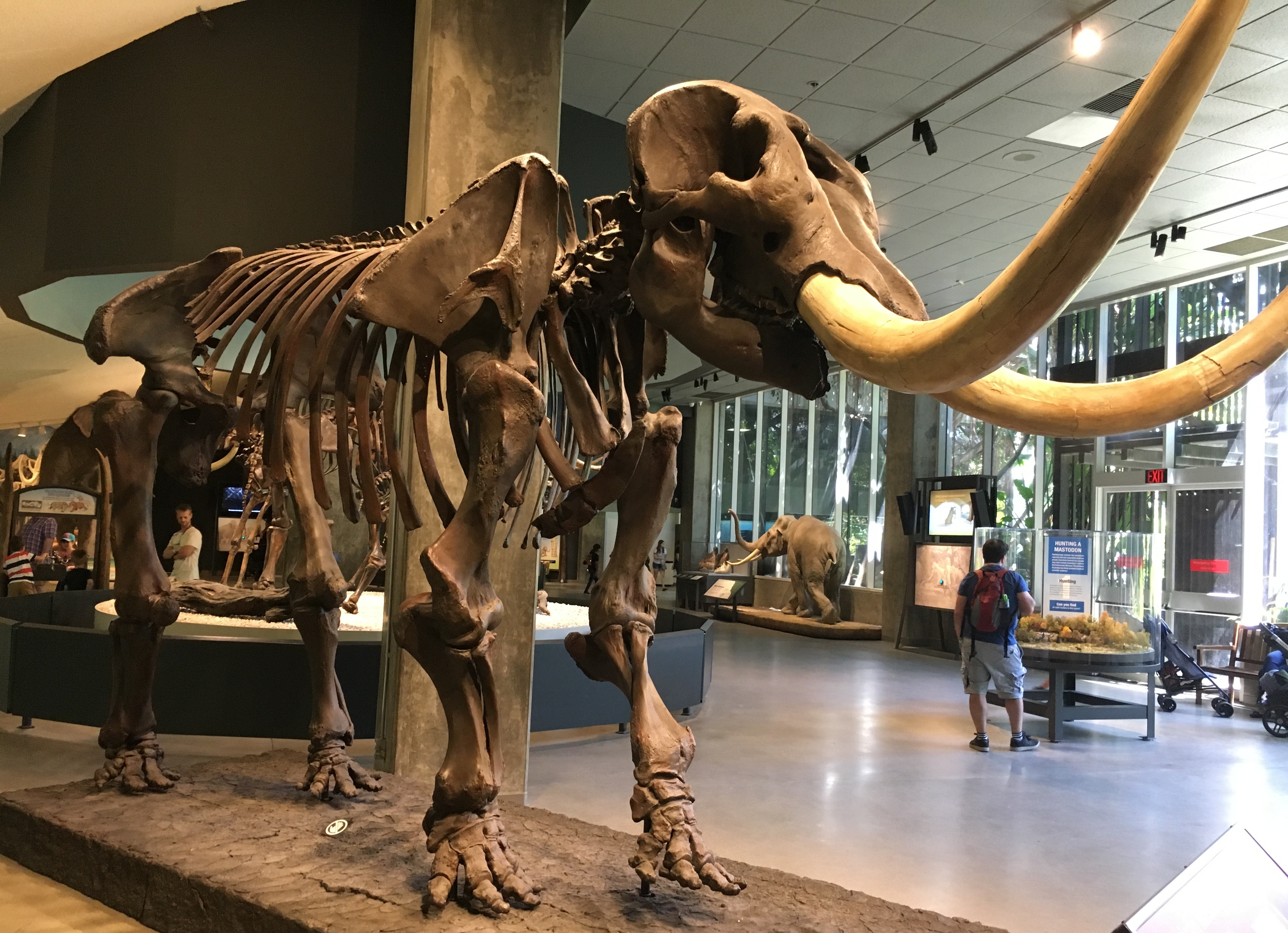
Elephants, woolly mammoths, and mastodons are all members of the proboscidean family. Woolly mammoths and mastodons weighed up to eight tons, while elephants can weigh up to seven tons. When it comes to megafauna, Dr. Metcalfe says she's partial to herbivores, but she has a hard time picking her favourite one. "If push came to shove, I would say mastodons are my favourite. I also love giant beavers and giant sloths, which lumbered around using their massive claws to eat trees and maybe even dig up roots." Above, an American mastodon, Mammut americanum, skeleton at the La Brea Tar Pits Museum, California.
Her study of the tooth enamel of mastodons in southern Ontario suggests mastodons were able to adapt to a warmer climate after deglaciation before going extinct. This finding was strengthened by her analysis of mastodon bone collagen that suggested that the disappearance of mastodons' wetland habitat was a greater factor in their extinction than warmer weather.
Some of Dr. Metcalfe's current research into woolly mammoths is being done in collaboration with Yukon government palaeontologist Dr. Grant Zazula, who was also part of a 2026 Canadian Quaternary Association session on megafauna that Dr. Metcalfe organized.
"We reconnected because of a well-preserved baby mammoth, named Nun cho ga, that emerged from the Yukon permafrost on National Indigenous Peoples Day in 2022. It was the first time that a woolly mammoth with soft tissues was found in North America," she says.
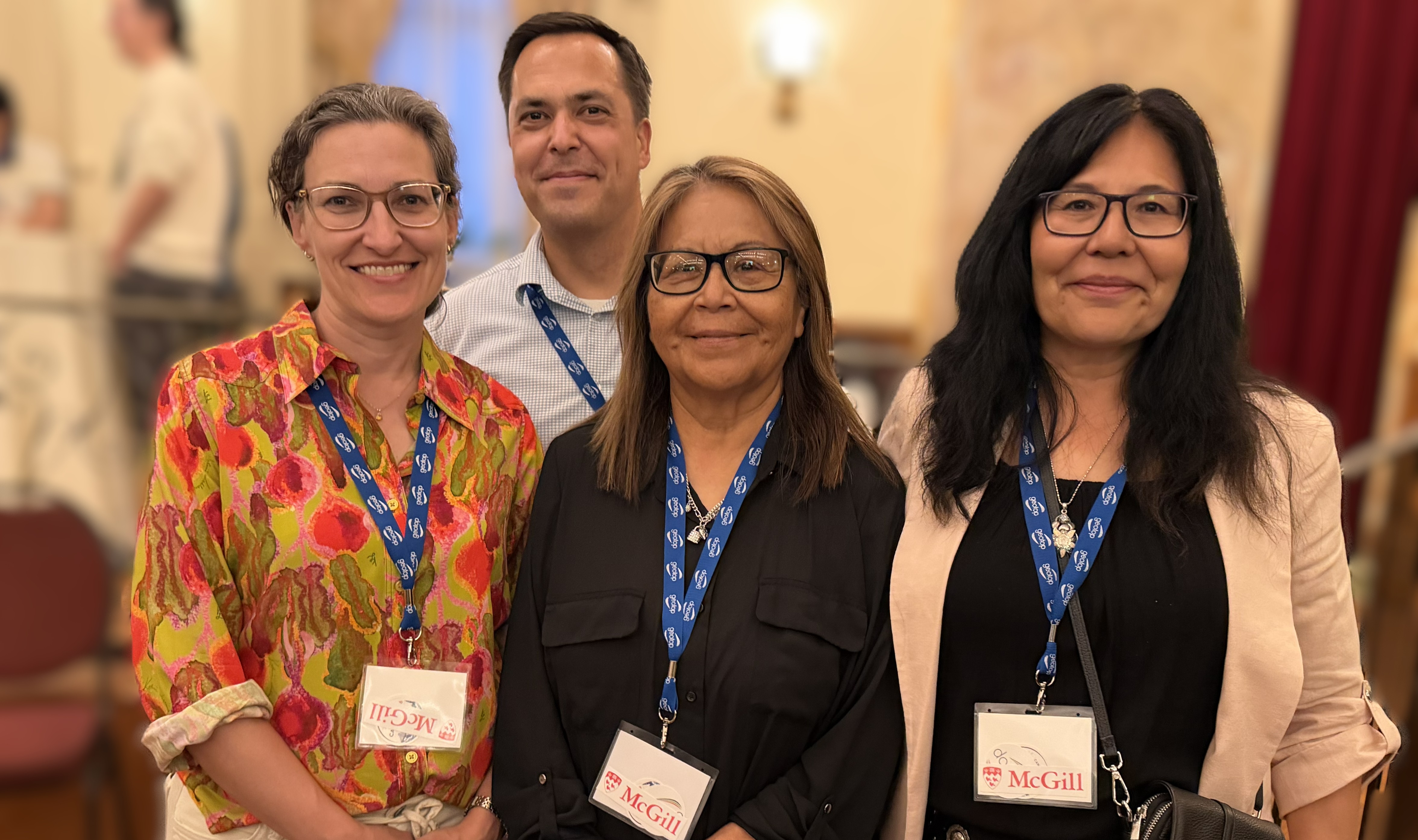
In June 2026, Dr. Metcalfe organized a Canadian Quaternary Association session called "Powerful megafauna: Palaeontological and Indigenous perspectives on giant animals in western Canada." Session organizers and presenters Jessica Metcalfe (far left) and Victoria Wanihadie (far right) presented on what they have learned from their collaborative research in western Canada. Presenters Edward Jolie (middle left) and Sharon Gloshay (middle right) discussed the footprints at White Sands National Park as evidence of Native American relationships with megafauna. Dr. Metcalfe is currently co-editing a special issue in the journal Palaeogeography, Palaeoclimatology, Palaeoecology about proboscideans.
Instead of taking this ancient baby animal as government property, Dr. Zazula immediately partnered with the Trʼondëk Hwëchʼin First Nation, on whose land the animal was found, and who named the woolly mammoth Nun cho ga.
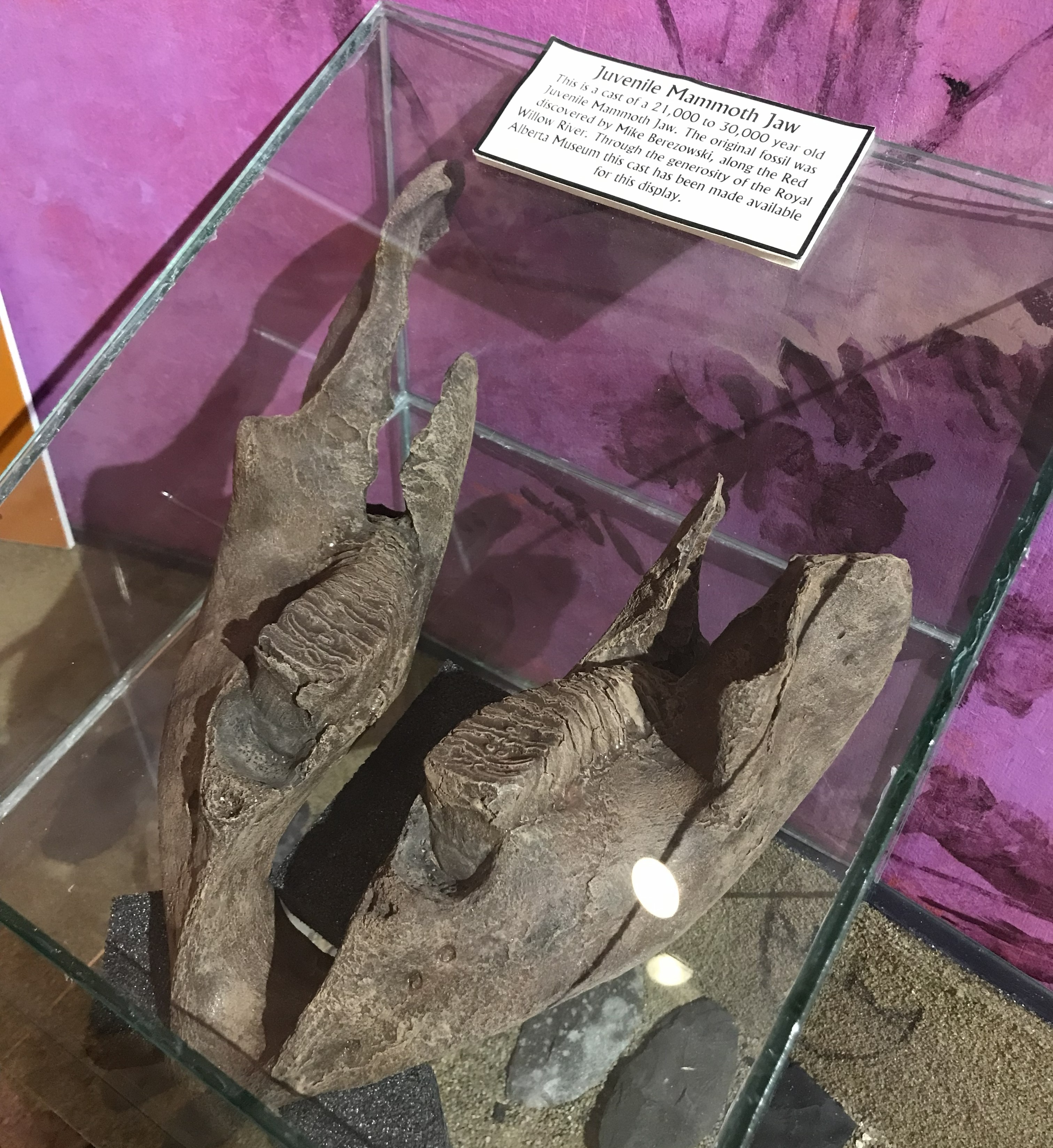
"One of the differences between mammoths and mastodons is that their teeth were extremely different," Dr. Metcalfe says. "Mammoth teeth were like washboards for grinding toughgrasses while mastodons had big pointy peaked teeth for eating woody plants and shrubs." Left, a cast of a juvenile mammoth jaw on display at the Grande Prairie Museum, Alberta.
"They speak of Nun cho ga as an ancestor and a relative, which is very different from seeing it as a scientific specimen," Dr. Metcalfe says. "Nun cho ga has brought their community together and become a focus for asserting their rights as Indigenous people."
Dr. Metcalfe's previous research has provided a window into how Yukon woolly mammoths reared their young. Her analysis of the bones and teeth of woolly mammoth calves indicates that they nursed for a long time, similar to modern elephants in stressful environments.
"This was likely related to the long nights of darkness in the Arctic region, which meant that baby mammoths had to stay very close to their mothers to avoid predators such as Beringian lions," she says.
"Megafaunal fossil remains are the literal and metaphorical bones that archaeology and palaeontology are built upon," she adds.
Lakehead University gratefully acknowledges the following grants Dr. Metcalfe has received for her research:
2025 NSERC Discovery Horizons Grant (five-year grant) for the research project, Follow the Bison: Insights into Environmental and Cultural Change
2019 SSHRC Insight Development Grant (two-year grant) for the research project, Dene Bison Hunting and Migration: Western Science and Indigenous Perspectives
