



Researcher Céline Wick Embraces the Potential of Traditional Medicine
Meet an Emerging Leader Using Indigenous-Centred Care to Support Well-being
"The birth of my niece and nephew made me see myself as part of a long line of people," Céline Wick says.
It was a realization that led this Lakehead University PhD student and new Indigenous Learning professor on a transformative journey.
"An Elder told me that being an auntie means being a little mother," Céline says. "He also talked about our responsibilities to children as well as to our ancestors, our grannies, and our grandfathers.
That's why I'm committed to fostering healthy, bright, and loving futures for my community and my nation."
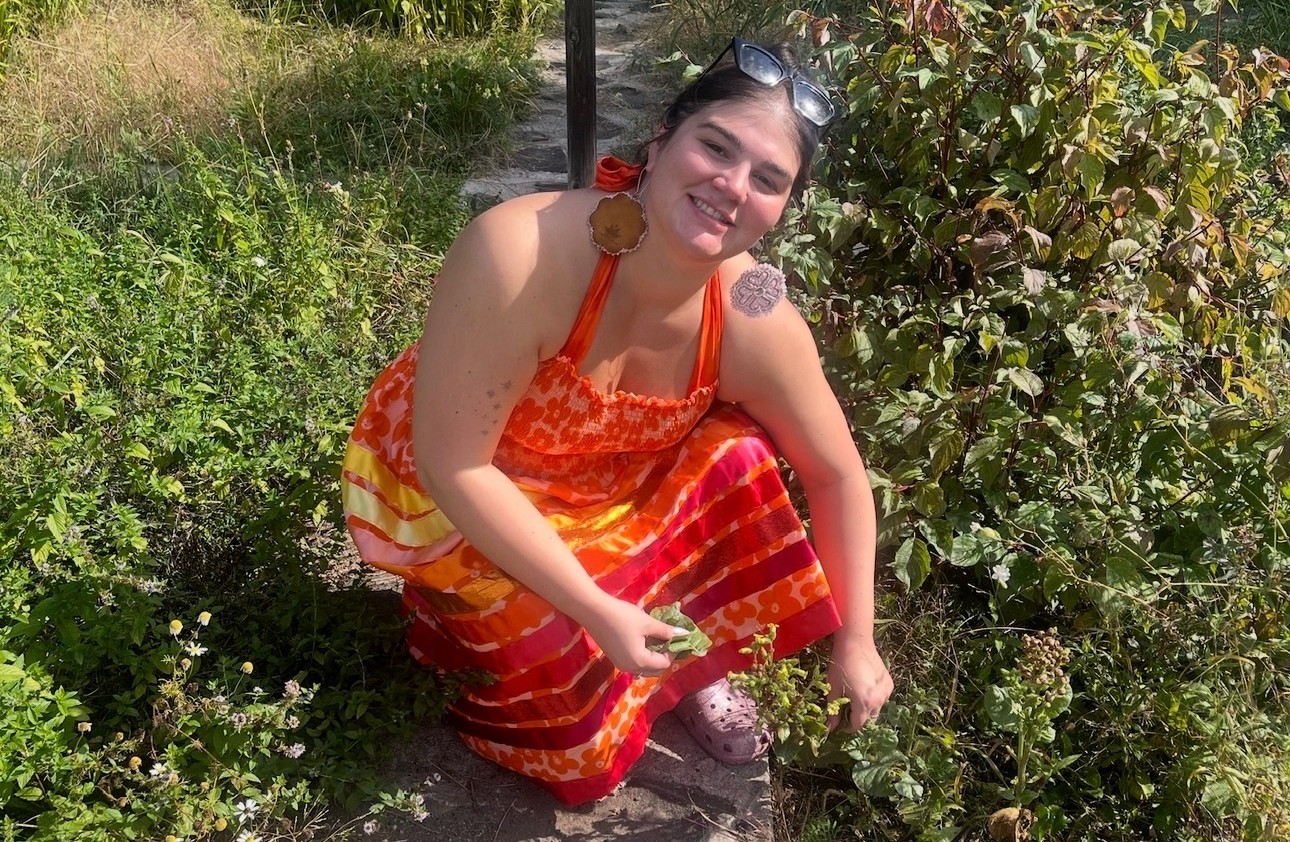
"I never saw myself pursuing a PhD, but having people like Lana Ray, Denise Baxter, and Kristin Burnett believe in me made me realize it was possible," Céline says. "Now I have my dream job as an Indigenous Learning professor. I love my colleagues and will keep finding ways to be useful to my people and my Nation, including through health research." Above, Céline collects plants from the Gitigaan Medicine Garden at Lakehead University's Sweat Lodge Site.
Finding Strength in Métis Culture
Céline has already earned two Lakehead degrees and is on the verge of completing her third—
a health sciences PhD focused on Indigenous well-being.
She credits her BA in Political Science and Government with introducing her to the postsecondary world and her Master of Social Justice degree with deepening her connection to her Métis heritage.
For her master's, Céline collaborated with her mother and her grandmother to document their experiences of being Métis women. Her resulting thesis provided insights into how relationships enable Métis women to sustain their cultural identity.
"It was through this degree that I began to see research as a useful way of bringing resources to my community," she says. "This, in turn, got me interested in Indigenous health."
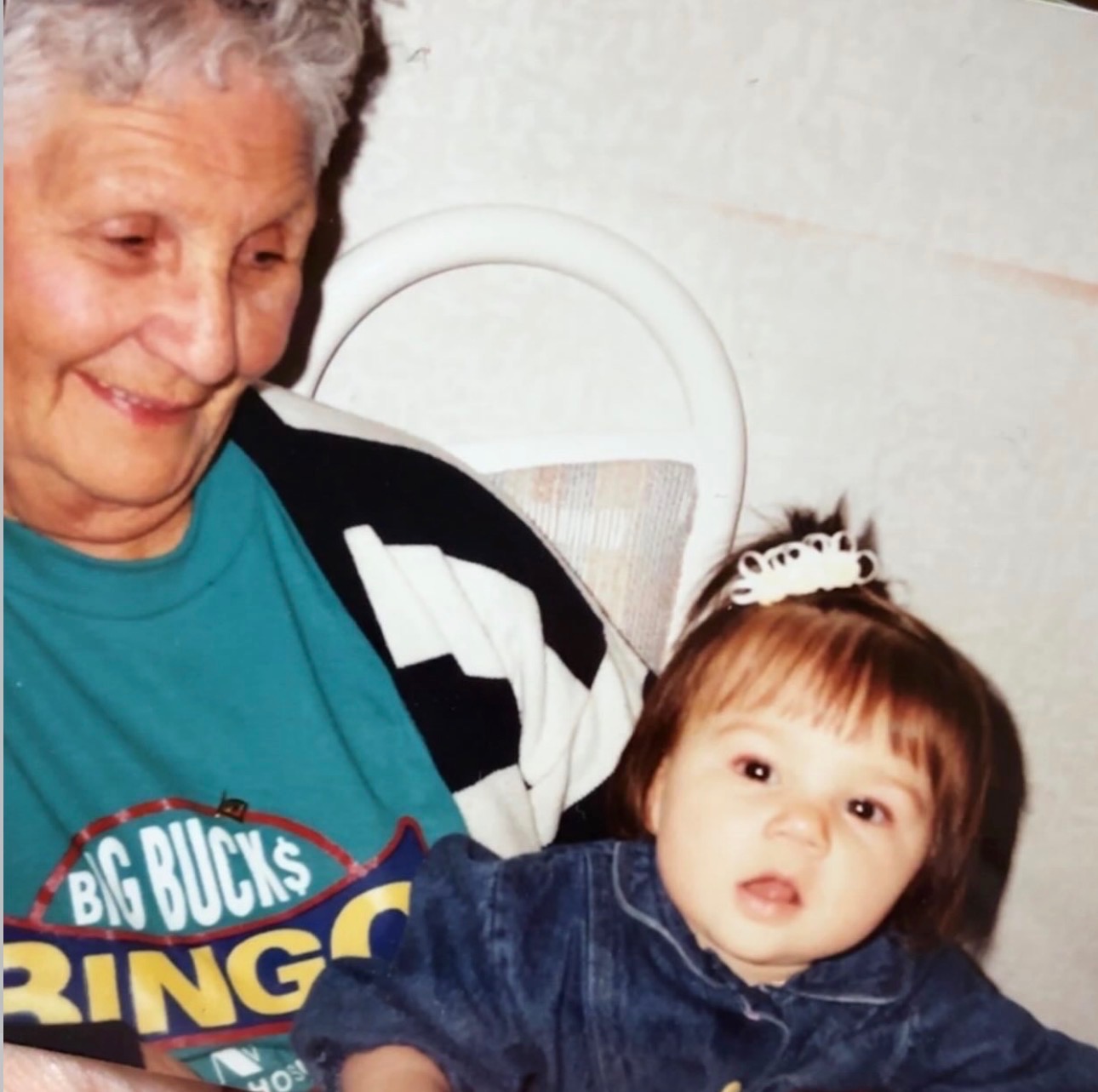
Céline's grandmother was born in a Métis road allowance community in southern Saskatchewan. These communities arose after the government displaced Métis people to make way for immigrant farmers from Europe. These settlements didn't have running water and houses were built with salvaged materials. "It was a really difficult time, but it was also a time of resource sharing and Métis values," Céline says. Left, a photo of Céline as a toddler with her great-grandmother Agnes (Bellerose) Bellamy.
Céline master's thesis supervisor Dr. Lana Ray— Lakehead's Anishinaabe Kendaasiwin Institute Director and the Canada Research Chair in Resurgent Methodologies for Indigenous Health with Athabasca University—played a pivotal role in this shift.
"I spent the year after my master's degree as a research assistant with Dr. Ray's Waasegiizhig Nanaandawe'iyewigamig Mino Bimaadiziwin (WNMB) project," Céline says.
"It explored how access to traditional medicine has the potential to support overall well-being and address high rates of cancer and other chronic diseases.
Her project helped prepare me for my PhD, and it helped prepare me as a human being."
The Power of Traditional Medicine
Céline's PhD dissertation, co-supervised by Dr. Ray and Dr. Anna Koné, is investigating how love and care can act as protective factors against the harms of settler colonialism.
"Colonization attacked our relationships to ourselves, each other, and the land, and this has been really detrimental to our health," she explains.
"My PhD is focused on how culturally responsive care can be an antidote to these harms by treating the whole of an individual's being."
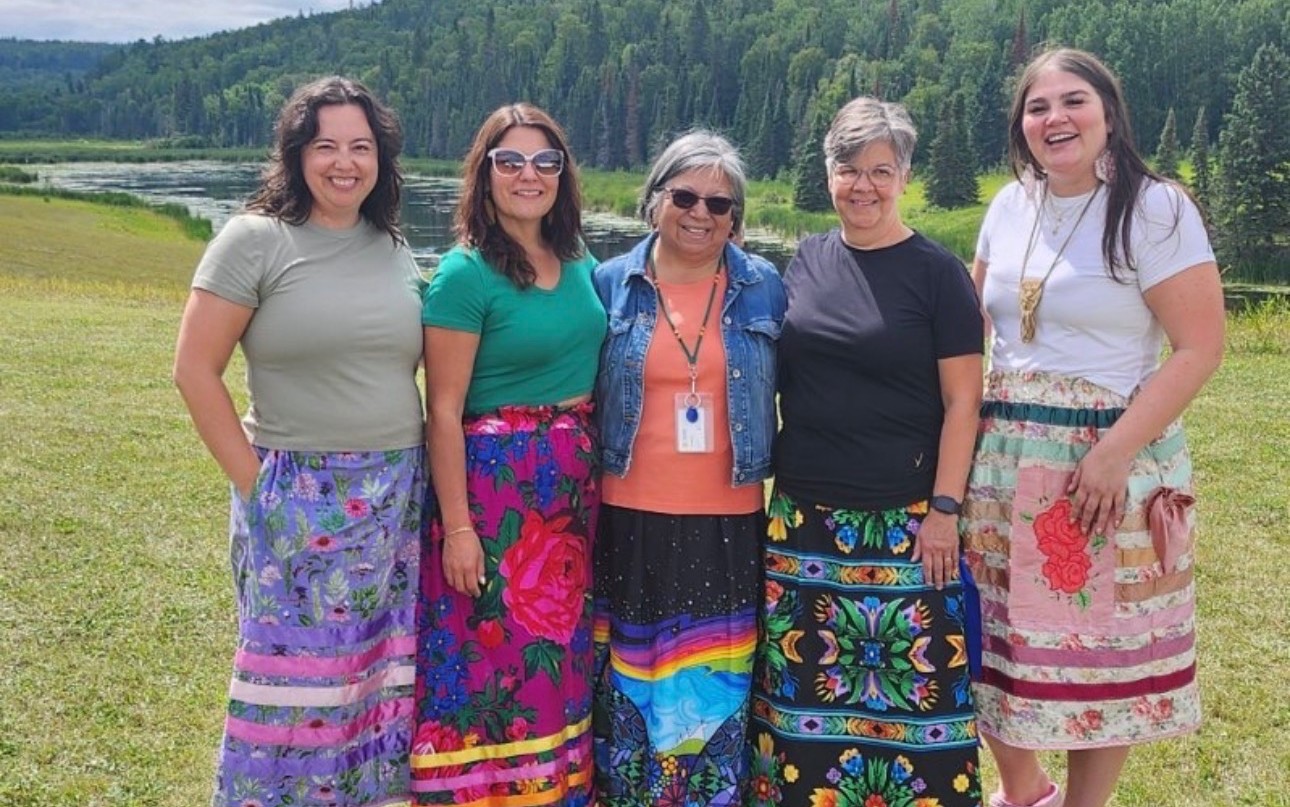
"Part of the process of my master's research was coming to understand the importance of unconditional love and how it helps you find your place," Above, Indigenous members of the WNMB research project. Left to right: Dr. Alanna Morgan (MD), Dr. Lana Ray, Ida Copenace, Dr. Cindy Peltier, and Céline Wick.
Traditional medicines and ceremony support health and good living because they are underpinned by love.
"Love is the fabric that holds everything together, and it's how my people survive impossible realities," she says.
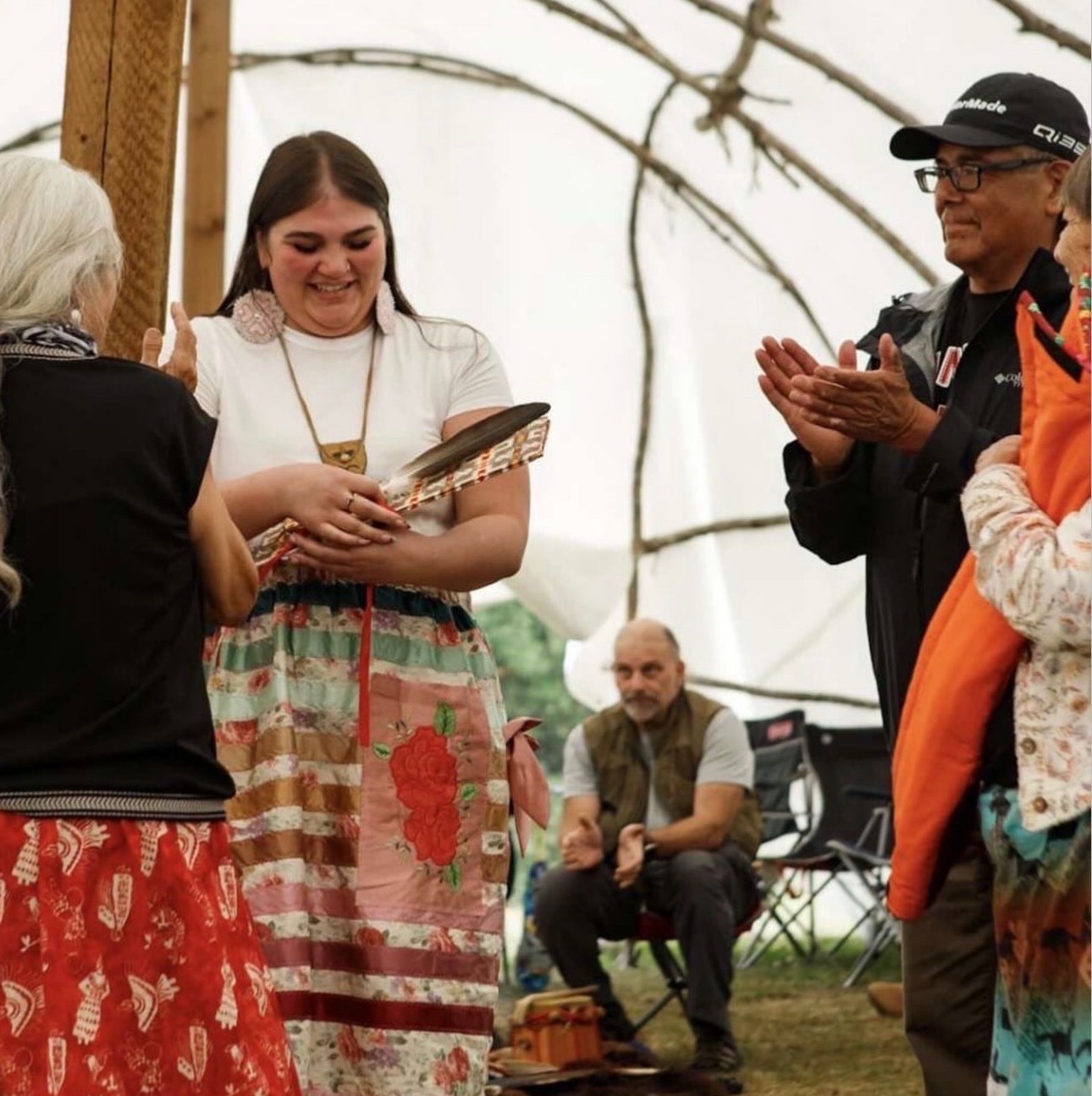
“Over the summer of 2025, after I was hired as an Indigenous Learning professor, I did a lot of reflecting on this new chapter,” Céline says. “I want my students to know that they’re brilliant and that they can do anything that's important to them.” Above, Céline is honoured with an eagle feather for her WNMB research work at a medicine camp teaching lodge.
"My goal is to tell the story of the important work being done in our communities to undo the ongoing harms of colonization. Both Indigenous and Western approaches to medicine have an important role in health and well-being, and it's important to ensure that both are respected."
Céline's work as a health research advisor with the Métis National Council reaffirmed her commitment to this area of research.
"I worked on a docu-series called "We Won't Be Ignored." We interviewed Métis people across the country about their experiences with diseases and other health issues because Métis health is very under-researched."
Mentors Inspire the Changemakers We Need
"Dr. Ray has been wonderful and much more than a master's and PhD supervisor," Céline says. "She's helped me grow into my community responsibilities and shown me what it means to be a strong Indigenous woman in an academic space."
When the position of Indigenous Learning professor opened up at Lakehead, it was Dr. Ray who encouraged Céline to apply.
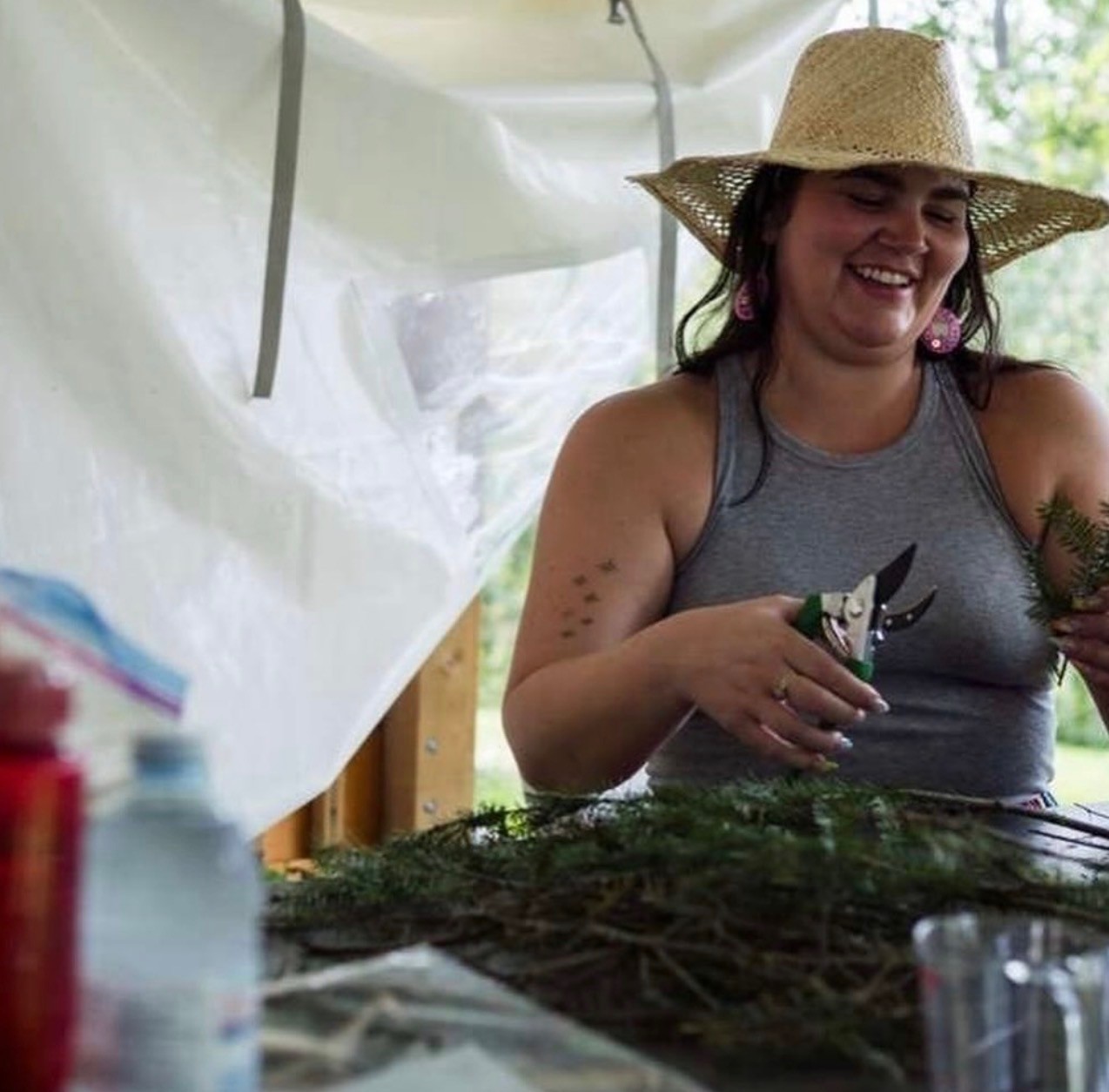
"Learning about traditional healing has been one of the most beautiful parts of being on Dr. Ray's research team," Céline says. "We worked with traditional knowledge holders and the Waasegiizhig Nanaandawe'iyewigamig Health Access Centre (WNHAC)." Above, Céline processes medicines harvested at a medicine camp near Kenora, Ontario, as part of the WNMB project.
"I was really nervous and didn't think that I'd get the position," Céline says. "Now, I'm just starting my second year of teaching. It's been amazing to see my students get excited about learning and research that can nurture their communities."
She's also grateful to Indigenous Learning professor Dr. Kristin Burnett for encouraging her to enrol in Lakehead's master's program and for the ongoing support of Indigenous Initiatives Vice-Provost Denise Baxter and the Indigenous Initiatives team.
"All the love that's been poured into me, I want to pass forward," Céline says. "I want to be the cheerleader and supporter that so many of my mentors have been to me."
Watch the "We Won't Be Ignored" video Céline helped produce about Métis people's experiences with cancer and their barriers to treatment.
Lakehead University thanks the Canadian Institutes of Health Research (CIHR) for their $1.2 million in funding in support of the Waasegiizhig Nanaandawe'iyewigamig Mino Bimaadiziwin research project led by principal investigator Dr. Lana Ray.
