



Dim the Lights, Break Out the Popcorn, and Hit Play
The Crossfade Program Turns High School Students into Filmmakers
"Film is about illusion and a filmmaker is a kind of magician," says Media, Film and Communications Assistant Professor, Neven Lochhead.
The cinematic world is one that Dr. Lochhead knows intimately.
He's an accomplished media artist and filmmaker who joined Lakehead in September 2025 to teach students in the Media, Film and Communications (MFAC) program on the Orillia campus.
"Mentoring emerging filmmakers is a thrilling adventure as an educator," he says. "I'm surprised every time I assign my students a project."
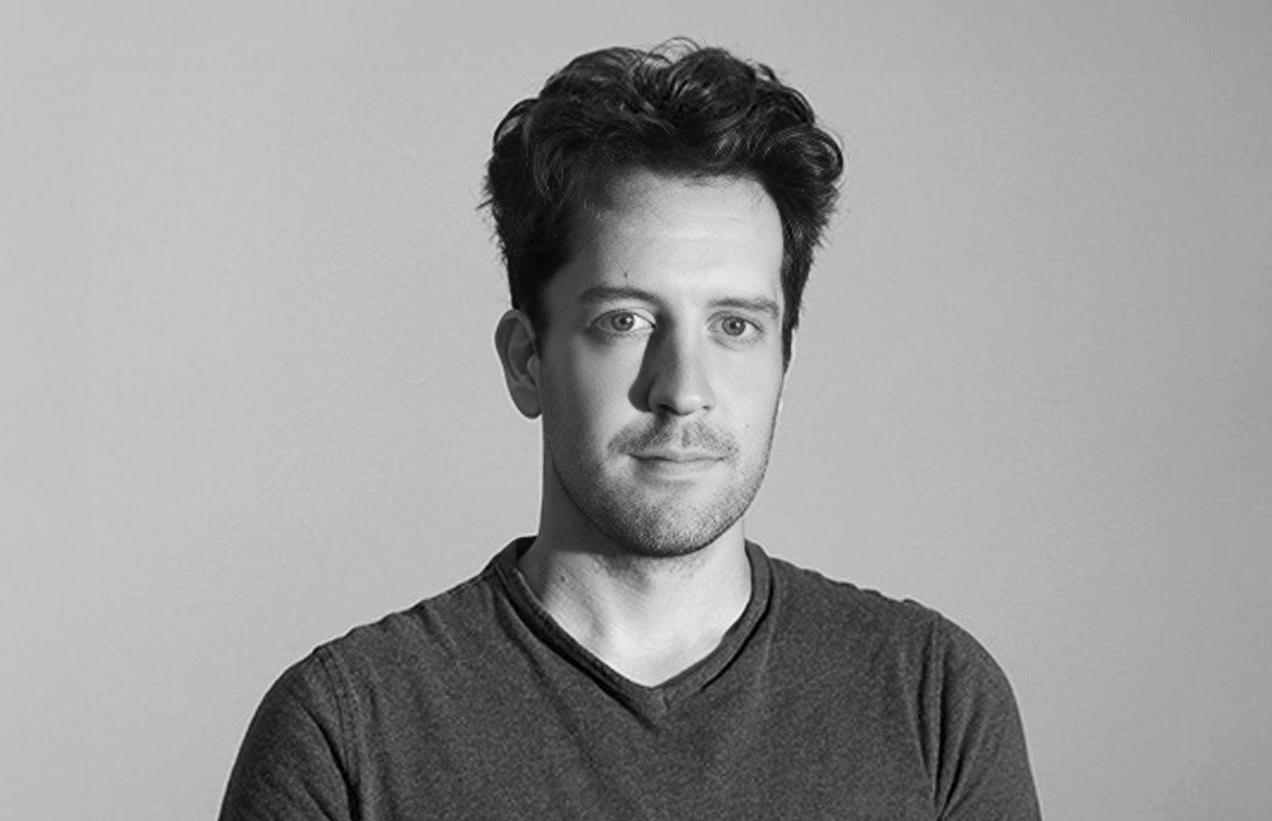
Dr. Lochhead is an artist-filmmaker, curator, and educator. He says he fell in love with filmmaking because it's so elastic and capacious. "I can fit music, text, art and architecture into film and have things collide in unexpected ways," he says. "I also love narrative storytelling, of course, especially French New Wave cinema."
Recently, Dr. Lochhead has been extending the magic of film beyond the university campus.
Since winter 2026, he has been teaching a series of workshops—called Crossfade—that introduce high school students to sound design, filmmaking, and interactive storytelling.
"Crossfade is a term used in radio broadcasting," he explains. "It refers to the moment of overlap between songs when you bring down one song and bring up another. In film, it signifies the transition between two scenes or two time periods."
The program is offered through Lakehead's Office of Community Engagement and Lifelong Learning (CELL) with support from the City of Orillia.
Crossfade is also part of the Ontario Ministry of Education's SHSM program and helps fulfil the requirements of the Arts & Culture Specialist High Skills Major (SHSM). SHSM specializations provide young people with experience in different economic sectors and are recognized on their high school diplomas and transcripts.
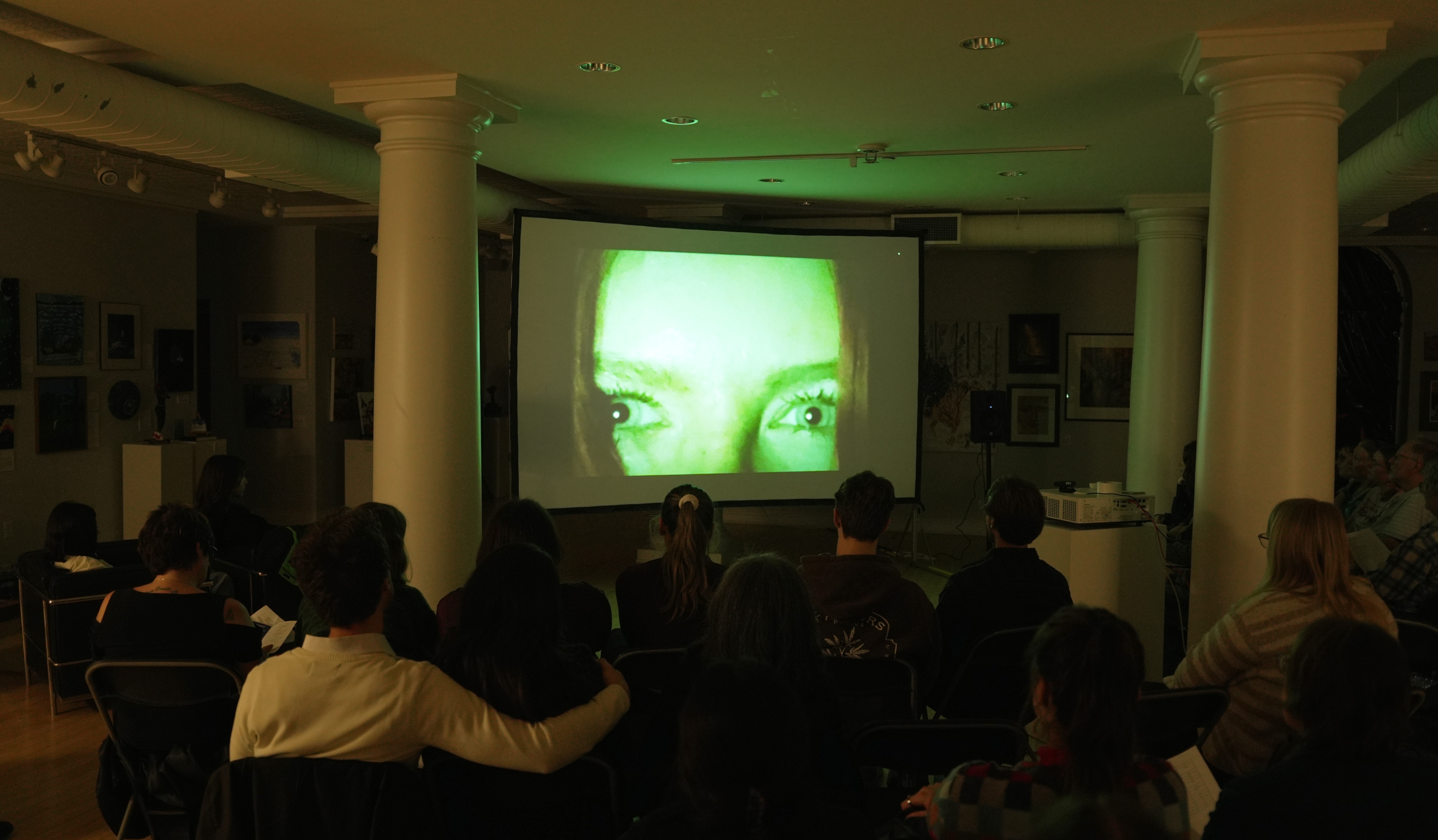
High school students who completed Crossfade in winter 2026 had their productions displayed alongside the works of Lakehead MFAC students in the annual Media Arts Showcase (above), which was held at the Orillia Museum of Art and History." Jeff Cole, a wonderful teacher at the Patrick Fogarty High School, approached me about offering a film workshop for his media students, which led to the birth of Crossfade," Dr. Lochhead says. "I'm also grateful to CELL Director Nicky Locker for her work getting Crossfade designated as a Specialist High Skills Major."
"Demystifying spaces of higher education and giving students a taste of Lakehead life are two other important goals of Crossfade," Dr. Lochhead says. "The workshops take place on the Lakehead Orillia campus and students eat lunch together in the university cafeteria."
There's yet another advantage for Crossfade participants who may later apply to Lakehead's MFAC program. They can accelerate their admission route to MFAC by submitting their Crossfade projects for consideration instead of a standard filmwork portfolio.
Pick a Card, Any Card
Dr. Lochhead takes an inventive approach to teaching filmmaking.
"I listen to students, challenge them, and encourage them to take risks with their ideas," he says.
After discussing filmmaking principles and techniques, Dr. Lochhead pulls out a deck of custom-made cards.
"In collaboration with an educator at the Edinburgh College of Art, Neil Mulholland, I have been exploring how the randomness of decks of cards can be used to jumpstart the creative process," he says.
Each deck is tailored to different aspects of filmmaking to activate playful workshop environments.
In Dr. Lochhead's cinematography workshops, for example, students drew from his Ciné-Magic Card Deck, which has cards featuring camera shots, angles, moods, and motivations.
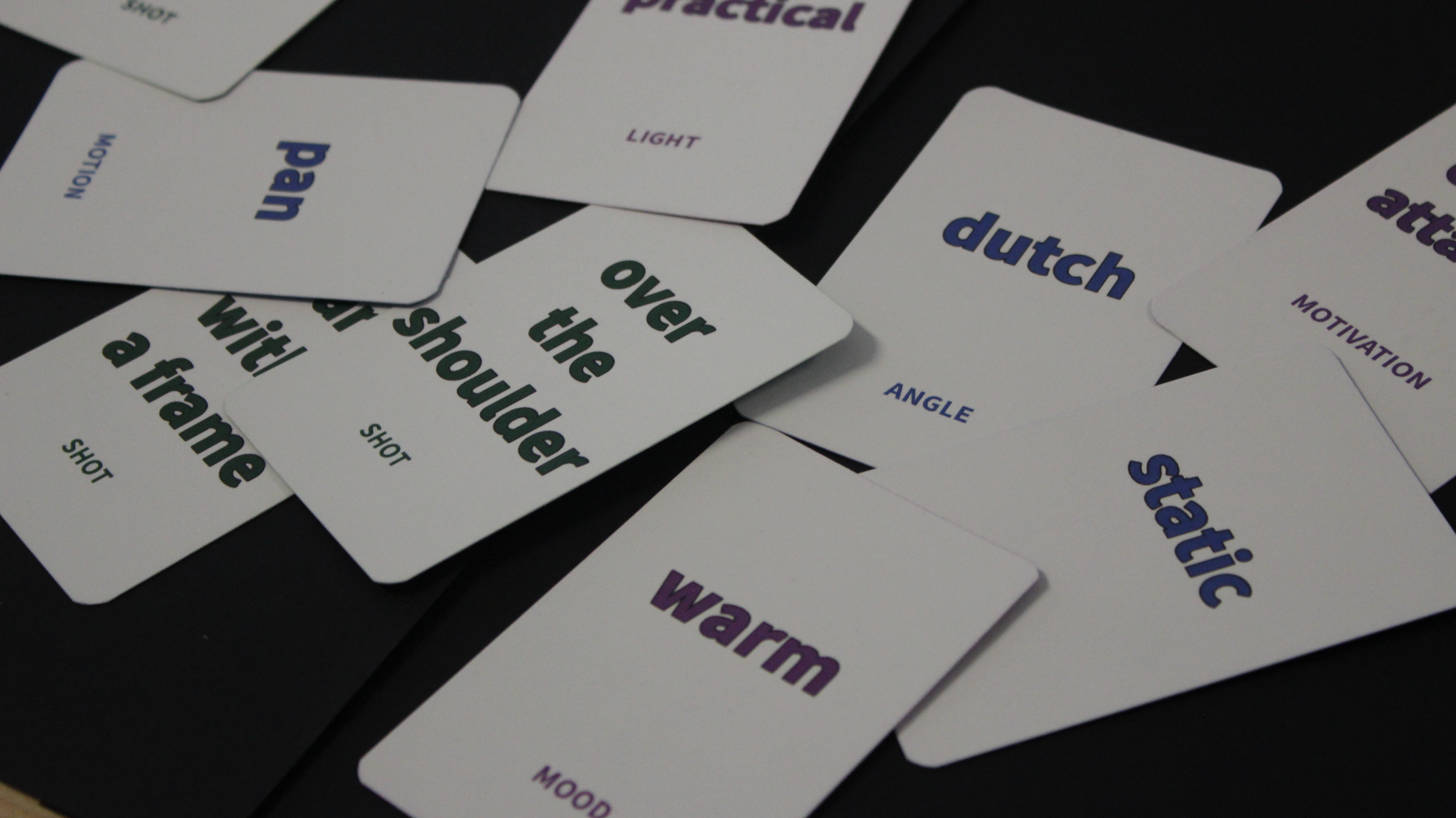
Dr. Lochhead's decks of cards lead to unexpected juxtapositions. "The Jootsy! deck is my favourite because it's more speculative. It stands for Jump Out of The System, and it prompts students to develop a parallel-narrative map and connect multiple storylines into a playful, shared, and interactive project."
"A deck functions like a recipe book. Students have to figure out what they can make by combining disparate ingredients. By bringing chance and rules into filmmaking, it becomes a game of problem-solving."
After students deal and choose their cards, they work together in small teams.
"The workshops become a flurry of collaboration where students will produce short works anywhere between 30 seconds to 4 minutes in length," Dr. Lochhead says.
This is crucial because every film and media production requires a troupe of people working together, making the ability to collaborate an essential skill in the field.
"The projects that emerge from the workshop are always full of energy, and there are lots of laughs," he adds. "One group used a birdhouse to film a story about an alien abduction."
From Babbling Brooks to Screeching Traffic
The most recent Crossfade workshops immersed students in the medium of sound art during an intensive three-day program called Sonic Imagination.
"The students went out and collected sounds and then assembled them into audio collages that evoke specific moods and feelings," Dr. Lochhead says.
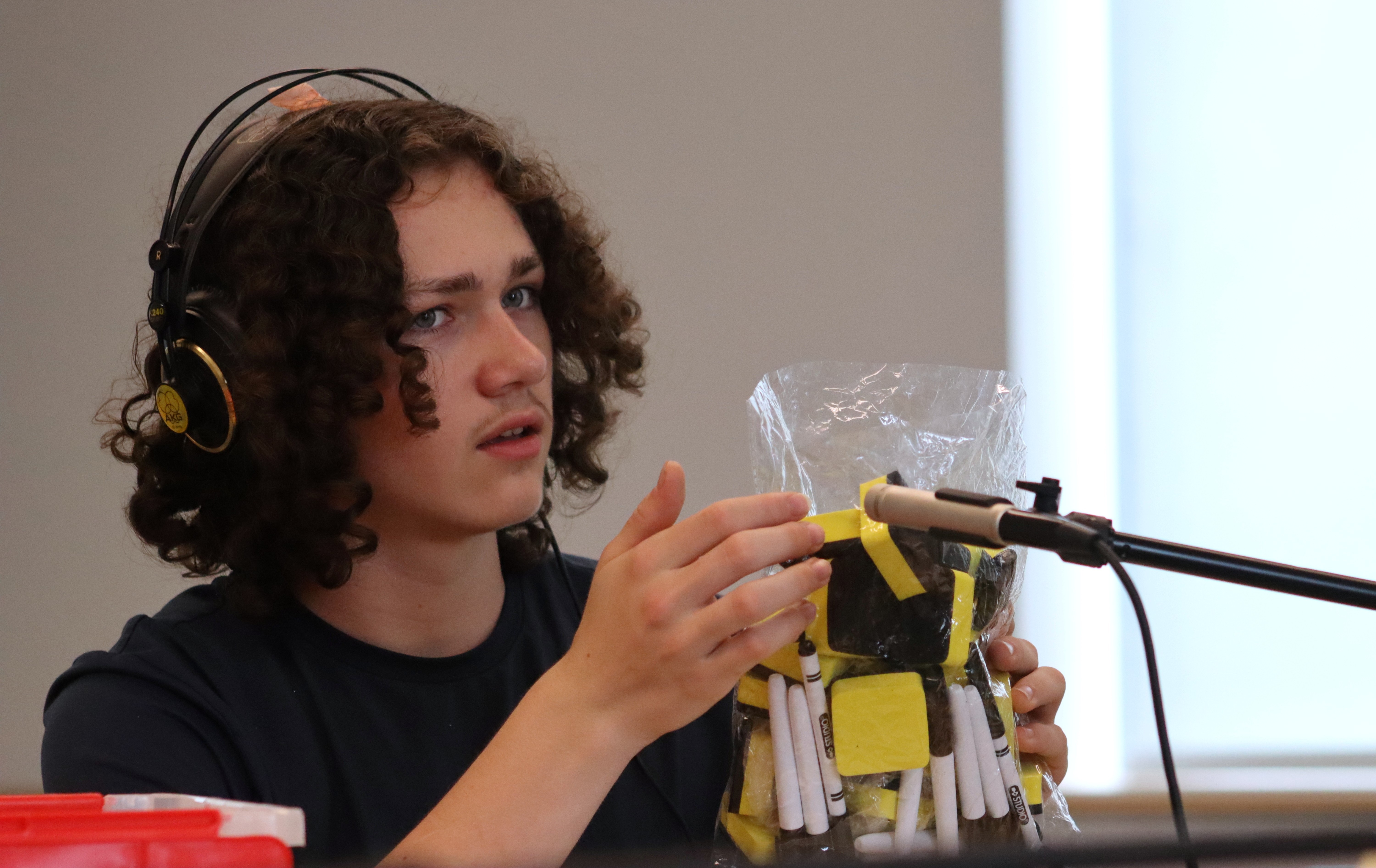
Any sound imaginable can be incorporated into sound art, whether it's a barking dog or the wind in the trees. Unlike music, it isn't driven by harmonic structures or musical scales, offering sound artists great freedom. Above, a student records sounds.
"Audio collages are playful and they encourage students to be open and curious about the world around them, where music can be found anywhere," he says.
Dr. Lochhead hopes to run a Crossfade series focused on interactive storytelling this fall, giving more Simcoe County students the opportunity to become the next Ken Burns or Sofia Coppola, or to break the mould entirely as they pursue their own unique vision.
Check out this piece of sound art created by Crossfade students called Cosmic Storm.
Click here for information about Crossfade and upcoming workshops.
