



Alumni Spotlight: Kate Solbakk is Passionate about Protozoa
This Gifted Scientist and Artist Loves Unlocking their Mysteries
A YouTube video changed Kate Solbakk's life.
"The 'Story of Stuff' documentary exposed society's cycle of buying stuff and throwing it away and then buying more stuff and throwing it away," explains Kate (HBASc'14).
"As I was becoming a young adult, I didn't want to participate in that destructive loop.
Plus, I've always loved nature. I spent my childhood catching frogs and minnows, so learning that the animals I loved were under threat made me want to protect them."
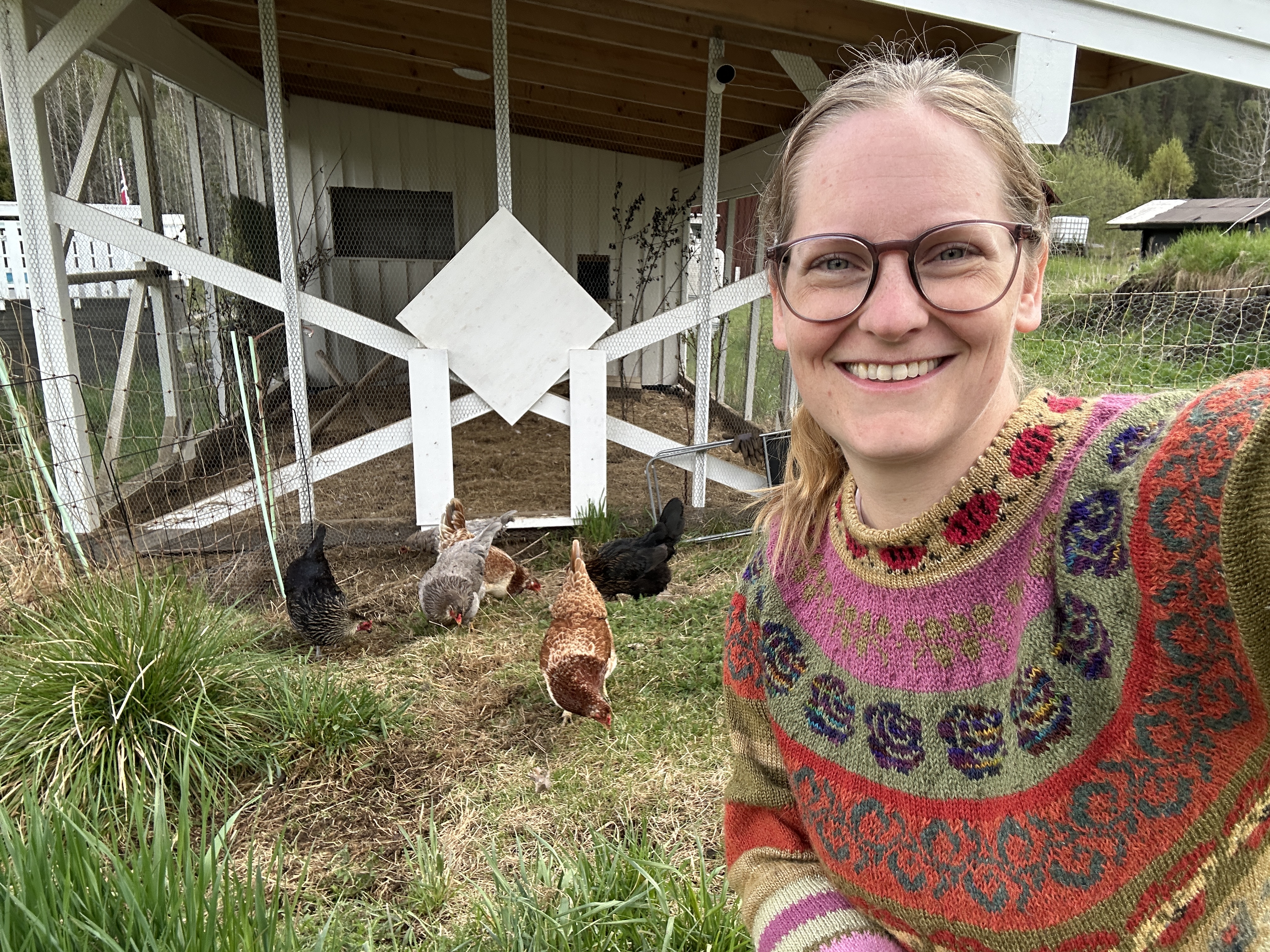
Kate grew up on a vegetable farm in Simcoe County, now she lives on a hobby farm with chickens outside the town of Drangedal in Norway.
A Young Environmentalist Finds Her Calling
Armed with this resolve, she joined the first group of students in Lakehead Orillia's Honours Bachelor of Arts and Science in Environmental Sustainability program.
When this degree launched in 2010—the year Kate enrolled—it was the first of its kind in Canada.
"There were just six students, which made us feel like collaborators," she says. "The faculty were always asking what we thought of various aspects of the program."
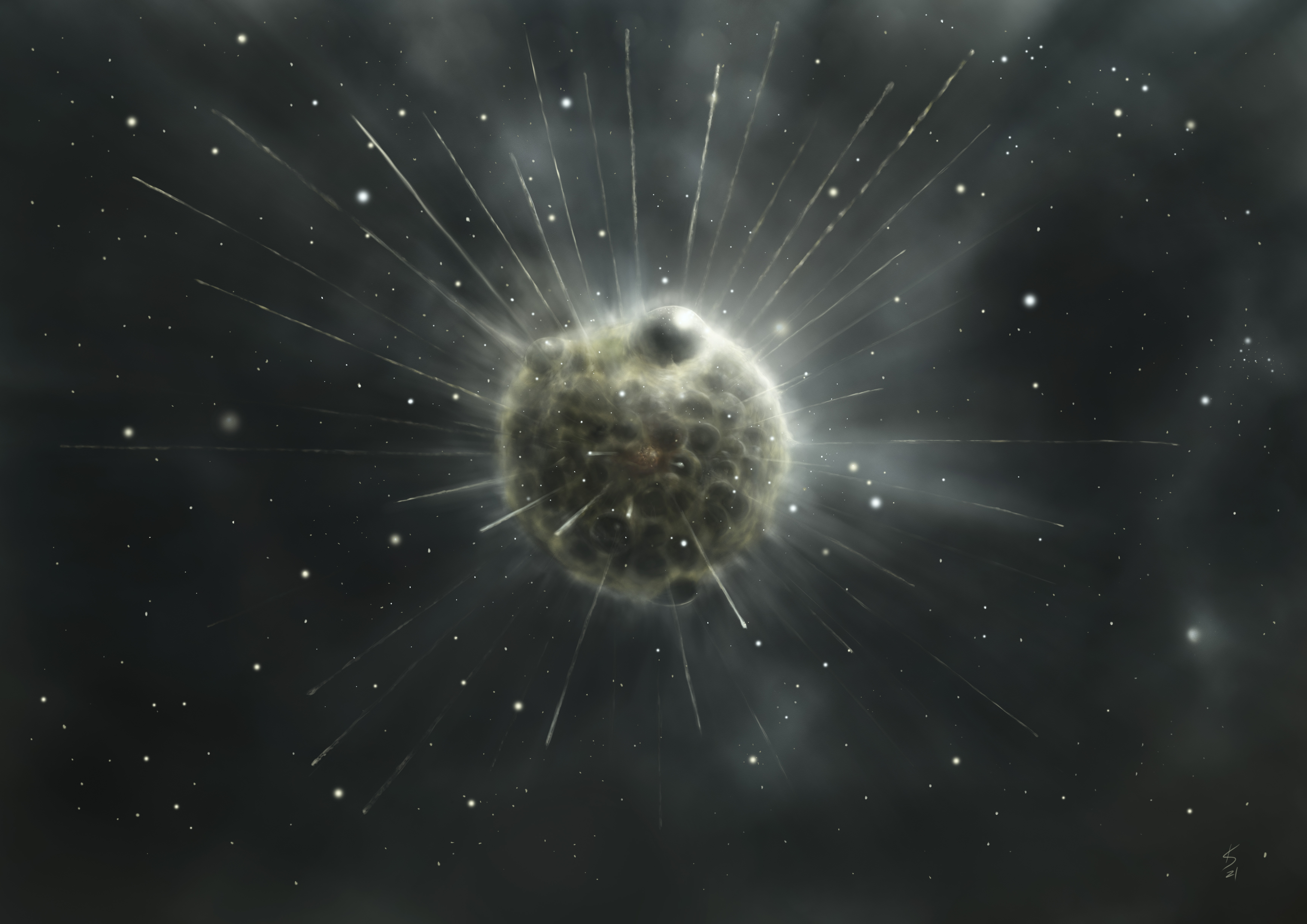
"I became fascinated with the incredible diversity of protozoa," says Kate Solbakk (née Weel). "They play beneficial roles in many ecosystems including encouraging plant growth, promoting soil formation, and stimulating plants' defense mechanisms to protect them against disease. Artwork Credit: Kate Solbakk
It was through her Lakehead studies that Kate found her professional path.
She was hired as a work-study research assistant for a project led by environmental sustainability professors Dr. Sree Kurissery and Dr. Nanda Kanavillil.
Her job was to analyze microscopic organisms in Lake Simcoe and Lake Couchiching.
"That's where I fell in love with protozoa—the charismatic megafauna of the single-celled world," Kate says. "They do all the things that animals do, but with just one cell."
An Adventure in Norway
The end of her third year at Lakehead marked another turning point for Kate.
It happened in Norway, where she'd travelled to visit her now-husband.
"While we were walking around a farmer's market at the Bygdøy Royal Farm in Oslo, I saw microscopes and a poster of protozoa in a display for the VitalAnalyse research company," she recalls.
VitalAnalyse studied how human activity affected microorganisms in agricultural soil. Their goal was to develop better fertilizers to feed the soil and prevent it from being depleted.
Kate became the only scientist in northern Europe doing microscopy to help farmers and researchers understand agricultural soil ecology.
"I asked if they needed help for the summer and they hired me as a field technician."
In September, she headed back to Lakehead to complete her degree but returned to Norway after graduation to build a career at VitalAnalyse.
Revealing an Invisible Universe
Kate spent much of the following years peering into a microscope, but in 2016, she embarked on a journey that took her in an unexpected direction.
She had begun creating illustrations of protozoa to help bring attention to VitalAnalyse's public outreach efforts.
"There was a demand for illustrations because microscopy photos can be hard to understand. Images of the same creature look dramatically different in different lighting.
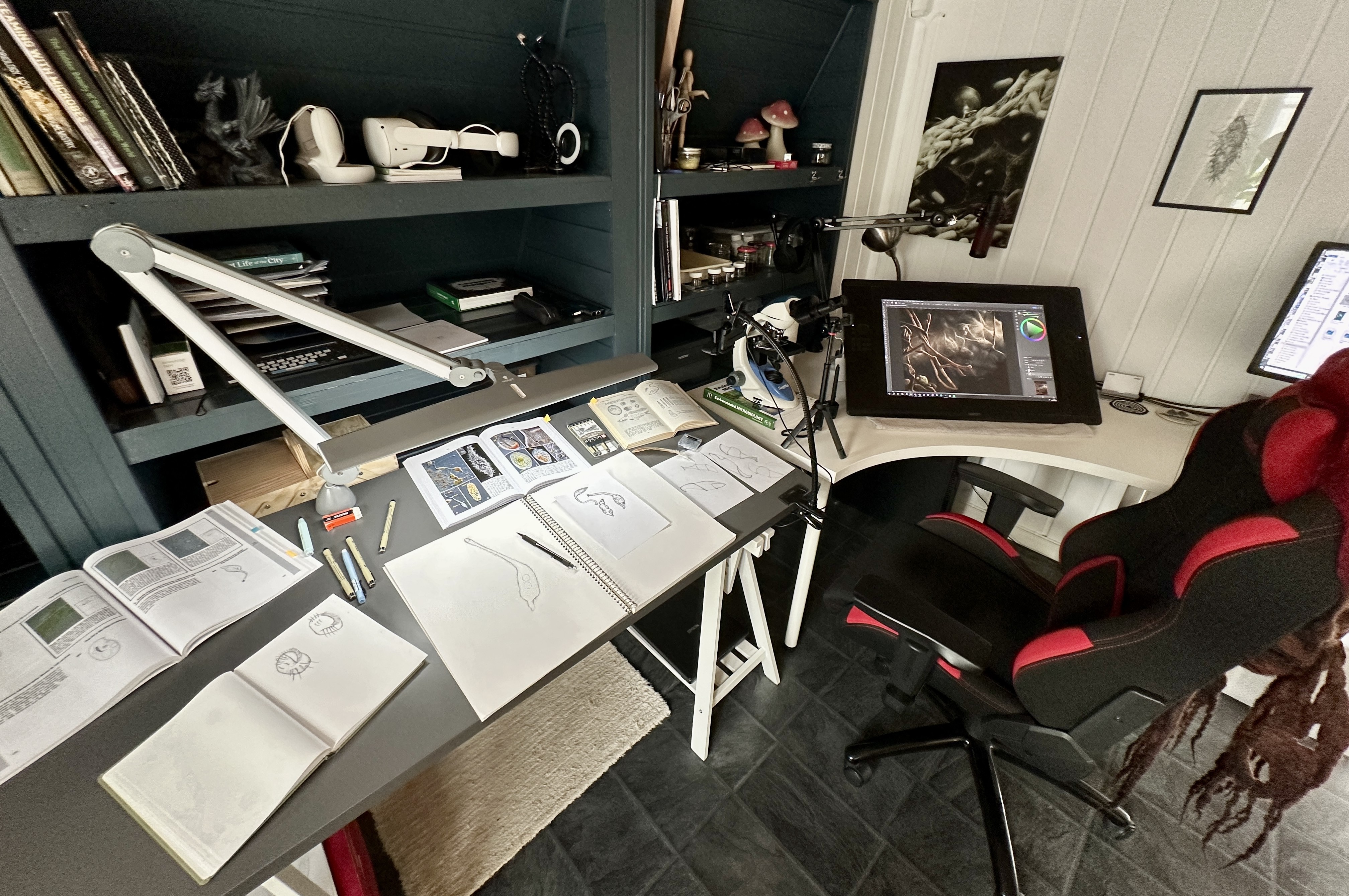
"My husband encouraged me to do microscopy illustrations when he found out that I could draw," Kate says. "He was also interested in digital art and had bought a stylus pad. To create my illustrations, I use a stylus to draw on the computer in a process similar to oil painting." Everything is hand drawn, there's no AI involved."
As a kid, Kate was constantly drawing, so illustration work allowed her to reconnect with this part of herself.
"People started telling me they loved my drawings," she says. "They'd say, 'Ooh, it looks like it's from outer space!'"
In 2019, Kate started her own company, called Mikroliv.
Initially, Mikroliv offered both soil testing for researchers and microscopy illustrations, but she soon shifted exclusively to illustration.
"My drawings have appeared in gardening books, research papers, presentations, and websites. People can buy them as art prints and schools sometimes use them."
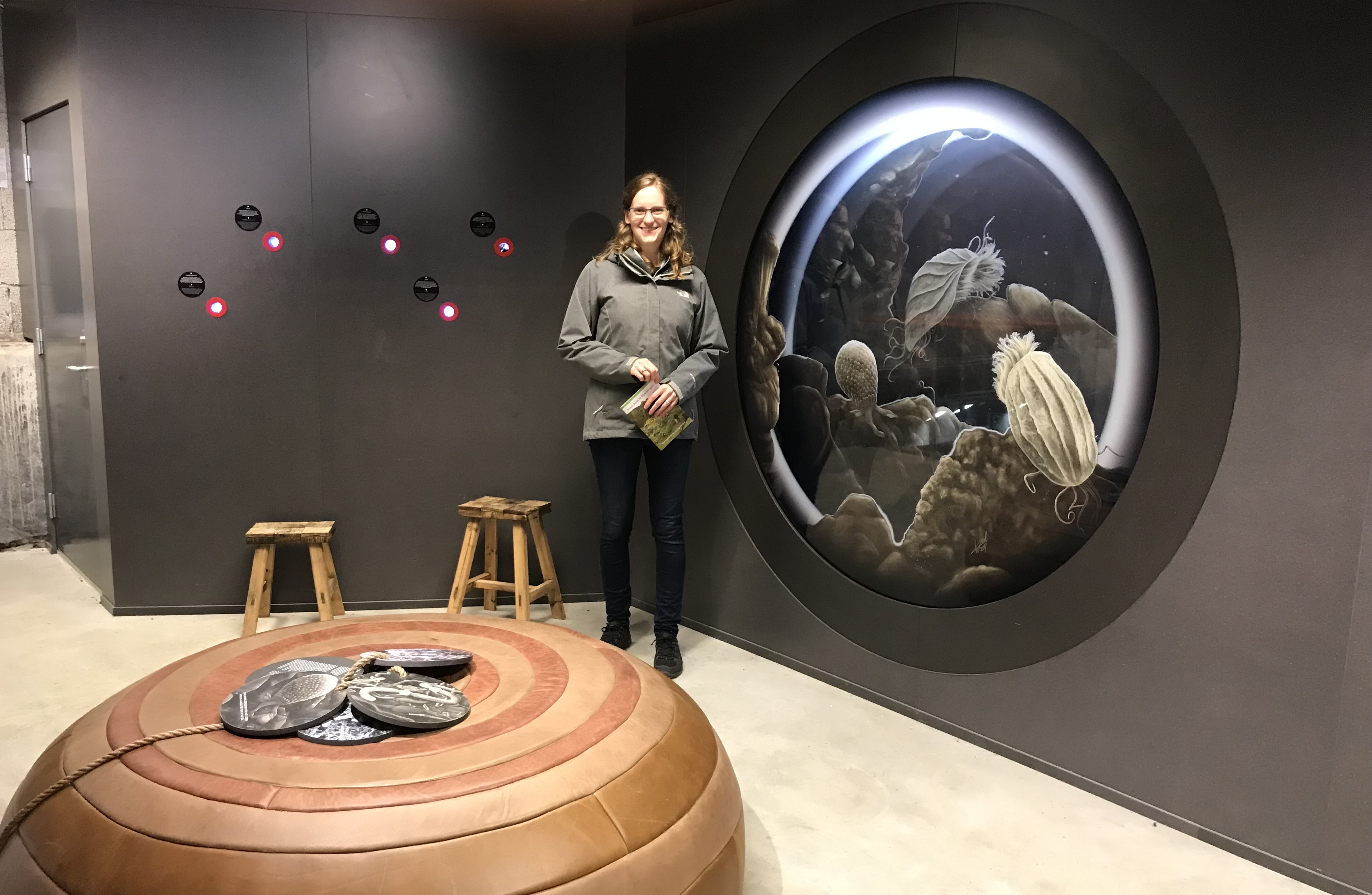
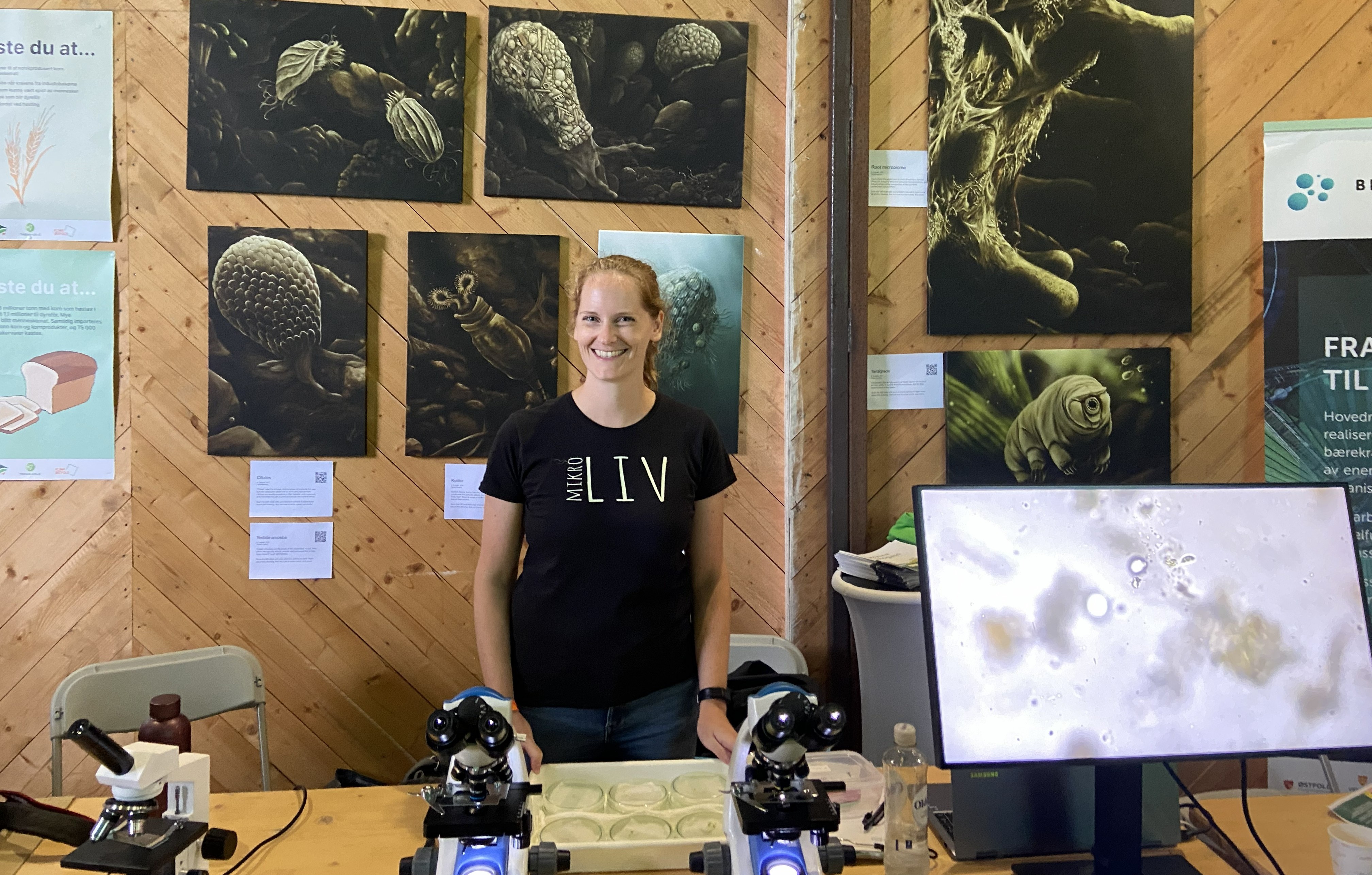
The popularity of Kate’s illustrations led to an important commission to create soil life illustrations for the Levende Matjord (living soil) research project. After finishing the commission, Kate continued to create drawings and eventually expanded her subject matter to include pond life. Above, Kate at an exhibition of her illustrations. Artwork Credit: Kate Solbakk
Immersing Videogamers in the Micro World
Videogaming has always been a huge part of Kate's life. Now it's become the latest way for her to merge the worlds of art and science.
She's been developing Cellscape—a fun arcade-style survival game—which she hopes to release in late 2026.
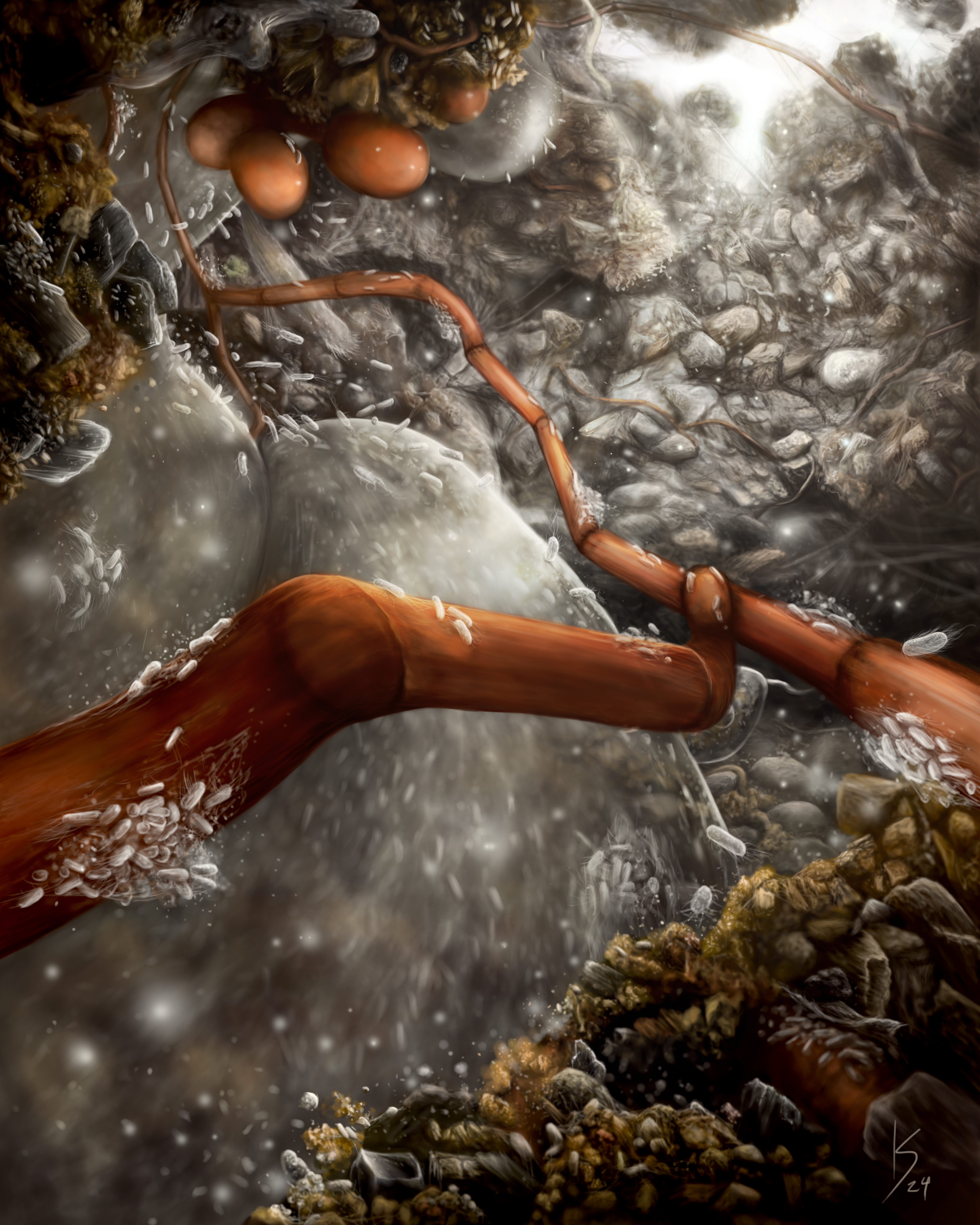
Developing the Cellscape videogame has tapped into Kate's imaginative powers. "You play as a protozoa in a soil ecosystem where the creatures around you eat and divide depending upon who has eaten who," she says. Artwork Credit: Kate Solbakk
"It's the culmination of the last decade of my work," Kate says. "I want to make microbes more relatable and approachable."
Or in the words of Cellscape:
"Experience life as a microbe in a dynamic, living ecosystem. Hunt bacteria, dodge hazards and predators, and divide as many times as you can!"
Download a demo of Kate's Cellscape videogame and try it out for yourself.
