Student Affairs - Orillia Campus

Talk Campus has arrived at Lakehead!

We have launched a new mental health service called TalkCampus. It’s a free to download app where you can talk with other students from around the world if you’re struggling and worried about your mental health. Your student email address will give you free access, just download TalkCampus from the app stores.

TalkCampus is anonymous, it isn’t run by us and we won’t be able to see if you are using it, you also won’t be able to see where other students are from. TalkCampus is based around peer support; you can use it if you need some help yourself or you can go on there and listen and support others.

The platform is safe and moderated and is designed as a place where you can just be yourself and talk about how you’re really feeling. Student life can be tough and we know sometimes you might not want to talk to us about how you’re feeling. TalkCampus isn’t a replacement for counselling or professional support however it is a great place to start talking and to make sure that however you’re feeling right now you’re not alone.

app store.png
google play btn.png


Embracing the Winter

Wintertime can be tough mentally and physically without a pandemic placing restrictions on outings, gatherings and activities. But whether we like it or not, the cold weather is here to stay and this year is definitely the time to embrace the season rather than get through it. Try some of the following to make the change:

Dress for the Weather. A popular saying in Norway is “There’s no such thing as bad weather, only bad clothes”. It’s important to prioritize your extremities-if they are cold, you will be miserable. Get warm socks, waterproof insulated boots, mitts or gloves and a toque. To keep your core warm and dry, plan to layer. You need a base layer, an insulating layer and an outer shell. 

Find an outdoor activity you enjoy. Now is the time to try something new (or rediscover an old pastime) that makes you want to spend time outside. Snowshoeing, ice climbing, cross country skiing, ice skating, sledding, and fat tire biking are all options even under the current Ontario COVID-19 public health restrictions.

Socialize. While indoor gatherings are restricted, going outside is an opportunity to get together with friends or family. Bundle up and have a bonfire (keep the guest list within gathering limits) or meet a friend for one of the outdoor activities from the last tip. 

Shift your mindset. Focus on the small things you enjoy about the winter: the beauty of a fresh snowfall, warming up with hot chocolate, the opportunity to get cozy and lost in a book, whatever is it, try to consciously focus on it instead of focussing on the things you dislike. 

If you are struggling with the winter blues, don't forget to reach out and book a counselling appointment with Student Health and Wellness. Our counsellors can give some guidance and help connect you to resources if needed. 

-Lindsey Wachter, R. Kin

Health and Wellness Promoter


frost on tree with SHW logo

Making New Habits Stick

Did you start the new year off with the best of intentions to wake up early, eat right, and exercise daily, but are already struggling to maintain your new routine? It’s normal to struggle with new habits, but there is also a lot of research we can learn from on how to make your resolution stick this year.

1. Focus on the process, not on the outcome

A lot of goals focus on the outcome- weight loss, books read, miles ran- but these kinds of goals don’t deliver results, behaviour changes do. And behaviour change is a process- so focus on the habits and routines needed to achieve your overall goal instead of the desired outcome.

2. Too Small to Fail

It’s not uncommon to make sweeping resolutions or set lofty goals for yourself, only to abandon them a few weeks later. James Clear, the author of Atomic Habits, suggests that we need to start small when adopting a new habit by picking a task that is meaningful enough to make a difference, but simple enough that you can get it done. So take a look at your overall goal, break it down to a small task, and build up from there.

3. Engage People Around You

Having other people involved in the process can keep you accountable even if your motivation wanes from time to time. Engagement can be either–  Active, where you inform your friends, partner or roommates who might be interested in and cultivate the habit together with them or Passive, where you let others know about your plans and having them morally support you. 

There are also a ton of online communities you can join if you don't have anyone in your life who shares your new goal, do a quick google search to find people with similar resolutions. If your goal is fitness related, join our Wolves on the Move Strava community to stay committed. 

4. Keep Track 

Tracking keeps you accountable for your habits. Every day where you successfully do your habit, give yourself a check. It’s very satisfying to do the checks every time you finish a habit! You can track your habits physically on a whiteboard or journal, or on your computer/device.

Here are some great habit trackers apps:

5. Abandon Perfection

Life happens and you are bound to skip/miss a day at some point. Be kind and patient with yourself and get back on track tomorrow. 


-Lindsey Wachter, R.Kin

Health and Wellness Promoter

Man eating from a plate, Student Health and Wellness logo in corner

Resetting Your Sleep Schedule

Sleep is critical for learning and memory. The process of learning is actively taken up by your brain during sleep, especially during the REM stage. Sleep is essential for long-term memory formation and it is during sleep that memory consolidation and enhancement occur. If you have fallen into a sleep schedule that’s not working for you because you’re having trouble getting up in the morning or staying up later than you want, there is no time like the present to get into a new sleep routine. Try some of the following to get into a sleep pattern that works for you:

  • Adjust your bedtime, but gradually. If you’re aiming to go to sleep earlier, try slowly scaling back your bedtime until you are at the desired hour. Go slowly and in small increments, adjusting no more than 15 minutes earlier every two to three days.
  • Get up at the same time each day. Being consistent is important in maintaining a functioning sleep schedule. Get a good alarm clock and don’t hit snooze. Try giving yourself something to get out of bed for- like pre-setting your coffee maker so you can wake up to a fresh cup. 
  • No napping, especially in the afternoon. Power napping may help you get through the day, but if you find that you can't fall asleep at bedtime, eliminating even short catnaps may help.
  • Avoid exercise too close to bedtime. Exercise can wake you up and keep you alert longer than you would like. 
  • Ditch the screens an hour before bed. Blue light can activate your brain and make it harder to fall asleep. Some phones already have settings that remind you to wind down but you can also set an alarm. 
  • Set the mood and create a relaxing bedtime routine. Take a warm bath and play some relaxing music, try meditating or a full body stretch routine. Make sure your bed is comfortable, the room is dark, and the temperature is not too warm. 

Changing your sleep schedule isn’t easy, but with the proper discipline, it can be done. Don't get frustrated yourself if you oversleep at first, or struggle to fall asleep at your desired bedtime, it will come eventually. 

If your sleep schedule is interfering with your academic work, job and other responsibilities, if the above strategies don’t work, or if you’re struggling with sleep in any way, tell your doctor. Sleep affects functioning and health now and in the long-term. Chronically not getting good sleep can do a lot of damage, and there are healthcare providers out there who can help. If your primary care provider does not have expertise in sleep, they can refer you to a sleep specialist who can help.

For more information and resources related to sleep check out the Sleep Section of our site!

woman sleeping with SHW logo

Study Tips from Peer Wellness Educators

Finding ways to cope with exam stress has always been imperative to taking care of one’s self as they navigate through their academic journey. As we all head into exam season during this pandemic, the need to support your wellbeing has never been more important. Your Peer Wellness Educator team has compiled a list of their best academic and wellness tips to help you cope with stress and avoid the chance of burnout.

ACADEMIC TIPS

1) Plan ahead! A key part of reducing stress during exam season is to make a plan and to make the plan early. We recommend printing off a blank calendar and writing down all of the readings and assignments you need to complete on the schedule. Space out the assignments based on how much time you will need to complete each task and give yourself plenty of time to complete each task before the due date.
2) Connect with your peers! There’s nobody better than your peers to help you through a tricky assignment or a complex reading. By putting your knowledge together, you can help each other succeed and hold each other accountable. Zoom is a great platform to hold study sessions. Remember: Meeting with your peers doesn’t always have to be strictly about academics! Take the time to destress and talk to your peers about how you have been feeling and develop friendships.
3) Reach out to your professors early! Is there something you have not been understanding as well as you would like to? Reach out to your professor through email or ask to set up a zoom meeting. Your best bet is to start the conversation early because exam season is when questions will start flooding into the professor’s inboxes and you want to get your opportunity for one-on-one help before it’s too late.

WELLNESS TIPS

1) Fuel your body and your mind! We know that when studying the days can fly by and you can go hours without realizing you have not stopped to eat. Make sure to keep a schedule that allows you to eat healthily and gives you the opportunity to try your hand at cooking. Baking and cooking are a great way to take a break from your studies and destress by engaging in a fun and satisfying activity. Remember: Make healthy choices that will help fuel you and keep your mind sharp.
2) Take time for yourself! While it may feel that every moment you possibly have should be spent studying, this is not true. While studying is important, it is just as important to continue doing things that bring you peace and joy. No matter what, schedule some time into your day to do something you enjoy. This could be as simple as watching a tv show, having a relaxing bath or practicing a new hobby! We are not robots and cannot study 24 hours a day, nor should we! Take some time to be at peace and enjoy life around you. While exams can be overwhelming, remember it is okay to take time and relax and feel grounded. This will help you study and focus better!
3) Do not over caffeinate! While many of us love coffee, consuming too much caffeine can worsen the stress we already encounter from exams. Caffeine is a stimulant and increases your body’s stress levels. If you feel you need those cups of coffee to stay up and finish studying, listen to your body instead and get some sleep. You will feel more refreshed and will retain more information once you properly take care of your body. Try swapping out your coffee for herbal tea or water while you are studying!

We’d love to hear from you! If you have any exam stress tips that you think we should share, message us on Instagram @lupeerwellness

-Ashley Warburton and Samantha Sawyer, Peer Wellness Educators

Note book, coffee cup and pen

Meal Prepping During Exam Season

As we get towards the end of the semester, your schedule might be full of final assignments, essays and studying, leaving little time to cook proper meals. 

You don’t have to settle for boxed macaroni and cheese and late-night pizza to get you through the next month.  Try batch cooking or meal prepping., it takes a little bit of time on the front end but you can reap the benefits for days after (weeks if you have the freezer space). It is also a practical way to make sure your meals are nutritious and budget-friendly.

Before you get cooking you have to make a couple of decisions, first- do you want to make individual meals, batch cook or just prep all the ingredients? All of these have their pros and cons but consider if you get sick of eating the same thing multiple days in a row? Will having prepped ingredients be enough to outweigh the convenience of Skip the Dishes?

Next up, you have to decide what you are going to make. This depends on personal preference as much as anything else but consider the following: 

  • How much time you want to spend in the kitchen, some recipes are more demanding than others
  • Produce that is in season can be cheaper and more flavourful.
  • Don't be afraid of frozen vegetables, they are flash-frozen at peak ripeness so you don't have to sacrifice quality for price.
  • Meal prepping isn't just for dinner- you can prep breakfast and lunch just as easily. 
  • If you are making a couple different recipes, try to get ingredients to overlap for budgeting and bulk prepping. 

Once you have decided on your menu, check what you have in your cupboards and then make a list for the rest. Then it is time to get to work in the kitchen.

One of my favourite meal prep's is bahn mi bowls adapted from Pinch of Yum's recipe:

quick pickled carrots

  • 1/2 cup rice vinegar
  • 1/4 cup brown sugar
  • 1 tablespoon sesame oil
  • 1 teaspoon salt
  • 6–8 carrots, peeled into ribbons
  • 1 jalapenon, sliced thin

meatballs

  • 1 lb. ground pork
  • 1–2 tablespoons chopped lemongrass 
  • 4 cloves garlic, minced
  • 1 tablespoon Sriracha
  • 1 tablespoon fish sauce
  • 1 tablespoon brown sugar
  • 2 teaspoons cornstarch
  • 1 teaspoon salt

bowls:

  • brown rice
  • sliced cucumber
  • herbs: cilantro, basil, mint, green onions
  • crushed peanuts
  • spicy mayo (just mayo with a hit of sriracha)

INSTRUCTIONS

  1. Quick Pickled Carrots: Whisk the rice vinegar, brown sugar, sesame oil, and salt together. Soak the carrots and jalapenos in the mixture for one hour.
  2. Meatballs: Mix all ingredients. Roll into small meatballs with your hands (they might feel wet and heavy – pop them in the fridge or freezer for a few minutes to get them to hold their shape a bit better). Heat a little bit of olive oil over medium high heat. Add the meatballs and fry until golden brown on the outside and fully cooked (not pink) inside.
  3. Bowls: Layer the carrots and meatballs over rice. Top with herbs, peanuts, sesame seeds, and/or spicy mayo. 

For meal prep, I put rice and meatballs into individual containers and store all the topping in their own containers, so I can heat the rice and meat balls and keep the toppings cool. 

Looking for more meal prep suggestions? Here a couple of websites to get you started:


-Lindsey Wachter, R.Kin

Health & Wellness Promoter

Trying to Find Work-Life Balance as a Grad Student


Graduate students might have thought getting into their program was the hard part, only to find that trying to juggle academic requirements, research, teaching responsibilities, work and family feels impossible. 

Here are some tips and resources to thrive in graduate school:

Grow and maintain support networks. A strong support system can act as a buffer against stress and as a post-grad you are going to need to both prioritize your existing network of friends and family while also finding/creating a network with fellow grad students.  You will want both because having those outside the academic bubble can help put things in perspective, and those in the academic community will understand what you are going through and be able to share their own experiences. So set aside time to connect with your social network and try to fight the urge to cancel plans when deadlines come around.

If you aren’t sure where to connect with other grad students- check out the Lakehead University Graduate Students' Association (LUGSA) for upcoming events. 

Have a goal/project outside of academia. There are going to be times when you are frustrated with your work, or where it seems like you aren’t making any progress. Having something to work on or towards that doesn’t rely on anyone else can give you the chance to feel productive, boost your confidence and give you a sense of competency. This can be anything you enjoy but especially good are things that give you mental downtime and/or a change of scenery. Try to run your first 10k, take a pottery class or master the art of sourdough bread.

Set boundaries. This is especially important this year with most of the school and work being done from home. Try to set up a physical workspace in your home so that you can create a separation of work and leisure. It is also important to try to schedule business hours to help focus your time. Depending on your other responsibilities, these hours might not fall between 8:30 am -4:30 pm and that’s okay, just communicate your plan with your supervisor(s).

Don’t struggle in silence. If you’re feeling overwhelmed or stuck on something, it usually means you need to consult with a colleague or supervisor. Remind yourself that it is OK to ask for help; no one expects you to have all the answers or to know everything! If you have tried this and are still feeling the same- you can also reach out to a counsellor. Student Health and Wellness services are available to all grad students.

Expect to have some challenges in grad school. Some days it will seem like graduate school is impossible and you will question why you ever thought it was a good idea. It’s normal to feel that you don’t belong here sometimes but remember that you’re not alone; fellow graduate students and professors have had these feelings, too. There are also going to be times of the year that are hectic and stressful no matter what you have done to prepare- when this happens just do your best, try to take care of the basics of self-care (sleep, movement, healthy eating) and try to put it into perspective. 


-Lindsey Wachter, R.Kin, MSc Health and Wellness Promoter 

 

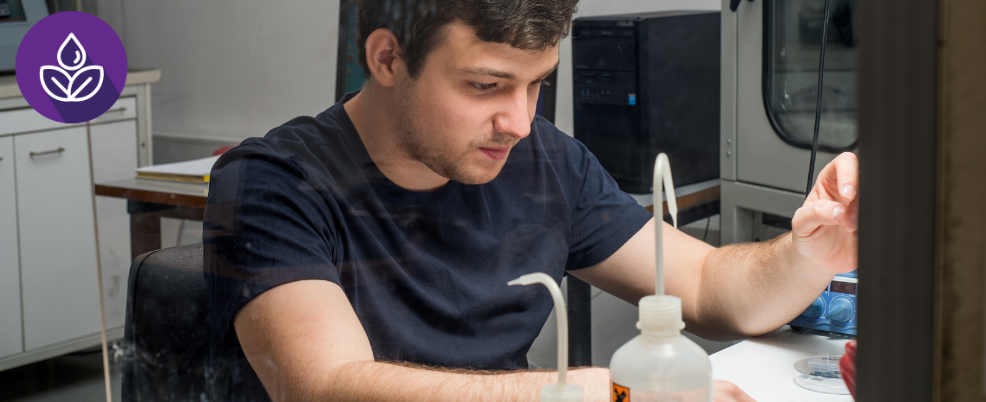
student in a lab

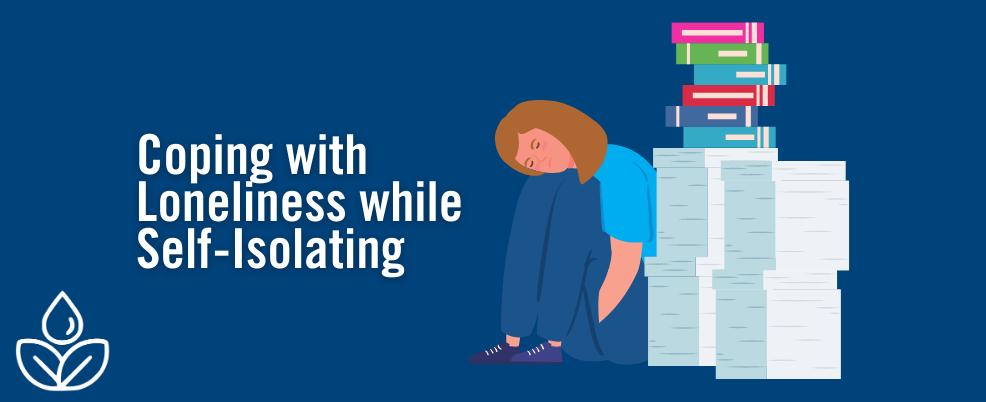
Coping with Loneliness while Self-Isolating

With cold and flu season upon us, there is a chance you might have to self-isolate if you have symptoms that overlap with COVID-19. Having to self-isolate can feel lonely and challenge our mental health. Here are some steps you can take to help you cope during a period of isolation:

  • Find alternate ways to connect with friends and loved ones: phone, text, FaceTime, emails can allow you to stay in touch and receive support. Online gaming is also a great way to connect and keep busy.
  • Let others know you want to stay connected: inform friends and loved ones that keeping in touch in other ways is important to you. Ask them if they can also reach out to you during this period
  • Practice wellness at home: stretch and move your body (check out Campus Rec's on-demand fitness classes), get proper nutrition, and ensure good rest.
  • Remind yourself that isolation is not forever: You will be able to get out and about and resume your normal activities again.

If you are self-isolating and struggling with mental health- don't forget that Student Health and Wellness counselling appointments are being conducted via phone so you can still book an appointment. If you find yourself lonely after hours, call a hotline like Good2talk or check out online peer support like TalkCampus or 7 cups.

A reminder that one way to avoid having to self-isolate is to get your flu shot, available at Student Health and Wellness in Thunder Bay, pharmacies across Ontario and from primary health care providers.

coping with loneliness while self-isolating

International Pronouns Day

The third Wednesday of October marks International Pronouns Day.

International Pronouns Day seeks to make respecting, sharing, and educating about personal pronouns commonplace. Referring to people by the pronouns they determine for themselves is basic to human dignity. Being referred to by the wrong pronouns particularly affects trans and gender-nonconforming people. Everyone has the right to be addressed by the name and pronouns that correspond to their gender identity, including the use of non-binary/neutral pronouns (e.g., they/them). Recent research finds that referring to people in the ways they wish to be referred to can have positive health outcomes for trans people.

Using your own pronouns when introducing yourself or in your email signature tells everyone that you are not going to assume their gender. It also helps take the burden off of trans and non-binary students to continuously explain their identity. Using pronouns is a key element of being a 2SLGBTQIA+ ally and is something that is effortless to do, but means the world to others. These actions are part of the larger work of creating and sustaining inclusive and supportive communities for everyone.

To learn more about gender orientation and being an ally, visit this page or check out www.mypronouns.org


International Pronouns Day

Pages

Subscribe to Student Affairs - Orillia Campus