8 Healthy Activities You Can Test Out This Summer

Two students wearing backpacks stand on a hill overlooking a lake.

8 Healthy Activities You Can Test Out This Summer.

8. Hiking

Hiking is an excellent form of exercise that is low intensity and great for your cardiovascular system. It can also help you reduce feelings of stress through the release of endorphins. Want to know more about hiking in your area? check out https://www.alltrails.com/ or download their app to see all kinds and difficulties of hiking trails in your area.

7. Canoeing/Kayaking

a group of people canoeing beside a rock face

Did you know that Canada has approximately 20% of the world's surface freshwater? Why not explore some of your local waterways on a sunny day! Canoeing and kayaking are great ways to relax while giving your body a great upper body workout. Curious about renting some equipment and trying it out? Here are some businesses that offer canoe and kayak rentals near Lakehead University.

Orillia:

https://www.abreathoffreshair.ca/

https://swiftoutside.com/georgian-bay/

Thunder Bay:

https://queticooutfitters.com/quetico-canoe-rentals/

https://www.wildernesssupply.ca/rent-canoes-kayaks-sup-s-more-in-winnipeg-thunder-bay

 6. Rock Climbing

An empty rock climbing gym

Just because the sun is now out doesn't meant it's here to stay. Rock climbing is an excellent way to get active in an indoor environment. Rock climbing is also an excellent way to work out everything from your heart to your legs and everything in between. Below are a couple of local rock climbing gyms near Lakehead University.

Orillia:

https://www.orillia.ca/en/living-here/rotary-place.aspx

Thunder Bay:

http://boulderbearclimbing.com/

 5. Softball

a softball sitting on an empty softball pitch

Are you looking to meet some new people? Or are you and some friends looking for a fun activity to do together? Why not join a local softball team? Softball is an excellent way to spend some time outside socializing with peers, making new friends, and stretching your legs. Check out these links for some information about local recreational softball leagues:

Orillia:

http://www.ospl.ca/forms/16696-Free-Agents

 Thunder Bay:

https://www.facebook.com/groups/battingforthecure/

4. Disc Golf

a disc golf post in a field

Looking for a low intensity activity to play by yourself or with friends? Disc golf is a great relaxing activity that can reduce stress while performing low impact exercise! check out some of these local courses in your area:

477 Cuyler St, Thunder Bay, ON P7A 1B5

 A map showing the location of the disc golf course in Thunder Bay

68 Woodside Dr, Orillia, ON L3V 3K9

A map showing the location of the disc golf course in Orillia

3. Bicycling

Lower half of someone biking down a path in a forest.

Bicycling is an excellent hobby for anyone of any age to get into. It also is an activity that can be made easier or more difficult depending on your level of experience and chosen path. Check out the AllTrails app or visit https://www.alltrails.com/ for trails, information, and difficulties.

2. Soccer

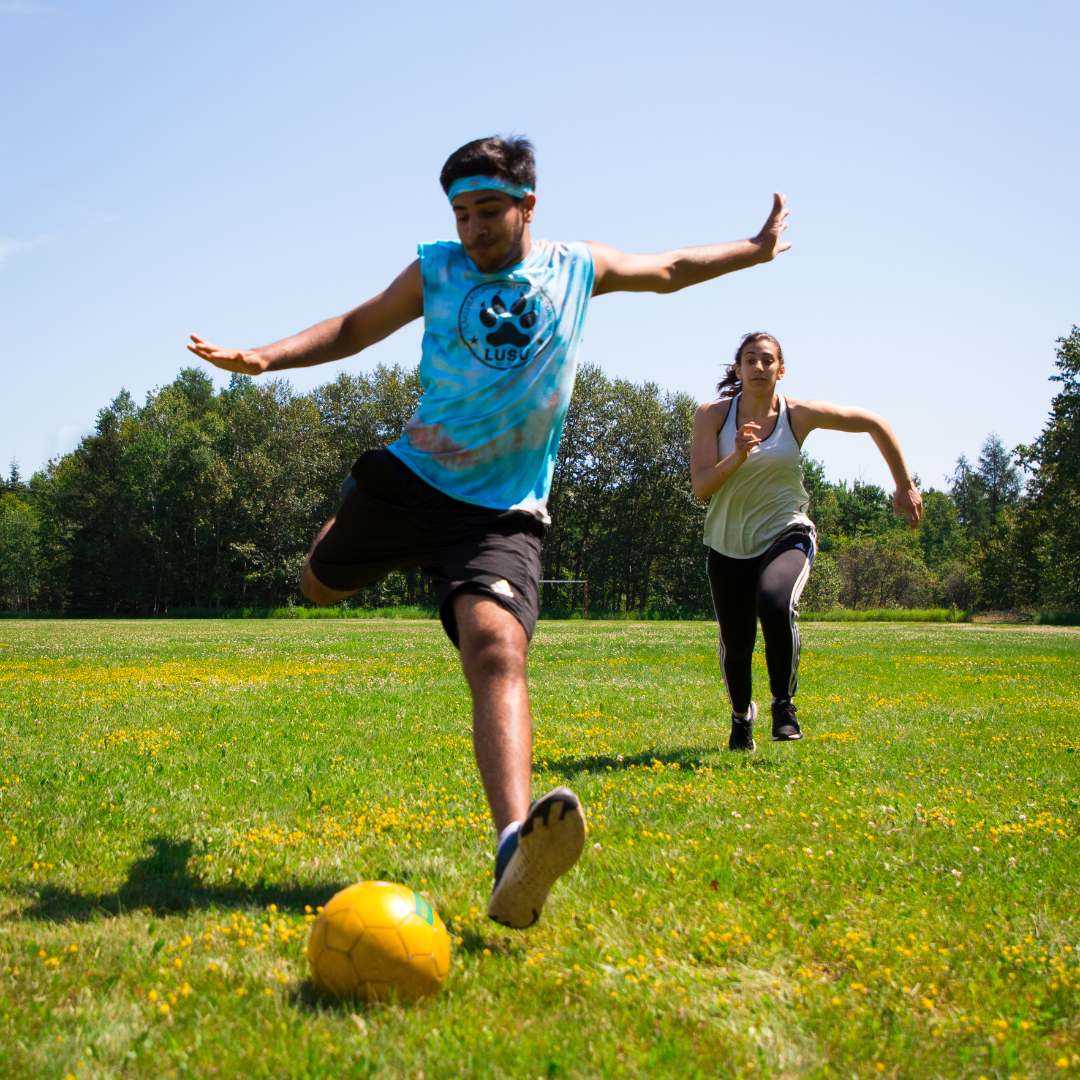
Lakehead University students playing soccer in the C.J Sanders Fieldhouse

Wanting to get out and meet some new people? Joining a local soccer league is an excellent way to meet tons of new people while getting some great aerobic exercise. Want to know more? see the links below for more information about soccer leagues in your area.

Orillia:

https://www.orillia.ca/en/living-here/sports-leagues.aspx

Thunder Bay:

https://interlucania.ca/

1. Concerts

A crowd of people sitting in front of the stage at a previous Live on the Waterfront event

Not every healthy activity has to involve physical movement. Many cities offer free public concerts throughout the summer which can help reduce stress and improve your sense of community.

Thunder Bay:

https://www.thunderbay.ca/en/recreation/live-on-the-waterfront.aspx

Orillia:

https://calendar.orillia.ca/Default/Index?__RequestVerificationToken=ieUSQED5h8-VC0EHkE9tW7HacHnkztZonLfd-aB9YmbHVARs6sCMFWPINbS0RtlmVZyOUn_iMDIm0AF7zFgYpQeX2HW4rexGV9mMi983HhY1&PrintView=list&StartDate=05/11/2022&EndDate=08/11/2022&Calendar=Events&Keywords=concert

A man and woman wearing backpacks stand on a hill overlooking a lake

World Suicide Prevention Day

September 10th marks World Suicide Prevention Day. Death by suicide is the second leading cause of death among Canadians aged 15-24 (Statistics Canada, 2017) and the most recent NCHA survey found that 16% of Canadian post-secondary students had seriously considered suicide in the past 12 months. 

This year, debunking the myths surrounding suicide and bring an increased awareness of signs and symptoms might be more important than ever. The pandemic has caused stress and disruption for everyone and according to a nationwide survey released by the CMHA and UBC, this has caused pronounced mental health concerns- including suicidal thoughts and feelings- especially among: parents, those living with mental illness or mental health issues, Indigenous people, those with a disability or individuals in the LGBTQ+ community. 

It is important to remember that individuals thinking about killing themselves do not want to die, they want to end their suffering. These individuals are feeling helpless and hopeless. It is also important to remember that suicide does not come out of nowhere, warning signs—verbally or behaviorally—precede most suicides. Therefore, it’s important to learn and understand the warnings signs associated with suicide.

The American Association of Suicidology has a mnemonic to remember warning signs frequently experienced or reported within the last few months before a suicide, or suicide attempt: IS PATH WARM? The specific warning signs are: 

I – Ideation. Expressed or communicated suicidal ideation threatening to hurt or kill themself or having thoughts of doing so

S – Substance Abuse. Increased alcohol or drug use

P – Purposelessness. No reason for living; no sense of purpose in life, start giving things away because there’s no purpose in keeping anything, no reason to maintain their hygiene

A – Anxiety. Anxiety, agitation, unable to sleep or sleeping all the time, difficulty concentrating 

T – Trapped. Like there’s no way out and things will never get better

H – Hopelessness. No future orientation 

W – Withdrawal.  Isolating from friends, family and society.

A – Anger. Rage, uncontrolled anger, seeking revenge, irritable 

R – Recklessness. Engaging in high-risk activities, seemingly without thinking, impulsive behavior

M – Mood Changes.  Dramatic mood changes, flat affect, depressed mood, acting out of character

Signs that someone is at more immediate risk of suicide might include:

  • Threatening to hurt or kill themselves, or talking of wanting to hurt or kill themself; and/or

  • Looking for ways to kill themself by seeking access to firearms, available pills, or other means; and/or

  • Talking or writing about death, dying or suicide, when these actions are out of the ordinary.

If you think someone is thinking about suicide- ask them. There is a misconception that bringing up suicide can put the idea into someone’s head, but in reality, talking calmly about suicide, without showing fear or making judgments, can bring relief to someone who is feeling isolated. A willingness to listen shows sincere concern; encouraging someone to speak about their suicidal feelings can reduce the risk of an attempt. If you aren’t sure how to start a conversation with someone who appears to be struggling, check out Jack.org’s Be There golden rules. If they are not immediately at risk, you can encourage them to talk to a counsellor or someone they trust and continue to check in on them.

If you or someone else is in crisis you can:

  • Call 9-1-1.
    • For Thunder Bay Campus security, call 807-343-8911.
    • For Orillia Campus Security, call 705-330-4008 ext. 3912 


  • Call Crisis Response Services, a 24/7 crisis line staffed by Canadian Mental Health Association
    • Thunder Bay- 807-346-8282
    • Orillia- 705-728-5044


  • Not on either campus?
    • National Suicide Prevention Lifeline: 1-800-273-8255
    • Suicide Hotlines Across the World 
    • GOOD2TALK post-secondary crisis line- 1-866-925-5454
    • Crisis Text Line powered by Kids Help Phone- a free, confidential texting service, available 24/7/365. By texting GOOD2TALKON to 686868, post-secondary students in Ontario can be connected to a trained volunteer Crisis Responder who is there to listen and support students with any issue they’re facing.
    • Crisis Service Canada: www.crisisservicescanada.ca
    • First Nations and Inuit Hope for Wellness Help Line: 1-855-242-3310
    • Service is available in Cree, Ojibway, Inuktitut, English and French.
    • Trans Lifeline: 1-(877) 330-6366

To learn more about how talking about suicide can make a difference join the Canadian Association of Suicide Prevention webinar, it begins at 7 pm on Sept. 10 and can be found at https://suicideprevention.ca/event-3956222.

If you aren’t confident that you could support someone who is having suicidal thoughts and feelings- there is training available through Livingworks


Man comforting man another man with head in hands

CMHA Mental Health Week 2022

When times are tough, we need to be there for each other. We need to practice empathy. #MentalHealthWeek is May 2-8. Learn how you can #GetReal about how to help at  www.mentalhealthweek.ca 

Support your own well-being with the WellU Passport Challenge from Student Health and Wellness and Human Resources. Do the activities solo or get your whole household involved. Check off any activities that you complete during Mental Health Week (May 2nd to 8th) and email the form to activities.shcc@lakeheadu.ca by May 9th to be entered into a draw for a wellness prize basket! Open to students, staff and faculty from both campuses. 

Learn how to support others with LivingWorks START training, available to Lakehead students, staff and faculty. LivingWorks START is a 90-minute e-learning program that teaches learners to recognize when someone is thinking about suicide and steps to connect them to help. You’ll learn a powerful four-step model to keep someone safe from suicide, and you’ll have a chance to practice it with impactful simulations. Safety resources and support are available throughout the program. Sign up here. 

Thunder Bay Campus

Pawsitively Social Puppy Visit

May 3, 2022, 10-11:30 am 

SHW Activity Room

Candlelit Yoga and Meditation

May 3, 2022, 7-8:30 pm

SHW Activity Room

Registration Required

Check out your local CMHA for more events.

Students can learn more about the health and wellness supports available to them by visiting lakeheadu.ca/shw.

To learn more about the mental health and wellness resources available to staff and faculty visit ​​https://www.lakeheadu.ca/faculty-and-staff/departments/services/hr/resources-for-staff/wellness-resources or check out the Wellness Board focussing on Mental health at work in the notice board opposite HR.


Students standing on bride overlooking lake tamblyn

Health and Wellness Tips for Student Observing Ramadan

It's important for all students to make efforts to stay well during a busy and possibly stressful end of the semester and exam period, but those who observe Ramadan may need to take some extra time to plan and consider how to support their well-being.

Eating Well During Ramadan

You are what you eat- it is important to consider that how you eat during non-fasting hours can affect your mood, energy, and stress levels the rest of the day.

Iftar 

Breaking the fast. A common recommendation is to eat 5-6 dates soaked in one cup of milk. Dates are a potassium-dense food, which aids in hydration and restores electrolyte balance. Milk is high in calcium, and water, and is balanced in macronutrients. This combination is perfect for restoring energy. 

Slow down & savour. When you break your fast, try to avoid eating as much as you can and as quickly as you can, allow yourself to enjoy the food and for your stomach to absorb it.

Avoid fried foods. Use the oven to bake your food or use an air fryer instead. Both these methods help to decrease the amount of fat and calories that come from frying. If you must fry or are invited to an iftar dinner with lots of fried goodies, try to limit your intake to one item only. This will allow you to enjoy your treat while not overindulging.

Protein, protein, protein. Be sure to include a source of protein at every iftar to provide your body with the required nutrients it needs after a long day of fasting. Protein can be from meat but also consider plant-based proteins such as lentils and beans.

The importance of snacking. It is recommended to eat at least two small snacks between breaking the fast and going to sleep. 

Hydration

Stick with water. For flavour, infuse your water with lemon slices, mint leaves, and fresh fruit.  Levels of hydration will affect how much energy you have and your alertness during the day.

Suhour: Maximizing energy for the day

Hydrate. Drink plenty of fluids and choose fluid-rich foods to make sure you are well hydrated for the day ahead.

Maximize energy. Choose starchy foods for energy, opting for high fibre or wholegrain varieties where possible as these can help keep you feeling fuller and can aid digestion, helping to prevent constipation. 

Prepare this meal (or parts of it) before going to bed. This allows you to sleep as long as possible.

Other suggestions for Suhour:

  • Include fruits and vegetables, especially those with high water content (watermelon, cucumber)

  • Use whole-grain carbohydrates. Whole grains are high in fibre which means the energy will be absorbed slower in the body helping you feel fuller and energized for a longer time. Examples of whole grain carbohydrates are:

    • Whole grain bread, pita, oats, cereal, brown rice, and wild rice. 

    • Quinoa 

    • Barley

  • Fill up on healthy fats. Healthy fats will also help you feel full and satisfied throughout the day and are an important part of a balanced diet. Examples of healthy fats include:

    • Avocados

    • Nut butters

    • Nuts and seeds

    • Ground flaxseed

    • Hemp seeds

  • Make drinking water a priority. In order to avoid dehydration throughout your fasts, it’s important to ensure you’re drinking enough water at suhoor. Aim to have at least 2-3 cups of water while having your suhoor.

Check out the Healthy Muslim for recipe ideas

Physical Activity while Fasting

Regular exercise can help manage stress, increase energy levels and improve focus- so it is important not to dismiss fitness altogether during Ramadan but there are some things to consider. 

Maintain muscle mass. As well as using the body’s stored carbs for energy during fasting, it is likely that your body will also turn to protein stores; this can lead to loss of muscle mass. Resistance training helps to preserve muscle mass, so opt for bodyweight exercises such as squats, lunges and push-ups or add in lighter free weights for deadlifts, shoulder press, chest press and rows. 

Limit high-intensity cardio. Keep cardio low intensity during fasting as high intensity will eat up glycogen stores and force the body to use protein for energy. If you want to do some cardio during the day, a walk just before iftar is a good option to safely burn some calories.

Maintenance and recovery. Ramadan is not the time to try to make gains, fasting makes this near on impossible. So focus on maintaining muscle and cardiovascular fitness during this time. 

Timing is everything. Physical activity can further deplete energy stores so you may have to reconsider your nomal fitness routine. Here are some suggestions as to when you get in a workout.

  • After your evening meal. While cardio can be difficult on a full stomach, around one hour after iftar is a good time for weight training. On the days you plan to exercise after your meal, you may want to add in a little extra food to fuel your body and ensure you drink plenty of water to rehydrate.

  • Between 11 pm and 2 am. For night owls, the best time to work out may be between 11 pm and 2 pm, after your food has had a little time to settle and your body has fully rehydrated. If you have managed to get some rest in the afternoon, exercising at this time can be favourable, as it will still leave you with a couple of hours more sleep until you get up to start the day.

  • Between 3 am and 4 am For early risers, the best time to work out may be just before your morning suhoor. This way, you will have energy from the previous night's meal, yet be on an empty stomach. You can hydrate while you exercise and once you are done, eat again to refuel. This method will also get you to get energized for the day ahead.

If your gym is not open 24 hours a day, consider home workouts. If exercising outdoors consider the safety of being out at night- wear reflective clothing, stick to well-lit areas and paths. 

Sleep Schedule

Usually is it recommend that individuals get 7-8 hours of sleep in one block but during Ramadan, this is not possible. Try to get the same amount of sleep over the 24-hour period.

Make a plan before Ramadan which fits in with your schedule and that you can stick to as best as possible. This may involve going to bed earlier than normal. For example, try to go to bed by 11 pm and have four hours’ sleep following iftar, then wake up at 3.30 am ready for suhoor and fajr and return back to sleep at around 5 am for two hours. If you are working reduced hours then this sleep can be a little longer. If not, then a nap after work, but before iftar, can make up for the last one to two hours of lost sleep. Whatever plan you make, try to stick to the same routine daily. 

Power naps. If your energy levels are still low during the day, a power nap can be helpful. Find a quiet place and take a 20-minute nap. Set an alarm to ensure you do not sleep for longer than 20 minutes otherwise your body will go into a deep sleep and you will wake feeling tired and groggy.

Make the environment conducive to sleep, no matter what time of day. Ensure your sleep area is quiet and dark. Earplugs and eye masks work wonders for getting into and staying in a deep sleep. Avoid using electronic devices such as your mobile phone, laptop and TV close to bedtime as studies suggest that the blue light from screens can interfere with quality sleep.

Stress

The end of the semester and exam period is stressful. 

  • Practice self-care. Make time for things you enjoy, stay connected with friends and families,  spend time outdoors, practice meditation.

  • Talk about it. A problem shared is a problem halved, and hearing from someone else can put things in perspective. 

    • SHW counselling- Thunder Bay- call 343-8361 or email health@lakeheadu.ca to book an appointment. Orillia- request an appointment through MySuccess.

    • Connect with other students in the Lakehead Muslim Student Association
    • Talkcampus- 24/7, global, student, peer support app. Download from the app store and log in with your Lakehead email.

    • Naheesa- Mental health hotline for Muslim and non-muslim youth. Call or text 1 (866) 627-3342. Available 7 days a week,m 12 pm-12 am EST. 

    • Good2Talk- 24/7, free confidential support for post-secondary students. Call 1-866-925-5454, text GOOD2TALKON to 686868 or connect via Facebook messenger.

    • The WeConnect Student Assistance Program is available to those who did not opt-out of the LUSU health plan. It provides eligible students and their dependents with short-term therapy, lifestyle counselling, courses, tools, and events to improve mental and physical health.

Muslim man and woman studying

What To Do Over Reading Week- Orillia

If you are staying in Orillia over the break, take the opportunity to explore the community and all it has to offer. Check out the recommendations from Peer Wellness Educator Lead, Emma Goddard.

1. Family Day Fun at the Orillia Fairgrounds (http://www.orilliafairgroundsfarmersmarket.ca/events.html)
2. Go for a walk on any trails Copeland Forest, Grants Woods, Scout Valley, Hardwood Ski and Bike, Millennium Trail (https://www.orillialakecountry.ca/trails/) (https://www.orillia.ca/en/living-here/resources/Environmental_Services/Open-Trails-Map.pdf)
7. Family Day Skate at the Roller Skating Place (https://www.facebook.com/therollerskatingplace/)
8. Go shopping, support local (https://www.orillialakecountry.ca/shop/)
11. Worlds of the night at the Simcoe County Museum (https://museum.simcoe.ca/exhibits/orientation)
12. Tobogganing at Couchiching Golf Course (370 Peter St. N.), Clayt French Park (114 Atlantis Dr.), and Homewood Park (68 Woodside Dr.)
2 downhill skiers

What To Do Over Reading Week- Thunder Bay

Spending your February reading week in Thunder Bay and not sure what you will do other than study? I have compiled a list of some of my favourite activities and places in Thunder Bay to visit when I need a breather from my studies. I have sorted them into outdoor activities, indoor activities, and places to get food! Thunder Bay has a lot of great activities and little shops you definitely want to check out while you are here. During my first year in Bartley I found a lot of reprieve in leaving campus and exploring the city, let me share with you where I went!

Outdoor Activities

Although it has reached some pretty cold temperatures recently, hopefully, a few days during the reading week will be warm enough to afford you some fresh air. To begin with some fun physical activities to get some exercise and fresh air I recommend:

  • Skating at Marina Park: take a pair of skates and some friends and enjoy a small skating loop near Thunder Bay’s waterfront!

  • Vickers Park: Vickers Park offers a skating trail where you can skate through the park on a nicely flooded winding trail.

  • Lost Mountain Loop: this hiking trail is great for those looking for a bit of a longer, more physical hike, and is a 6.3km hiking trail located right near Thunder Bay with some very great views. Note that it is winter and the conditions are not guaranteed to be conducive to hiking. More information can be found here.

  • Other nice spots to go for a walk around: Hillcrest Park - has great views of the Sleeping Giant, Centennial - has a great number of easy to walk trails with varying lengths, and some nice views of winding rivers

Thunder Bay is also home to Loch Lomond and Mount Baldy for your downhill skiing and snowboarding needs, as well as Kamview for cross country skiing and snowshoeing!

Indoor Activities

As we know though, Thunder Bay weather can be rather harsh and perhaps you want a warmer distraction from your studies-here is a list of ideas for you:

  • Tbay Country Market: is a farmer’s market-esque, craft, and food market that is open Wednesdays 3:30pm-6:30pm, and Saturday 8:00am-1:00pm. You must go to the market when you are in Thunder Bay at least once. Everyone can find something at the market for them I promise.

  • Goods & Co. Market: is another market with a neat interior and vibe that is relatively new to Thunder Bay this past fall, and has food and merchandise vendors and is another must see while in Thunder Bay!

  • Countdown Escape Rooms: though I have not personally been to the Escape Rooms, friends have told me they are a lot of fun, might be something to check out with a group of friends!

  • Mario’s Bowl: if you’re a fan of bowling you should definitely head to Mario’s Bowl with some friends!

Food

Thunder Bay has a lot of variety in restaurants and cafes, and I find that there is always some new place I haven’t heard of before until someone recommends it to me! Here are some of my favourite restaurants and cafes in Thunder Bay that I like to go to (rather regularly):

  • Sweet North Bakery: Sweet North Bakery has two locations, one is a drive-through and the other is a sit down cafe/bakery in the more downtown Port Arthur area of Thunder Bay. Sweet North has great baking, sandwiches, and drinks. Personally, I recommend any of the sandwiches on their homemade pretzel buns, and definitely their sticky buns!

  • Nomad On Bay: is a sandwich bar that makes really good homemade bread and different meats that make for some very good sandwiches. I personally like the Reuben! 

  • The Prospector: are you and your friends looking to go out to celebrate half a term over? I recommend The Prospector, with a pretty diverse dinner menu and the best table bread you could ask for, it’s a great place to head for dinner. 

That concludes my list of fun things to do, places to see, and food to eat over your February reading week. I hope it's restful and productive and you take time for yourself to recharge and take the rest of the semester on!

  • Max, Peer Wellness Educator Lead, Thunder Bay Campus

Snowsculpture of a man's face

Lessons Learned

Have you ever wished that you could fast forward to the end of university so you could know now what you will learn in the future? Here's your chance to learn about the triumphs and obstacles current 4th year Lakehead University students have faced and gain valuable knowledge about how they approached their student experience with a focus on your wellbeing. Think of this as your wellness cheat sheet!

Lesson Learned #1 Time Management

One of the most common difficulties that students encounter that impacts their wellness is the stress associated with time management. After almost four years of university, what you come to discover is that coordinating your ‘me’ time is just as important as your academic time. We understand that it may be unrealistic to believe that there will be an equal amount of time available for both, which is why we have learned that you’re looking for more of an 80/20 split. If you spend 8 hours a week studying, you have earned 2 hours of time to focus on your passions. Passions don’t have to be a big extravagant hobby either, something as simple as going to see a movie qualifies as a brilliant form of self-care.

Lesson Learned #2 Learning to Self Moderate

One of the biggest challenges of transitioning to a university environment is learning to adapt to being your own best moderator. You get what you put into your Lakehead experience so it is important to be accountable for your actions and study habits. However, being your own moderator doesn’t mean that you’re alone in the process, it just means that you have accepted your role as being the leader. Use your role to access the numerous supports available to you at Lakehead University. Finding the support (counsellor, peer support, academic support, etc) that matches your wellness needs will help you complete your university journey with special respect for your health & wellness.

Lesson Learned #3 Explore all of your Options

Finding your true passion and unlocking your full potential is what university is all about. You don’t have to stay within the realm of what you thought you originally wanted; don’t be afraid to explore new opportunities! Switching your course plan does not EVER mean that you failed or gave up, it means that you have moved onto something new and more suited for your own unique potential. Discovering your true calling is essential to maintaining your wellness.

Lesson Learned #4 Relying on Your Peers

When it comes to facing obstacles in university, one of your best resources is your peers. Developing friendships based on trust and respect will help you to discuss challenges you are facing which gives you a safe space to vent & learn valuable advice. The dynamic relationship between peers is founded on the unique shared experience that you’re both working through. 

Do you want the opportunity to connect with your peers? Peer Chat is a program made by students, for students. It takes the pressure off of traditional counselling methods (which are still amazing options for some- everyone is different) by allowing you to discuss obstacles you are facing with other students and offer your own advice to other students looking for guidance. Follow @lupeerwellness on Instagram to learn more about upcoming Peer Chat meetings!

-Samantha Sawyer, 4th year student and Peer Support Lead 

Lessons learned Presented by peer chat

Eating on a Budget

Food can eat up a large part of your monthly budget and at times you might feel like you have to go the ramen route to make ends meet. There are ways to stretch your dollar and still eat food that is satisfying and provides the nutrients your body and mind need!

Plan Ahead

Don’t let your mood dictate your groceries for the week- take the time to plan your meals for the week and write a list based on that. Try to make use of ingredients in several different meals. You can also try meal prepping or batch cooking so that nothing goes to waste, having a meal ready also curbs the desire to order in on busy days.

Take Advantage of Student Discount Days

Some grocery stores or restaurants have dedicated discount days- if you can make it work with your schedule plan your shopping on those days.

Thunder Bay

Bulk Barn: Bulk Barn offers a 10% discount on Wednesdays with a valid student ID (source). 

Metro Grandview mall: Get 10 percent off your groceries every Tuesday with your student card.

Orillia

Bulk Barn: Bulk Barn offers a 10% discount on Wednesdays with a valid student ID (source). 

Grocery Store Loyalty Programs

If you hit up the same grocery store week after week, take advantage of any loyalty or points programs they have. These programs are almost always free and allow you to accumulate points that can be redeemed for discounts. Some programs also offer personalized coupons and discounts to loyalty members.

Apps

As always, there is an app for everything- including grocery discounts- these are ones we recommend.  

  • Flipp- Flipp takes the weekly flyers crammed in your mailbox and puts them on your phone or tablet in a clean, searchable app. While you can search for a specific flyer and browse flyers as you would if they were sent to your house, the best capability of Flipp is being able to search for a product, such as milk, to see all the flyers that have it listed and for what price.

  • Checkout51- Checkout 51 gives you money back on certain products after you purchase them. Some items will give you 0.25$, while others could give you a few dollars back. The app shows you what products you can get money back on that week so you know what deals you can get ahead of time. After you purchase items on the list you photograph and upload your receipt via the app. The receipt gets checked and once approved (usually within 48 hours) the money you earned gets added to your account. Once you hit $20 a cheque is mailed out to you.

  • Caddle- The Caddle app is similar to Checkout 51, but unlike Checkout 51, Caddle is currently only available in Canada. Caddle publishes cashback offers every Thursday and this runs for a week. To claim an offer, purchase the item (usually at any store), scan, and upload the receipt for processing. You can claim multiple offers on one receipt. When your cashback balance reaches $20 or more, it is easy to cash out and receive a check in the mail.

Student Discount Cards

The requirements for student discounts vary- some only need to see your Lakehead ID but others require a specific membership program. Some cost money to sign up so read through their partnerships to see if it is worthwhile.

Food isn't the only thing that can get expensive and a lot of companies offer student discount, check out a complete list of Student Deals at https://dealhack.ca/blog/canadian-student-discounts


Man and women standing in front of a grocery shopping cart

Naturopathic Services Through Student Health and Wellness- Thunder Bay

Naturopathic Services available on Thunder Bay Campus


Student Health and Wellness in Thunder Bay is pleased to announce the addition of Dr. Jordan Sokoloski to our centre.

He will offer naturopathic services to Lakehead staff, students and faculty, both virtually and in-person. There is a fee for Naturopathic services that is not covered by Student Health and Wellness. 

To book an appointment visit his website or call 807-683-7287. 

To learn more about naturopathic medicine, read on:

Naturopathic medicine is primary health care that blends traditional forms of medicine with modern clinical research and medical knowledge. It is evidence-based and informed by available research, clinical experience, and each individual patient’s unique health situation and preferences.

Health promotion and disease prevention are a particular foundation of naturopathic practice. Treatment draws from a number of therapies including clinical nutrition, botanical medicine, acupuncture/traditional Asian medicine, and diet and lifestyle counselling.

Naturopathic medicine is for people of all ages and health histories and naturopathic doctors are trained to find the root cause of a patient’s symptoms and to identify any possible side effects that may arise between a patient’s prescription medication and any recommended therapies.

The majority of naturopathic doctors work in multi-disciplinary practices with health professionals from other regulated professions including medical doctors, nurses, and psychologists. The profession is regulated under the Regulated Health Professions Act by the College of Naturopaths of Ontario, whose mandate is to ensure the protection of the public and professional competency.

The student population is a specific group that stands to benefit greatly from naturopathic care. University students are under significant stress and some of the effects of chronic stress are often seen in students, including disrupted sleep, decreased immunity, low energy, muscle tension, and indigestion.

Mental health conditions such as depression and anxiety are also common. Healthy lifestyle factors become compromised as convenience foods are substituted for nutritious meals and exercise becomes a challenge to prioritize. Naturopathic medicine is well equipped to manage these concerns. When under stress, there is a distinct physiological response that can affect the function of many body systems.

These changes are addressed in several important ways, including:

  • Discussing clinical nutrition and dietary medicine and finding ways to encourage more convenient, easily prepared whole foods in the diet;
  • Emphasizing sleep hygiene and optimizing sleep while giving consideration to those things that may be interfering with restful sleep;
  • Finding healthy coping mechanisms for stress, including exercise and meditation;
  • Using physical therapies such as acupuncture to address chronic muscle tension and optimize nervous system function;
  • Making evidence-based supplementation recommendations that support the body’s ability to respond to stress and address the individual concerns mentioned above, including poor sleep, increased frequency of colds and flus, and indigestion.

Naturopathic doctors are primary care health professionals well-equipped to manage the often complex health concerns of the student population.

There is a growing interest in natural medicine, and the multi-disciplinary clinic setting at Lakehead University will foster understanding and collaboration between the different health professionals working there. I am really looking forward to having the opportunity to work with this team to improve the health and well-being of the staff, students and faculty at Lakehead University.

-Jordan Sokoloski, ND

Photo of Naturopathic Doctor Jordan Soloski, Text reading naturopathic services available at Student health and Wellness

COVID Screener FAQ

With cold and flu season upon us, it is likely that you will come down with an illness that shares symptoms 


1.    Q- I have symptoms listed in the Daily COVID-19 Screening questions that are related to a known chronic condition (i.e. allergies) I have. Should I check them off?

A - Assessing symptoms of COVID-19 should focus on evaluating what is new, worsening, or different from your baseline health status or usual state. Symptoms associated with known chronic health conditions, or related to other known causes/conditions, should not be considered unless new, different or worsening.

2.    Q - I received a red QR code following my Daily COVID-19 Screening questions on Lakehead’s Mobile Safety app. May I still go to class?

A - No. If you receive a red QR code after answering your daily COVID-19 screening questions, you are not permitted to access any Lakehead University premises. Follow the directions provided through the Mobile Safety app and contact your instructor to explore options if you must self-isolate for a period of time.

3.    Q - If I have COVID-19 symptoms, can I just get a rapid test?

A - No. Rapid testing is not appropriate for symptomatic individuals. If you have COVID-19 symptoms, complete the provincial self-assessment and follow the directions provided.

4.    Q - I have a negative COVID-19 test but still have symptoms. Can I return to class?

A - It’s important to follow the advice of Public Health when you are unsure about whether it’s safe to leave your home. Contact the Thunder Bay District Health Unit at (807) 625-5900; or the Simcoe Muskoka District Health Unit at (705) 721-7520 or 1-877-721-7520.

5.    Q - I’m sick and unable to attend my exam. What should I do?

A - Lakehead University is temporarily suspending the need for a student who is ill to provide a Certificate of Illness or Incapacitation completed by a medical professional as per University Regulation IV (Examinations – Missed Examinations Due to Illness or Other Extenuating Circumstances).  If you are ill and need to defer an exam, please follow the steps outlined here.

6.    Q - I’m an instructor and I’ve had a student contact me about not passing the Daily COVID-19 Screening questions on the Lakehead Mobile Safety app.  How do I address situations where students are not able to attend campus?

A - As an instructor, it’s important to support students who cannot access campus as a result of feeling sick and/or may be at risk of potentially spreading COVID-19. Please accommodate their learning requirements as much as possible while they adhere to the instructions they will receive through the app and from Public Health in order to help keep yourself, your students, and the campus community safe. 

Click here for more COVID-19 FAQs specific to Lakehead University employees.

7. Q: Is there anything I can do to avoid getting sick?

A- You can take actions to prevent illness this cold and flu season: 

  • Practice frequent hand hygiene
  • Avoid touching your face
  • Get your flu shot
  • Get plenty of sleep
  • Eat well-balanced meals 
  • Stay physically active and spend time outdoors
  • Find ways to de-stress and relax
Group of students seated, wearing masks and using devices

Pages