Sex is an important part of many people's lives and it's not something that's just going to stop when there's a pandemic, nor should it as long as you are able to engage in sexual activity in low-risk ways. Here are some tips on how to enjoy safer sex while reducing the risk of spreading COVID-19.
Know how COVID-19 spreads. The virus spreads through particles in the saliva, mucus or breath of people with COVID-19, even from people who do not have symptoms. We still have a lot to learn about COVID-19 and sex. The virus has been found in the semen and feces of people who have tested positive for COVID-19. It is not entirely clear if COVID-19 can be spread through vaginal or anal sex but there is evidence that other coronaviruses do not easily spread through sex.
That being said- if you are having sex with someone, it is likely that you will be within six feet of each other and you will probably be kissing at the same time, and the virus is passed through saliva. Essentially, any possibility of transfer of coronavirus - from your mouth to your hands, to genitals, to someone else's nose or mouth - increases the risk of passing on coronavirus
You are your safest sex partner! Take advantage of the chance to get (re)acquainted with your body and have some fun. Remember to wash your hands & any toys with soap and water for at least 20 seconds.
The next safest partner is a consenting partner in your bubble. In Ontario, you can establish a social bubble of no more than 10 people who can interact with one another without physical distancing. Keep in mind that you can’t have multiple bubbles, so if you add someone outside your household, you have to include anyone in their household as well.
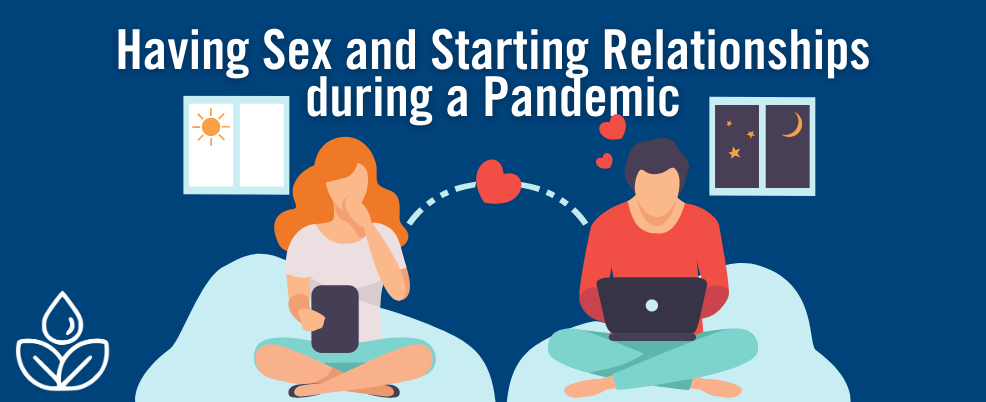
If you are meeting someone new- there are a lot of ways to start and develop a relationship with technology. Try watching the same movie or cooking the same meal and eating together over facetime. Send voice notes instead of texts so you can hear each other. You can also take the next steps in your relationship virtually by sexting, or phone or online sex. If you do decide to meet up IRL, any first dates should be two metres apart. Whether it takes place indoors or outdoors will be up to the people on the date and their comfort levels.
Do your own screening to protect yourself by asking potential partners about symptoms of infection or potential exposures. Approach this conversation the same way you would talk about sexually transmitted diseases before being intimate with someone for the first time: It's a matter-of-fact conversation about your health and that of your potential partners. Before getting physical with a partner, ask them:
If they have, or have recently had, symptoms of COVID-19 infection or are at high risk of being exposed to the virus or being a carrier.
Do they have any cold or flu symptoms (cough, fever, shortness of breath)? Have they travelled anywhere in the past 14 days?
Have they been exposed or in close contact with someone who tested positive for COVID-19 or had symptoms?
Do they work in a profession that exposes them to individuals who may have COVID-19 (eg: healthcare workers)?
This isn’t a one-time conversation, it is important to continue to ask these questions each time you plan on getting up close and physical with someone else.
Skip sex if you or your partner are not feeling well, or have been in contact with someone with a confirmed case of COVID-19. If you feel unwell, or even start to feel unwell, avoid kissing, sex or any close contact with others. Follow public health recommendations for isolation & quarantine and contact the appropriate health care provider for the next steps.
Here are some other ways to lower the chances of being exposed to COVID-19 during sex with others:
Consider keeping contact information for your partner(s) so that you can reach them if one of you develops symptoms.
Limit alcohol use and other substances so safer decisions can be made.
Before and after sex:
Wash your body with soap and water.
Wash your hands with soap and water for at least 20 seconds.
Wash sex toys thoroughly per the manufacturer’s instructions. Most, but not all, can be cleaned with mild unscented soap and water. Do not share them with multiple partners.
Wear a face covering or mask. Heavy breathing during sex can create more droplets that may transmit COVID-19.
Avoid or limit kissing and saliva exchange.
Be creative with sexual positions and physical barriers, like walls, that allow sexual contact while preventing close face to face contact.
Using condoms, lubricants, and dental dams may help to further reduce the chances by minimizing contact with saliva, semen, feces, blood and/or internal genitalia/vaginal fluids during sex.
Don’t forget COVID-19 is not the only infectious agent to think about, continue to use condoms to prevent transmission of sexually-transmitted infections and an effective method of birth control to prevent an unplanned pregnancy
Although relationships and sex do present a risk during a pandemic, emotional and physical connections can be essential to your overall wellbeing. Assess the risks of dating or having sex the same way you have assessed the risks of going to the grocery store. We should not downplay the importance of human connection because relationships are what help us stay mentally sane through these strange and challenging times.
Lindsey Wachter, R.Kin
Health and Wellness Promoter