

Safer Alcohol Use

University life and drinking are often depicted to go hand in hand, and it's true that students typically drink more often and in larger amounts than their non-student peers. People drink for all kinds of reasons—having fun, socializing, dealing with stress, boredom, or just because it feels like the thing to do. Whatever your reason, if you choose to drink, knowing how to do it safely can help you have a good time while reducing the risks.

What's in A Drink

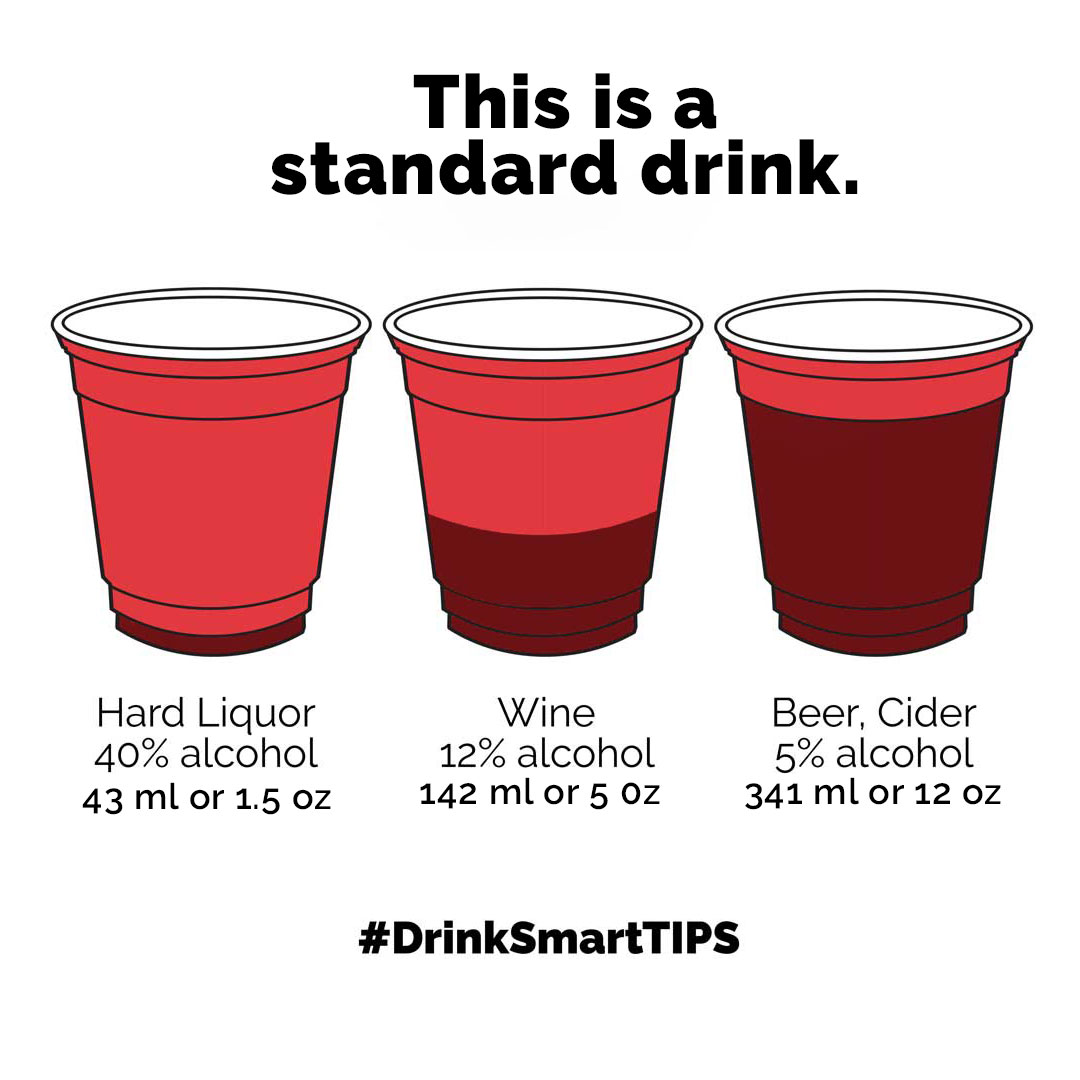
Many people are surprised to learn what counts as an actual drink. In Canada, a ‘standard’ drink is any drink that contains about 13.6 grams of “pure” alcohol. Once you know what a standard drink is you will know how much alcohol you are actually drinking.

One Drink Equals

  • One regular beer 350ml or 12oz at about 5% alcohol
  • One glass of wine (150ml or 5 oz) at about 12% alcohol
  • One shot of hard liquor or spirits (44ml or 1.5 oz) at about 40% alcohol

Canada’s Low-Risk Alcohol Drinking Guidelines

  • 10 standard drinks a week for women, with no more than 2 drinks a day, most days
  • 15 standard drinks a week for men, with no more than 3 drinks a day, most days
  • Plan non-drinking days every week to avoid developing a habit.
  • These limits will help reduce your long-term health risks from alcohol consumption
Tips for a Night Out

Before Drinking

House in front of blue background text reads before drinking

Eat and drink water before and while drinking alcohol. Try setting a reminder on your phone.

Set a drink limit before you start drinking and stick to it . Try an app to help you keep track of your drinks.

Be aware of how alcohol affects you. Know when you’ve had enough and say so

Arrange a safe ride home before you start drinking.

Try to reduce the number of times you use alcohol each week. Daybreak is another app you can try if you’re looking to cut down or stop drinking.


While drinking

Beer glasses cheersing in front of blue background, text reads while drinking

If you’re playing drinking games, try playing with non-alcoholic drinks.

Top up your own drinks and finish one drink before starting another.

Only get in the car with a sober driver-decide who will be the designated driver before you go out.

Keep your drink with you at all times. If you have any doubts, make or order a new one.

Drink in good company – keep a good friend around.

Keep an eye out for each other – if you see a friend becoming too drunk, make sure they drink water, eat food, and stop drinking alcohol.

Staying Sober

Water bottle and coffee cup on blue background, text reads

Sometimes friends will try to pressure you to drink when you don’t want to. You could use these strategies when telling others why you want to stay sober:

Be the designated driver-your friends will thank you and you will know they got home safely.

Make or order your own non-alcoholic drinks.

Tell people you’re taking medication. Many medications should not be combined with alcohol.

Say you have an a.m. workout. People respect long-term goals and physical challenges.

Tell people you are trying to save money- students understand the financial stress.

Alcohol-Free Activities

Reducing your alcohol consumption or abstaining altogether doesn't mean you have to lock yourself in your room. There are a lot of things to do that don't involve a drop of alcohol.

Thunder Bay

Orillia

Reducing Alcohol Consumption

Contrary to public opinion, not everyone on campus is drinking. In fact- alcohol consumption is on the decline at Lakehead. It can still be hard to say no in the moment so it’s best to practice what you will say ahead.

Build your drink refusal skills

Raised hand in a circle with line through it

Tips

  • Make your intention not to drink known in advance
  • Script and practice your 'no'
  • Ask for support from others to cope with temptation
  • Become a mocktail master
  • Plan an escape if the temptation gets too great

Examples

“ I don’t think I’ll be drinking tonight, I’ve decided to take a break for a while”

“Thanks but I've already had my drink for the night and I'm sticking with water from here on. I've got a research paper to complete in the morning and it's already overdue."

Binge Drinking
Binge or heavy drinking, referred to technically as heavy episodic drinking, poses serious health and safety risks. Young adults, particularly post-secondary students, are more susceptible to these risks.
When Drinking Becomes Problematic

University life often brings new social opportunities, and drinking can sometimes be part of the experience. However, it's important to recognize when alcohol use might be crossing into risky territory. Understanding the warning signs can help you make informed choices about alcohol and prioritize your health.

  • Being unable to limit the amount of alcohol you drink
  • Wanting to cut down on how much you drink or making unsuccessful attempts to do so
  • Spending a lot of time drinking, getting alcohol or recovering from alcohol use
  • Feeling a strong craving or urge to drink alcohol
  • Failing to fulfill major obligations at work, school or home due to repeated alcohol use
  • Continuing to drink alcohol even though you know it's causing physical, social, work or relationship problems
  • Giving up or reducing social and work activities and hobbies to use alcohol
  • Using alcohol in situations where it's not safe, such as when driving or swimming
  • Developing a tolerance to alcohol so you need more to feel its effect or you have a reduced effect from the same amount
  • Experiencing withdrawal symptoms — such as nausea, sweating and shaking — when you don't drink, or drinking to avoid these symptoms

Wondering about your own alcohol use? Check out CCSA's Practical Guide to Assessing Your Drinking 

Alcohol Poisoning

Alcohol poisoning is when there’s too much alcohol in your blood, and it causes parts of your brain to shut down. It’s also called alcohol overdose. Alcohol is a depressant. That means it can affect your brain and nervous system to slow your breathing, your heart rate, and other important tasks that your body does. Your liver usually does a good job of keeping alcohol's toxins from getting into your bloodstream. But if you drink a lot in a short time, your liver may not be able to keep up.

Alcohol poisoning can lead to brain damage or death. If you’re with someone who might have drunk too much, call 911 right away.

Alcohol poisoning symptoms include:

  • Confusion.
  • Vomiting.
  • Seizures.
  • Slow breathing, which is fewer than eight breaths a minute.
  • Breathing that's not regular. This is when there is a gap of more than 10 seconds between breaths.
  • Skin that looks blue, gray or pale.
  • Low body temperature, also known as hypothermia.
  • Trouble staying conscious or awake.

 Do’s

  • Try to keep them awake and sitting up if possible.
  • Keep them warm- Alcohol poisoning will likely make them feel cold.
  • Put them in the recovery position- if they pass out and vomit, they won’t choke
  • Make certain they’re breathing and that their mouth is empty.
  • Stay with the intoxicated person and wake them frequently. If alcohol levels continue to rise, the person may become unconscious.
  • Call an ambulance if they stop breathing or can’t stop throwing up
  • Start CPR if breathing stops or find someone with first aid training to perform CPR immediately.

Dont’s

  • Never let them drink anymore alcohol-The amount of alcohol in their bloodstream could become dangerously high.
  • Don’t give the person a cold shower; the shock of the cold could cause unconsciousness.
  • Don’t give the semi-conscious person food or fluids (not even water) it could cause vomiting, choking or aspiration.
  • Never make them sick. Their gag reflex won’t be working properly which means they could choke on their vomit.
  • Never leave someone to sleep it off. The amount of alcohol in someone’s blood continues to rise even when they’re not drinking.
Resources