Mohit Dudeja Awarded the Henry Mandelbaum Graduate Fellowship for Excellence

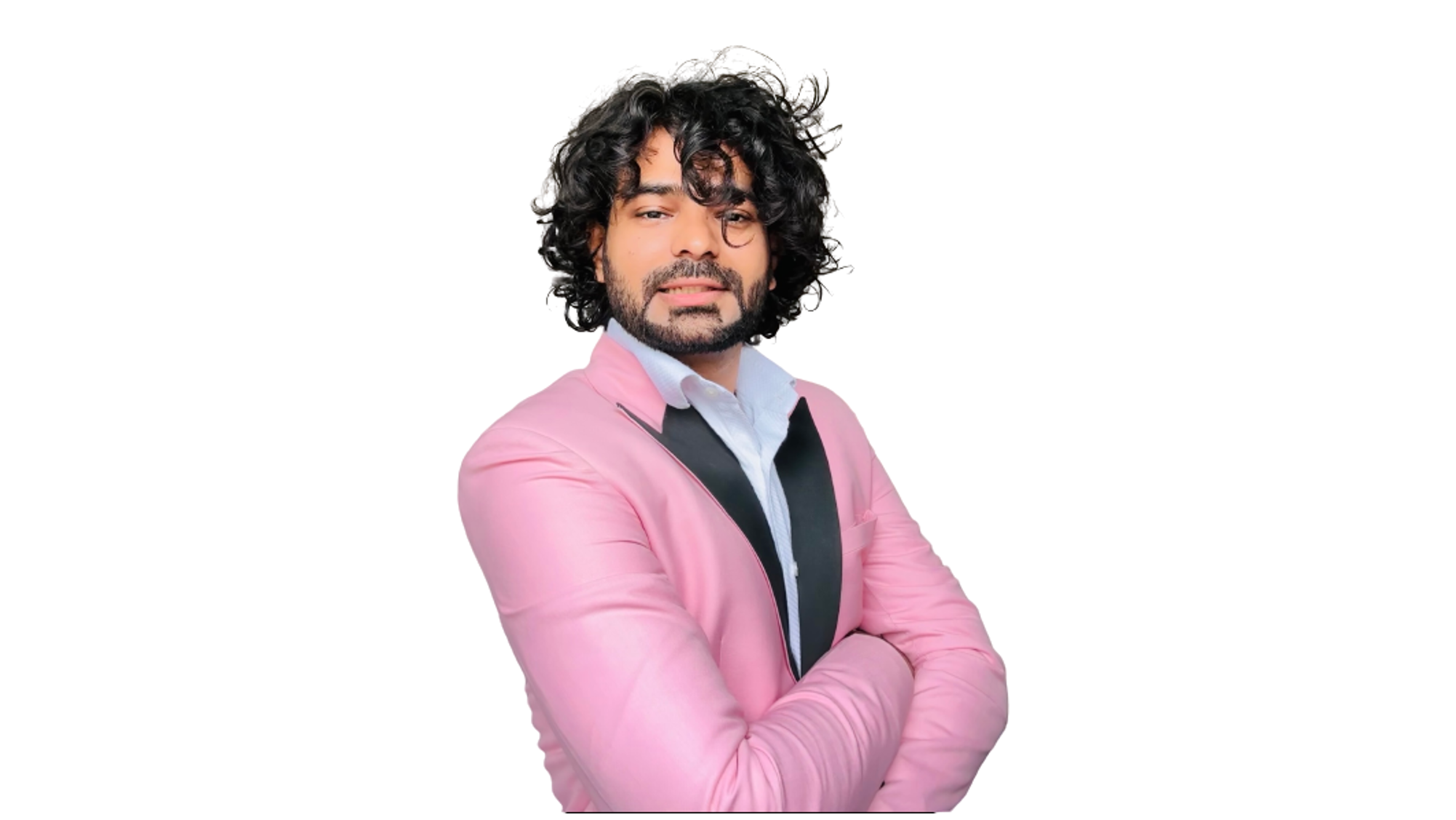
Mohit Dudeja (PhD student and Contract Lecturer, Faculty of Education/Department of Gender and Women’s Studies) has won the Henry Mandelbaum Graduate Fellowship for Excellence in Social Sciences, Humanities, or Arts (Doctoral Student), awarded by the Ontario Confederation of University Faculty Associations (OCUFA).

Each year, OCUFA recognizes 10 members of the academic community, including one doctoral student who demonstrates academic excellence, provides significant community service, and shows exceptional academic promise in their university career.

Mohit’s doctoral research investigates the experiences of Indian queer international students in small Canadian cities. Mohit plans to conduct in-depth interviews to explore the challenges faced by these students in navigating the intersections of their sexual and cultural identities in unfamiliar social contexts.

“International queer students face a double barrier, transitioning to studying and living in Canada within the nexus of both identities, being both queer and international,” says Mohit. “Even queer campus groups fail to address the diverse identities and experiences of international students, and their shifting sexual identity and liberation relative to their home countries may raise worries about returning home. Research identifies that queer international students’ space in the Canadian social community is complex, frustrating, demoralizing, and frequently re-traumatizing. Building upon existing research, my doctoral study will investigate the lived experiences of queer Indian students in post-secondary programs. The findings will inform the development of inclusive policies and support systems for this population.”

Mohit adds that “I am deeply grateful for the recognition the prestigious OCUFA award provides. It reaffirms that I am on a solid pathway for my doctoral research, framed broadly as Social Justice. This recognition fuels my commitment to the pursuit of knowledge and positive change. I sincerely thank all who have contributed to my academic journey, and I feel fortunate to have such guidance and encouragement, especially from my supervisor, Dr. Gerald Walton."

Mohit will attend the OCUFA Awards of Distinction event, which will take place in Toronto in October.

Congratulations, Mohit!

Setting Goals and Achieving Them: Christopher Behrens Awarded Chancellor’s Medal and Dean’s Scholar Award

“Throughout my life, I have found that setting a goal has helped me focus and stay on track,” says Christopher Behrens. “While I have experienced difficulties in my life, I believe that my determination and goal-setting approach, along with the support of others, has helped me achieve my dreams. This includes realizing my goal of becoming a Technological Education Teacher—and now, my sights are set on earning the qualifications to become a Secondary School Principal.”

In Spring 2023, Christopher graduated from Lakehead’s BA General program, earning a Chancellor’s Medal and the Dean’s Scholar Award for the Faculty of Social Science and Humanities. These awards were particularly hard-earned, given the fact he was working full-time as Head of Technological Education in the Hamilton Wentworth District School Board while completing his degree. Once again, he says his goal-setting approach helped to see him through.

“Throughout my journey at Lakehead, I set a goal of achieving 80% or higher. I very much enjoyed learning about social justice issues in the BA General program, which helped me to focus and learn. The program was fairly challenging, and I was exhausted at times, especially as I earned the degree while working full-time and experiencing some personal health concerns. However, I was pleasantly surprised to see my name on the list of award and medal winners. This means a lot to me, knowing my efforts have been recognized.” 

Inspired to Teach  

Christopher earned his teaching certificate in 2009, and landed his dream job two years later: teaching Technology Education in the very school he attended as a teenager. He explains that he was inspired by one of his teachers, who was a positive role model and demonstrated great care and compassion.

“My teenage years were challenging: my mom, who was suffering from cancer, passed away when I was 14 years old. I survived on my own throughout high school, living on social services and working part-time at full-serve gas stations. My Transportation Technology Teacher was a very positive force in my life during this time. He made a difference, and I wanted to do the same for other students facing similar challenges.”

Today, Christopher leads the school’s large, progressive Technology Education Department, as a Tech Honours Teacher, a Teacher Leadership Specialist, and Departmental Head. He says that having the opportunity to lead, and make a difference, is a “great feeling.”

Working to Achieve Principal Qualification

As Christopher has achieved the goals from his younger years, he has now set a new one: to become a Secondary School Principal. This requires him to further his post-secondary education—first earning his recent undergraduate degree, and now taking additional qualification (AQ) courses through the Faculty of Education’s Professional Development department. At present, he is pursuing the Principal’s Qualification Program, and will have completed the two-part program in August of 2023.

He says his educational journey will likely not end there, either.

“I have a commitment to life-long learning,” he says. “As such, I’m considering pursuing a Master’s degree in the mid-term, and perhaps even a PhD in Education Leadership in the long-term. I truly enjoy learning, teaching, and leading in education. It makes my life challenging and fulfilling, and I enjoy being in a profession where I can have a positive impact on the lives of the next generation, and my peers”.

Christopher also credits the support he has received from Lakehead, throughout his educational endeavours.

“The administrative staff, professors, and my classmates, have all been a positive influence. They are kind, professional, supportive, and encouraging. Although I have worked online for my courses, I feel very connected to Lakehead University, and the support of everyone has helped to guide me and keep me on track.”


Indigenous Mathematics and Education Conference Focuses on Relationships and Reciprocity

With the support of a SSHRC Connection Grant and CanCode Grant awarded to Dr. Ruth Beatty (Associate Professor, Orillia), Colinda Clyne, Anika Guthrie, Christina Ruddy, and their research partners, a two-day Indigenous Mathematics and Education conference took place in April at the Orillia campus. The conference theme was “Relationships and Reciprocity.”

An aim of the conference was to give attendees—including community Elders, knowledge keepers and leaders, educators, and administrators from across the province—an opportunity to explore and discuss the First Nations & Métis Math Voices Project, a comprehensive, long-term, multi-site project that has taken place in elementary and secondary classrooms throughout Canada.

The conference also served as a forum for the 160+ attendees to develop relationships and share experiences, practice, knowledge, and ideas about connections between the mathematical content knowledge of the Canadian math curricula (including coding), and the mathematics inherent in Indigenous technology, design, and artistry.

The formal opening and closing were given by Anishinaabe artist Grandmother Vicki Pawis from the Chippewas of Rama First Nation to ensure that the conference began and ended in a good way. Three-hour workshops were held each day, so that participants could be immersed in the experience of exploring mathematics through Indigenous culture. The workshops examined the mathematics inherent in traditional Indigenous technologies and cultural practices, including looming and the making of hairbone pipe bracelets, medallions, and birchbark baskets (wiigwas makak). Participants considered how incorporating Indigenous pedagogical approaches align with current mathematics instruction and provide insight for creating more inclusive classrooms. They also learned from community research partners as they shared their experiences of the importance of including First Nations and Métis cultures in mathematics instruction.

Eighteen research partners were involved in the organization of the conference, including several student volunteers from the Lakehead community. For a full list of conference organizers and their biographies, please see the conference website.  

Faculty of Education May 2023 Newsletter Published

The Faculty of Education's May 2023 Education Exchange newsletter is now published.

This issue features articles on the fourth annual Social Studies Festival, recipients of the RITE (Research in Teacher Education) award, Professor Emerita appointments, faculty news and awards, alumni profiles, and more.
To access the Education Exchange newsletter, click here.

Faculty of Education Recognized for Environmental Education Excellence

EECOM (The Canadian Network for Environmental Education and Communication) awarded Lakehead University’s Faculty of Education their 2022 Outstanding Post-Secondary Institution Award.

The Faculty of Education has a large contingent of faculty members at both the Thunder Bay and Orillia campuses who are deeply committed to environmental education. Collectively, they have made significant contributions to research on a wide range of environmental education topics over the years, and this passion for environmental education can be felt throughout the Faculty’s undergraduate and graduate programs.

The innovative Master of Education program in Education for Change, with its specialization in Environmental and Sustainability Education, has proven to be very popular. Highlights in the undergraduate program include being the first Ontario Faculty of Education to have a required course in environmental education, the only Faculty of Education in Canada to have a climate change education elective, and home to the longstanding Outdoor Experiential Education (OE3) specialization.

Another exciting innovation is the Faculty’s collaboration with a number of First Nations to co-develop and deliver community-based, Aki-based learning in both the graduate and undergraduate programs; Aki is the Anishnaabeg word for Land that incorporates the Earth, water, air, and spirit.

Dr. Connie Russell’s Special Issue on Humour and Environmental Education Released

Dr. Connie Russell (Professor, Faculty of Education and Lakehead University Research Chair in Environmental Education) recently co-edited, with Patrick Chandler (University of Colorado Boulder) and Justin Dillon (University College London), a Special Issue of the top-ranked journal, Environmental Education Research.

The issue focused on humour, an under-studied topic in the field. Other related fields, like climate change communication and social justice education, have begun delving into the topic and revealed the potential for humour to lower resistance to uncomfortable topics, increase engagement, raise awareness, and spark or sustain action. It is not without pitfalls, however, especially since what is found funny is subjective and may not be shared across cultures or generations.

The eleven papers in the Special Issue illustrate humour does have potential for environmental education. Hailing from eight different countries, the authors adopted an array of methodological approaches and theoretical frames and their inquiries were grounded in diverse sites of learning. Delving into humour led authors to push beyond the boundaries of their own disciplines and, for some, to form creative collaborations that took them not only into new academic fields but also outside their professions to work with cartoonists, comedians, actors, and game developers. The full issue is available here.

Dr. Ann Kajander Publishes Mathematics for Intermediate Teachers: From Models to Methods

Research shows there is a need to move beyond traditional, formula-based approaches to mathematics—and Dr. Ann Kajander’s (Professor, Thunder Bay campus) new book, Mathematics for Intermediate Teachers: From Models to Methods, aims to teach teachers the reasoning behind the methods.

The 2023 book is written for prospective and practicing teachers, with the encouragement of Lakehead’s Bachelor of Education candidates in mathematics curriculum and instruction courses. These preservice teachers, all of whom had extensive post-secondary mathematics coursework, claimed that understanding the representations and reasoning (what the field calls specialized mathematics content knowledge for teaching) significantly deepened their understanding of the concepts. A group of the 2021-2022 cohort even gathered for the book's cover shot in the Bora Laskin library!

As noted on the Cambridge Scholars Publishing website, the ideas and activities outlined in the book “are directly transferable to classroom use, with concepts developed using visual models and representations, manipulatives, reasoning, and with deep connections to other concepts. These methods support better thinking, learning, and understanding for all students. In addition, these visual and active approaches are also much better aligned with Indigenous ways of thinking and knowing, a critical benefit for societies striving for decolonization.”

Ann, who teaches mathematics education, is the author of numerous research papers, and has published five other books on mathematics education.

Dr. Pauline Sameshima Named OAEA “Post Secondary Teacher of the Year”

Dr. Pauline Sameshima (Professor, Faculty of Education) has been awarded the Post Secondary Teacher of the Year, 2022 award by the Ontario Art Education Association (OAEA).

The OAEA recognizes excellence in Visual and Media Arts education, and honours visual art schools and community educators who exemplify standards of quality in art education in Ontario.

Pauline was nominated for the award by Andrew Dean, Vice President, Research and Innovation at Lakehead University, for her numerous and significant contributions to the arts. As written in the nomination letter:

"Since her arrival as the Canada Research Chair in Arts Integrated Studies (a first in this field) at Lakehead University in 2012, Pauline has continued to promote the arts and alternative representations of research knowledge as ways to engage and stimulate thought, conversation, and learning across wide audiences, disciplines, and communities. Her work provides extensive opportunities for artistic expression and learning, and introduces new artistic techniques and arts integrating methodological approaches to the university community, the Thunder Bay community locally, and internationally through the galleries she curates… Her leadership and contributions to art education here at Lakehead, in our community, and internationally through her research and curation are richly deserving of this award.”

Some of Pauline’s notable achievements include:

  • opening and curating seven Galleries spaces: six on-site campus locations plus a virtual gallery that hosts local, national, and international juried art exhibitions as well as featured art work. The galleries are used to teach about local research, build community and research capacity, and showcase local community artists in an academic setting;
  • publishing Parallaxic Praxis: Multimodal Interdisciplinary Pedagogical Research Design (2020), an arts integrating methodology book that won a Society of Professors of Education Outstanding Book Award;
  • creating her own artwork. One artwork was recently selected as one of the 80 of 425 submissions to be exhibited in the 2022 National Art Education Association’s Members’ Juried Exhibition;
  • participating in a current research project with a large scientific research team on a 26.5 million USD National Institutes of Health grant. Pauline leads the Community Arts Integrated Research program for this grant, which seeks to develop, with scientists and community members, an education curriculum for HIV cure research through the arts; and
  • being inducted into the College of New Scholars, Artists and Scientists of the Royal Society of Canada, one of the highest honours for a Canadian academic.

A Zoom awards ceremony was held to honour Pauline and the other award winners, hosted by the OAEA Awards Committee.

Congratulations, Pauline!

Randy Wilkie Appointed Editor of the Ontario Association for Geographic and Environmental Education Journal

Congratulations to Randy Wilkie (Contract Lecturer, Thunder Bay), who has been appointed as Editor of the Ontario Association for Geographic and Environmental Education journal, The Monograph.

The Monograph shares geographic teaching resources to its membership, which includes geography and environmental teachers across Ontario.

Randy’s first edited journal can be found here.

Congratulations, Randy!

Research in Action: Arts Build HOPE and a Bridge between Science and Public

Published in The Chronicle Journal Thursday, January 31, 2023.

BY JULIO HELENO GOMES

A world-wide effort to find a lasting cure for one of the biggest epidemics of the modern age is using art to help researchers understand how their work is being perceived and to engage the public in reaching their goal. One of the community engagement leaders is an award-winning Lakehead University professor who hopes such artworks will be on display in Thunder Bay, for Lakehead’s Research and Innovation Week, to shed light on research into HIV, the human immunodeficiency virus.

“I hope the exhibit will draw attention to the urgency we need to give to HIV,” says Dr. Pauline Sameshima, a professor in Lakehead's Faculty of Education. “It's a very pressing issue globally and we need to draw attention to HIV and the stigma still associated with people living with HIV.

“The project is exciting in that we can share research using the arts. We are in the second year of this grant and we have been very successful in creating conversations and dialogues amongst the scientists, communities and the artists.”

Sameshima is involved with the HOPE Collaboratory, a San Francisco-based US$26.5-million initiative trying a “block-lock-excise” approach to HIV treatment led by primary investigator Dr. Melanie Ott. The aim is to develop therapies that will not only stop the remnant HIV in a body from reproducing, but permanently get rid of it. This group includes researchers from 16 institutions and two pharmaceutical companies. HOPE is one of 10 Martin Delaney Collaboratories funded by the National Institutes of Health. There are currently 10 collaboratories based in the United States with international collaborators across the globe.

(More information on HOPE, the “HIV Obstruction by Programmed Epigenetics” collaboratory, is available at: https://hopeforhivcure.org/about/hope-collaboratory)

Many people can manage HIV, which can lead to AIDS, by taking a pill each day to essentially put it to sleep. HIV however, remains a significant health concern where barriers to access prevail, and in some countries it is a leading cause of death.

“It's a fatal virus for many in Africa,” Sameshima states.

A component of the HOPE Collaboratory is Community Arts Integrated Research (CAIR), which uses artworks to raise awareness of this complex endeavour and promote discussion.

Sameshima, who acts as educator and curriculum designer, leads the CAIR program, which includes interdisciplinary researchers and graduate students from Lakehead and Brazil. The team works closely with HOPE’s Community Advisory Board (advocates, ambassadors and People living with HIV) and Dr. Patricia Defechereux, HOPE’s Community Engagement Coordinator. The team’s highly collaborative structure is a key innovation that creates bridges between communities.

“We use the arts as a way to teach and learn about what the scientists are trying to figure out,” Sameshima explains. “We want to teach and involve the community in what is going on, so the community can advise the scientists, and the scientists can keep the community informed. We're using art as a communication between the two groups.”

Specifically, arts will help explain the “block-lock-excise” approach. An exhibit at Gladstone Institutes in San Francisco features sculptures and photography. Sameshima is planning an exhibit to coincide with Lakehead’s Research and Innovation Week activities in February, where local residents can see pieces that reflect the work of the collaboratory.

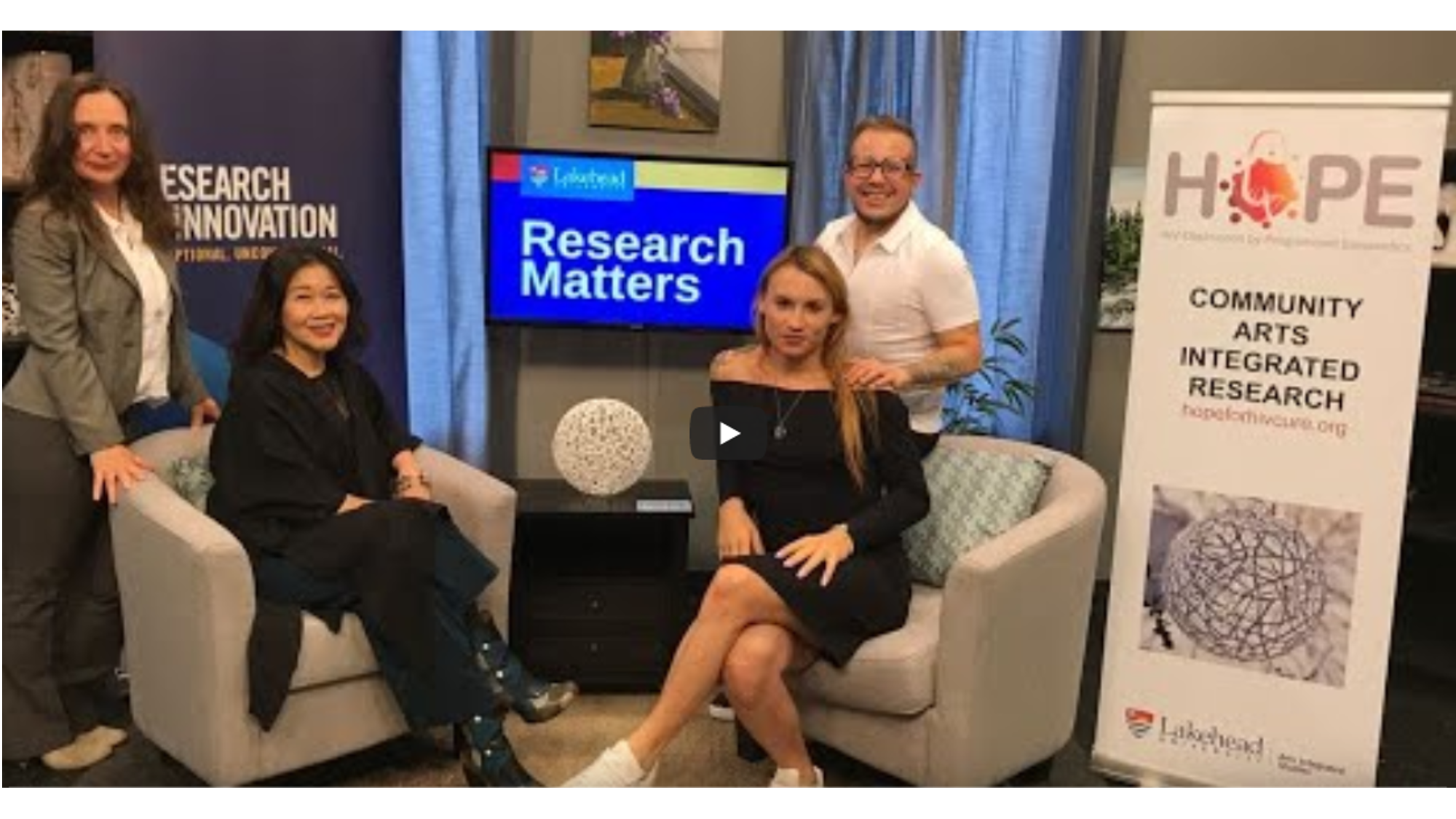
Tashya Orasi, a PhD candidate in Leadership & Policy in Educational Studies, is Sameshima's graduate assistant. She has presented her own art and was co-lead on an community art-making session at the HOPE annual meeting in September involving scientists and community members. Raif Derazzi, HOPE’s Community Advisory Board’s Co-Chair, interviewed scientists at this event. See the interviews here: https://youtu.be/NiZrtkSZx1c

“As an artist, teacher and researcher, this experience working across disciplines with HIV scientists and community members, alongside Dr. Sameshima, has been invaluable to my future career as an educational researcher,” Orasi says.

As part of her graduate assistantship, Orasi is also gallery coordinator of the LAIR galleries, spaces on campus where items curated by Sameshima and guest jurors can be viewed. (More information on LAIR, the Lakehead Arts Integrated Research Galleries, is available at: https://galleries.lakeheadu.ca)

This project has been a learning experience for Sameshima. She spent 17 years as a classroom teacher before earning a PhD in curriculum studies, and working at Washington State University before joining Lakehead a decade ago.

“My focus is really on education, not science,” says Sameshima, who was recently recognized as the Ontario Art Education Association's Post-Secondary Teacher of the Year.

Along with the Lakehead University's Research and Innovation Week activities (February 27 to March 2, 2023) displays, Sameshima also hopes this summer's C2U Expo <https://ec.lakeheadu.ca/c2uexpo/welcome>, which seeks to strengthen community-campus research and learning partnerships, will host a panel of HOPE participants and other researchers to discuss the multi-pronged search for HIV cures.

“There are a lot of things on the go,” Sameshima notes. “And, yes, we would like to expand and grow this project within our own community.”

Research in Action highlights the work of Lakehead University in various fields of research.


Pages