Randy Wilkie Elected to the College of Fellows of the Royal Canadian Geography Society

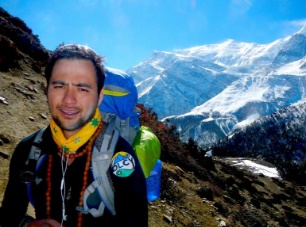
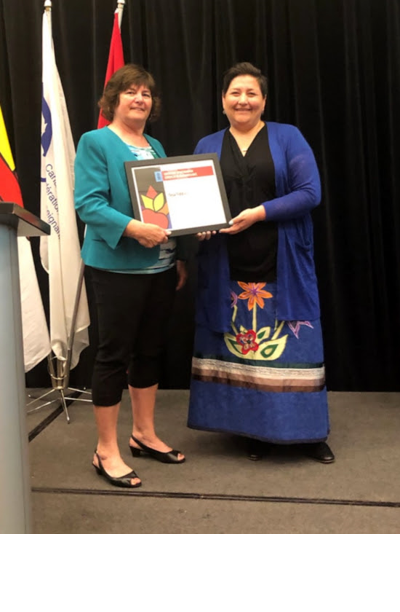
Congratulations to Randy Wilkie (Contract Lecturer, Faculty of Education), who has been elected to the College of Fellows of the Royal Canadian Geographic Society.

Randy was nominated for this prestigious honour by his colleagues at the Ontario Association for Geographic and Environmental Education (OAGEE), where he has served as a regional councilor for over 25 years. During that time he has helped to promote geography and assist geography teachers through the publication of teaching resources, assistance in developing the Grades 7-12 Ontario Geography curriculum, and the creation of an OAGEE geography poster series (many of these posters hang in Ontario classrooms today). He was also awarded the OAGEE Award of Distinction in 2011, among numerous other geography-related awards, honours, publications, and distinctions throughout his career. 

According to the RCGS, Fellows are community leaders who act as ambassadors for the Society, helping through volunteerism, advice and giving, building community and furthering their mission to make Canada better known to Canadians and the world. The RCGS notes that Randy’s election to the College of Fellows reflects his commitment to Canada and its remarkable geography. 

Dr. Pauline Sameshima Featured as Distinguished Outstanding Alumna of UBC

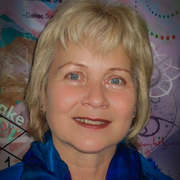
Dr. Pauline Sameshima, Professor and Canada Research Chair in Arts Integrated Studies, has been featured as a distinguished and outstanding alumna of the University of British Columbia (PhD in Curriculum Studies, 2006).

An interview and biography, published here, discusses Dr. Sameshima’s current research projects and creative research methods, which “seek to respond to pressing calls for Canada to nurture and develop creativity and innovation capacity by leveraging broad interdisciplinary approaches.”

Dr. Sameshima has received numerous honours and awards in her career. Her collaborative research model framework, Parallaxic Praxis, has been taken up in research projects ranging from HIV research, interpersonal violence, mental health care, dementia studies, technology and inclusive education, knowledge generation, literacy, and more. Her book on this framework, Parallaxic Praxis: Multimodal Interdisciplinary Pedagogical Research Design, co-authored by Dr. Patricia Maarhuis (Washington State University) and Dr. Sean Wiebe (University of Prince Edward Island) will be available shortly from Vernon Press.

Dr. Sonia Mastrangelo and Dr. Connie Russell Partners in Provincial Centre of Excellence for Early Years and Child Care

Faculty of Education professors Sonia Mastrangelo and Connie Russell are part of the newly created Provincial Centre of Excellence for Early Years and Child Care, led by Western University and the Ontario Reggio Association.

A 3-year $2.25 million initiative funded by the Ministry of Education, the Centre is tasked with advancing early childhood pedagogies in Ontario and will promote calls to action of the Truth and Reconciliation Commission and embrace the values of Ontario’s pedagogical framework How Does Learning Happen, including the view of children as protagonists in their own lifeworlds with participatory rights and responsibilities. 

The Provincial Centre for Excellence Executive Summary is available here

Dr. Pauline Sameshima Juried Art Exhibition and Showcased Artwork in a Solo Show

Dr. Pauline Sameshima, Canada Research Chair in Arts Integrated Studies, was the juror of the 26th annual juried art exhibition of the MacRostie Art Center, which exhibited two- and three-dimensional works by 35 artists from Minnesota, North Dakota, South Dakota, and Wisconsin over the month of August.

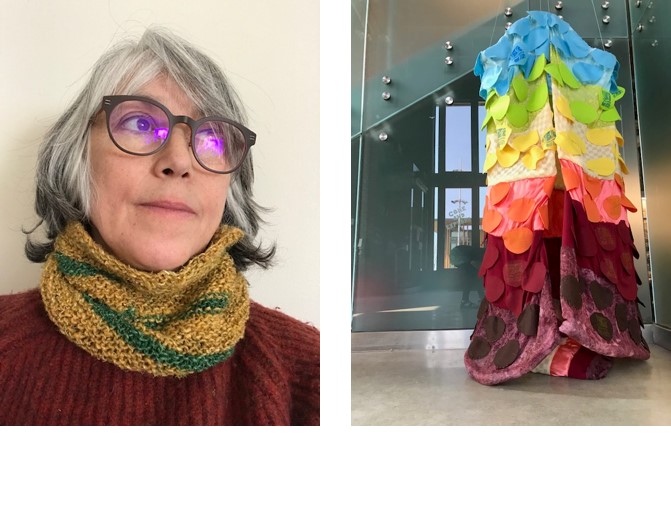
Dr. Sameshima also exhibited her own artwork in a solo show in August. Her art included a collection of 11 ceramic bells. The series is called “Silent Belles,” inspired by the work done in a SSHRC grant spanning seven Canadian universities. The grant title is: “Reconceptualizing Teachers’ Roles for Canada’s Creative Economy.”

In an essay called "Teacher as Silenced Superhero," Dr. Sean Wiebe (2016, Primary Investigator of this grant) writes that teachers are given the token social status of superhero and that this obligates them to be expressions of our social ideals for education. The project has found that this obligation silences teachers. Idealism creates expectations for teachers to be perfect role models, and disallows risk-taking, creative experimentation, and authentic relation in their teaching.

Artwork bellThe bell(es) present women in various dispositions. The one pictured accompanies a haiku:

leaves evergreen

she walks

down the street


Dr. Sameshima explains that “this bell looks like a Christmas Tree. It is a familiar icon representing happiness, fullness, and idealism. The runway model too, holds her head high and walks with her thin legs down the street. Yet, when the angle of the photo is changed, the thin legs are actually wide and the leaves’ edges are sharp and uncomfortable. The model of perfection is tainted as the expectation of idealism prevents teachers from taking risks.”

For more information, please see: solspire.com


Dr. Jan Oakley Receives Contribution to Teaching Award

Dr. Jan Oakley (Contract Lecturer in the Bachelor of Education program, Master of Education program, and Women’s Studies department) has received a Contribution to Teaching award for the 2017-2018 academic year. The Committee noted that Dr. Oakley provides a safe and active learning environment, and stimulates discussion that encourages deep reflection and growth in the areas of social justice and feminist pedagogy.

“This award is very meaningful to me, especially knowing the nomination came from my students,” she says. “Teaching about social justice issues for the past decade has been a huge privilege, and I am continually seeking to refine my approaches, and try out new ways to develop my toolkit as a facilitator. It’s an honour to learn with and from my students, and to build relationships with them so we can meaningfully consider how we can make shifts toward an inclusive and equitable society.”

Dr. Meridith Lovell-Johnston and Dr. Sonia Mastrangelo Win SSHRC Partnership Engage Grant

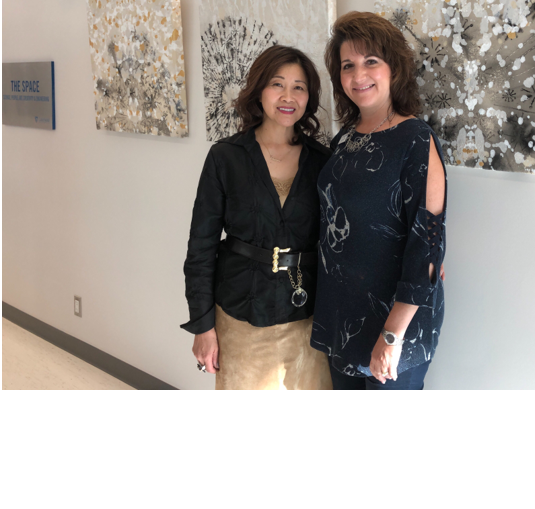
Congratulations to Dr. Meridith Lovell-Johnston and Dr. Sonia Mastrangelo, who were successful with their SSHRC Partnership Engage Grant, entitled “Enhancing Instruction in Literacy, Inquiry Based Kindergarten Classrooms.”

As part of their research, they will observe and analyze child-led learning opportunities focused on inquiry and literacy in Simcoe County District School Board Kindergarten classrooms, and facilitate professional development focus group discussions with Kindergarten educators.

Their interest in Kindergarten pedagogy and practice will also help to strengthen the placement experiences of teacher candidates in the Bachelor of Education program by identifying needs expressed by Kindergarten educators – many of whom host teacher candidates in their school board.

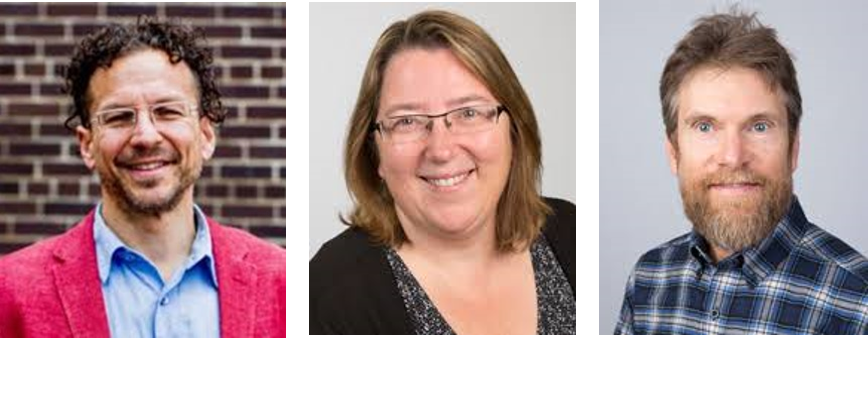
Pictured below: Dr. Meridith Lovell-Johnston and Dr. Sonia Mastrangelo  

PhD student Kelsey Robson Wins Italian Studies Graduate Award

Faculty of Education PhD student Kelsey Robson has won the Institute of Italian Studies Graduate Award for her research on Reggio Emilia Kindergartens.

Kelsey travelled to Italy as part of her research, visiting Reggio schools to study their approach to early childhood education.

In a published paper co-written with her supervisor, Dr. Sonia Mastrangelo, Kelsey describes the philosophy of the Reggio approach as guided by 12 principles: “collaboration, the image of the child, environment as a third teacher, relationships, transparency, documentation, pedagogical documentation, provocation, progettazione (term used to describe curriculum), one hundred languages of children, respect, and reciprocity.”

The Italian Studies Graduate Award is given out every second year to a graduate student based on academic excellence and a research topic that contributes to the promotion and appreciation of the Italian culture.

Dr. Michael Hoechsmann and Co-Editors Publish New Book: Democracy 2.0: Media, Political Literacy and Critical Engagement

Participatory media, which allow us all to produce and circulate information to limitless online audiences, have radically shifted public life. Democracy 2.0: Media, Political Literacy and Critical Engagement (Brill, 2018) explores this shift through “a series of evocative, international case studies that document the impact of alternative and community use of media, in general, and Web 2.0 in particular.”

Co-edited by professors Paul R. Carr (Université du Québec en Outaouais), Michael Hoechsmann (Lakehead University), and Gina Thésée (Université du Québec à Montréal), the volume examines some of the potentials and also limits of interactive media for democratic participation.

As the authors explain: “Democracy requires a functioning, critically-engaged and literate populace, one that can participate in, cultivate and shape, in meaningful and critical ways, the discourses and forms of the society in which it exists. Education for democracy, therefore, requires not only political literacy but also media and digital literacies, given the ubiquity and immersiveness of Media 2.0 in our lives.”

In his Afterword to the collection, renowned critical pedagogue Peter McLaren refers to the book as “one of the best media literacy texts in the field” and one that “has arrived at a precipitous moment in world History.”

Other Lakehead University contributions to the book include a co-edited chapter, “Engagement with the Mainstream Media and the Relationship to Political Literacy,” co-authored by Lakehead Orillia Assistant Professor Gary Pluim, and former Lakehead Orillia student Lauren Howard. 

The collaboration between the three editors continues with a follow-up book underway called Education for Democracy 2.0: Changing Frames of Media Literacy.

Dr. Sonja Grover Publishes New Book: Child Refugee Asylum as a Basic Human Right: Selected Case Law on State Resistance

Dr. Sonja Grover, Professor in the Faculty of Education, has published a new book with Springer titled Child Refugee Asylum as a Basic Human Right: Selected Case Law on State Resistance.

The book discusses the child's right to asylum as a basic human right; the scope of the child's right to asylum given the child's privileged status under international human rights and humanitarian law, and considers relevant international and domestic case law concerning child refugees and child asylum seekers.

Dr. Grover provides recommendations for modifications of child refugee policy and state law to further compliance with international law requirements in regards to child refugee asylum seekers.

Dr. Ann Kajander and Co-Editors Publish New Book: Teaching and Learning Secondary School Mathematics

Bridging the gap between mathematics education research and practice is a key focus of the recently published Teaching and Learning Secondary School Mathematics (2018, Springer).

Co-edited by Associate Professor Dr. Ann Kajander (Lakehead University), Dr. Jennifer Holm (University of Alberta), and Dr. Egan Chernoff (University of Saskatchewan), the volume – featuring a roster of Canadian and international authors – provides a synopsis of recent research about secondary level mathematics teaching and learning.

As stated on the Springer website: “The chapters address topics of broad applicability such as technology in learning mathematics, recent interest in social justice contexts in the learning of mathematics, as well as Indigenous education. The voices of classroom practitioners, the group ultimately responsible for implementing this new vision of mathematics teaching and learning, are not forgotten. Each section includes a chapter written by a classroom teacher, making this volume unique in its approach.”

Mathematics educator Dr. Ann Kajander, who has taught mathematics at the secondary and post-secondary level, says the book is designed to fill a gap in the literature and includes a uniquely Canadian perspective, situated in an international context. She reports that the editorial team was particularly thrilled with the book’s Forward, written by Indigenous mathematician and educator Edward Doolittle, in which he observes that “many of the chapters of this book are directly about Indigenous mathematics education” and that he was pleased to find some “connections to Indigenous cultures, issues, and peoples” in every chapter of the book.

Each of the book’s six sections is introduced with a Preface (or two) by senior Canadian mathematics education scholars or mathematicians. The final Commentaries in each section situate the chapters in an international context, including eight commentaries from scholars representing five different continents.

Pages