
Dr. Ellen Field as Lead Consultant on National Framework for Environmental Learning
Dr. Ellen Field (Associate Professor in Education, Orillia) has been serving as lead consultant on the development of Canada’s National Framework for Environmental Learning (NFEL), a federal initiative supported by Environment and Climate Change Canada. The Framework is intended to help strengthen environmental, biodiversity, and climate change learning across Canadian education systems.
“The National Framework for Environmental Learning responds to a growing recognition that young people are inheriting a world shaped by climate change, biodiversity loss, pollution, and rapid environmental change,” said Ellen.
“While environmental and climate change education is expanding across Canada, opportunities remain uneven between provinces, territories, school systems, and communities. The Framework is intended to support a more coordinated and future-oriented approach to environmental learning nationwide.”
Ellen’s work on the project occurred in two phases. Phase 1 involved conducting a landscape review examining environmental education policies related to climate, biodiversity, and pollution and initiatives across sub-national, national, and international jurisdictions. The review explored how environmental learning is being integrated into education systems globally and identified promising practices, policy gaps, and emerging trends.
Phase 2 focused on the collaborative development of learning principles, learning outcomes, and indicators for environmental learning in Canada. At a national forum in March in Toronto, this work was presented to educators, researchers, youth, Indigenous leaders, non-profit organizations, government representatives, and community partners from across the country. From this consultation, participants’ input is being integrated into the Framework, which emphasizes holistic, place-based, justice-oriented, and action-focused approaches to learning that support not only environmental knowledge, but also critical thinking, resilience, civic engagement, and learner agency.
Building National Collaboration and Future Action
As part of this work, Ellen brought internationally recognized education and climate policy expert Dr. Christina Kwauk, co-founder and chief researcher at Unbounded Associates, on to the project to support the development of the indicator framework. The indicators are intended to help education systems and organizations monitor progress toward strengthening environmental learning across areas such as educator capacity, learning spaces, green skills, governance and community engagement.
One of the most significant outcomes of the project has been the emergence of a growing national coalition committed to advancing environmental learning in Canada. The ongoing development and mobilization of the National Framework is now being coordinated through the Canadian Network for Environmental Education and Communication (EECOM) in collaboration with a coalition of non-government organizations and partners across the country.
Ellen will continue this work this July when she presents on the National Framework for Environmental Learning at the Canadian School Boards Association Congress in Whistler, BC, along with Executive Director Colin Harris from Take Me Outside. The presentation will focus on the Framework’s learning principles, outcomes, and indicators, as well as opportunities for school boards to support environmental and climate learning within Canadian education systems.
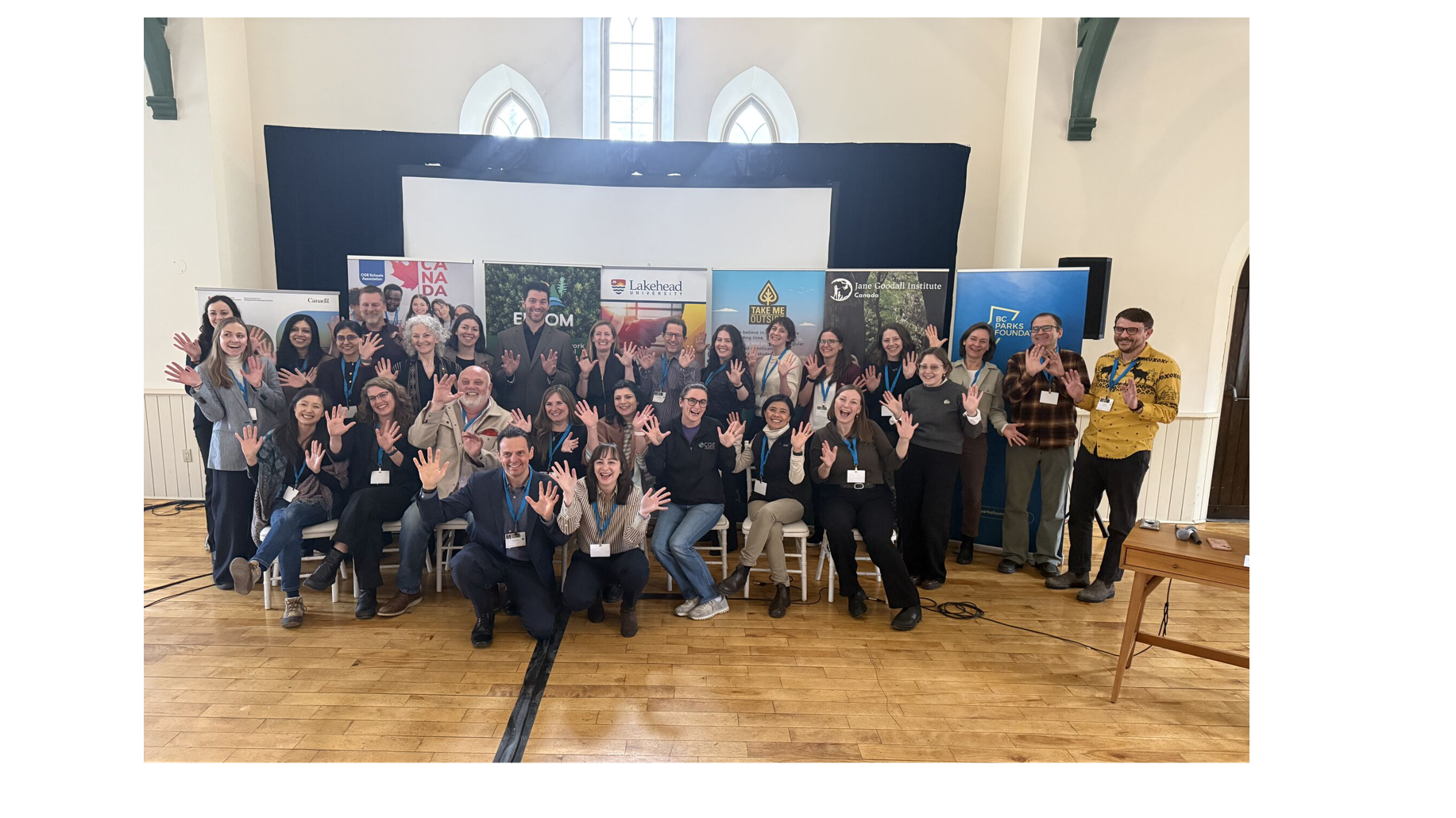
Below: The Advisory Committee for the National Framework for Environmental Learning, including Ellen Field and Will Burton (Education PhD candidate).