
Man in Motion

Monday, January 6, 2020 /

Christopher Britt doesn’t consider himself a daredevil, but he jumps at the chance to go heli-skiing on in the mountains bordering Canada and Alaska and surfing in Bali. “My brain is always on, so skiing and surfing – or putting on my goalie gear – are meditative and peaceful for me,” he says. “Risk leads to increased focus.”

Given his affinity for athletics, it made sense that Christopher gravitated to Lakehead’s Outdoor Recreation, Parks and Tourism program.

“My time at Lakehead was one of the best chapters of my life. I’m grateful for all the educators I got to work with and learn from – Brent Cuthbertson, Tom Potter, Rodney Swatton, Sue Hamel, Connie Russell, Wayne Melville, Tom Puk, Rhonda Koster, Leonard Hutchison, and so many more.”

Dr. Brent Cuthbertson, in particular, had a lasting influence on Christopher. “I was a struggling 17-year old on his own for the first time. Brent took me under his wing and gave me wonderful opportunities, like becoming a field course instructor and running a lab. Those were huge character builders for me.”

Christopher also earned science and education degrees at Lakehead (both of his parents were teachers), which he now puts to use as the Xet’olacw Community School Administrative Coordinator. Located just north of Whistler in Lil’wat Territory, Xet’olacw is one of the largest First Nations schools in British Columbia. He also teaches a science class and runs the school’s co-op and skills link programs.

Before starting at Xet’olacw, he taught at a private girls’ school in Vancouver and earned a master’s degree at Royal Roads University in educational leadership. Christopher’s life seemed to be going smoothly when his mentor – Brent Cuthbertson – suddenly and tragically passed away at the age of 53. “It hit me really hard and I was in a terrible place for a while,” Christopher says.

Brent’s death prompted Christopher to leave his career in education and embark on a six-month ski and surf trip to Bali, Japan, Indonesia, Vietnam, Australia, and New Zealand. “Part of that travel experience was to try to figure myself out,” he says.

In 2016, when Christopher returned to British Columbia, he planned to get back into guiding outdoor leadership, but an ad in a local Whistler newspaper for a social sciences and math teacher at Xet’olacw changed his mind.

“I fell in love with the school. It’s been incredibly restorative and healing. Barely a day goes by that I don’t think about sharing what I’m up to with Brent.”

Since Christopher started at Xet’olacw, his brother Taylor (high school science), his partner Laurin (Grade 2), and Christopher’s partner Stephanie (high school career and planning) have all begun teaching at Xet’olacw. “I am really fortunate that the family school I work at, has welcomed not just me but my family.” 

As well as his work as an educator, Christopher is a tail guide with Yukon Alpine Heli Ski. “I serve as a support. After the skiers are flown up by helicopter, a lead guide takes skiers down the mountain and I follow behind.”

In 2017, Christopher and his boss at Heli Ski started a community outreach ski program for Christopher’s high school students. The students embraced the experience, prompting Christopher to hire two friends in the film industry to shoot a documentary about it.

“We wanted to celebrate how amazing and brilliant these kids are and highlight how important it is for ecotourism operators to connect with the First Nations communities that, by all legal rights, own the land they’re on.”

The documentary premiered at the 43rd American Indian Film Festival in San Francisco and was shown in Carcross Tagish, Lil’Wat, Erie, Toronto, and Montreal.

Christopher dedicated the project to Brent Cuthbertson.

“Brent had a beautiful simplicity in the way he listened to people – you felt you were being 100% appreciated. And he didn’t shy away from disagreeing with you – but he did it in a way that wasn’t confrontational.”

“I try to recreate that as much as I can with my students. If I can have the kind of impact Brent had on my life with just one kid, I will consider myself a success.”

Watch Christopher’s inspirational 14-minute documentary Belongs to the Youth: https://vimeo.com/301654243


Alumnus Christopher Britt (left) with his fellow filmmakers Joey Arseneau (centre), and Joey Bidner (right) at the 43rd American Indian Film Festival in San Francisco for the premiere of their documentary.

Mind Over Mountains

Monday, February 3, 2020 /

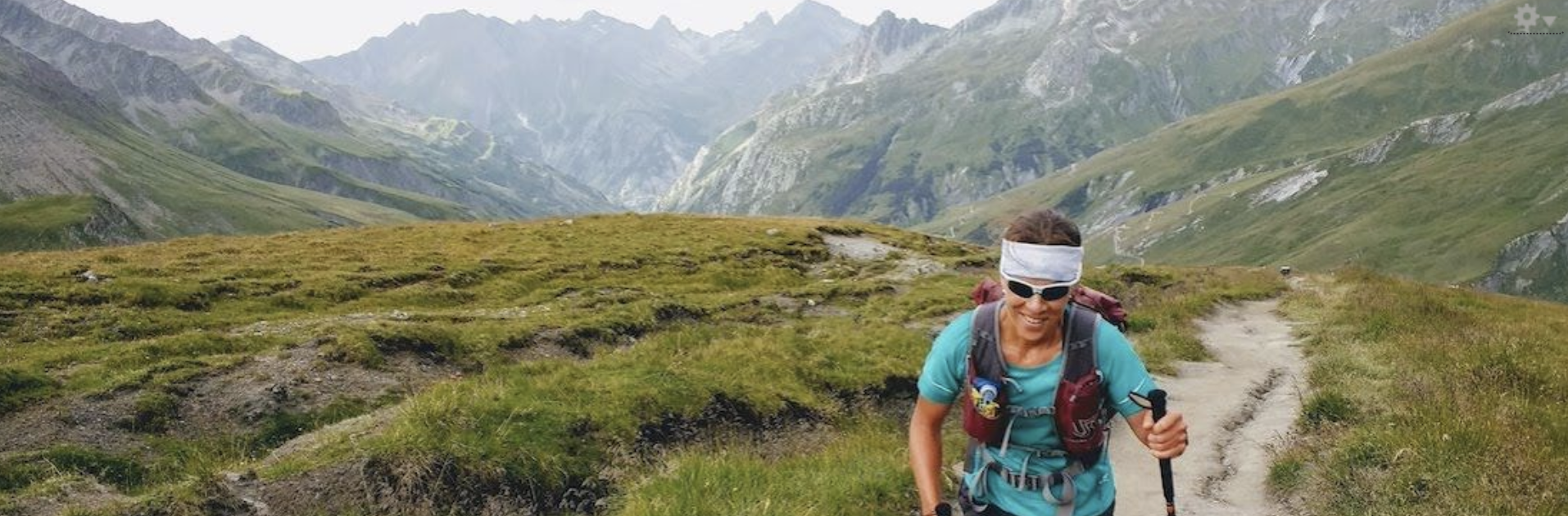
Every morning following a sunrise run, Jill Wheatley (BEd.'99) cycled to work along picturesque farm roads – expertly dodging cattle, sheep, tractors, and impatient commuters – on her way to work at an international high school in Bavaria. She was a health and sport science teacher with an adventurous streak. Since leaving Canada in 2001, she had been to more than 60 countries and had extended work stints in Singapore, Russia, Switzerland, and Germany.

Then in September 2014, her world collapsed. Jill was leading a baseball lesson when one of her Grade 10 students accidentally hit a line drive that fractured Jill’s skull. The bleeding and swelling was so severe that Jill wasn’t expected to live. She had suffered a traumatic brain injury that caused serious behavioural and cognitive changes and the loss of 70% of her vision.

Jill spent the next two years in hospitals in Germany, Canada, and Colorado undergoing a painful and frustrating rehabilitation. She describes herself as a nightmare patient who resisted treatment, tampered with medical monitors, poked holes in feed lines, and repeatedly pulled tubes from her nose. “I remained disgruntled and battled severe, sky-high anxiety about the uncertainty of life ahead,” she explains.

Things finally began to shift when Jill became spellbound by the Rockies outside her hospital room window in Colorado. “The thought of taking my recovery into the mountains lit my fire like nothing else,” Jill recalls. She resolved to run 13 mountain ranges throughout the world in a single year. “My goal was to embrace and accept the ways that my traumatic brain injury had changed me,” she says.

Months later, Jill was competing in the 2017 Manaslu Trail Race in the Nepalese Himalayas while battling post-traumatic stress and altitude sickness. Jill also had to contend with her limited vision and differently abled body. “I learned to be gracious with myself when physically challenging trail routes slowed my pace or swept my feet from under me,” she says. Although Jill was travelling independently, she discovered that she wasn’t always alone. Strangers were ready to help her traverse rickety bridges and offer her places to sleep, rides, and hugs of encouragement and friendship.

Since beginning her quest “to conquer the mountains of my mind,” more than two years ago, Jill has run in the Alps, the Himalayas, the Pyrenees, and the Italian Dolomites, as well as mountain trails in Iceland, New Zealand, Patagonia, Peru, and the Rockies.

“My wish is to guide others towards a place of hope in times of adversity. Though my eyesight has narrowed, my perspective has widened,” Jill says. “I embrace every stride on the trail that is life.”

Listen to Jill discuss her incredible journey on the Sparta Chicks Radio podcast “Jill Wheatley on Losing Sight yet Gaining Vision.”

https://www.spartachicks.com/066-jill-wheatley/
 

You can also learn more about Jill’s mountain running feats by visiting her website: https://mountainsofmymind.com/

School Days: What happens when your homeroom is in your living room?

Tuesday, May 5, 2020 /

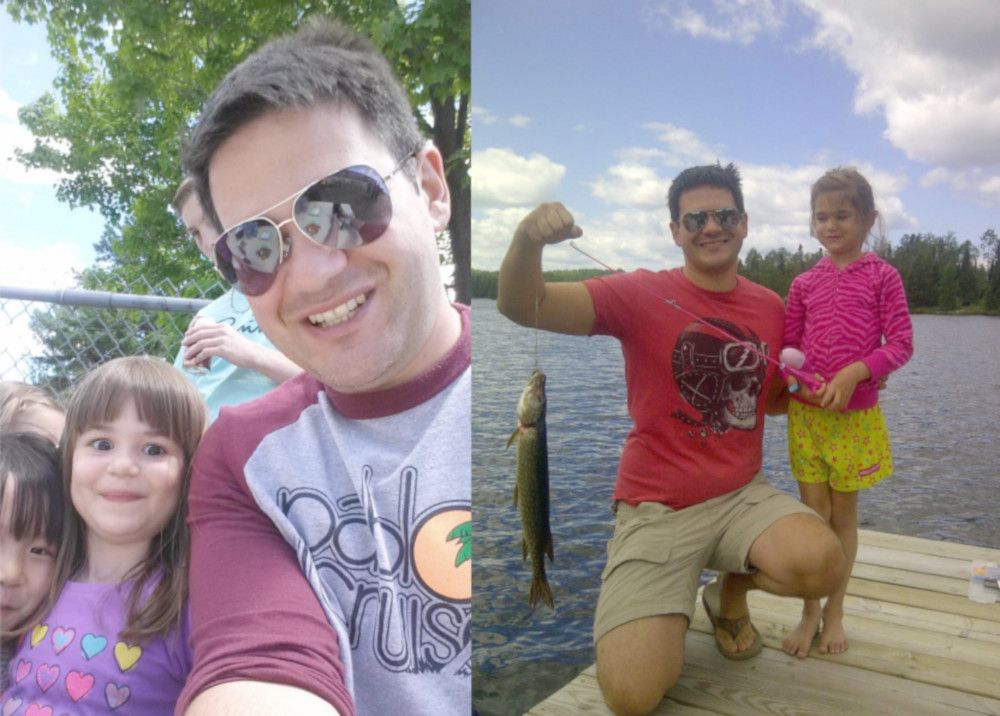
Photos of Gino Russo with his daughters

As a kid Gino loved video games and Nintendo. “I was thrilled when my dad bought me my first computer in grade six. It was a Commodore 64.”

By Tracey Skehan

Gino Russo (BSc’00/BEd’01) faced a huge challenge when the COVID-19 pandemic shut down Northwestern Ontario. The information technology consultant teacher had to shift the entire Lakehead Public Schools system to remote learning at the drop of a hat.

March Break was cancelled for Gino as he scrambled to get ready. “I ran eight sessions in a row the first week I was training teachers and staff. There were so many requests from students and staff moving online all at once.”

Typically, Gino’s role is to coach students and support teachers who want to expand blended learning and communications technology in the classroom.

“I try to bring coherence and streamline the possibilities. There’s many tools we could be using, I steer teachers to the best ones. Edsby, for instance, allows teachers to post assignments, give feedback, and give online quizzes.”

But when COVID-19 changed how Canadians live and work, Gino found himself in an entirely different situation. “Many parents felt overwhelmed and students were afraid they would lose credits. It was pretty stressful.”

Every elementary and high school student enrolled at Lakehead Public Schools was contacted to see if they needed laptops or devices. By early April, 80% of students were able to log on to an online portal and learn from home.

“The goal is to teach the essentials of courses, maintain connection, and strengthen the emotional health of our students,” Gino says. Technology that wasn’t available even a few years ago is making this possible.

“When you give students a Microsoft Teams connection, their faces light up because they can see their classmates and teachers again. It gives them an anchor.”

In some respects, Gino believes that online learning has advantages, because in a physical classroom it’s hard to make sure that everyone participates. “The same four students who aren’t shy put their hand up and the other students have to listen.”

Online tools like Microsoft’s Flipgrid can change this dynamic. Teachers are able to post a prompting question like, “Did anyone see the Aurora Borealis?” and then students use their phones to film videos, post them, watch other student’s videos, and show their reactions.

“The kids who need 20 minutes to reflect can think about a question, see how other people have responded, and maybe post an incredible response,” he says.

As Canadians continue to practice social distancing, Gino encourages parents not to be afraid to ask for one on one help from their child’s teacher – either with a phone call or an email – and to remember that this is emergency learning.

“We are not an online school, so we should have some flexibility in our tasks and make them fun.”

Gino also urges students to share their knowledge with their teachers to make online learning better.

“Most students know a lot about tech. A teacher might ask them to make a poster with a specific tool, not knowing that you can use many other tools to create one.”

The students aren’t the only ones adjusting to a new way of doing things. Gino is working remotely while his two daughters spend their days at home.

“They’re rolling around playing with dolls. I find it a blessing to be able to spend more time with them,” he says.


Go to www.lakeheadschools.ca for more resources or email Gino at gino_russo@lakeheadschools.ca


After getting a computer science degree at Lakehead, Gino started an internet company. When the dotcom bubble burst in 2000, Gino went back to Lakehead to get an education degree at Lakehead. While teaching in Thunder Bay high schools, Gino also earned a master’s in computer science degree from Capital University in Maryland. It was one of the only online master’s degrees in the continent for computer science at that time.

Gia Spiropoulos Rules The Court

Monday, March 2, 2020 /

Gia Spiropoulos is a natural born leader and a serious threat on the basketball court. “My dad got me hooked on the sport,” explains the Lakehead Orillia graduate student from Belleville, Ontario. “When I was a kid, we used to play together.”  

Gia was so good that – at the age of 13 – during a family vacation to Greece, she was recruited to play for the Greek national basketball team. She had been shooting hoops in her father’s hometown of Tripoli, attracting the attention of a professional coach. “Basketball is a huge part of my life and it’s shaped me as a person,” she says.

Recently, Gia has been focusing her attention on reenergizing Lakehead Orillia’s basketball team, both as a player and a co-coach, as well as conducting master’s research on climate change.

It’s a lot to take on, but Gia grew up defying expectations. “My parents were clear that school should come before sports, yet there have always been these two parts to me,” she says.

“I’m a student athlete through and through, and I want my teammates to know you can do both school and athletics. Sports gives you a place to be supported and discover who you are.”

Convinced that she wanted to be a teacher, Gia completed a concurrent education and science degree at Queen’s. As graduation approached, however, she shifted direction. She’d been inspired by an environmental science course and decided to look for a graduate program in climate change education instead of taking a classroom job. “Although it took me a while to get here, once I found my path, I knew it was the right one.”

Her search led her straight to Orillia. “There is no other program in Ontario like Lakehead’s Master of Education,” Gia says. “It’s a perfect blend of education, science, and sustainability.”

Tackling the pressing need for updated climate change resources in Canada, Gia’s research combines classroom surveys, observation, and conversations to develop a first-of-its-kind guideline addressing the realities, diverse perspectives, and ethics of teaching climate change in any subject, in any province.

“Teachers have the responsibility to educate students on the facts of the climate emergency and turn that information into action and motivation, not worry,” she explains. “If I can help even three teachers, that’s 90 students – what a way to make an impact on classrooms and communities.”

“I’m a student athlete through and through, and I want my teammates to know you can do both school and athletics. Sports gives you a place to be supported and discover who you are.”

Pages