
A Man on a Mission

Monday, March 5, 2018 /

Combining careers in medicine and the military has allowed Lieutenant Colonel Nathan Nugent to chart his own course and help fellow Canadians. Nathan joined the City of Belleville’s military reserve 25 years ago as an eager 18-year-old and he’s never looked back. “I enjoyed the camaraderie and being outdoors – it was an adventure. I was paid to go out with my friends on training exercises.”

Since then, Nathan has been a nurse in remote First Nations communities, served as the flight surgeon for the Snowbirds Air Demonstration Squadron, and participated in the medical screening of aspiring Canadian astronauts. “People are surprised when I tell them that – from a medical perspective – screening astronauts isn’t that challenging. The applicants are all extremely healthy.”

In 2015, Nathan was promoted to Head of the School of Operational Medicine (SOM) with the Canadian Forces Environmental Medicine Establishment. SOM trains flight surgeons – specialized medical military officers responsible for the health of pilots and air and ground crew on Canadian Air Force bases. Flight surgeons (who are doctors, but not necessarily surgeons) are responsible for preventing and treating health 
issues so that aviation personnel can perform at the highest level.

Nathan’s interest in medicine was triggered by a childhood spent struggling with debilitating asthma attacks. “I spent a lot of time in oxygen tents and I missed a lot of school,” he says. Determined to overcome this setback, Nathan became a high school track and field athlete obsessed with fitness and preventative medicine.

When he looked to doctors, however, for wellness strategies to cope with his asthma and sports injuries and to optimize his health and performance, Nathan ran into a brick wall. “The GPs didn’t know why I was there. Their medical model was centred on “health” being simply the absence of disease.” He discovered that nurses were more aware and helpful, prompting him to complete a nursing diploma at Loyalist College and then earn his Bachelor of Science in Nursing at Lakehead.

“Lakehead offered many electives related to First Nations and I was attracted to that more holistic approach to health,” Nathan explains. “I also knew that there was a pressing need for health care in these communities.”

He finished the RN program while working as a nurse at the Pikangikum First Nation on a Health Canada placement. “For a time, it was just myself and one other nurse, even though it was a six-nurse station. Lakehead prepared me for those challenges.”

Wanting to delve deeper into health promotion and illness prevention, Nathan took on a Heart Health Coordinator position at a Belleville health unit. From there he went on to earn a medical doctorate from McMaster University and a specialization in Family Medicine from Queen’s University. During medical school and residency, he had the opportunity to return to Northwestern Ontario for a number of community placements and electives. Through the Canadian Forces, he had the opportunity to obtain a Master of Public Health at the University of West Florida followed by an Aerospace Medicine residency with the U.S. Navy.

Nathan got into the aviation medicine field by chance. “There was an opening at the Cold Lake Air Force Base where Canada trains our F-18 pilots and I jumped at it.” To care for air crew, he first had to become trained as a Flight Surgeon. “If we have a pilot flying an F-18, with health issues – or even effected by something as seemingly benign as dehydration and their concentration and coordination is off – it can really impact the mission. They may be flying with bombs or doing air to air refuelling over the Atlantic Ocean.”

Nathan continues to push his own limits. He likes the idea of going on a UN relief mission to Africa or working in Iraq. When his military career is over, he plans to continue to have an impact on society as a family doctor or as a medical officer of health. “Officers of health are at the forefront of educating the public on health promotion and illness prevention issues, such as strategies to address the opioid crisis. These are the issues that really look at optimizing people’s health and that appeals to me.”

Andrew Petras Gets Down to Business

Monday, April 9, 2018 /

It wasn’t long ago that Andrew Petras (HBComm’13) was sitting in a lecture theatre learning about the fundamentals of economics.

In five short years, Andrew has made a name for himself in the financial world, becoming one of the youngest financial consultants in Canada to achieve the designations Certified Financial Planner (CFP) and Chartered Life Underwriter (CLU). He spends his days handling large sums of money and generating substantial revenues for clients as a certified financial planner with Investors Group in Barrie, Ontario.

“Being responsible for a person’s retirement fund, estate, or personal wealth is a huge responsibility,” he explains. “It was also my motivation to achieve the gold standard within the industry.”

As a teenager, Andrew, a native of Simcoe County, wanted nothing more than to leave home at the end of high school. As the time came to decide on a university, Andrew and his family made the 30-minute drive from Innisfil to Orillia for March Break Open House at Lakehead’s Orillia campus. They left with a different perspective of Lakehead University.

“I was leaving my meeting with the chair of the business department when she handed me her business card with her cell number and said, ‘If you have any questions give me a call,’” he recalls.

A reassuring gesture for a 17-year-old trying to make such a significant decision, and an encounter that conveyed an unspoken commitment from faculty and staff to helping the university grow and be successful. “I knew that there were going to be growing pains coming to Lakehead Orillia, but I looked at it as an opportunity to put my footprint on the campus,” he said.

After graduating from Lakehead in 2013, Andrew put that tenacity and commitment into his own career. Today, he is managing a growing business with over 200 clients in Simcoe County.

Like many alumni, Andrew credits extracurricular involvement as contributing to his success. “I liked being able to have an impact on developing the Orillia campus. I helped start the Business Orillia Student Society (BOSS) club and had the opportunity to play on the men’s soccer team. Because Lakehead Orillia was such a new school, as a student I had the opportunity to develop and participate in clubs and activities.”

It was also an opportunity to build relationships with instructors and professors that would be of benefit once he left Lakehead. Not to mention that he met his own employer during a Lakehead networking event. “It’s definitely my No. 1 piece of advice to students currently at Lakehead: Put yourself out there, build relationships! Your name and reputation are important, and so are the relationships that you build at university and within the industry. You never know what’s going to come of a relationship, but maintaining it is very important.”

The Bold and the Beautiful

Monday, April 9, 2018 /

Marina Rupcic (née Mesic) grew up watching the soap opera The Young and the Restless with her grandmother. Marina’s favourite character, the glamourous Ashley Abbott, worked in the lab of her family’s company – Jabot Cosmetics – creating luxury perfumes and makeup. The show sparked a lasting fascination in the young girl from Thunder Bay.

Today, Marina is an R&D cosmetic chemist with famed makeup giant Estée Lauder and works in their M•A•C cosmetics division in Toronto. “Estée Lauder has always been my dream company – it’s not just a brand, it’s more of a feeling,” she says. “My mom used Estée Lauder and I spent a lot of time at that cosmetic counter.”

Marina’s family sometimes played an active role in her early chemistry experiments. “I loved to make potions – concoctions of salt and pepper. I would pretend that I was healing my uncle.” In high school, Marina became obsessed with creams and perfumes, mixing her mother’s mousses together and slathering them in her hair. “That’s probably why my hair was always knotted.”

High school chemistry courses cemented Marina’s attraction to this field and led her to study chemistry at Lakehead, giving her access to real laboratories for the first time.

A major turning point happened the day Marina asked her favourite professor, Dr. Christine Gottardo, if cosmetic chemistry actually existed. Professor Gottardo promptly gave Marina an overview of the R & D and quality assurance processes that go on at big cosmetics companies. She also steered the budding chemist towards what had seemed like an improbable career by helping Marina search for cosmetic chemistry graduate programs.

Marina successfully applied to ISIPCA (Institut supérieur international du parfum, de la cosmétique et de l’aromatique alimentaire) – a partnership between the Université de Versailles Saint-Quentin-en-Yvelines in France and the University of Padova in Italy.

She headed off to France in 2014 to earn a European Fragrance and Cosmetic Master degree followed by a Master of Business and Management degree (specific to the perfumery and cosmetic industry) in Italy.

Marina was impressed not only by the excellence of her programs, but also by Europeans’ approach to life. “It was very cool – they have a different mentality,” she says. “When you eat, you sit down and respect that time. Even though it’s not rushed there, there is time for everything.”

Since completing an internship at Nature Soap and Spa in Winnipeg and graduating in December 2016, Marina has gotten married, moved to Toronto, and landed her dream job at Estée Lauder after months of diligent online searching.

Marina has been on the M•A•C lip products team for almost a year now and she’s still euphoric. “I love bringing something to life and watching the reactions of excited consumers to a product our team has created. MAC lipsticks are the #1 best sellers in Canada – there’s a reason for that.”


Firefighting Trailblazer Stephanie Drost

Monday, September 3, 2018 /

Thunder Bay firefighter Stephanie Drost never lets the grass grow under her feet. “Even as a kid, I was very active,” she says. “I was a competitive cross-country skier from the age of seven.” Stephanie competed provincially and nationally and then as a member of Lakehead University’s cross-country ski team. She combined her studies in kinesiology, and later business, with a gruelling race schedule.

It all came to a sudden halt in her second year. The intensive training caused nerve damage to Stephanie’s elbow (she’d broken it in a childhood trampoline accident and it had never fully healed) that required surgery followed by a long recovery period. This setback wasn’t the devastating blow it might have been to another athlete. “It was a blessing in disguise,” Stephanie says. “The injury led me to firefighting by giving me the time to pursue other things.”

At the encouragement of friends working for the Ministry of Natural Resources and Forestry, she got a job as a forest firefighter in Dryden, Ontario, and began spending her summer breaks battling wildfires. After her third year at Lakehead, though, Stephanie was still searching for the right path to take. By chance, she heard about a three-month structural firefighting course offered by Texas A&M University.

It seemed like fate when she returned from Texas with her certification in April 2015 and discovered that the City of Thunder Bay Fire Department (TBFD) was hiring. Stephanie passed the written TBFD test and began preparing for the physical test – which is the same for male and female candidates and one of the most demanding in the country. “The toughest part for me was the stair challenge,” Stephanie says. It required her to wear ankle weights and a 50-pound vest while running up and down three storeys, three times in a row, carrying a weighted 85-pound hose.

Stephanie passed the physical test with flying colours and so did Ceilidh Boyd, a forest firefighter she’d met while working in Dryden. In 2016, the two women became the first female firefighters ever hired by the City of Thunder Bay.

“I was really fortunate to go through training with Ceilidh,” Stephanie says. “The guys were very welcoming but it’s intimidating anytime you start something unknown, so it was good to start with a friend.”

Stephanie hasn’t looked back since joining the Thunder Bay Fire Department. “I’ve never felt like I was so much in the right spot before. I love the different situations firefighting throws you in and the adrenaline rush it gives you. When people think about firefighters, they think about fires and rescuing cats, but we literally go to everything – car accidents, medical calls, fires, public assists.”

She also enjoys working with police officers and paramedics. “We all come together to help someone in trouble. I see people on their worst days. Knowing that you can help them – even if you’re just comforting them – is so rewarding.”

Even when she’s not firefighting, Stephanie doesn’t slow down. She and two friends opened a strength and conditioning gym called Industrial Athletics in 2017. It’s been so popular that they had to expand a few months after it launched.

Despite Stephanie’s innate grit and resolve, she says she couldn’t have gotten to where she is without her parents. “My mom and dad are very supportive. When I told them I wanted to be a firefighter, they didn’t question my decision. They just said, ‘Go for it Steph.’”


Photo credit: Della Robbins

Adventures of Titanic Proportions

Monday, January 7, 2019 /

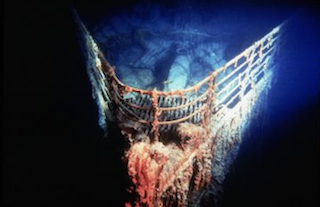
In the unforgiving North Atlantic, the hulking wreckage of the Titanic rusts in gloomy silence on the ocean floor. Until 1991, no one – except a handful of scientists – had seen the ‘unsinkable’ ocean liner since it collided with an iceberg and disappeared into the frigid waters.

That all changed when Lakehead grad and documentary filmmaker Stephen Low (BA’74) released his feature-length IMAX® film – Titanica. Stephen took moviegoers along with him as he and his expedition team descended 12,500 feet before reaching the once splendid ship. “More people have gone into space than into the deep ocean,” Stephen says.

IMAX® is the largest film format in existence and it enables audiences to be fully immersed in previously hidden worlds. Capturing the spectacular scenes that set IMAX® documentaries apart demands ingenuity, persistence, and courage.

“We’re not working on a set, we’re working in real environments,” Stephen points out. “On the way to the Titanic, we were caught in gale force seas and later on we were actually trapped inside the vessel. Many of my contemporaries – documentary directors and cameramen – have died making their films.”

Pictured right: Underwater photo of the wreckage of the Titanic.

Every IMAX® movie Stephen has directed pushes him to develop new technologies to capture the images he wants and overcome the challenges of extremely heavy cameras. In the case of the Titanic, Stephen’s team designed a lighting system that illuminated an area the size of a football field. “James Cameron used our film as the model for his famous Hollywood film, Titanic,” he says. Stephen was also pivotal in developing 3D IMAX® techniques, beginning with his film The Last Buffalo.

“We’re not working on a set, we’re working in real environments.”

In 1998, Stephen once again headed into the abyss for his film Volcanoes of the Deep Sea (2003). His destinations were the Mid-Atlantic Ridge and the East Pacific Rise at the bottom of the world’s two largest oceans – inhospitable and strange realms populated by giant tubeworms and luminescent shrimp that live along hydrothermal vents spewing toxic black chemicals.

Stephen hasn’t confined his explorations to the water - he’s also strapped audiences into an Indy 500 car, taken them on a breathtaking steam engine journey across Canada, and traced humans’ attempts to soar into the heavens in Legends of Flight. Right now, he’s working with sub-atomic particle physicists unravelling the mysteries of the universe at Switzerland’s CERN Large Hadron Collider.

“I’ve met astronauts, fighter pilots, Russian submariners, scientists of all kinds, the Rolling Stones, and Jane Goodall, to name a few,” Stephen says. “It’s been marvellous.” And because of his films, millions of moviegoers have met them too.

Read more stories about fascinating people and discover how our students, researchers, and over 63,000 Alumni in 97 countries are opening the world. Visit Lakehead’s 2017-18 Annual Report at openyourworld.ca


The Trolley trailer:

https://player.vimeo.com/external/223846080.hd.mp4?s=122f09b66805e4dfbb7...


Volcanoes of the Deep Sea Trailer:

http://www.stephenlow.com/project/volcanoes-of-the-deep-sea/

Bolu Fabanwo Reaches Out to Lakehead Orillia Students

Monday, February 4, 2019 /

A few years ago, any international student arriving at Lakehead Orillia had a very different university experience than they do now. Their homesickness was intensified because there were almost no other overseas students on campus.

Things began to change when Bolu Fabanwo decided to do his commerce degree at Lakehead. “I’ve been fascinated by banking since I was a little kid,” he says. “My parents hoped I’d be a chemical engineer like my dad – he worked for a large oil company – but I’d made up my mind.”

The autumn day Bolu stepped out of a taxi and onto Orillia’s campus, though, was a shock. “I didn’t realize Lakehead was in the countryside. I wasn’t used to such a small population – my hometown of Lagos, Nigeria, has over 20 million people.”

He felt an overwhelming loneliness. Then, as he sat in the silence of his dorm room, his roommate Eric knocked on the door and introduced himself and his parents before taking Bolu around the entire floor to meet the rest of the students. “I became friends with them all,” Bolu says. “That wouldn’t have happened if I’d gone to university in Toronto.”

Once he started making friends, Bolu began transforming the culture of the campus. “He possesses great empathy for anyone who feels alone, judged, or out of place,” says Katie Fraser, international engagement specialist.

“I used to be shy but now I go out of my way to connect with people.”

He helped get the University’s varsity soccer team off the ground and while in his first year, the outgoing president of the Lakehead University Multicultural Association (LUMA) approached Bolu about becoming the new president. Under Bolu’s leadership – and with the hard work of the executive team – LUMA grew from four members to 39 members.

He also inaugurated a multicultural day that soon expanded into a multicultural week. Strolling through campus, students, staff, and professors enjoyed chai tea, got henna tattoos, and sampled snacks from different countries. The vibrant atmosphere fostered greater pride in Lakehead Orillia. “Being an international student at Lakehead changed my life,” Bolu says. “I used to be shy but now I go out of my way to connect with people.”

Bolu continues to be a force to be reckoned with. He’s planning to do a master’s in finance and some job opportunities have come his way. One, at a local bank, is a chance to fulfil his childhood dream. “I’d start at the bottom and work my way up.”

Read more stories about fascinating people and discover how our students, researchers, and over 63,000 Alumni in 97 countries are opening the world. Visit Lakehead’s 2017-18 Annual Report at openyourworld.ca

A Passion for Politics

Monday, May 6, 2019 /

A high school co-op at a Thunder Bay radio station turned out to be the first step on a journey that’s taken 24-year-old Matt Pascuzzo to the Prime Minister’s Office.

The co-op gave the aspiring journalist the chance to cover city council news. “It really opened my eyes to how much politics affects everybody’s daily life,” Matt explains. It was there that he first met Patty Hajdu, now the MP for the Thunder Bay—Superior North riding and the Minister of Employment, Workforce, and Labour.

“Patty came to council when she was the director of Shelter House,” Matt says, “She had practical solutions to problems like homelessness and poverty.

A few years later, Hajdu was running as a candidate in the 2015 federal election and Matt was a second-year Lakehead student majoring in political science and minoring in Indigenous studies. He was also becoming an active member of the Liberal Party, prompting Hajdu to ask him to be her youth director.

Pictured right:  Matt Pascuzzo is one of three press secretaries in the Prime Minister's Office. "It's very high pressure because you are in the epicentre of federal decisions," he says. "My first email comes in about 6 am and then I read through the daily newspaper clippings."“I decided that I could sit on the sidelines and criticize or get in the middle and make a difference,” Matt recalls.

He excelled in his role and was promoted to campaign director. “I’d go to class in the morning, then go door knocking for the campaign, go back to school, eat supper, and go door knocking again.”

It was a lot to take on, but Matt’s mother Carol, a vice-principal, and his father John, Lakehead University’s AQ and PQP Education Manager, were supportive – although a little nervous.

“Throughout the time leading up to the election,” explains Carol, “Minister Hajdu would say to us, ‘When I go I’m taking him with me,’ and we would respond, ‘Well, he has to finish school.’”

When Patty Hajdu won her seat and was appointed the Minister of Status of Women, Matt moved to Ottawa as her executive assistant. A year later, he became her press secretary. “Working on Parliament Hill is exciting,” Matt says. “Regardless of your political affiliation, people are trying to do the right thing for their communities.” He also kept his promise to his parents and finished his degree by taking online courses.

Everything changed again in 2018 when he was recruited as a press secretary in the Prime Minister’s Office. “Matt asked if we would look over his résumé but never mentioned why,” his father says. “When he told us he’d secured a position in the Prime Minister’s Office we were extremely surprised and ecstatic.”

How does Matt handle the pressure? He follows the top two rules of being a staffer – eat when you can and sleep when you can. “It’s an incredible opportunity,” he says, “especially when we travel across the country. People are genuinely excited when the prime minister visits their town, even if they disagree with him.”

Matt feels honoured that his career is allowing him to witness watershed moments in Canadian history – including the G20 summit in Argentina where the NAFTA trade bill was signed. “It was a surreal experience being with the world leaders of the 20 largest economies in the world.”

Pictured below: On March 22, Matt returned to Lakehead University for a town hall with Prime Minister Trudeau. “My family was excited that they had the chance to meet the Prime Minister,” Matt says, “especially since they helped out on the 2015 election campaign.”​

 Pictured left:  On March 22, Matt returned to Lakehead   University for a town hall with Prime Minister Trudeau. “My   family was excited that they had the chance to meet the Prime   Minister,” Matt says, “especially since they helped out on the   2015 election campaign.”​

Lakehead University a second home to the Carlinos

Monday, March 4, 2019 /

For the Carlino siblings, Lakehead University became a home away from home, a place to learn how to learn, to meet new people and grow and push their limits while obtaining the skills needed to work in their desired careers.

Rosa, Sam, and Daniela – who were raised in Schreiber, Ontario – graduated from Lakehead University and launched successful careers in law, the pulp and paper industry, and business, respectively.

Rosa received an Honours Bachelor of Commerce degree and then a Master of Science in Management, both at Lakehead. She then went to the University of Windsor to study law and is now a lawyer with Cheadles LLP in Thunder Bay, practicing corporate/commercial law, real estate law, and wills and estate law.

“My most vivid memories from Lakehead had to do with both staff and students in my faculty as well as my experience in residence,” Rosa says.

“I made so many friends in the Faculty of Business; people who helped me get through the challenges that come with post secondary education by being a friend. We worked hard, but knew when to take breaks and have fun.”

Since finishing post secondary, Rosa has passed the bar exam and been called to the Ontario Bar, chaired the Board for the Thunder Bay Chamber of Commerce, received a Shift – Young Professional’s Top 20 Under 40 Northern Ontario Visionary Award for Leadership, and volunteered with Camp Quality.

She wants to one day open her own business, but says the idea is a secret and she will only tell you about it if you are a potential investor.

Her advice to future students is “don’t stress too much about acing every test – in the end, a couple years out of university, no one will care what your marks were. And, meet new people, step out of your comfort zone and try new things.”

Sam earned his degree in Business Administration at Lakehead in 2007, where he made new friends from all over the world.

After graduation he spent a few years working at the mill in Terrace Bay, and then became a successful applicant to junior trades. He earned his instrumentation technician certificate and red seal from the Southern Alberta Institute of Technology.

“I believe my education at Lakehead played a role in my achievement,” he says. “Lakehead was influential in helping me attain my instrumentation certification. The skills I developed from earning my degree translated into success.”

Sam now works as an instrumentation technician at AV Terrace Bay. He says future students should keep in mind how much their past can benefit them.

“Even if the career you end up with is not the career you originally pursued, your experiences and skills will always help you.”

Daniela applied her skills and experiences to graduate from Confederation College’s film production program and then she earned her Honours Bachelor of Commerce at Lakehead in 2017. Now she runs a very successful photography and video business.

“I have a lot of great memories from Lakehead,” she says. “As dorky as it sounds, many of those memories involve studying for exams and working on papers with my classmates, which stand out because it was always a team setting. The camaraderie among students at Lakehead truly helped create the perfect community and network. I met some of my best friends at Lakehead.”

She appreciated that Lakehead’s business program focused on “current and relevant subjects. In addition, I completed a lot of the work in team settings, which mirrors what many workplace experiences are like. My time at Lakehead helped me learn how to strategize, prioritize, be a good team member and, most importantly, handle stress.”

Those skills recently helped Daniela when she completed a short documentary film about the Nipigon River and its famous brook trout, inspired by meeting retired Ministry of Natural Resources biologist Rob Swainson.

“He explained how locals from Nipigon worked to save and rehabilitate the dwindling brook trout population,” she says. “His story was so enchanting that we teamed up to produce the documentary. It was really moving to have a passionate group of locals trust me with their story.”

The film, Nipigon Brook Trout – Fish of Legend, can be watched on YouTube.

Daniela says future students should consider getting involved in the community, “whether it be through a volunteer program or a networking event – do it. You never know who you’ll meet or who might inspire you.”

Believe it or not, another Carlino sibling is currently pursuing a degree at Lakehead.

Antonella is in the final year of the Honours Bachelor of Arts Education (Music) program at Lakehead and she looks forward to starting her career as a high school music teacher.

It sounds as if Antonella took her sister Rosa’s advice on not being afraid to try new things.

“When I first started at Lakehead I was a biology student, but I saw a poster for music electives so I decided to explore the department,” Antonella says.

“Now, the next thing I know I’m in my fourth year of music and also president of the student association. If I did not go out of my comfort level four years ago, I would not have had the many great experiences that I’ve had as a music student.

“I take every opportunity I can to participate around the university as Lakehead holds different events for students every day,” she says.

Channelling Yoga’s Healing Power

Tuesday, April 21, 2020 / Thunder Bay, Orillia

Doing downward dogs and warrior poses in sweltering 38-degree heat might sound alarming – but alumna Debbie Zweep (BAdmin'94) wants to assure anyone who is curious not to worry. She is the co-owner of Modo Yoga Thunder Bay, located in Lakehead University’s C.J. Sanders Fieldhouse. 

“A lot of people tell me, ‘Oh, I don’t like heat,’ and I say, ‘Give it five classes, your body will feel amazing.’ The sweat releases emotional and physical tension, which enhances mental well-being and energy levels, it also improves sleep.”

Modo Yoga is a hot yoga practice designed to be accessible to people of all ages and abilities. Debbie’s son Myles Ball, who has a Master of Social Work from Lakehead, co-owns the business with her.

“We wanted to build a yoga 
studio that allowed the Thunder Bay community to find a place where they could be at peace,” Debbie explains. “Because of our history with Lakehead and the diversity of individuals we knew would walk in our doors, Lakehead was where we wanted to be.”

Pictured right:  Debbie believes that the Modo Yoga sequence puts people on a healing path. “Students at our yoga studio and at the shelter often tell me how yoga has helped them in their mental wellness.”

Debbie and Myles make a point of hiring Lakehead students as “energy exchangers” to clean the studio and work at reception 3-4 hours a week. In return, the students can do as much yoga as they like. “They’re really great ambassadors for Modo,” she says.

Opening a new enterprise is always a risky venture, but Debbie comes from a business background. She grew up loving math and problem solving and went on to earn a Bachelor of Administration with a focus on management from Lakehead. “All the exams I wrote were terrifying,” she recalls, “but they taught me to act under pressure.”

After graduating in 1994, she worked in distance education. When her job ended in 1998, fate intervened to put her on an entirely different path.

“My husband and I went to the Scandinavian House for breakfast – as we did every Saturday – and a folded newspaper was left on the table. The only item visible on the page was a job ad for the executive director of the Faye Peterson Transition House.”

Faye Peterson is a shelter for women seeking refuge from abuse. Debbie applied immediately. “I’ve always been a feminist and I wanted to support and empower other women,” she says. “I also am a mother first and my love for children drew me to work with them, their mothers, and their fathers (through the Caring Dads program).”

A few years later, Debbie took her first Modo yoga class in Winnipeg. It was an experience that would help her deal with the often harrowing situations she faced on a daily basis at the shelter.

“I remember thinking, ‘Wow this is really healing.’ Being with women and children suffering from trauma was creating vicarious trauma in both me and my staff.”

This spurred Debbie to introduce yoga, meditation, mindfulness, and expressive arts to Faye Peterson in the early 2000s for both the shelter’s women and her staff. Debbie later trained as a yoga teacher in 2005 so that she could help people in the wider community.

“I believe that the Modo sequence, done consistently, can reduce the affects of PTSD, anxiety, and depression. As human beings we all experience, at some time or another, adverse situations or conditions and yoga can offer support – not only to women, children, and men affected by violence – but everyone.” 

If you would like try some online yoga, check out the free classes being offered by Modo Yoga Thunder Bay on Instagram Live.


Modo Yoga Thunder Bay owners Myles Ball (far left) and Debbie Zweep (third from left with her grandson) relax with the studio’s teachers.
The mother and son opened the studio five years ago in April 2015. Debbie had strong support from her family, especially her life partner, Jim Ball.

Putting Pen to Paper

Monday, October 7, 2019 /

In 2015, Doug Diaczuk did what he once thought was impossible – he wrote a 40,000 word novel in only three days.

His book Chalk went on to win the Three-Day Novel Contest, which takes place each year over Labour Day weekend, and was published by Anvil Press. The Thunder Bay-born writer, who has a Master’s in English, an HBA in English and History, and a minor in Philosophy – all from Lakehead, offered some advice for aspiring writers.

“You cannot write only when you have free time or when you feel inspired,” he said. “You have to make time for writing and writing takes practice, so it has to be something you work at every day.”

“It’s also okay if what you write is not very good - that’s not important. In fact, you should write as though no one will ever read it because that takes away some of the fear and self-doubt. Just write for you.”

Doug said the knowledge he picked up at Lakehead University helped him write his novel and his time writing for the Argus student newspaper helped prepare him to work as a reporter and photographer at the Thunder Bay Source.

“You cannot write only when you have free time or when you feel inspired. You have to make time for writing and writing takes practice, so it has to be something you work at every day.” - Doug Diaczuk (Chalk book cover shown right.)

Lakehead prepared me for my future in a variety of ways,” he said. “On the academic side, I learned proper research and critical thinking skills through reading and analyzing texts, conveying a clear and concise argument through essay writing and presenting seminars, how to take on a substantial project through the completion of my Master’s thesis, and assisting others through my role as a Graduate Assistant.

“My role outside the classroom with the Argus provided me with hands-on training in the many aspects of journalism, from conducting interviews, writing stories, editing, to layout and design.”

He applies these skills daily in his role at the Source. But, how exactly did he write a 40,000-word novel in three days?

“I didn’t really go into the three-day novel contest with much of a plan,” he said.

“I knew how the story would begin, how it would end, and I had some ideas for what I wanted to happen in between, but I didn’t have an outline or any notes prepared. I was basically making it up as I went along, which made the writing process a lot more interesting and exciting.”

Doug wrote approximately 13,000 words per day. By the end, he felt physically and mentally exhausted.

“Basically, every moment of that weekend was spent either writing or thinking about writing. I did take breaks for meals and I did sleep at night because if I didn’t, I would have burnt out after the first day,” he said.


Synopsis for Chalk

"You" and L, a mysterious third gender runaway, hit the road on a mission to find the meaning of life. Travelling by plane, bus and car, You run into trouble with the cops, mourn a family tragedy, smoke hundreds of cigarettes, attend a retirement party, come to terms with a broken heart, and discover that all roads lead back to where You started.

Pages