Every Animal Deserves Care and Compassion
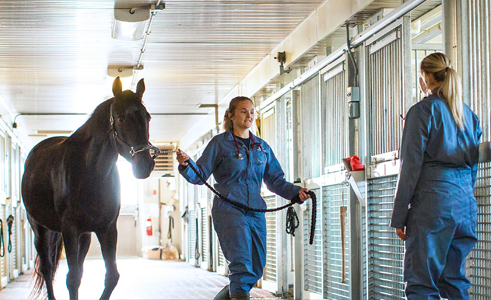
In the not-too-distant future, horses, cows, sheep, and dogs will call the Thunder Bay campus home.
They’re arriving as part of the new Collaborative Doctor of Veterinary Medicine Program (CDVMP)—a partnership between Lakehead University and the University of Guelph’s world-renowned Ontario Veterinary College.
The CDVMP has launched at a critical moment.
For years, a severe veterinarian shortage has meant that northern Ontarians—whether they’re families or farmers—are often unable to get care for their animals.
But that’s about to change.
Making the Impossible Possible
The CDVMP has become a reality thanks to outstanding Lakehead champions like Kim and Stu Lang, whose vision and support are vital to the success of our new veterinary program.
The couple has made a transformative $10-million gift—the largest in Lakehead’s 60-year history—towards the construction of the CDVMP’s Gakina Awesiinyag large animal-education facility.
“I’ve been a lifelong animal lover since childhood. It’s at the core of my being,” Kim says. “I’ve always had dogs, horses, and cats. That’s why it was exciting to learn about the CDVMP.
Supporting this initiative is a natural progression of my advocacy.”
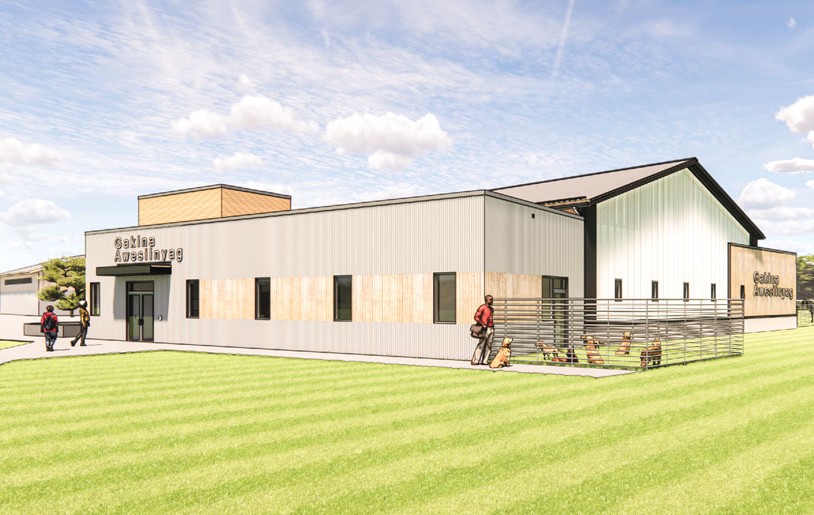
Beginning in 2027, CDVMP students will spend the first year of their degree studying on Lakehead’s Thunder Bay campus, including at Gakina Awesiinyag.
Honouring the Animal Kingdom
The name “Gakina Awesiinyag” comes from the Anishinaabemowin language and translates to “All Animals (Place For).”
“Lakehead has many Indigenous students and there are many Indigenous communities in the region, so we thought it was crucial that the animal-education facility have an Indigenous name,” Kim says.
“The name was chosen to represent all animal life that needs medicine,” explains Elder Gene (Little Bear) Nowegejick.
He recounts the story of Nanabush, the first man to walk on Turtle Island, to illustrate humans’ responsibilities toward animals.
“Nanabush found himself alone and lonely, so he took a wolf as a pet—an action that he knew was wrong and that violated the natural law,” Elder Gene says.
“To answer that wrong, Nanabush went on a vision quest. In this quest he was given a dog for a companion.
He had to look after that dog and make sure that all animals are well and ready to give life.”
Lakehead University is incredibly grateful to animal welfare advocates and philanthropists Kim and Stu Lang. They established the Ontario Veterinary College’s Kim and Stu Lang Community Healthcare Partnership Program (CHPP) and have contributed to initiatives like Veterinarians Without Borders, which brings vet clinics to underserved Arctic communities. Photo Credit: Unsplash/Andrew S
Committed to Indigenous Ways of Knowing
In June 2025, to mark the ceremonial start of Gakina Awesiinyag’s construction, Elder Gene performed a ground-blessing ceremony.
“It was a way to acknowledge that the Animal Kingdom is very important,” he says. “A big part of the CDVMP is showing honour and respect to all the winged, four-legged creatures, swimmers, and crawlers,” he says. “We know these animals have been taking care of us all along.”
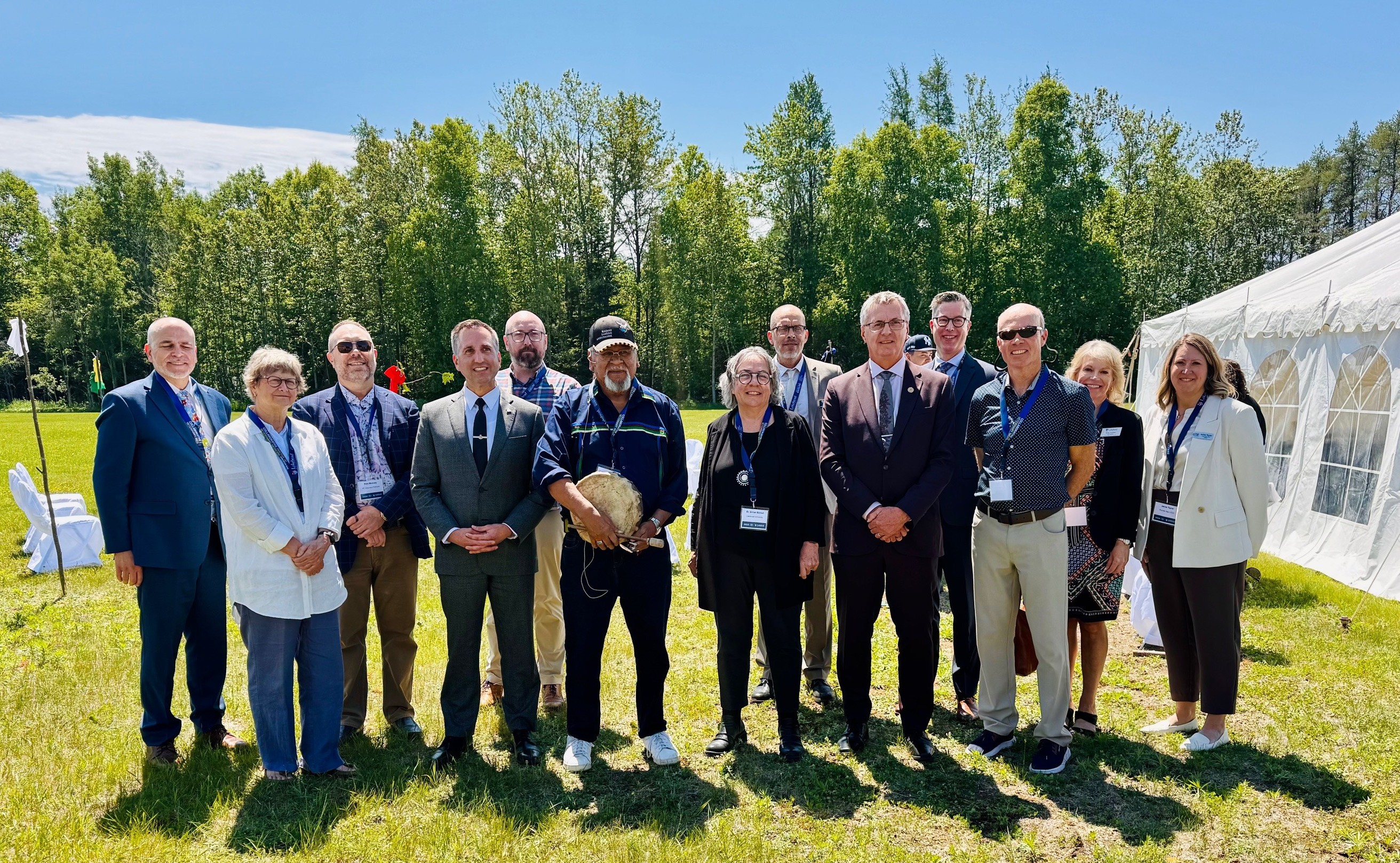
“We have to maintain this journey together and not lose sight of why we started this program,” says Elder Gene Nowegejick (centre, holding drum) who led the ground-blessing ceremony. “Nowadays people take many different animals, not realizing they are breaking the Seven Grandfather Laws. The Anishinaabe way is to maintain Anishinaabe Traditions.”
Training student veterinarians to serve northern, rural, and remote communities in a way that draws upon Indigenous knowledge is central to the CDVMP.
“The existing Indigenous content in the Ontario Veterinary College’s curriculum will be strengthened to ensure culturally relevant education and veterinary services tailored to northern and Indigenous communities,” says Dr. Todd Randall, Lakehead’s Dean of Science and Environmental Studies.
“I’m discovering that Reconciliation is more than just words—there has to be action,” adds Stu. “I’m happy that some of the students will become veterinarians in Indigenous communities.”
Training Vets for the North
Beginning in 2027, CDVMP students will spend much of their first year of studies at Gakina Awesiinyag, before transitioning to OVC, as they work towards their dream of becoming veterinarians.
The Gakina Awesiinyag facility will have seminar rooms, student study space, and labs for anatomy/pathology, life sciences skills, communications, and clinical skills. Students will also learn in renovated spaces and classrooms on campus.
Photo Credit: iStock/mgstudyo
"We're really pleased to be part of these young veterinarians' journey to serve the north. They'll be committed and compassionate," Kim says.
“The CDVMP is an example of how two great institutions can create something special,” agrees Stu. “My hope is that the CDVMP not only creates great veterinarians, but that it creates good and caring people.”