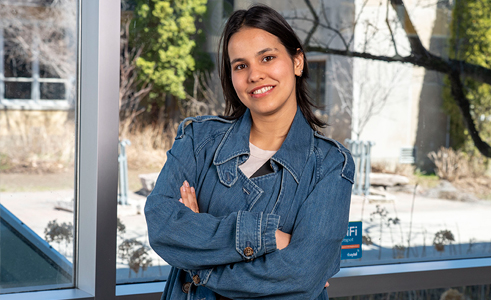
Between the North Pole and the South Pole Lies the Awe-Inspiring Third Pole
If you say the word "Himalayas," the image of a mountain climber summiting Mount Everest pops into many people's minds.
But Dhanvi Gahlawat's thoughts are trained on understanding the alarming retreat of the Himalayas' glaciers and snowfields.
She is an environmental sustainability student with a personal connection to this spectacular area of the world—a connection that drives her academic studies and her work as a climate change activist.
Dhanvi is from Delhi, India, where extremely high pollution levels led her parents to send her to a boarding school in the town of Nainital.
"Nainital is in a beautiful Himalayan valley with lush green forests and snow-capped mountains," she explains.
"The Himalayas, and the surrounding mountain ranges, are called the Third Pole of the world because they hold so much frozen water," she adds.
"Many major rivers originate in the Third Pole and flow into countries including Bhutan, Nepal, China, India, and Pakistan."
Growing Up among the World's Highest Peaks
"Ever since I was a child in Nainital, I've wanted to see what lay beyond the mountains of my home," Dhanvi says.
In the summer of 2025, she had the opportunity to do that as part of her undergraduate thesis research at Lakehead. Dhanvi was able to venture deeper into the Himalayas to study how rising temperatures are melting Third Pole glaciers.
"I'd never viewed where I'd grown up through a climate change lens, but my environmental sustainability studies made me realize that retreating glaciers have become a big issue."
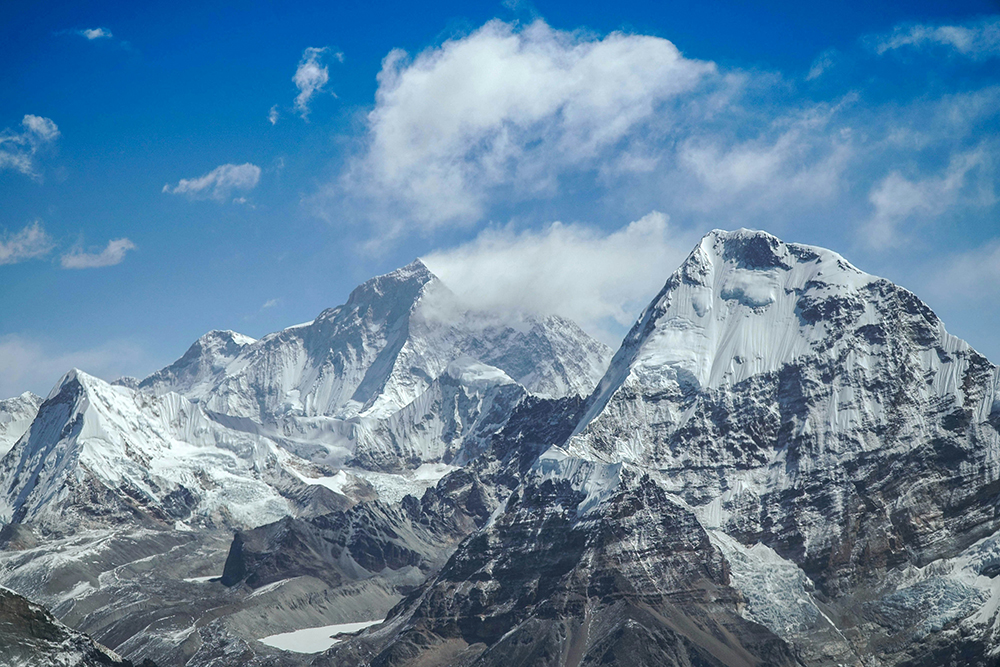
The Hindu Kush-Karakoram-Himalayan mountain system—also known as the Third Pole because it holds the most frozen water on Earth after the North and South Poles—has become the focus of Dhanvi's research.
For her thesis, Dhanvi collected scientific data and talked to the Indigenous Tibetan and Lhoba people who live there.
"The glaciers are essential to the survival of these mountain communities," she says.
"They depend upon them for food security, military security, and water security—the melt water from the glaciers has always been their primary water source."
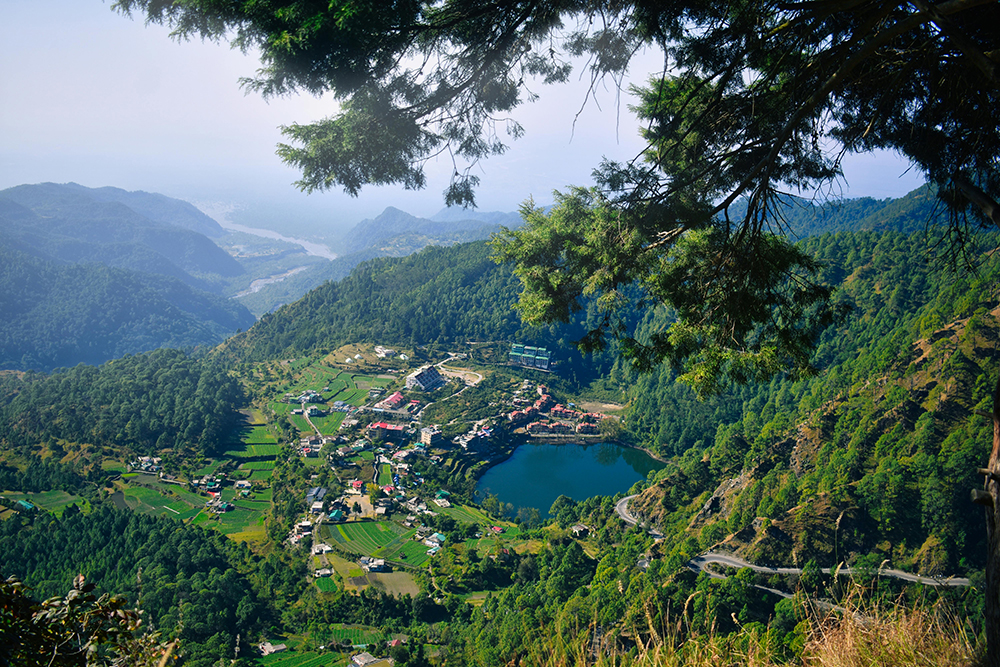
"I really love being out in the forest and going on treks whenever I can," Dhanvi says. Above, a view of Nainital where Dhanvi spent her childhood.
Dhanvi is similarly concerned about the native plant and animal species being endangered by climate change.
"Plants are a source of food as well as important for the treatment of cancer and other diseases."
Mountain communities also face the threat of being displaced by mining companies and countries that want access to the Himalayas' rich mineral resources.
"It's really tragic what's happening there," she says.
Raising her Voice and Taking Action
Dhanvi came to Canada for university because the environmental science programs she was looking for weren't available in India at the time.
"I chose Lakehead because I wanted a smaller school with a sense of community," she says.
She initially began her studies at the Thunder Bay campus, but switched to the Orillia campus so that she could enrol in its unique Honours Bachelor of Arts and Science program and major in environmental sustainability.
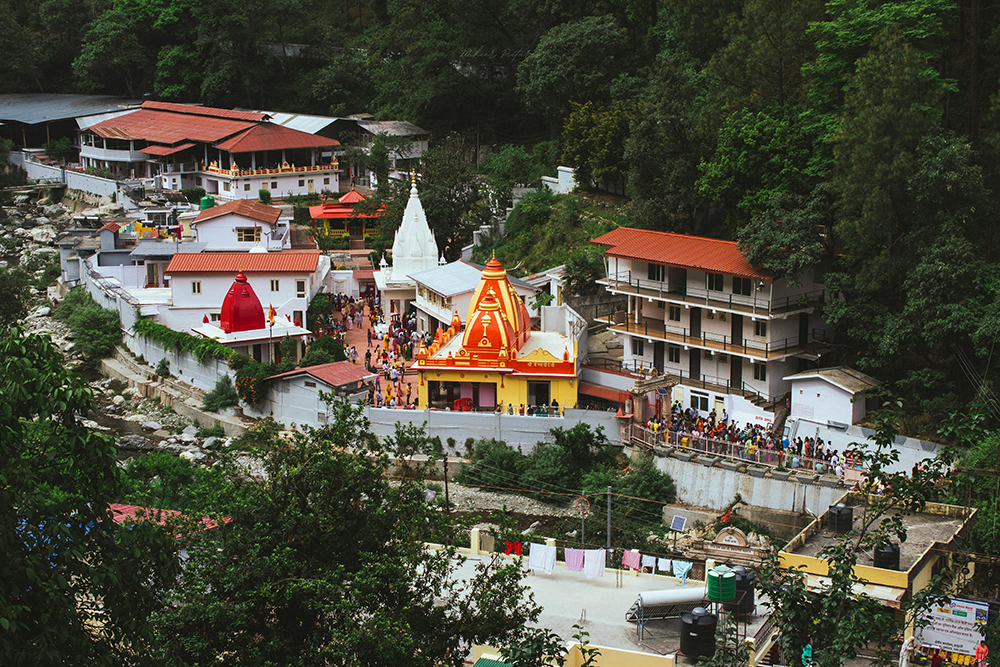
Dhanvi is driven by the urgency of the climate crisis to find lasting solutions. "It doesn't always have to be about attending rallies. Real change begins with small consistent actions, like making different choices in our day-to-day lives." Above, a view of Nainital with its impressive Kainchi Dham Ashram and Temple.
Since arriving at Lakehead, Dhanvi has shown impressive leadership on and off campus. In 2024-25, for instance, she was a member of the Ontario Council for International Cooperation's Youth Policy Makers Hub.
As a youth policymaker, she participated in advocacy and research efforts supporting United Nations Sustainable Development Goals (SDGs) and the Beijing Declaration and Platform for Action—a blueprint for advancing women's rights.
A Sustainable Planet is Possible
After Dhanvi graduates from Lakehead, she plans to complete a Master of Science in Climate Change and Glaciology in India.
"I want to expand my research into glaciers and help communities struggling with these issues build their resilience. I also want to raise governments' and non-governmental organizations' awareness of the effects of climate change."
She also has a message for young people who are feeling overwhelmed by climate change.
"You're not too small to make a difference. Every movement in history has started with people who refused to remain silent.'"