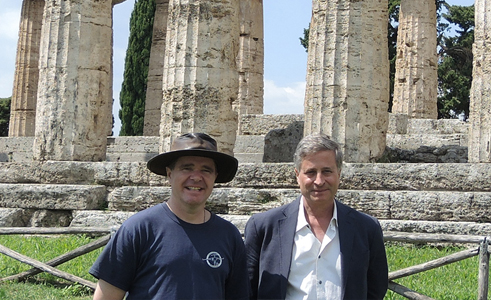
An Unforgettable Professor and a Transformational Campus
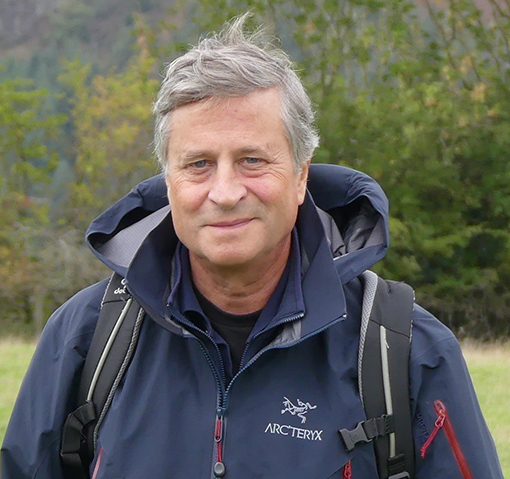
“I had an apartment in Heritage Place, so my commute to work was 45 seconds,” Dr. Kaiser says. “I stayed there until 2010 when the new campus at 500 University Avenue opened.”
When Dr. Tim Kaiser arrived at Lakehead’s fledgling Orillia campus in 2006, he was eager to get to work.
“It was a delightful challenge; there were so many things to be done, and none of them were in our job descriptions,” he says.
“All of the faculty and administration worked together, whether it was making presentations to the Orillia city council or going to Home Hardware to pick up supplies.
At that point, the drywall was still being put up, and the carpet hadn’t been laid yet,” explains Dr. Kaiser, a renowned anthropologist specializing in Mediterranean and European archaeology.
The new campus—located over 1,200 km from Thunder Bay—was housed in the basement and first floor of the Heritage Place building in downtown Orillia.
The Heady Early Days
Into this flurry of activity came the students who would become Lakehead Orillia’s charter class.
“Many of them were the first ones in their family to go to university, so they didn’t know what to expect,” Dr. Kaiser says.
As a founding faculty member of Lakehead Orillia, Dr. Kaiser helped shape the campus. He was one of just six professors who set up the Department of Interdisciplinary Studies, which emphasizes an inquiry-based approach to learning.
Dr. Kaiser managed to do this while simultaneously developing outstanding anthropology courses for Orillia students.
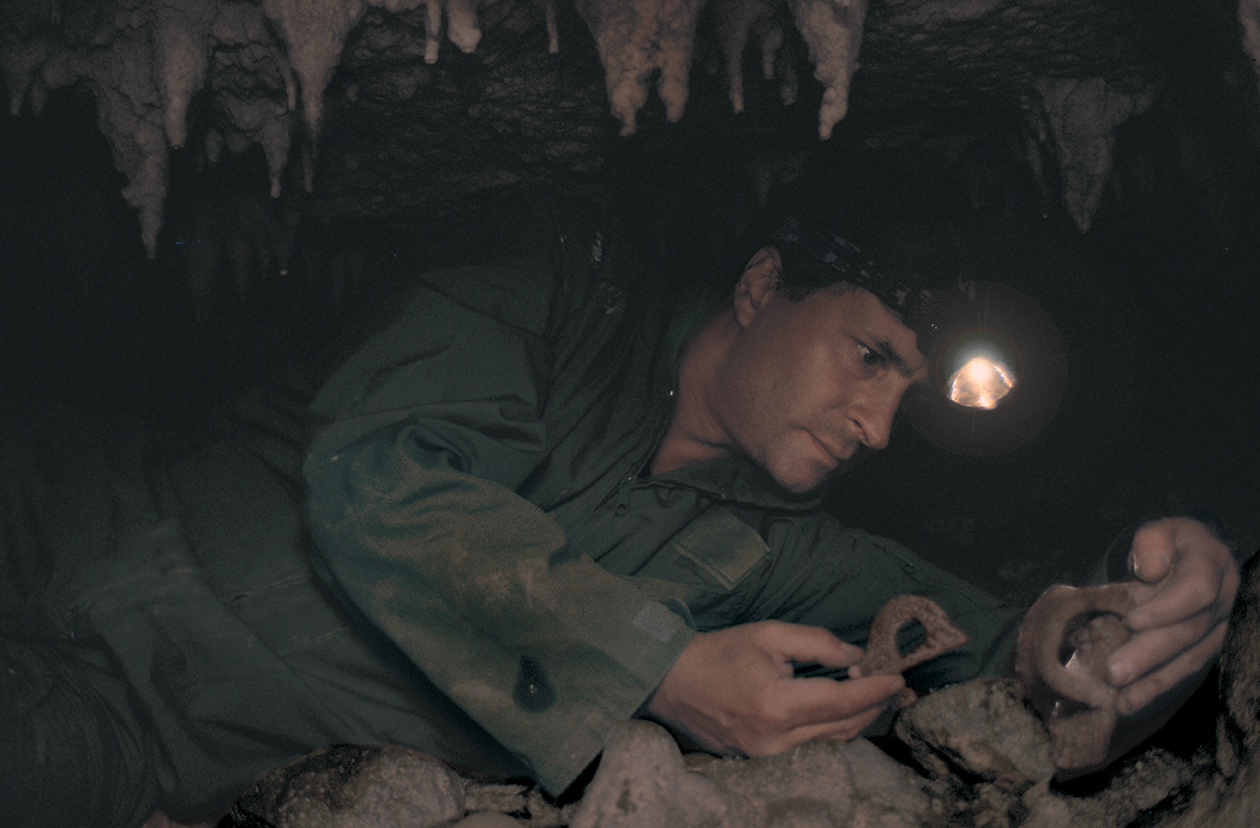
In 1999, Dr. Kaiser (above) and fellow archaeologist Stašo Forenbaher made a major archaeological discovery. After tunnelling into Nakovana Cave, they found a religious sanctuary used by the ancient Illyrians—a seafaring people who lived on the Adriatic coast in the 1st millennium BCE.
He was also a leader when it came to putting inquiry-based learning into action. Students loved his archaeological field school excavation of a mock site, which originally took place in a vacant lot next to Heritage Place.
Pottery shards, coins, and other objects were buried in layers for them to uncover.
“Archaeology is fundamentally destructive, so one of the values of mock-site field schools is being able to destroy the site while learning how to properly excavate,” Dr. Kaiser says.
Astronauts and Outer Space
Another faculty member who saw the potential of the vacant lot for inquiry-based learning was Dr. Thomas Stiff.
“He set up intricate, sophisticated bottle rocket launches there,” Dr. Kaiser says.
Dr. Stiff was an astrophysicist and consultant for NASA and the Canadian Space Agency who taught orbital mechanics to NASA engineers.
He thrilled students by hooking up a live connection between Lakehead Orillia and the famed NASA Mission Control Center in Houston.
“Astronauts and the future president of the Canadian Space Agency, Dr. Steve MacLean, would fly in to talk to Lakehead students,” Dr. Kaiser recalls.
“The astronauts strode around the hallways in their flight suits, making quite an impression.”
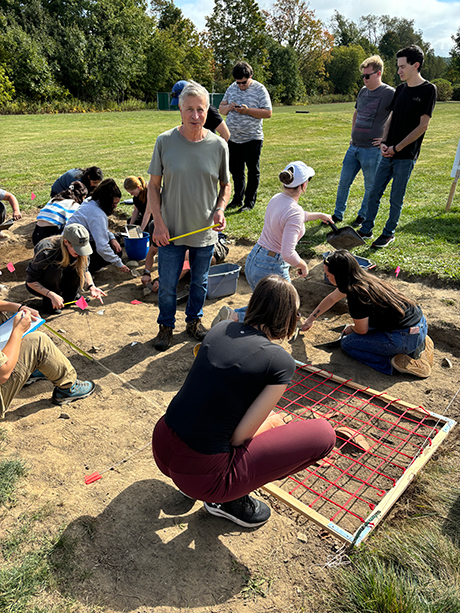
“Archaeology is like a jigsaw puzzle—but you don’t have a box top to tell you what it should look like and you have no instructions,” Dr. Kaiser says. Above, students at Dr. Kaiser’s 2024 field schools, which is a component of the ANTH2137 FAO Method and Technique in Archaeology course.
Orillia Students Prove They Have the Right Stuff
“It’s been wonderful to see students flourish, both those who pursue graduate studies in anthropology and those who go into unrelated professions,” Dr. Kaiser says.
Whatever path they chose, they all learned the archaeological traits of patience, grit, and adaptability.
“As an archaeologist, you could be in hip waders and bug suits in the middle of the boreal forest, baking in the sun in the desert, or freezing in a dark cave.”
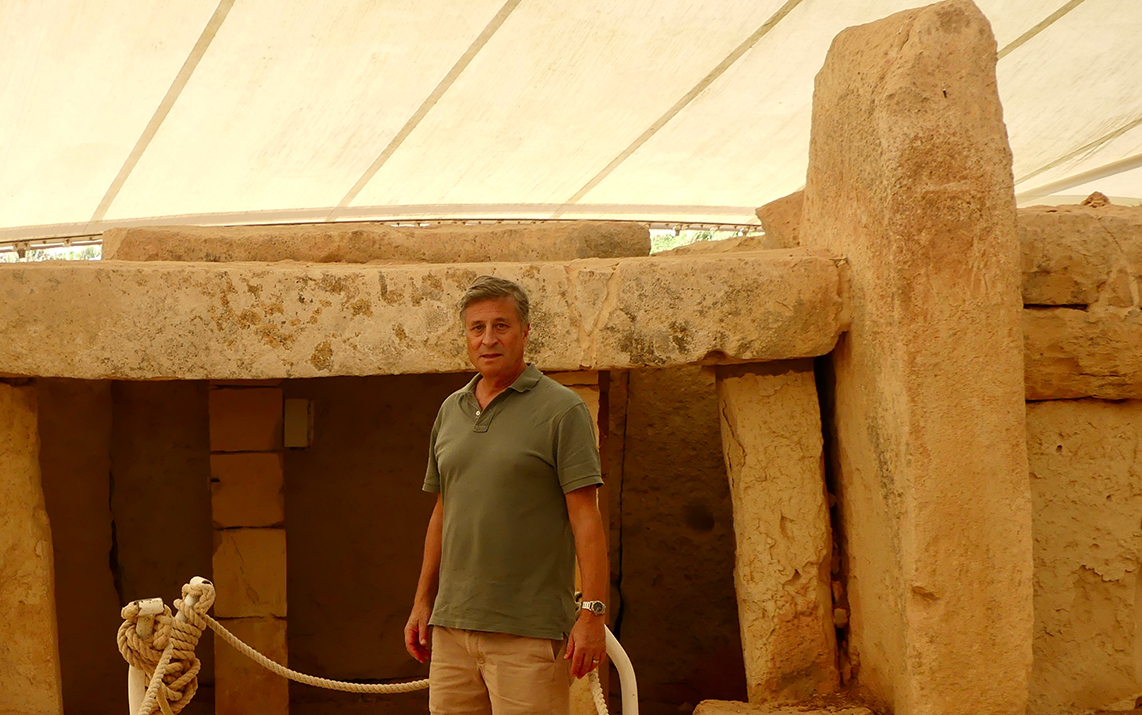 Now that he’s retired from Lakehead, Dr. Kaiser will be devoting more time to an archaeological project on the island of Malta in the Mediterranean. He’s investigating prehistoric navigation, specifically Bronze Age contacts between the Central Mediterranean and the Eastern Adriatic regions.
One of Dr. Kaiser’s more hair-raising archaeological experiences happened on a dig during the Balkan Wars in the 1990s.
“Our excavation team was on the road, headed to the city of Dubrovnik in the former Yugoslavia when we were ambushed. Men jumped out from behind some bushes and pointed automatic weapons at us.”
Fortunately, they came away from the encounter unscathed, and Dr. Kaiser went on to join Lakehead Orillia.
Dr. Kaiser retired on July 1, 2025, marking the end of a pivotal chapter in Lakehead’s evolution.
Much of the success of Lakehead Orillia rests on the shoulders of founding faculty members like him. They’ve mentored thousands of students who’ve made Lakehead—and the communities we serve—stronger and more vibrant.
Watch this video of Dr. Kaiser’s 2024 field school to discover how archaeologists work.