Truth and Reconciliation has the Power to Heal Us All
Education is what got us into this mess—and education will get us out—the use of education at least in terms of residential schools—is the key to reconciliation.
- Senator Murray Sinclair
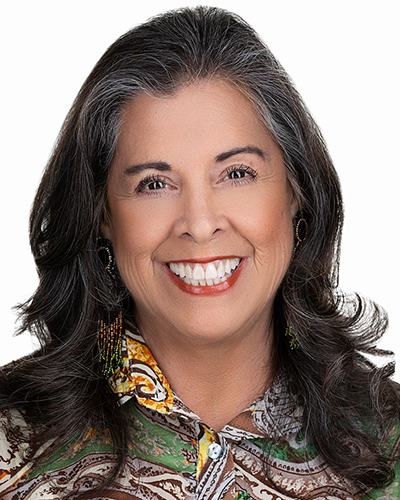
Dr. Wesley-Esquimaux earned a BA, MA, and PhD at the University of Toronto. “In 1996, I started researching the historic trauma experienced by Indigenous Peoples in North America—we lost 82% of our population during colonization. At the time, almost no one had heard of this type of trauma, but I said to myself, ‘They will when I’m done.’”
“Lakehead University’s voice is essential,” says Dr. Cynthia Wesley-Esquimaux.
“Whether it’s our Truth and Reconciliation work or our advancement of the United Nations’ Sustainable Development Goals, Lakehead is playing an important role.”
Dr. Wesley-Esquimaux is the first, and only, Truth and Reconciliation Chair in Canada.
This public education chair was created by Lakehead in 2016 to raise awareness of the devastation caused by Canada’s Residential Schools, foster healing, and build bridges between Indigenous and non-Indigenous peoples.
“The voice I carry is sometimes cautionary, sometimes celebratory, but I speak to encourage relationships and allyship,” Dr. Wesley-Esquimaux says.
These conversations are happening across Canada, and, increasingly, around the world in places such as Norway, Sweden, Finland, Taiwan, and Brazil.
“Other countries who are undertaking Truth and Reconciliation efforts want to know more about the process we used here in Canada,” she explains.
In her role as Chair, she’s also a regular visitor to Lakehead University classrooms where she enjoys engaging students in discussion. “As an educational institution, it’s Lakehead’s responsibility to teach students about Truth and Reconciliation.”
On September 30, 2025, Dr. Wesley-Esquimaux—who is a Truth and Reconciliation Honorary Witness—attended the National Day for Truth and Reconciliation flag-raising ceremony on Ottawa’s Parliament Hill. While in Ottawa, she also met with Governor General Mary Simon and Prime Minister Mark Carney.
A Powerful Changemaker
Dr. Wesley-Esquimaux was already an influential advocate and academic when she first joined Lakehead in 2013 as the Indigenous Initiatives Vice Provost.
After repatriation of the Canadian constitution in 1982, she collaborated with Indigenous leaders across Canada to protect the self-determination and treaty rights of Indigenous Peoples.
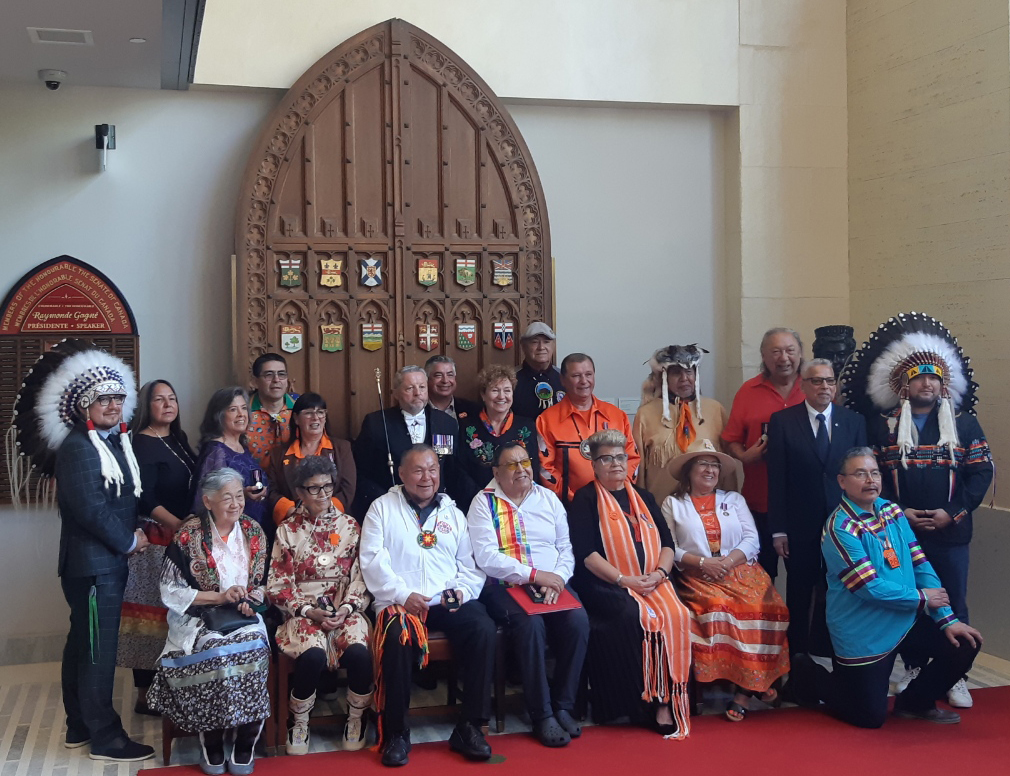
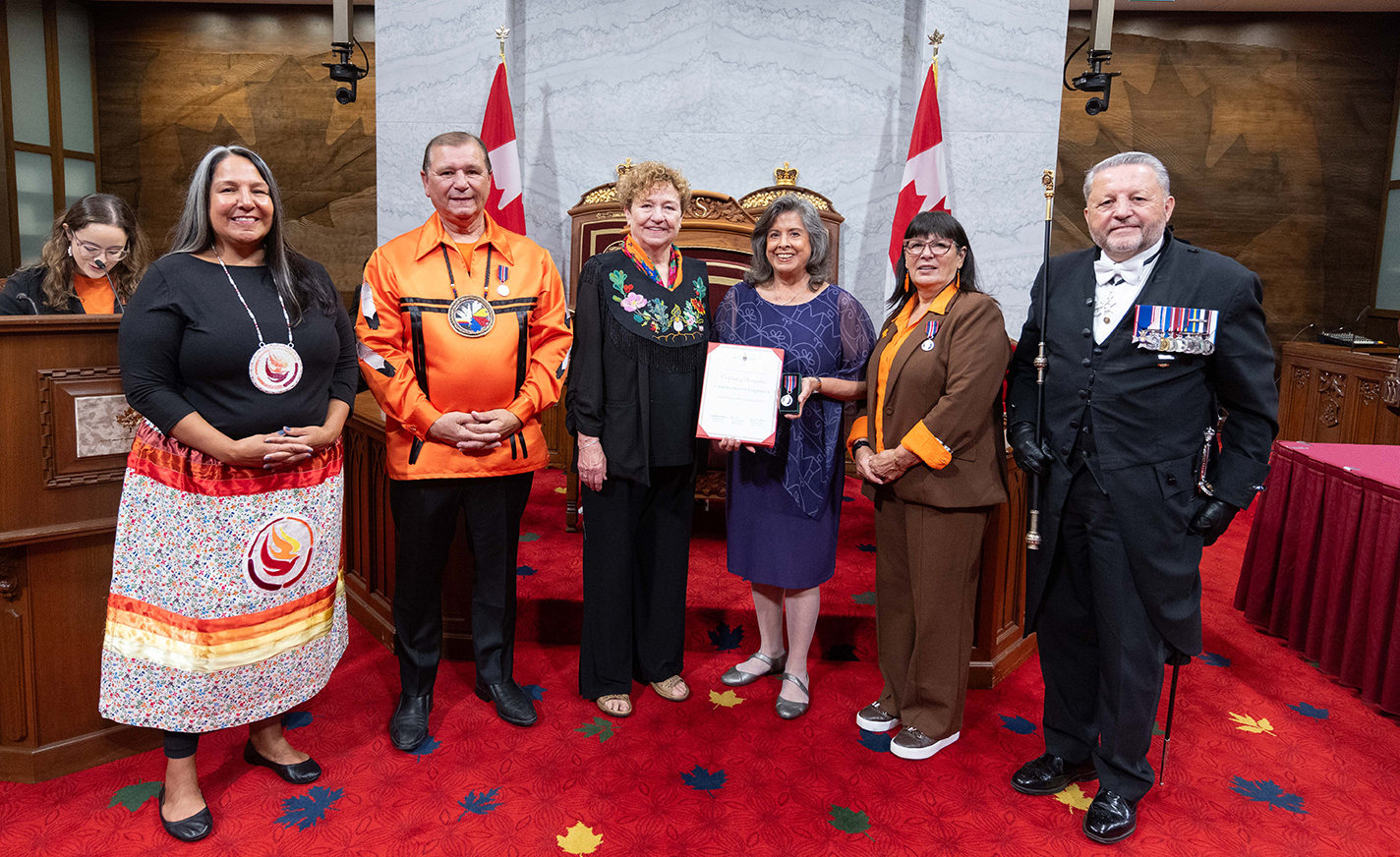
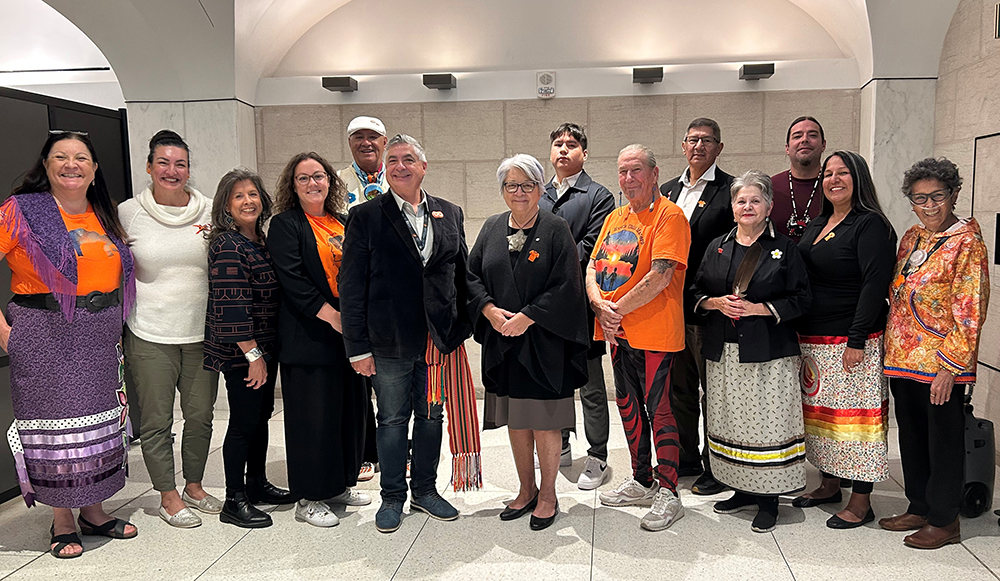
Dr. Wesley-Esquimaux (back row, third from left) received a King Charles III Coronation Medal in 2025 for her 40 years of work advancing Truth and Reconciliation. The ceremony was held on Ottawa’s Parliament Hill.
Dr. Wesley-Esquimaux has led initiatives on multiple fronts, including serving as the first Nexen Chair in Aboriginal Leadership at the Banff Centre in Alberta and co-founding the Canadian Roots Exchange (now the Indigenous Roots Exchange) —a national organization connecting youth and amplifying their leadership.
Her reputation has been cemented by her contributions to the Truth and Reconciliation Commission of Canada and her current position as Chair of the National Centre for Truth and Reconciliation’s Governing Circle.
Colonialism Casts a Long Shadow
Dr. Wesley-Esquimaux’s commitment to helping Canada reckon with its history is grounded in her life experiences.
“I grew up with two residential survivors, my mom and my stepfather,” she explains.
She also endured extreme bullying while growing up in Toronto.
“In school, I was constantly called racist names, and often physically attacked, because I was Indigenous.”
Not surprisingly, she dropped out when she was 16, but her questioning mind and love of learning drew her to postsecondary education as a mature student.
She specialized in cultural anthropology because “I wanted to understand historic trauma and to disprove the racist belief that Indigenous people don’t have the capacity to thrive.”
Lifting Up Young People
“Today, our ability to be present as Indigenous Peoples at colleges and universities is possible in a way it hasn’t been before,” Dr. Wesley-Esquimaux says.
“Indigenous people have stated these institutions would never let us in, but I tell them they will and I’m proof of that acceptance.”
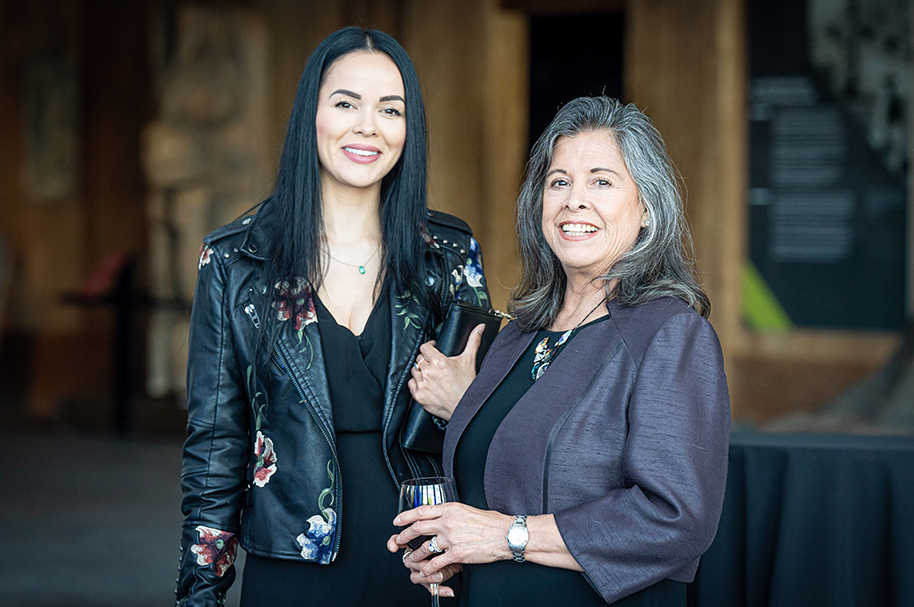
Above, Dr. Wesley-Esquimaux with her daughter Tareyn Johnson, who is an artist and the University of Ottawa’s Director of Indigenous Affairs.
At Lakehead, Dr. Wesley-Esquimaux’s guidance and advocacy are transforming our campuses.
One of the achievements she’s most proud of is the Niijii Mentorship Program, which she established with Niijii Coordinator Lisa Harris.
Through this community outreach program, Lakehead students mentor Indigenous high school students across northwestern Ontario, providing academic support and making them feel welcome on campus.
“Niijii has boosted the number of Indigenous students at Lakehead tremendously because now they don’t feel intimidated about applying to university,” Dr. Wesley-Esquimaux says.
“Lakehead has historically done work other universities haven’t—like offering access programs to educate Indigenous teachers and nurses as well as train Indigenous language instructors,” she adds.
“There’s always so much going on at this small but mighty university.”
It’s inspirational leaders like Dr. Wesley-Esquimaux who ensure Lakehead lives by the words exceptional and unconventional.
Watch Dr. Wesley-Esquimaux’s talk “Repatriation to Reconciliation: The Genesis of a Canadian Identity.”